
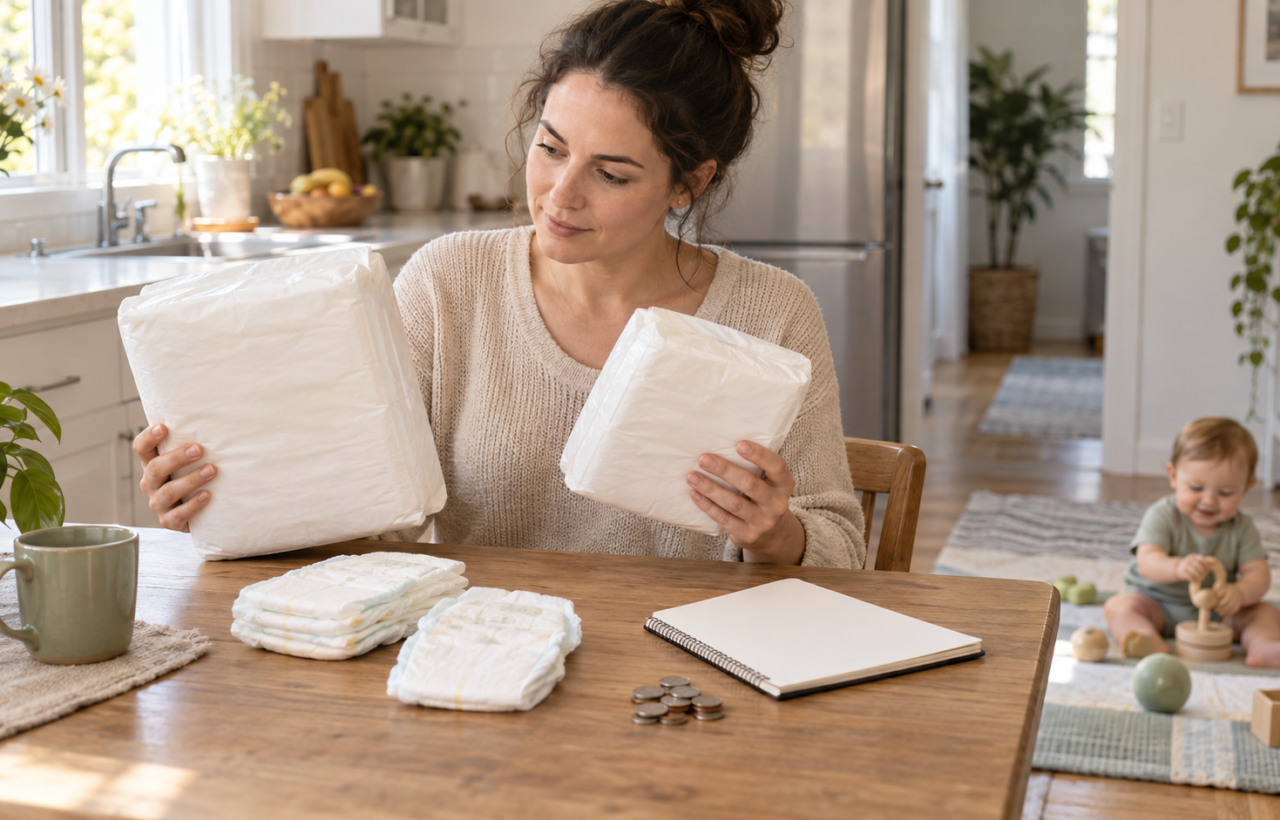
A diaper aisle gives you plenty of prices but very little help deciding which one will actually lower your household spending. The largest box is not automatically the best value, a discount is not useful if the fit is wrong, and rewards can make a deal look better than the money it truly saves.
You can lower your diaper bill without making your baby wear a diaper longer than needed. Focus on what you pay per usable diaper, buy cautiously while fit is changing, and create a simple refill routine that prevents both emergency purchases and abandoned packs.
Find the real cost per diaper
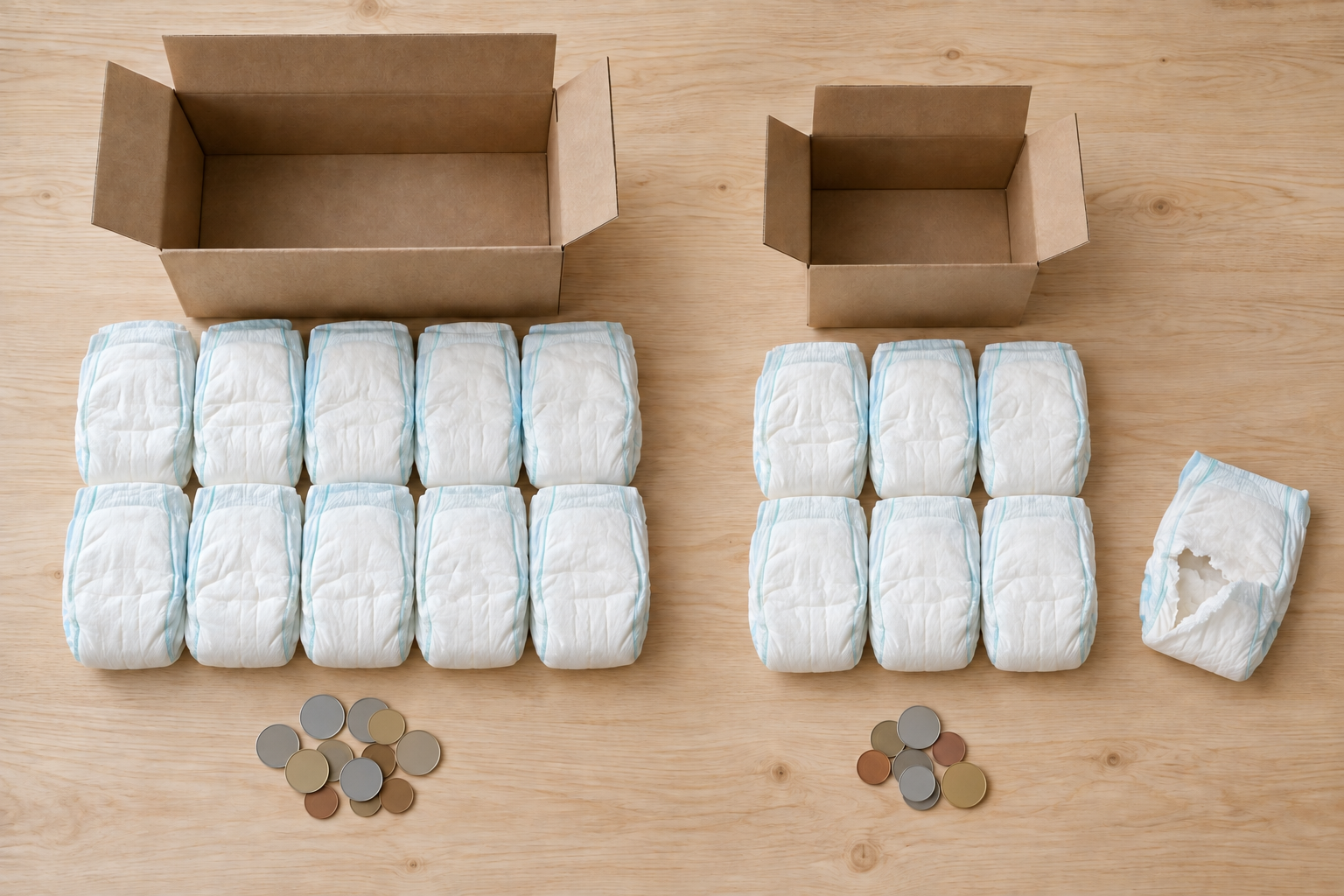
Pack price is the wrong comparison. Two packages can cost nearly the same while containing different quantities, and discounts can change the winner at checkout. Compare the amount you actually pay with the number of diapers you can actually use.
The calculation is simple: net checkout cost divided by usable diaper count equals cost per diaper. Use the price after an immediate coupon or discount. Include unavoidable delivery charges, and handle tax the same way each time so your comparisons stay consistent.
- Compare the same size. The count printed on a package is part of the price calculation. Do not compare two box prices without checking how many diapers each box contains in your child’s current size.
- Separate immediate savings from future rewards. An instant coupon reduces today’s cost. Points that may reduce a later purchase are not cash saved until you redeem them.
- Use the count you can realistically use. A deeply discounted case is expensive if the fit fails and most of it remains unopened or unusable.
- Save a benchmark. Keep the brand, product line, size, normal unit price, and sale unit price in a note on your phone. That gives you a reference when a promotion appears.
This calculation also corrects a common shopping trap: a larger box can have a lower unit price, but it does not always. A promotion on a smaller pack may beat it. Check the arithmetic instead of trusting words such as “value,” “jumbo,” or “bulk.”
Price is only the first filter. The diaper also has to fit your child and perform during the situation in which you plan to use it. If a cheaper option repeatedly leaks or cannot be used comfortably, its shelf price is not a meaningful saving. Your target is the least expensive diaper that works reliably, not the least expensive diaper in the store.
Lower the purchase price without chasing every promotion
Constant deal hunting can consume more attention than it deserves. A better system starts with a dependable default and a clear price benchmark. You can then recognize a genuine bargain quickly instead of reopening the entire decision at every purchase.
- Choose a default and a fallback. Your default is the lowest-cost option that consistently works. Your fallback is a widely available alternative for times when the default is out of stock or not discounted.
- Test lower-priced products in a small pack. Store brands and less expensive product lines are worth considering, but a case is a poor test size. Confirm fit and performance before making a bulk commitment.
- Check the final total, not the promotional headline. Apply any eligible retailer or manufacturer coupon, then recalculate the unit price. Read the offer terms before assuming coupons or discounts can be combined.
- Value loyalty points conservatively. Count points only if you already use that program and expect to redeem them for something you would otherwise buy. Do not count the same reward when it is earned and again when it is spent.
- Review subscriptions rather than forgetting them. A repeat-delivery discount helps only while the product, size, delivery interval, and final price still suit your household. Confirm that you can skip or cancel deliveries, and check the total before each shipment.
- Use price matching when a retailer actually offers it. Check the current policy and eligible competitors first. The lowest advertised price is irrelevant if the product size or package count does not match.
A promotion should change when you buy, not persuade you to buy the wrong product. If a familiar diaper reaches your recorded target price and the current size is still working well, an extra unopened package may be sensible. If you are already adjusting tabs to their limit, seeing gaps, or dealing with repeated fit problems, the discount is not a reason to build a stockpile.
You also do not need one product for every part of the day. If a lower-priced diaper works reliably when changes are easy and frequent, use it in that setting. Reserve a more absorbent or higher-priced option for the situations where it demonstrably solves a problem. Continue changing whenever your child needs it; reducing necessary changes is not a safe cost-cutting method.
Prevent fit changes and forgotten packs from erasing the savings

The most avoidable diaper expense is not always a high unit price. It is often a package that cannot be used. Babies change size, brands fit differently, caregivers may have different preferences, and childcare settings can have their own supply rules. Deal with those uncertainties before you buy in volume.
- Trial every unfamiliar combination. Treat a new brand, product line, or size as a new fit test, even if another product from the same company worked before.
- Open packages one at a time. Leave backup stock sealed until you need it. Keep receipts and read the retailer’s exchange or return policy before relying on it; diaper policies are not identical everywhere.
- Watch for a pattern, not a single messy change. Repeated leg gaps, tabs that strain, deep pressure marks, or recurring leaks are reasons to check placement, fit, and the manufacturer’s sizing directions before buying more.
- Confirm childcare requirements. Before stocking up, ask whether your childcare provider accepts the brand or type, how diapers must be packed and labelled, and whether they maintain a separate supply.
- Keep one visible inventory count. Diapers stored in several rooms, bags, or homes are easy to overlook. Count sealed packs as well as the open one before ordering.
- Create a reorder point from your own routine. Notice how quickly your household finishes a pack, then order with enough time for normal delivery. Your real usage is more useful than a generic estimate.
Gift planning can reduce waste too. If someone asks what your family needs, share the exact brand, product line, current size, and preferred retailer rather than saying only “diapers.” A receipt or retailer gift card preserves flexibility when fit changes. Avoid requesting a large supply in a future size unless you are comfortable storing it and checking the exchange rules yourself.
Emergency purchases deserve their own line in your plan. Keep a small reserve where you actually need it, such as the diaper bag or another caregiver’s home, and replace it when used. A known reserve prevents the rushed convenience-store purchase that happens when the main package runs out unexpectedly.
Decide whether cloth or a mixed routine fits your household
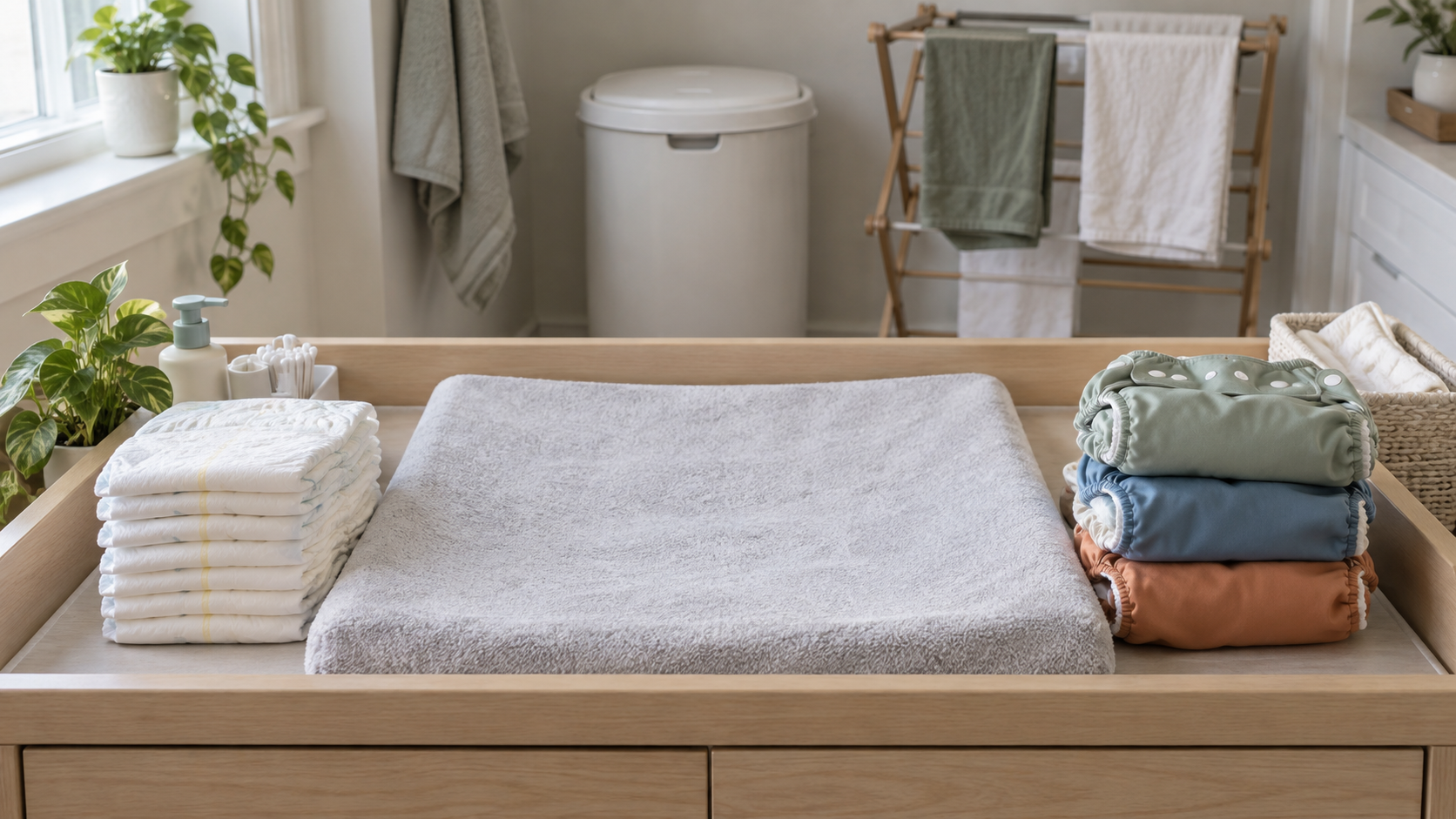
Reusable cloth diapers can reduce how many disposables you purchase, but they are not automatically the least expensive choice for every family. The answer depends on the products you buy, how you wash and dry them, whether you pay for laundry or a diaper service, and how often you still use disposables.
Before buying a full cloth supply, write down every cost the routine would introduce:
- Diapers, covers, inserts, liners, fasteners, wet bags, and storage;
- Detergent plus washing and drying costs;
- Paid laundry, building laundry, or diaper-service charges;
- Replacement items and any fit changes;
- Disposable diapers still needed for travel, childcare, overnight use, or caregiver preference;
- The storage, washing, drying, and preparation the routine requires from your household.
Then make the smallest reversible trial that answers your practical questions. Check whether the fit works, whether your laundry setup can handle the routine, whether other caregivers will use it, and whether your childcare provider accepts it. Follow the product’s fit, washing, and care instructions rather than improvising a cleaning method.
A mixed routine is a legitimate budget choice. Cloth at home and disposables for childcare or outings may be more sustainable for your schedule than trying to switch completely. The useful comparison is your household’s total cost and workload, not whether the routine qualifies as all-cloth or all-disposable.
Key takeaways for your next diaper order
- Divide the final checkout cost by the diaper count and compare products in the same size.
- Use the least expensive option that fits comfortably and works reliably in the intended setting.
- Test an unfamiliar brand, line, or size in a small pack before buying a case.
- Count loyalty rewards as savings only when they are redeemed, not merely when they are advertised.
- Stock up only when the fit is stable, the unit price beats your benchmark, and unopened extras can realistically be used.
- Never delay a needed diaper change to reduce consumption; lower the purchase price and prevent waste instead.
At your next purchase, record the final price, diaper count, size, and whether the product worked. That single note turns the following purchase into a quick decision. Once you have a reliable default, set your target price and reorder point, then let the system do the saving instead of starting from scratch in every diaper aisle.
References




