
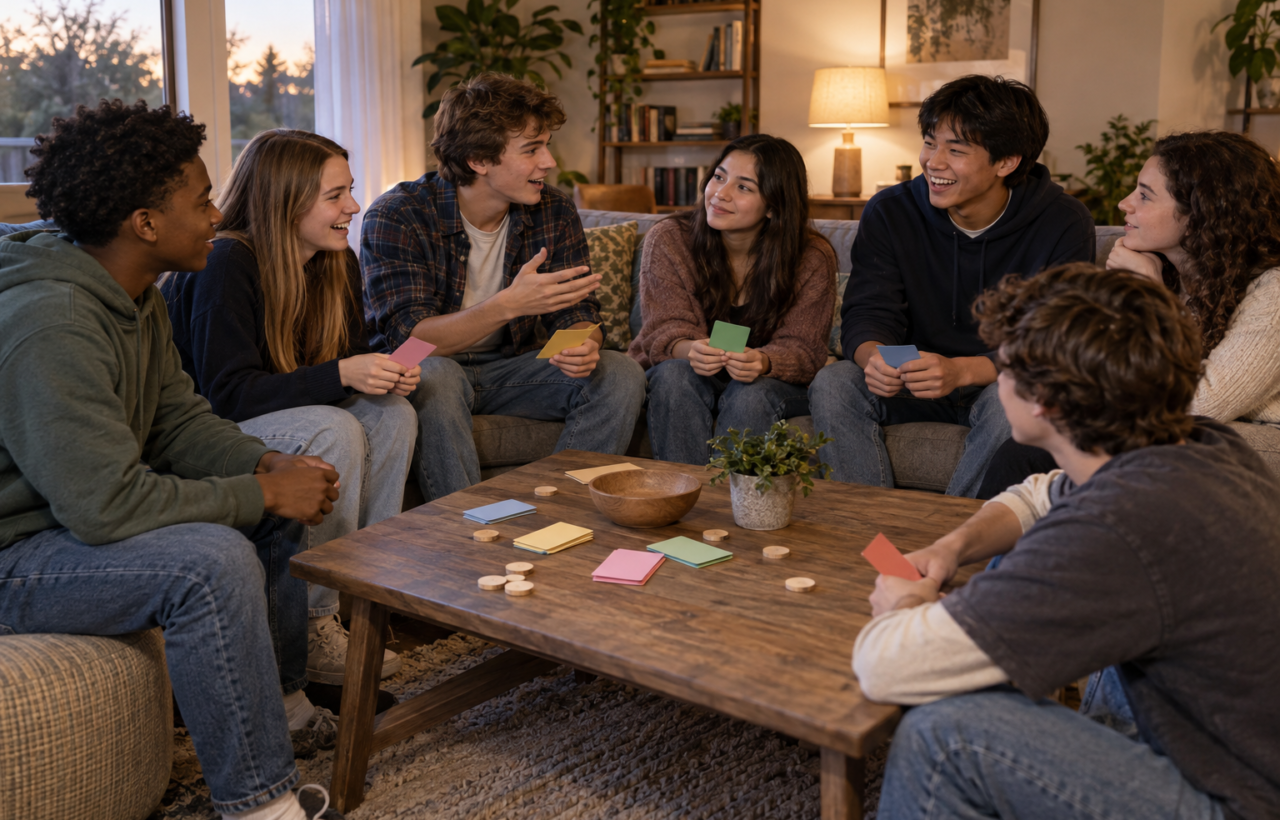
Your teen has agreed to have friends over, but that does not mean everyone will arrive ready to talk. A room can split into quiet clusters while each guest waits for someone else to make the first move.
The best teen party games solve that awkward opening without making anyone perform, confess, flirt, or become the joke. Give your teen a short menu, let them reject anything that feels childish, and keep the games optional. Your job is to prepare the conditions; the teenagers should still feel that the party belongs to them.
Pick a game for the room you actually have
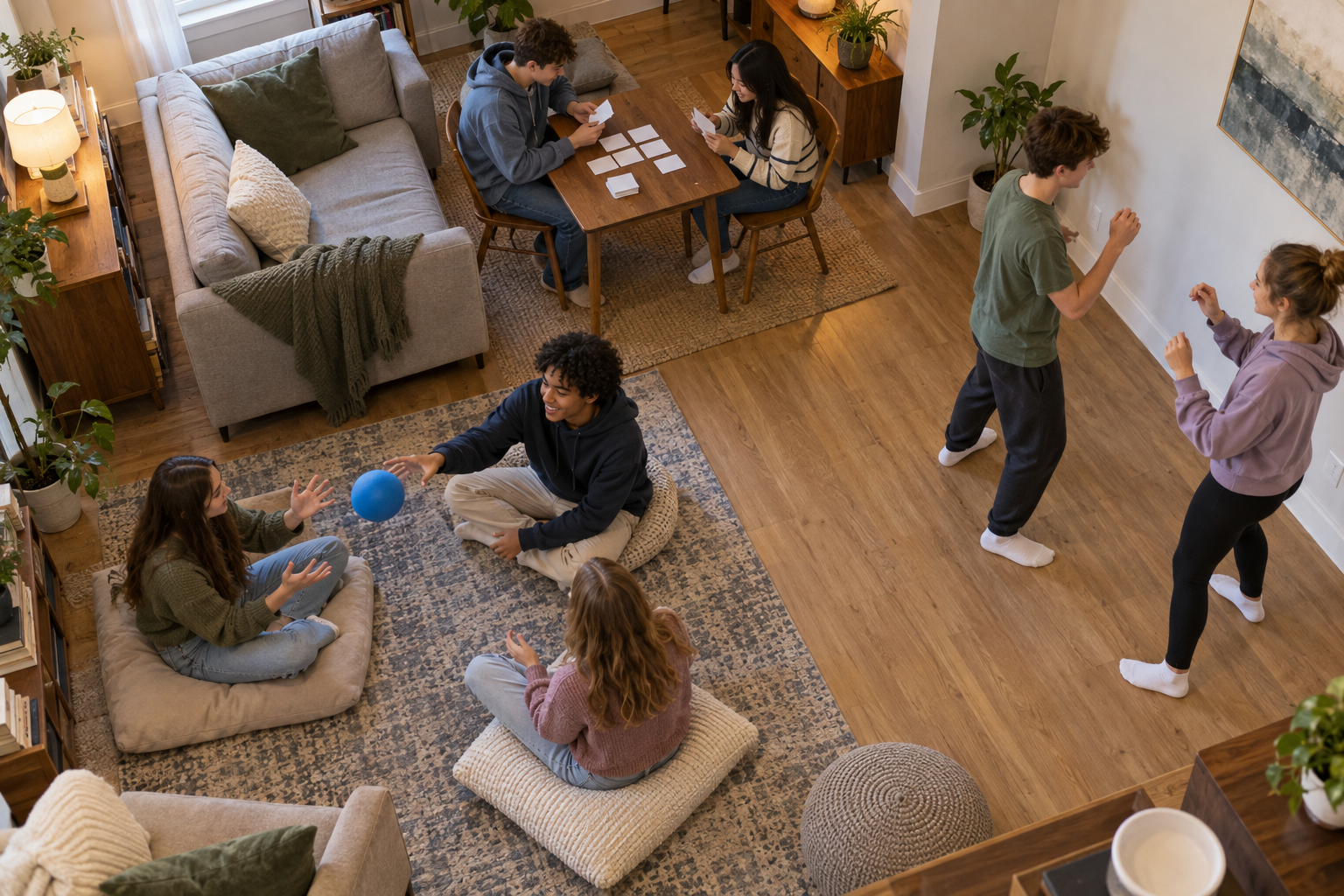
Do not choose by asking which game sounds funniest on paper. Choose by noticing what the group needs. A low-pressure prompt works when guests are still arriving. A movement game works better after everyone has settled in. Personal questions should wait until you know the group genuinely enjoys them, if you use them at all.
| What you notice | Start with | Avoid at first |
|---|---|---|
| Guests are quiet or do not all know one another | Would You Rather or Medusa | Confessions, dares, singing alone, or physical contact |
| The group already knows one another and likes playful attention | Honey, Make Me Smile or Sleeping Beauty | Prompts about dating, bodies, secrets, or family problems |
| Everyone is restless and there is safe open space | Sardines, Yard Twister, or Knees and Elbows | Running near stairs, breakable objects, or crowded furniture |
| The group prefers teams to individual attention | Singing Bingo or a scavenger hunt | Long elimination games that leave people watching |
Watch for the difference between reluctance and a firm no. Reluctance can disappear once two willing guests begin. A firm no should be accepted immediately. If several people opt out, change the game instead of trying to sell it harder.
Teen party games you can explain in a few sentences
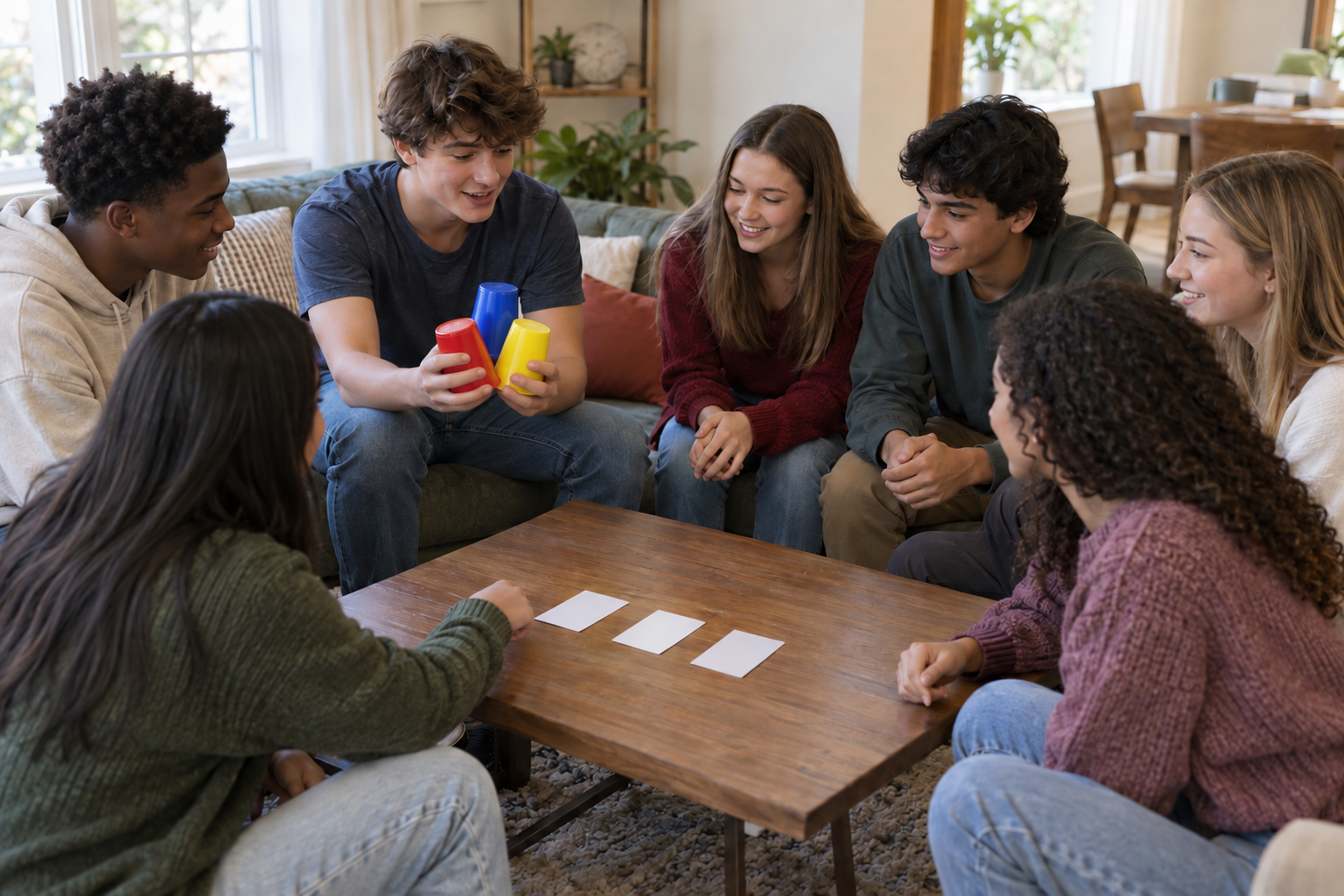
These simple game formats need little equipment and can be adapted to the group’s comfort level. Explain only the rule needed to begin, run a practice round if necessary, and let the teenagers take over as soon as they understand it.
For a group that needs an easy opening
- Would You Rather. Read a choice and let guests vote by raising a hand, pointing, or moving to a side of the room. Start with absurd questions, such as choosing between one horse-sized duck and a hundred duck-sized horses. Nobody has to explain a vote. If conversation begins naturally, let it replace the formal game.
- Medusa. Everyone forms a circle and looks down. On the cue, everyone looks at another player. When two players make eye contact, they react dramatically and step out for the rest of that round. It creates a shared joke without asking anyone to reveal something personal.
- Honey, Make Me Smile. One player tries to make another laugh by delivering an exaggerated request for a smile. The essential boundary is no touching. When someone laughs, they take the next turn. Use this only when the group is comfortable with direct attention.
For friends who are comfortable being silly together
- Sleeping Beauty. A volunteer lies on a rug or other clean, safe surface and pretends to sleep. The other guests try to make the sleeper smile or laugh without touching them. Let the volunteer end the round whenever they want.
- Never Have I Ever: light edition. Use prepared prompts about harmless experiences rather than asking teenagers to expose secrets. Missing a bus, forgetting a lyric, or wearing mismatched socks keeps the game playful. Give every player permission to skip a prompt without explaining why, and use counters instead of making food part of the rules.
- Spin and Dare. A bottle can select the player, but it should not determine physical contact or romantic pairings. The selected player draws a pre-approved dare from a bowl and may exchange it or pass. Good dares invite a funny voice, an imaginary commercial, or a harmless impression; they do not involve humiliation, pain, clothing, private messages, food challenges, or leaving the party area.
For movement and a change of scene
- Sardines. One person hides inside an agreed area. Each guest searches independently; anyone who finds the hider quietly joins the hiding place. The round ends when the remaining searcher finds the group. Declare off-limits rooms and unsafe hiding places before anyone moves.
- Yard Twister. Create the familiar coloured-circle layout on grass with a removable, lawn-safe marking product approved by the property owner. Check the ground for holes, stones, mud, and anything else that could make balancing unsafe. Skip the game if the surface is wet or unsuitable.
- Knees and Elbows. Players move a soft ball or air-filled balloon along a line without gripping it in their hands. Split a large group into teams if they want a race, but keep enough space between players to prevent collisions. Stop if the game becomes rough.
For teams, music, and creative problem-solving
- Singing Bingo. Make cards from common words that appear in songs, then play a suitable playlist and let guests mark words as they hear them. Another version has teams draw a word and name or sing part of a song containing it. Team play prevents one reluctant singer from being put on the spot.
- Photo scavenger hunt. Give teams a list of objects, colours, poses, or locations within a clearly defined area. They photograph each find rather than collecting or buying it. Keep strangers and store employees out of the challenge, and do not require anyone to appear in a photo.
- Selfie scavenger hunt. Use the same structure, but make each image a staged team scene. Every person chooses whether to be photographed. Keep the images in a private shared album if the group and their families agree; public posting should never be part of winning.
Build a party flow instead of scheduling every minute
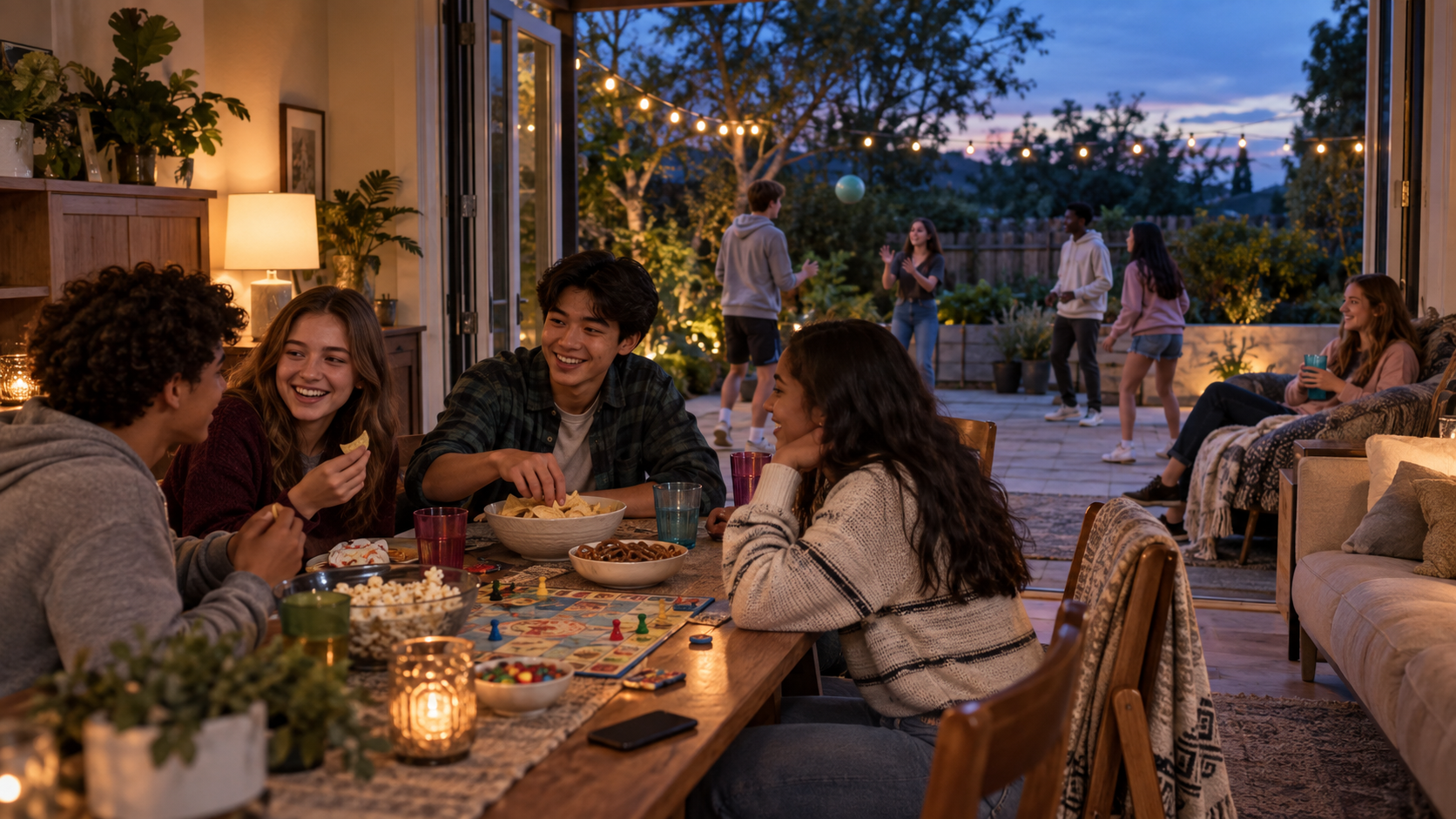
A party does not need continuous organized entertainment. Games work best as bridges: one helps guests begin talking, another redirects restless energy, and a backup rescues a lull. If guests are happily talking, eating, or listening to music, there is no problem to solve.
- Before guests arrive, ask your teen to approve the shortlist. Let them remove any game that would feel embarrassing with this particular group. That veto is useful information, not resistance to the party.
- Set out an optional arrival activity. Put Would You Rather cards on a table or display a few choices where guests can notice them without being summoned into a circle.
- Introduce a whole-group game once most guests are settled. Medusa works well here because the rule is visible, the round starts quickly, and personal disclosure is unnecessary.
- Offer an active or team game when the room needs a reset. Move outdoors for Yard Twister or a scavenger hunt if the space and weather permit. Indoors, Singing Bingo gives the group a shared task without demanding much movement.
- Keep one flexible backup. A new set of Would You Rather questions can fill a brief pause, while Sardines can absorb a group that actively wants another full game.
- Stop while the game is still welcome. When side conversations become more interesting than the next round, let the organized activity end. The game has already done its job.
Prepare the materials before the doorbell starts: prompt cards, a dare bowl, music, soft props, hunt sheets, and any boundaries the group needs to know. Searching for supplies in the middle of the party turns a quick transition into dead time.
Set boundaries that protect fun without taking over
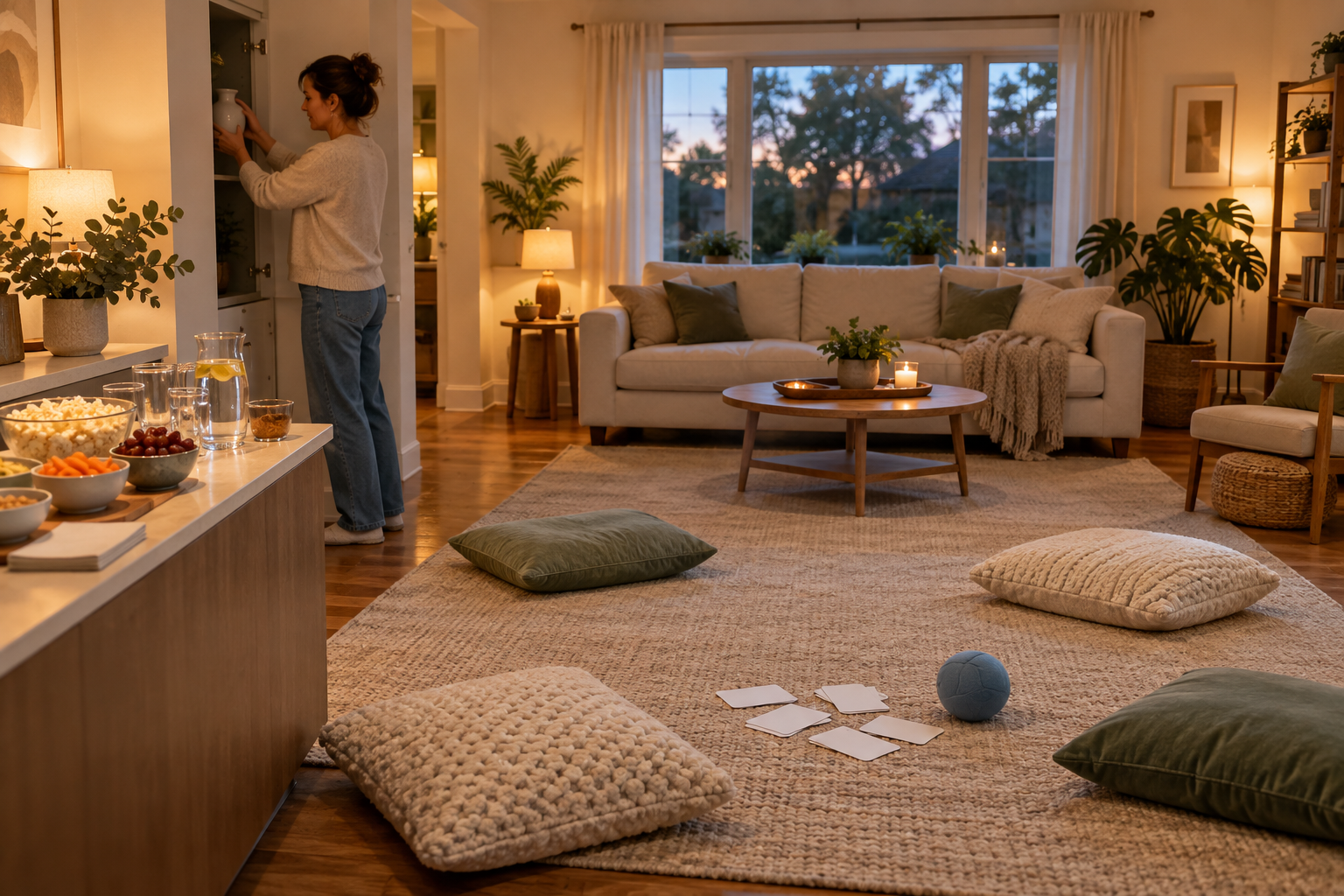
Teenagers can run the game while you control the environment. Agree with your teen on the usable rooms, outdoor boundary, photo rules, and how they will get your help. Explain the non-negotiable safety rules once, then stay available without becoming the host on centre stage.
- Make passing ordinary. Anyone may decline a prompt, dare, pose, photo, or physical activity without giving a reason. Do not award or remove points based on that decision.
- Remove forced intimacy. Games should not require kissing, suggestive contact, dating disclosures, sexual questions, or comments about bodies. A game being traditional does not make those demands necessary.
- Pre-screen prompts and dares. Remove anything involving pain, dangerous eating, undressing, property damage, account access, posting online, contacting an unsuspecting person, or leaving the agreed area.
- Keep food out of physical challenges. Passing peanuts, sweets, or spoons with the mouth creates avoidable allergy, hygiene, and choking concerns. Substitute a soft ball, balloon, paper card moved by hand, or another non-food prop.
- Protect people who are not playing. A scavenger hunt should not require interactions with strangers, photographing employees, entering businesses, making purchases, or blocking public spaces.
- Treat photos as private by default. Ask before taking or sharing an image. Do not create a public hashtag for the event unless every person pictured and the relevant families have knowingly agreed.
- Check the physical space. Move breakables, keep running away from stairs, light any search area properly, and identify rooms and hiding places that are off limits.
If a player is being singled out, looks trapped, or repeatedly says no, pause the round. Change the prompt, change the game, or end it. Protecting a guest from embarrassment matters more than preserving the rules.
Key takeaways for the parent hosting
- Match the first game to the group’s comfort level, not to the game that sounds most entertaining to adults.
- Begin with neutral choices or a visual reaction game; save personal prompts for a close group that actively wants them.
- Let your teen approve the shortlist and take over once the rules are clear.
- Make every activity optional and allow a pass without questions, penalties, or teasing.
- Pre-screen dares, define physical boundaries, and keep photos private unless everyone involved agrees otherwise.
- When guests begin making their own fun, stop organizing. Successful party games create connection and then get out of the way.
Choose an easy opener, an active option, and a backup that fits your space. Put the materials where your teen can reach them, agree on the boundaries, and then give the group room to make the night their own.
References




