
You felt a flutter and wondered whether it was the baby. Then you caught yourself lying on your stomach, remembered an upcoming trip, or noticed new lines on your skin. These questions can arrive together even though they do not all carry the same meaning.
The useful approach is to separate ordinary changes from clinical information. Comfort can guide some decisions. Changes in an established pattern deserve more attention. Prenatal measurements belong in the context of your whole pregnancy, not in a pass-or-fail interpretation of one moment.
Key takeaways
- You may recognize fetal movement sooner in a second pregnancy, but later recognition does not automatically mean anything is wrong.
- A fetal heartbeat can help your clinician assess gestational age and well-being, but one reading is not a complete assessment of development.
- Lying on your stomach is generally acceptable early in pregnancy if it remains comfortable and your clinician has not given you a restriction.
- Stretch marks are a skin response, not a measure of how well you cared for your body or how well the pregnancy is progressing.
- Travel decisions should account for your individual pregnancy, access to care, transportation safety, and what you would do if symptoms developed away from home.
What movement and heartbeat can tell you
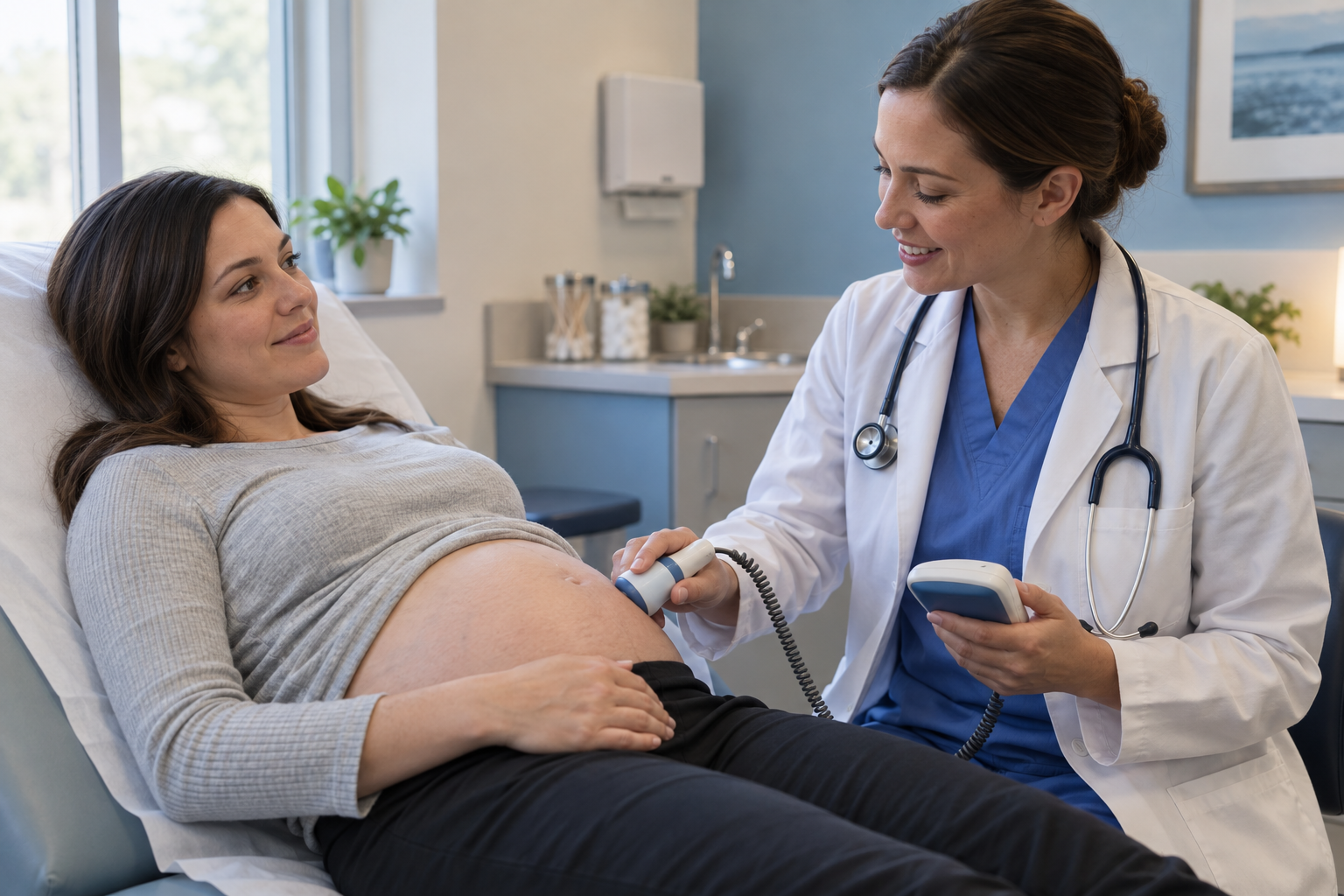
The first fetal movements are often subtle enough to be mistaken for digestion, a muscle twitch, or a small internal flicker. If you have been pregnant before, the sensation may be easier to identify because it is familiar. That is why movement can be noticed differently in a second pregnancy. It does not mean the baby is developing faster, and a friend’s timeline is not a useful test for your pregnancy.
Early sensations may be occasional and difficult to label. Later, movement usually becomes more recognizable as a personal pattern. Instead of trying to prove that every flutter was the baby, record the date and what you noticed. Mention it at your next appointment. Your clinician can explain what is expected for your stage of pregnancy and when they want you to begin paying closer attention to a pattern.
Once movement is established, a clear reduction or absence matters more than whether you first noticed it earlier or later than somebody else. Follow the monitoring instructions given by your maternity team. If your baby’s usual movement becomes markedly less or stops, contact that team promptly rather than spending hours trying internet tricks or waiting for the next scheduled visit.
A heartbeat check answers a different question. Fetal heart rate can help with assessing gestational age and well-being, but the number must be interpreted in context. Pregnancy stage, the way the measurement was taken, and the rest of the clinical assessment all matter. A reassuring reading is useful information, not a complete report on fetal development. An unexpected reading may need to be repeated or followed by another assessment.
If you are worried because you have not felt movement, cannot find a heartbeat with a consumer device, or received a result you do not understand, call your prenatal clinician. Do not use a home check to rule out a problem or to replace scheduled prenatal care.
Let comfort guide stomach lying, but treat skin changes separately

Lying on your stomach can still feel comfortable early in pregnancy. As your abdomen grows, the position usually becomes awkward or uncomfortable on its own. You do not need to force a change before your body asks for one, unless your clinician has recommended a restriction for your circumstances.
Use a simple comfort rule: change position if you feel pain, pressure, dizziness, shortness of breath, or anything that makes you uneasy. A pillow can support a partly side-lying position if you miss sleeping on your stomach. If discomfort continues after you move, or the pain is strong or worsening, contact your clinician rather than assuming it is only a sleep-position problem.
Stretch marks require a different mindset. They develop in the skin as the body changes, and some people are more likely to develop them than others. Family tendency and the way your skin responded to previous growth or pregnancy can offer clues, but they cannot provide certainty.
Moisturizer may make tight or dry skin feel more comfortable, but no skin-care routine can promise that marks will not appear. Treat claims of guaranteed prevention cautiously. Before using a product with an active ingredient during pregnancy, check it with a pharmacist or prenatal clinician.
Typical stretch marks do not tell you whether fetal growth is healthy, and their presence is not evidence that you gained weight incorrectly. Bring up a skin change promptly if it looks like a rash, blisters, becomes intensely itchy, is painful, or is accompanied by other symptoms. Those features may need evaluation rather than another layer of moisturizer.
Make travel safer by planning access to care

Early-pregnancy travel can often be planned safely, but the trimester alone does not settle the decision. Your symptoms, medical history, pregnancy complications, destination, mode of transportation, and access to care all affect whether a particular trip makes sense.
Before paying for a trip that is difficult to change, ask your prenatal clinician whether anything specific to your pregnancy should alter the plan. If you are already having bleeding, significant pain, severe vomiting, fainting, or another concerning symptom, seek medical advice before leaving rather than hoping it improves in transit.
- Map care before departure. Identify where you would go for urgent pregnancy care at the destination and along a long route. Confirm what your health or travel insurance covers.
- Save the right contacts. Put your prenatal clinic’s daytime and after-hours numbers in your phone. Carry a concise list of medications, allergies, relevant conditions, and pregnancy information.
- Pack for continuity. Bring enough prescribed medication and prenatal supplies for delays, keeping medicines in their labelled packaging. Do not start a travel remedy without checking that it is appropriate during pregnancy.
- Use the seat belt correctly. Keep the lap belt low across the hips and below the abdomen, with the shoulder belt across the chest. Do not place the shoulder belt behind your back or under your arm.
- Build in movement and hydration. Long travel can mean prolonged sitting and disrupted routines. Plan regular opportunities to change position, use the washroom, eat, and drink.
- Keep the itinerary flexible. Choose transport and bookings that let you pause, return, or obtain care if symptoms change.
The practical question is not only whether travel is allowed. Ask whether you could respond safely if your condition changed several hours from home. If that answer is unclear, adjust the route, destination, timing, or cancellation terms before you commit.
Know which changes can wait and which cannot
Not every unfamiliar sensation is an emergency, but pregnancy is not the time to diagnose a potentially serious change from a general checklist. Your own maternity team should give you instructions based on your stage of pregnancy and medical history.
Seek emergency assessment for heavy vaginal bleeding, severe or worsening abdominal pain, fainting, chest pain, severe difficulty breathing, or a seizure. Call emergency services if you may be in immediate danger or cannot travel safely. If you are unsure whether bleeding or pain is severe enough, call for clinical guidance instead of waiting for it to cross an imagined threshold.
Contact your prenatal team promptly about leaking fluid, fever, a severe headache, vision changes, persistent vomiting that prevents you from keeping fluids down, or a marked reduction in an established movement pattern. Also follow any additional warning signs your clinician has given you. This list is not exhaustive; a new, persistent, or rapidly worsening symptom deserves professional advice.
At your next prenatal visit, get three answers in plain language: when your clinician wants you to call about movement, which number to use after hours, and whether your sleep or travel plans need to change for this pregnancy. Save the answers in your phone. Then you can let ordinary comfort changes stay ordinary while acting quickly when a clinically important pattern changes.
References
- Parents – How Early Can You Feel Your Baby Move in a Second Pregnancy?
- Parents – How to Travel Safely During Early Pregnancy
- Parents – 4 Signs You’re More Likely To Get Pregnancy Stretch Marks
- Parents – Discover If It’s Safe to Lie on Your Stomach While Pregnant
- Parents – Tracking Your Baby’s Heartbeat: What It Means for Pregnancy