
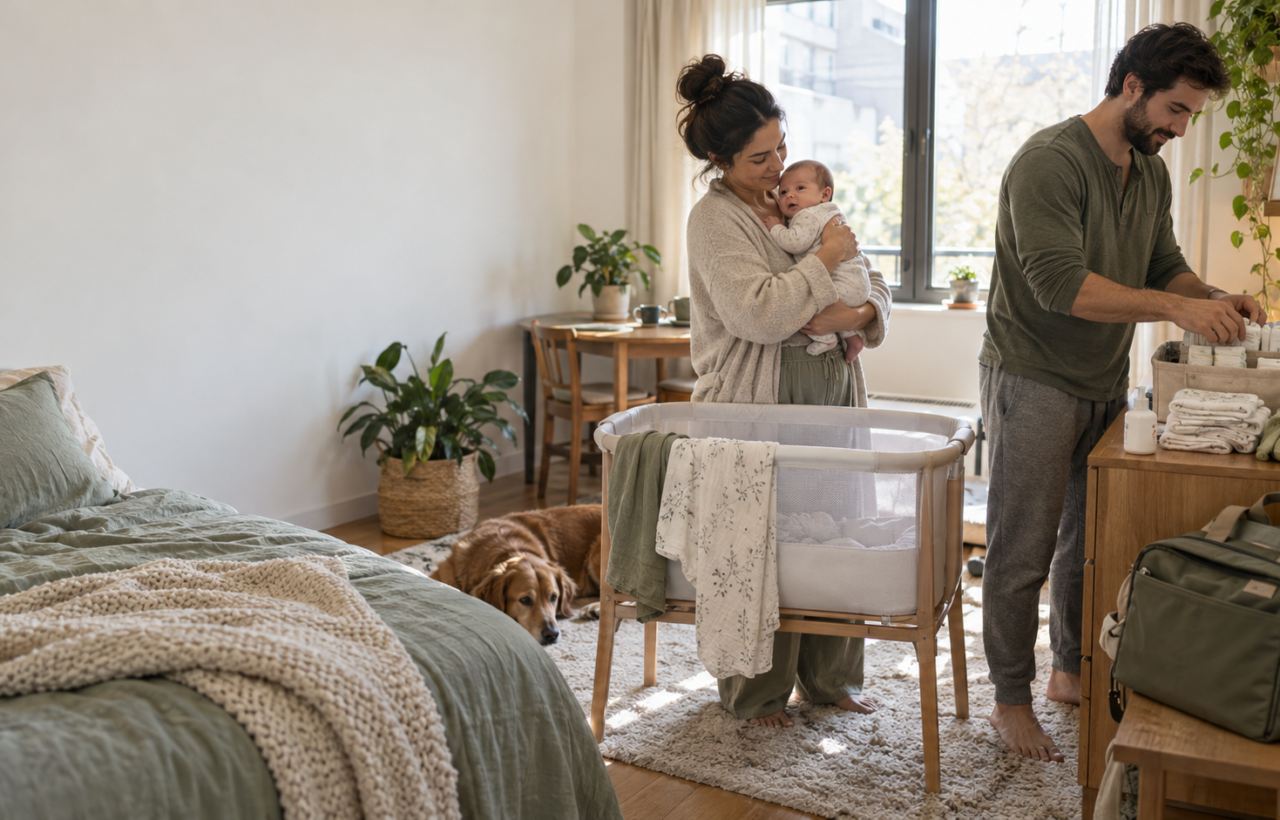
You have a registry full of possibilities, limited space, and no reliable way to know which products will matter once your baby is home. The useful question is not, “What does every baby need eventually?” It is, “What will help us complete the next care task safely, with the fewest unnecessary steps?”
The best starter setup is usually smaller than the internet makes it look. What reduces the strain of early parenthood is often having an ordinary item within reach at the moment you need it. Buy the core gear, arrange it around your real routines, and let experience decide what comes next.
Buy for the first care cycles, not the whole first year
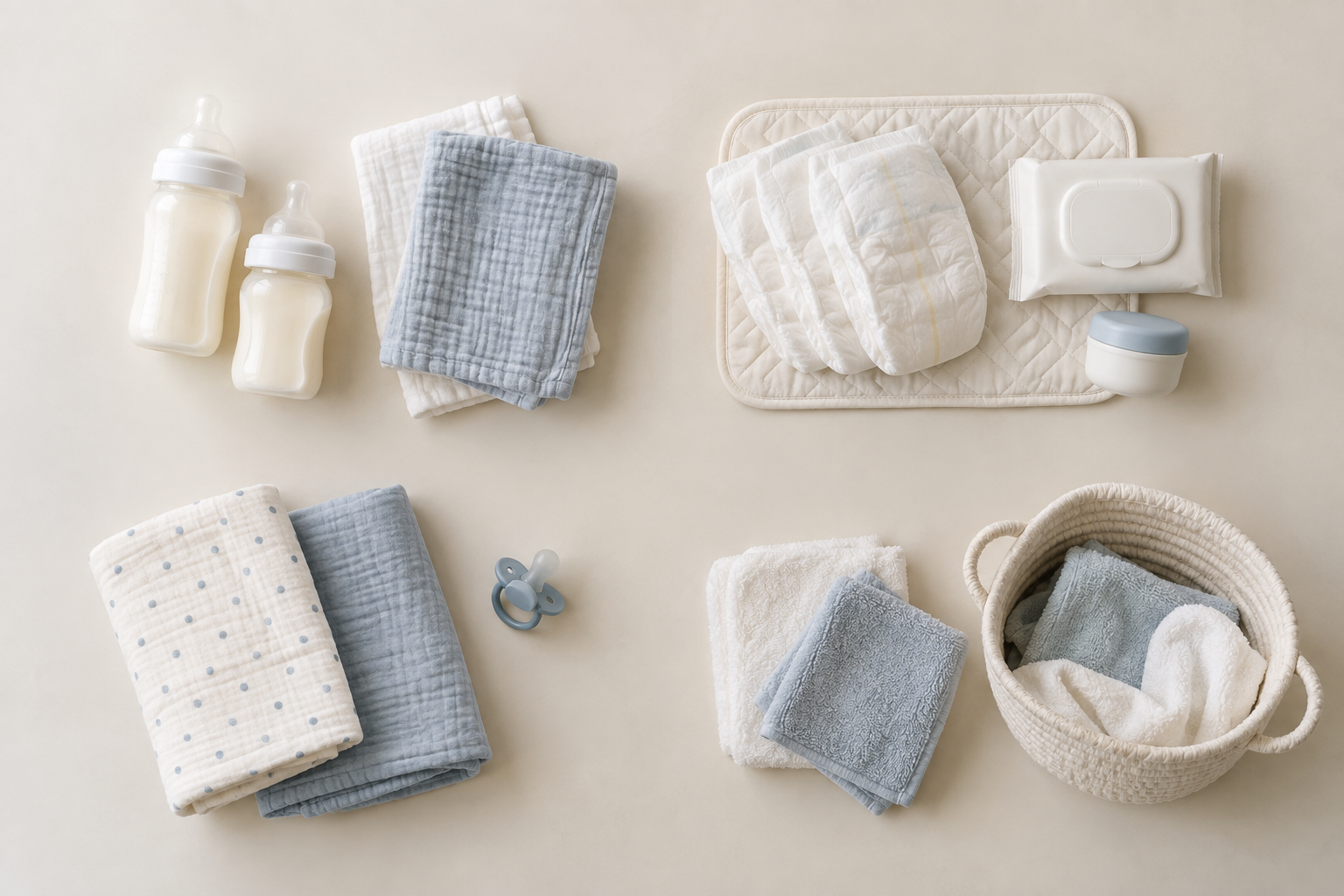
Walk through what you will actually do after bringing your baby home: feed, clean up, change, dress, settle, sleep, and occasionally leave the house. Your first purchases should let you complete those cycles. Products for hypothetical problems can wait until the problem exists.
- Prepare one complete diaper change. Start with a modest supply of diapers, wipes, diaper cream, a washable changing surface, a few burp cloths, and a spare outfit. Do not open every diaper package before confirming the fit. Babies move through sizes on their own schedules, and unopened packages are easier to exchange.
- Build around your feeding plan. Gather the supplies needed for breastfeeding, bottle-feeding, or combination feeding, plus cloths for spills and a simple way to clean the items you use. Keep water and food for the feeding parent nearby. Cheese, fruit, sandwiches, yogurt, nuts, and protein bars are useful when a meal has to be opened and eaten with one hand.
- Set up the sleep space before you need it. Assemble a sleep space that meets current safety guidance where you live, and follow the product instructions. Avoid adding accessories merely because they were marketed beside the sleep product. If an item is not permitted by the instructions or current safe-sleep guidance, leave it out.
- Choose a small working wardrobe. Prioritize clothes that are easy to open for changes and simple to wash. A usable rotation matters more than a complete collection in every size. Keep one clean outfit with the changing supplies and another in the diaper bag.
- Make the first car ride possible. If your baby will travel by car, choose a car seat approved for use where you live, suitable for your baby’s current stage and size, and compatible with your vehicle. Read both the seat manual and the relevant part of the vehicle manual before the first trip.
You will handle thousands of diaper changes during your baby’s first few years, so fit and availability matter more than novelty. Features such as a wetness indicator or added leak barriers can be convenient, but they are only useful when the diaper fits your baby and works reliably in your routine.
Delay bulk quantities of one diaper size, multiple carriers, elaborate feeding gadgets, large sets of special-purpose clothing, and duplicates that do not solve a known problem. A smaller initial order preserves your ability to change direction when your baby’s fit, preferences, and feeding routine become clearer.
Put each essential at its point of use

A beautiful nursery does not help much when the baby needs changing in the room where you spend most of the day. Set up supplies according to where care happens, not where a product category is traditionally stored.
Create a portable changing caddy
Stock a small basket or caddy with diapers, wipes, cream, a cloth, a washable changing pad, and a spare outfit. Move it to the room you are using. Keep a separate packet of wipes and a few diapers in the diaper bag so leaving home does not empty the household station.
Place everything within the caregiver’s reach before beginning a change. Never leave a baby unattended on a raised surface to retrieve a missing item. Reconsider storage as your baby becomes mobile; a caddy that is unreachable to a newborn may be easy for an older baby or toddler to open.
Give the caregiver a supply basket too
Near the chair or area where feeding usually happens, keep water, shelf-stable snacks, cloths, feeding supplies, and a charging cable. This is not indulgent extra gear. It prevents the caregiver from having to interrupt a feed or move a sleeping baby for an ordinary item.
Use a visible restock trigger
Do not rely on a sleep-deprived memory to track supplies. When you open the final unopened package kept at a station, add the item to a shared shopping list. During the last household reset of the day, replenish the portable caddy from the main supply. The goal is to discover a shortage while standing beside the cupboard, not during a diaper change.
You can apply the same low-friction approach to memories. A shared note or dedicated photo folder is enough: record the date and one sentence when something feels worth keeping. Do not let an elaborate journal turn noticing a moment into another unfinished task.
Choose car seats and carriers by fit, not feature count

Transport gear carries more consequence than most nursery purchases. A long feature list does not compensate for poor compatibility, confusing adjustments, or a product that is wrong for your baby’s present stage.
For a car seat, test the real installation
A convertible car seat can grow with a child and may reduce later seat purchases. That potential longevity is useful, but it should not overrule the immediate questions: Is the seat appropriate for your newborn’s stage and size? Does it install correctly in your vehicle? Can each caregiver repeat the installation and harness adjustment as directed?
- Confirm that the exact model is approved where you live and is permitted for your baby’s current stage and size.
- Check the chosen seating position against both the car-seat manual and the vehicle manual.
- Practice tightening and releasing the harness before the first trip.
- Make sure the routine is manageable for every caregiver who will use the seat.
- If considering a used seat, verify its full history, labels, instructions, and condition. If its history is unknown or you cannot confirm it remains safe to use, choose another seat or seek qualified local car-seat help.
Keep the receipt and packaging until you have completed a permitted trial installation. If the installation is uncertain, do not improvise or rely on a generic video for a different model. Use the manuals and qualified local assistance before travelling with the baby.
For a carrier, fit two bodies
Baby carriers are designed across newborn, infant, and toddler stages, so check the exact model’s limits and required newborn configuration. The carrier must also fit the adult who will wear it. A model that feels comfortable on one caregiver may be awkward or difficult to adjust on another.
- Read the age, size, and configuration requirements before putting the baby in the carrier.
- Check whether a separate newborn component is required and whether it is included.
- Practice adjustments without the baby first, then follow the manual for positioning.
- Make sure the baby’s face remains visible and breathing is unobstructed. Stop and reposition the baby if you cannot maintain a safe position.
- If caregivers have very different builds, confirm that adjustments are quick enough to make correctly every time.
If possible, try a carrier with the intended caregiver and baby or buy from a retailer with a workable return policy. You do not need several carriers before you know whether babywearing suits your household.
Make leaving home a routine you can reset
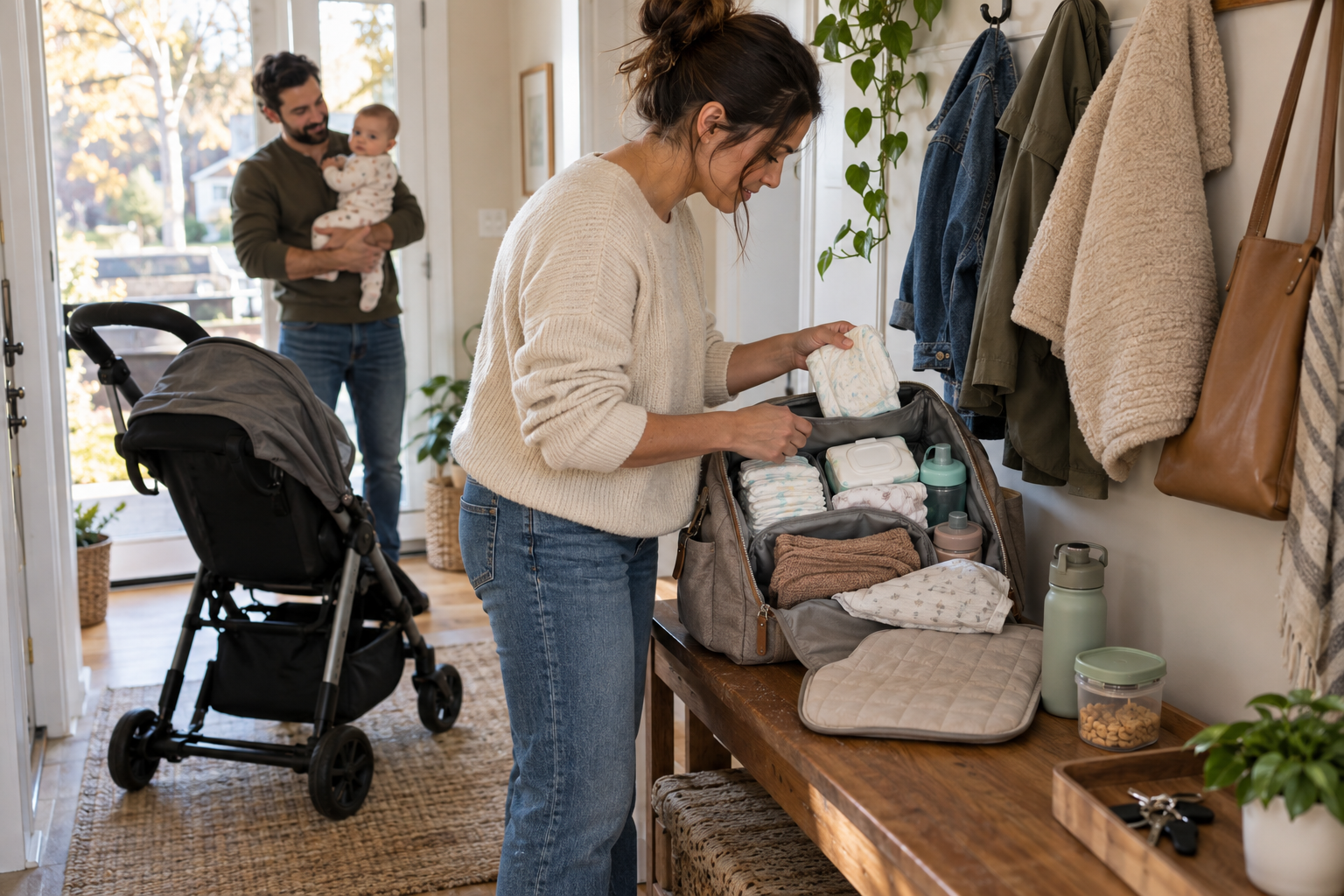
Choose one drop zone near the door for the things that leave with you: diaper bag, keys, baby carrier, weather layer, and any item that must go into the car. This is less about tidy storage than eliminating a search when the baby is already dressed and waiting.
Keep a baseline diaper bag packed with diapers, wipes, a portable changing surface, a change of clothes, cloths, a bag for wet or dirty items, and the feeding supplies appropriate to the outing. Add anything time-sensitive immediately before leaving. Longer trips and changing weather will require additions; the baseline bag simply gives every departure a reliable starting point.
Reset the bag when you return, while you still know what was used. Remove dirty clothing, replace consumed supplies, and return the keys and carrier to the drop zone. Packing only before an outing concentrates every decision at the moment you have the least spare attention.
Before buying a duplicate for the diaper bag, ask whether it will stay packed and prevent a recurring omission. A dedicated packet of wipes probably will. A specialized gadget used only occasionally probably will not. Let repetition earn the duplicate.
Key takeaways
- Buy enough gear to complete the first care cycles safely; let real needs shape later purchases.
- Keep initial quantities modest until diaper fit, feeding routines, clothing sizes, and product preferences become clear.
- Use a primary supply area plus a portable changing caddy instead of making every change happen in the nursery.
- Choose car seats and carriers for present fit, correct use, and caregiver compatibility before considering longevity or extra features.
- Give leaving home a permanent drop zone, a baseline bag, and a reset routine.
Before your next shopping session, trace one ordinary sequence through your home: feed, change, settle, leave, and return. Put the supplies for each task where your hands will need them. If a product does not meet a safety requirement, remove a repeated step, or solve a problem you already understand, leave it unpurchased for now.
References
- Scary Mom – The Little Things That Make New Parenthood Feel Less Overwhelming
- Parents – The 13 Best Convertible Car Seats We Tested and Trusted With Our Own Kids’ Safety
- Parents – The 10 Best Baby Carriers for Safe and Comfortable Babywearing




