
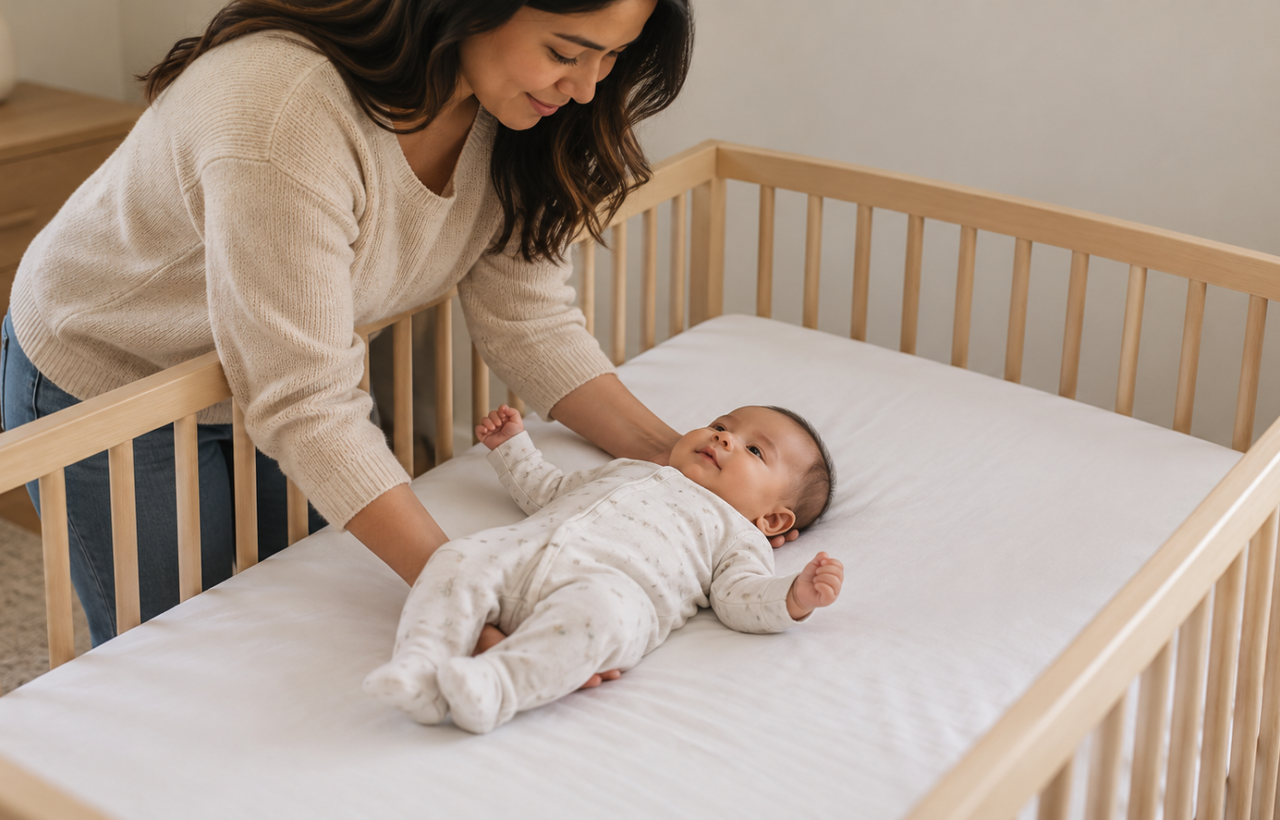
You put your baby down on their back. Later, the monitor shows them tipped onto one side. The important question is not whether that position looks comfortable. It is whether your baby moved there independently and can control the movement.
The safe starting position is straightforward: place your baby on their back for every nap and bedtime. If an older baby can deliberately roll in both directions and moves onto their side in a safe crib, you can generally leave them there. A newborn who curls sideways, or a baby who cannot yet roll both ways, needs a different response.
Key takeaways
- Place your baby on their back for every sleep from birth through 12 months, even after they learn to roll.
- Do not deliberately place a baby on their side. Do not use a wedge, pillow, rolled blanket, bumper or positioner to hold them there.
- If your baby gets onto their side without help and can roll from back to belly and belly to back, you can generally leave them in the position they chose, provided the sleep surface is firm, flat, level and clear.
- If your baby cannot roll both ways, gently return them to their back when you notice that they have shifted onto their side.
- Use side-sleeping only when your baby’s health care provider has evaluated your baby and given individualized instructions.
Why the side is not a safe starting position
Side-sleeping is not a safer halfway point between the back and stomach. It is less stable than back-sleeping, so a baby placed on their side can move more easily onto their stomach. Stomach-sleeping is associated with a higher risk of sudden infant death syndrome (SIDS).
That is why the American Academy of Pediatrics recommends the back for every sleep during the first year. The recommendation applies to short naps as well as overnight sleep. It still applies if your baby appears to settle faster on their side, has started rolling or slept on their side without an obvious problem before.
Your baby’s starting position and the position a capable roller chooses are two different decisions. You control the first one, so always start on the back. Once your baby has enough mobility to roll both ways, you do not need to force them to remain motionless throughout the night.
What to do when your baby rolls onto their side

Use observable rolling ability, not age or sleep preference, to decide what to do. The ability to roll in both directions often develops between 4 and 6 months, but that range is not automatic clearance for side-sleeping. Your baby needs to demonstrate the movement themselves.
- Put your baby down on their back at the beginning of every nap and bedtime.
- Ask whether you have seen deliberate back-to-belly and belly-to-back rolling. A single accidental tip onto the side is not the same as controlled rolling in both directions.
- If your baby can roll both ways and moves onto their side without help, leave them in the position they chose. Do not add anything to the crib to keep them on their side or back.
- If your baby has not learned both directions, gently return them to their back when you notice the side position. If the movement keeps happening or you are unsure whether it is controlled rolling, discuss it with your baby’s health care provider.
- After a feed, diaper change or other waking, begin the next sleep on the back again. A baby who rolled earlier should still not be deliberately placed on their side.
Once your baby is a confident two-way roller, you do not need to repeatedly wake them to turn them back. The part that now matters most is maintaining a sleep space that remains safe whichever position they choose.
Make the sleep space safe before rolling begins
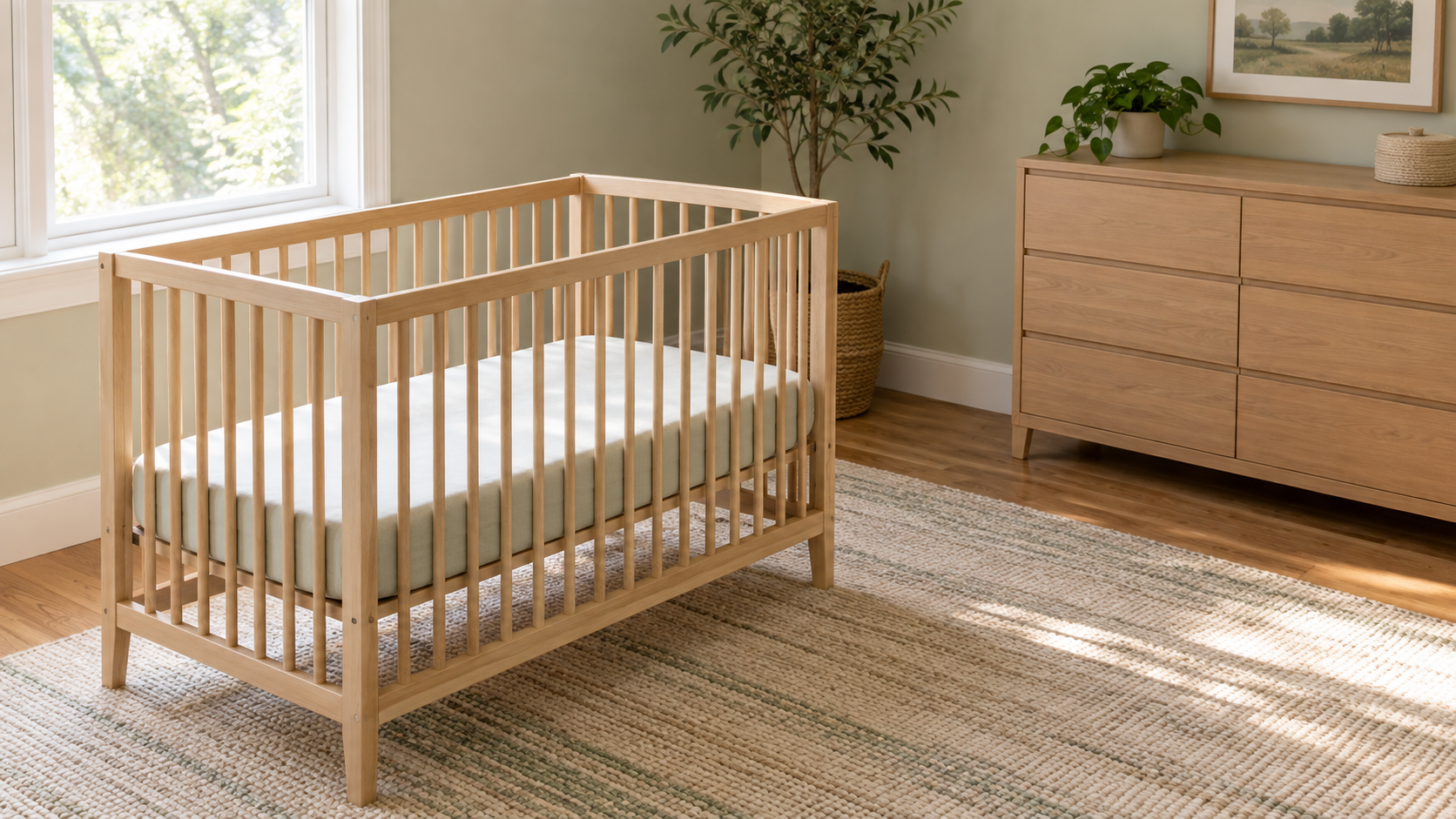
Do not wait for the first roll to clear the crib. Babies can shift unexpectedly, and a bare sleep area leaves fewer objects for their face or body to encounter.
- Use a firm, flat and level crib or bassinet mattress.
- Keep pillows, toys, loose blankets, bumper pads, wedges and sleep positioners out of the sleep space.
- Dress your baby in a one-piece sleeper or wearable blanket rather than adding loose bedding, and avoid overheating.
- Do not treat a swing as a place where side-sleeping is acceptable. A baby who shifts position in a swing is not on a flat, level sleep surface.
- Keep the sleep environment free from smoke exposure.
- For the first 6 months, room-sharing can be supported by placing a separate crib or bassinet in your bedroom. Room-sharing means that your baby has their own sleep surface in your room.
A positioner can look like a solution to rolling, but it adds an object to the sleep area and attempts to restrain movement. The safer response is a clear sleep space and a back-sleeping start, not a product that promises to hold your baby in one position.
Situations that deserve pediatric guidance

A newborn curls partway onto their side
During the first few weeks, some newborns keep their spine rounded and their arms and legs tucked in a fetal posture. This newborn curl can move them partway toward one side, but it is not the same as purposeful rolling in both directions.
Continue putting your newborn down on their back. If you notice the curl has shifted them sideways, gently return them to their back and make sure the sleep space is firm and empty. Contact their health care provider if they repeatedly move fully onto their side, if you cannot tell whether they are rolling or if the pattern concerns you.
Your baby has reflux
Some babies with reflux may appear to prefer their side, but that preference does not make side-sleeping the standard safe position. Do not raise the mattress, add a wedge or place your baby on their side as a home treatment. Any different sleep-position instruction should come from a clinician who has evaluated your baby and can explain exactly how to follow it safely.
Your baby consistently turns or tilts their head one way
A persistent head turn, a tilt toward the opposite side or limited neck rotation can be a sign of positional torticollis. Repeated side-sleeping may contribute to that pattern, although this is not common. Arrange an assessment with your baby’s health care provider rather than using forced side-sleeping to alternate their position.
Before the next sleep, clear the crib and think about what you have actually seen your baby do while awake. If you cannot confidently say that they roll both ways, use the safer branch: start on the back, gently reposition them when you notice a sideways shift and bring recurring movement to their clinician.
References




