
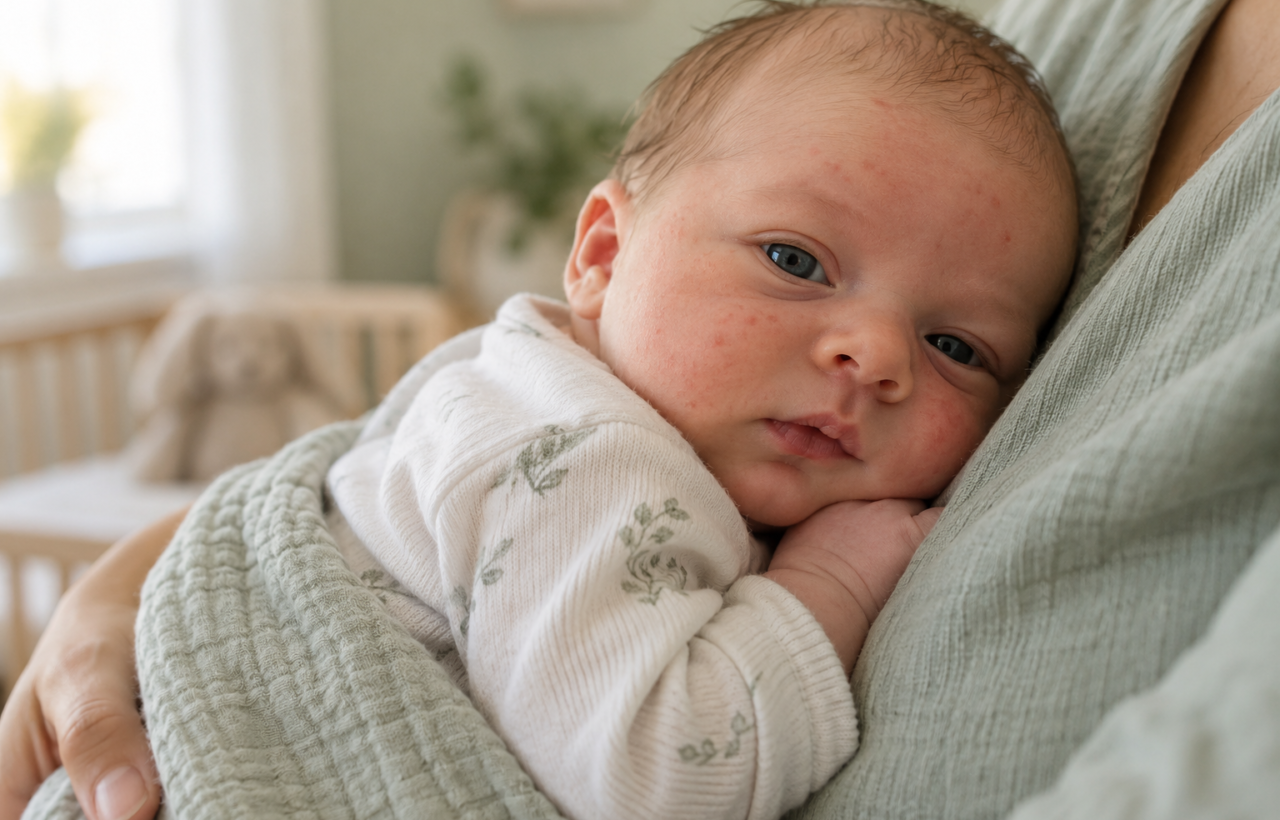
A sudden crop of red bumps on your newborn’s cheeks can make you wonder whether their skin is irritated, infected or reacting to something you ate. In many cases, those bumps are baby acne: a common, temporary skin change that doesn’t mean you’ve done anything wrong.
The useful question isn’t how to clear the bumps overnight. It’s whether they fit the usual baby-acne pattern, how to avoid making sensitive skin more irritated, and which changes deserve a call to your baby’s healthcare provider.
Key takeaways
- Baby acne usually looks like small red or pink bumps, sometimes with white centres, on the cheeks, nose or forehead. It can also appear on the neck, chest or back.
- Hormonal changes around birth are a likely cause. A naturally occurring skin yeast called Malassezia may contribute in some cases.
- Baby acne isn’t caused by poor hygiene. Breastfeeding and the breastfeeding parent’s usual diet aren’t generally considered causes, either.
- Use lukewarm water, mild baby soap only if needed, and a soft towel. Pat rather than rub.
- Don’t scrub, squeeze or treat the bumps with adult acne products. Baby acne commonly clears without medication over several weeks to a few months.
- Contact a healthcare provider if the rash is spreading, becoming much worse, showing possible signs of infection, failing to improve or appearing while your baby seems unwell.
First, check whether the bumps fit the usual pattern
Baby acne, also called neonatal acne, often appears as a scattering of small red or pink bumps or pimples. Some have tiny white centres. The cheeks are a common starting point, with bumps sometimes appearing around the nose and forehead or extending to the neck, chest or back.
The redness may look more noticeable when your baby is warm, crying or fussing. That temporary change in visibility doesn’t necessarily mean the condition itself is suddenly getting worse. Look at the overall pattern and your baby’s general well-being rather than judging the rash during one warm or tearful moment.
Several harmless newborn skin conditions can resemble acne. These clues can help you describe what you’re seeing, but they can’t confirm a diagnosis at home.
| Skin change | What you may notice | Useful clue |
|---|---|---|
| Baby acne | Small red or pink bumps, sometimes with white tips | Commonly centred on the cheeks, nose and forehead |
| Milia | Very small, firm white or yellowish bumps | Often appears on the face without surrounding pimple-like redness |
| Eczema | Red, dry or scaly patches | Looks more dry and possibly itchy than pimple-like |
| Heat rash | Clusters of tiny red bumps or small blisters | Often develops where heat and sweat become trapped, including the neck or chest |
| Cradle cap | Flaky, greasy or crusty patches | Usually affects the scalp and may extend to other oily areas |
Location and texture provide clues, but newborn rashes can overlap. If the bumps don’t resemble the typical pattern, take a clear photo in natural light and show it to your baby’s pediatrician or another qualified healthcare provider. A photo can also make it easier to explain whether the rash is changing between appointments.
Why baby acne appears, and what it doesn’t mean
The leading explanation involves hormones around the time of birth. Hormones transferred before and during birth may temporarily stimulate a newborn’s oil glands while their skin adjusts to life outside the womb. Malassezia, a yeast that naturally lives on skin, may also play a part in some cases. That possible role doesn’t mean your baby’s skin is dirty.
This distinction matters because the wrong explanation often leads to the wrong response. Washing more aggressively won’t correct a hormonal change and may irritate delicate skin. Baby acne also isn’t considered an allergic reaction, so the bumps alone aren’t a reason to change formula, stop breastfeeding or begin removing ordinary foods from a breastfeeding parent’s diet.
If your baby has other symptoms that make you concerned about an allergy, feeding problem or illness, discuss that full pattern with a clinician. But for otherwise typical baby acne, you usually don’t need to search for something you fed, applied or failed to clean.
A gentle routine protects the skin while it clears
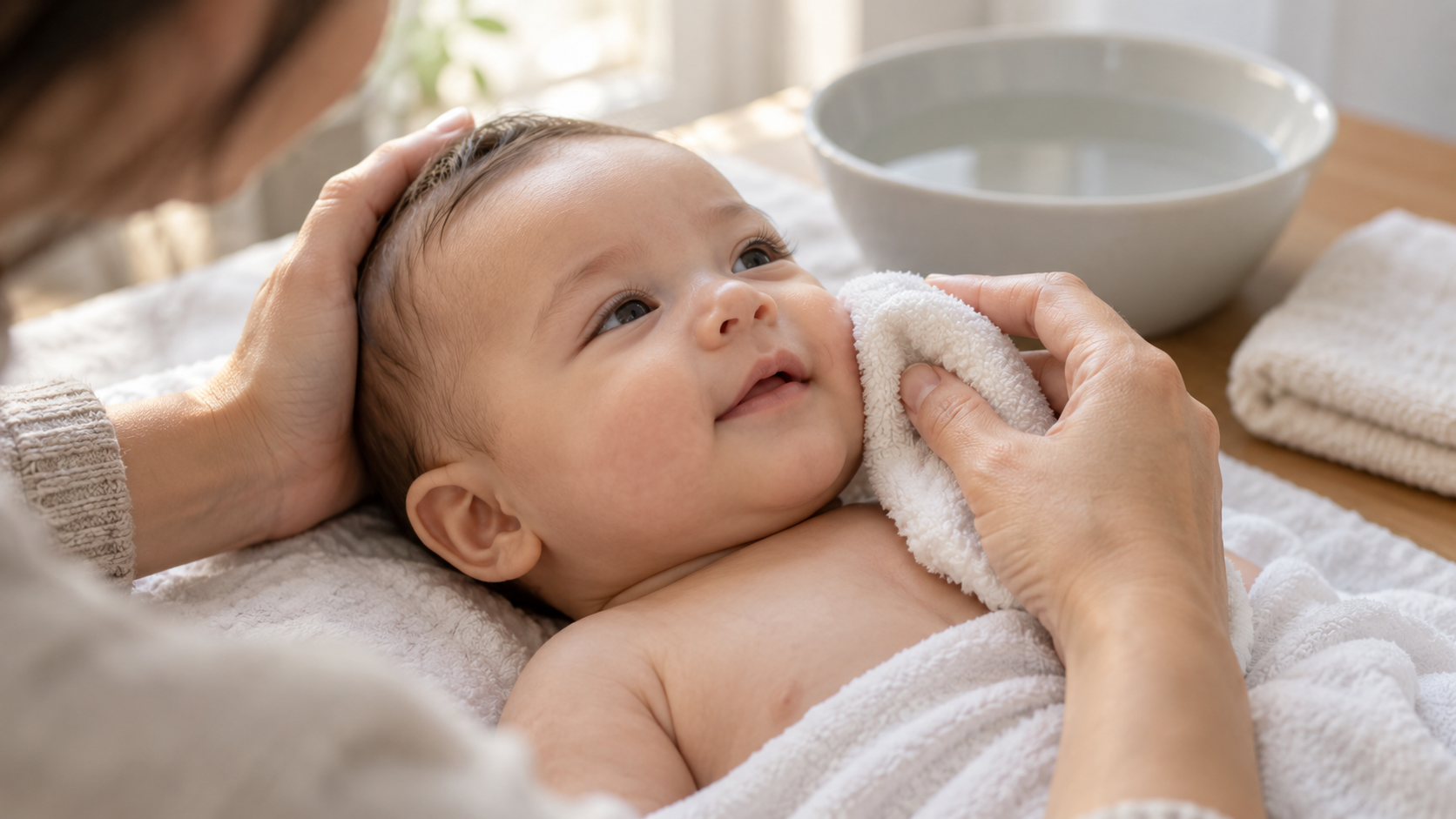
Most baby acne doesn’t require a special treatment. The safest home approach is deliberately simple:
- During your baby’s usual wash, clean the affected skin gently with lukewarm water.
- If water alone isn’t enough, use a mild baby soap rather than a medicated or fragranced adult acne cleanser.
- Pat the skin dry with a clean, soft towel. Don’t rub the bumps.
- Leave the area alone between washes and give the skin time to settle.
When parents ask what they can put on baby acne, the practical answer is often nothing. Adding several products at once makes it harder to tell what is helping and what is irritating the skin. In particular, avoid:
- scrubbing, exfoliating or repeatedly washing the affected area;
- popping, picking or squeezing individual bumps;
- adult acne washes, spot treatments or topical medications unless your baby’s healthcare provider specifically recommends one; and
- heavy oils, lotions or ointments that may irritate the skin or clog pores.
Picking is especially unhelpful. It damages the skin’s surface and can raise the risk of infection or scarring. Left alone, baby acne usually fades without leaving scars.
Expect the change to be gradual rather than immediate. Many cases clear within several weeks, while others take a few months. That range varies from baby to baby, so the absence of overnight improvement isn’t a reason to escalate to stronger products.
Call a healthcare provider when the pattern changes
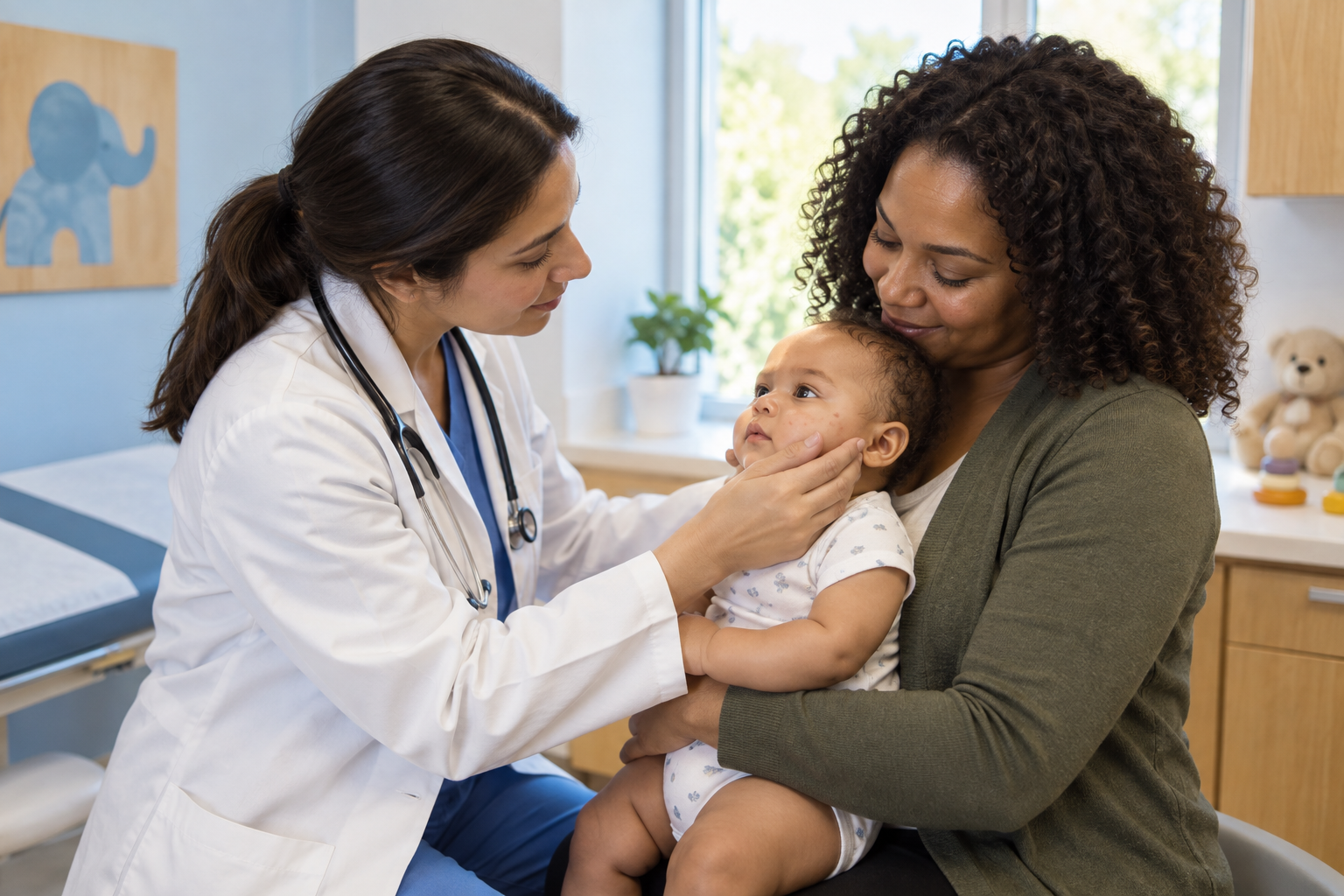
Baby acne is usually harmless, but not every infant rash is acne. Contact your baby’s healthcare provider if you aren’t confident about what you’re seeing or if the condition isn’t following the expected mild, self-limited pattern.
Reach out if:
- the rash is spreading or becoming significantly worse;
- the skin develops increasing swelling, warmth, drainage or significant tenderness;
- the bumps aren’t improving over time;
- the rash begins to look different from ordinary small pimples; or
- your baby seems unwell.
Increasing warmth, swelling, drainage or tenderness can point to infection and shouldn’t be managed by trying a home acne remedy. Contact a healthcare professional promptly for an assessment. If your baby seems unwell, focus on that change rather than assuming the skin is the only issue.
For a face-centred scattering of small bumps on an otherwise well newborn, keep the next step modest: use lukewarm water, pat dry and keep your hands and adult acne products away from the spots. Take a photo today so you can track the pattern. If the rash or your baby’s condition changes, let a pediatrician decide what it is and whether it needs treatment.
References




