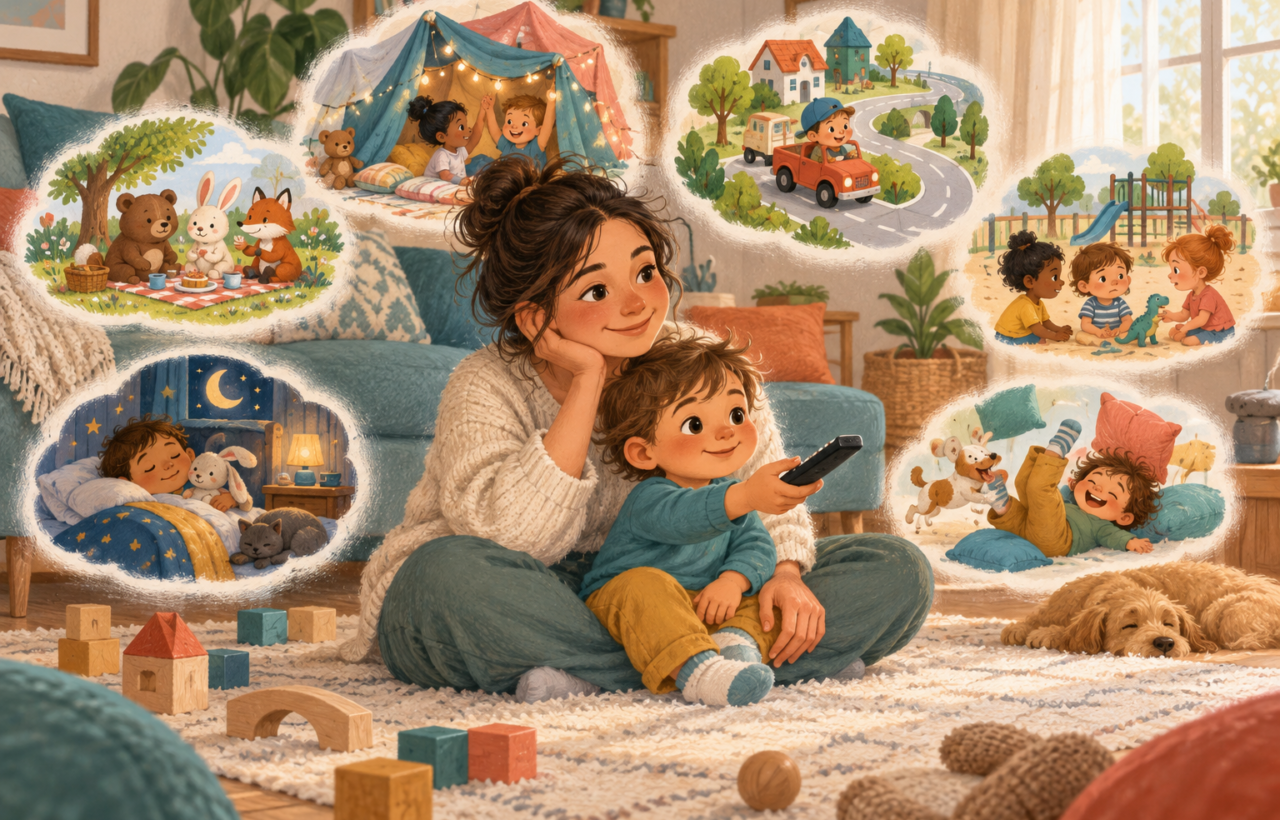
When your toddler asks for Bluey again, “anything with talking animals” is not a useful substitute. They may be returning for the pretend play, close family, small social problems, calm pace, or one particular kind of silliness. Match that ingredient and the next show has a much better chance of working.
These six picks all keep friendship, family, or fun at the centre, but they do different jobs. If your child is younger than 3, choose by what holds them comfortably – the tone, characters, vehicles, or recognizable routines – rather than expecting them to absorb every social lesson.
Key takeaways
- Choose Sarah & Duck or Puffin Rock when your child likes the gentler side of Bluey and you want a quieter viewing option.
- Try Carl the Collector when kindness, empathy, friendship, and inclusion are the qualities you want to carry into the next show.
- Pick Peppa Pig for an imperfect, cheekier character working through ordinary social situations.
- Start with Trash Truck when vehicles are the easiest route into a new story.
- Use Chip & Potato for an older toddler who is curious about school, new situations, and finding security in an unfamiliar place.
- Introduce only one new show at a time. One episode gives you more useful information than opening a streaming menu and asking your child to choose from dozens of unfamiliar pictures.
Six Bluey alternatives, matched to what your child enjoys
Carl the Collector: for empathy and inclusive friendships
Start here if your child responds to Bluey’s kind problem-solving more than its games. Carl is a raccoon on the autism spectrum, and his stories encourage appreciation for neurodiversity, inclusion, kindness, and empathy. The resemblance to Bluey is emotional rather than visual: both make social understanding part of the story without turning every interaction into a lecture.
Watch the first episode together. When it ends, name one kind or inclusive choice you actually saw instead of asking a broad question such as, “What did you learn?” A toddler may not be able to explain the theme, but you can still give the moment simple language. Start your search on PBS Kids.
Peppa Pig: for cheeky humour and everyday social mistakes
Peppa works for children who enjoy recognizable behaviour and characters who do not always get things right. Her stories use classroom dynamics and ordinary situations to explore sharing, taking turns, feelings, wants, and boundaries. Like a real preschooler, Peppa can be funny, affectionate, opinionated, and imperfect.
The tone is cheekier than the calmest shows on this list, so preview an episode if sass is the part of children’s television you find tiring. If the humour suits your home, Peppa can be a good move from family-centred play toward stories about peers and group settings. Peppa Pig is listed on Netflix.
Sarah & Duck: for short, calm, imaginative stories
Sarah & Duck is the strongest first try when you want imagination without a lot of noise. It follows a well-mannered child and her duck through gently unusual adventures. The muted, hand-drawn look and calm atmosphere are paired with episodes of about six minutes, making it easy to test without accidentally starting a long viewing session.
Offer one episode during a naturally quiet part of the day. If your child likes Bluey’s games but becomes overwhelmed by busier cartoons, pay attention to whether this softer presentation holds their interest. Start your search on YouTube, and check that you have opened an official or otherwise trusted upload before handing over the device.
Puffin Rock: for nature, teamwork, and a gentle pace
Puffin Rock follows Oona the puffin and a group of animal friends as they explore an island and work together when their adventures go wrong. The varied animal characters introduce parts of the natural world, while the sound and colours remain relatively subdued.
The practical distinction between this show and Sarah & Duck is the subject. Choose Puffin Rock when your child notices birds, bugs, beaches, or outdoor animals; choose Sarah & Duck when whimsical pretend play is the bigger attraction. After watching, look for one animal from the episode in a book or on your next walk. Puffin Rock is listed on Netflix.
Trash Truck: for vehicle-loving toddlers who still need heart
A child who stops for every garbage truck, crane, or bulldozer may not need a close Bluey look-alike. They need a familiar interest that opens the door to a warm story. Trash Truck centres on Hank’s friendship with a living garbage truck, with a raccoon named Donny and a bear named Walter joining their adventures.
The adults in Hank’s life accept his unusual friend without disrupting the imaginative premise. That gives the show some of the easy family warmth a Bluey fan may be seeking, even though the hook is a large vehicle. Use the episode as a bridge back to play: invite your child to make a truck from blocks, a box, or whatever is already nearby. Trash Truck is listed on Netflix.
Chip & Potato: for new situations and a reassuring sidekick
Chip & Potato is an 11-minute show about a kindergarten-aged pug and Potato, her secret pet mouse. Chip approaches confusing situations with kindness and curiosity, while an inclusive supporting cast helps make her world feel welcoming.
This is the most future-facing pick for a child under 3. The kindergarten details may not be personally familiar yet, but the feelings around entering a new setting, meeting people, and carrying a source of comfort can still make sense. Because the episodes are longer than Sarah & Duck’s, begin with one rather than turning on continuous play. Chip & Potato is listed on Netflix.
Use a one-episode test instead of guessing from the thumbnail

- Name the Bluey ingredient. Is your child asking for family play, gentle comedy, animals, vehicles, school stories, or help making sense of social moments?
- Choose the nearest match. Pick only one of the six shows. Do not introduce the entire list at once.
- Make the choice concrete. For a verbal toddler, ask, “Bluey or Puffin Rock?” For a younger child, show the two cover images rather than opening a crowded catalogue.
- Play one complete episode. Stay nearby the first time so you can judge the sound, pace, humour, and any moments your child finds confusing.
- Notice what follows. Does your child ask for that character again, turn part of the story into play, remain settled, or immediately lose interest? Those signals are more useful than whether they stared at the screen for every second.
- Offer the same show on another day. Unfamiliar artwork and voices can produce an automatic “no.” If the tone seemed suitable, give the pick a few separate chances before deciding it is not a fit.
You can stop the trial early if the tone clearly does not work for your child. The goal is not to persuade them to like a worthy-sounding programme. It is to find a second option that meets the same need Bluey has been meeting.
Build a small rotation your toddler can understand
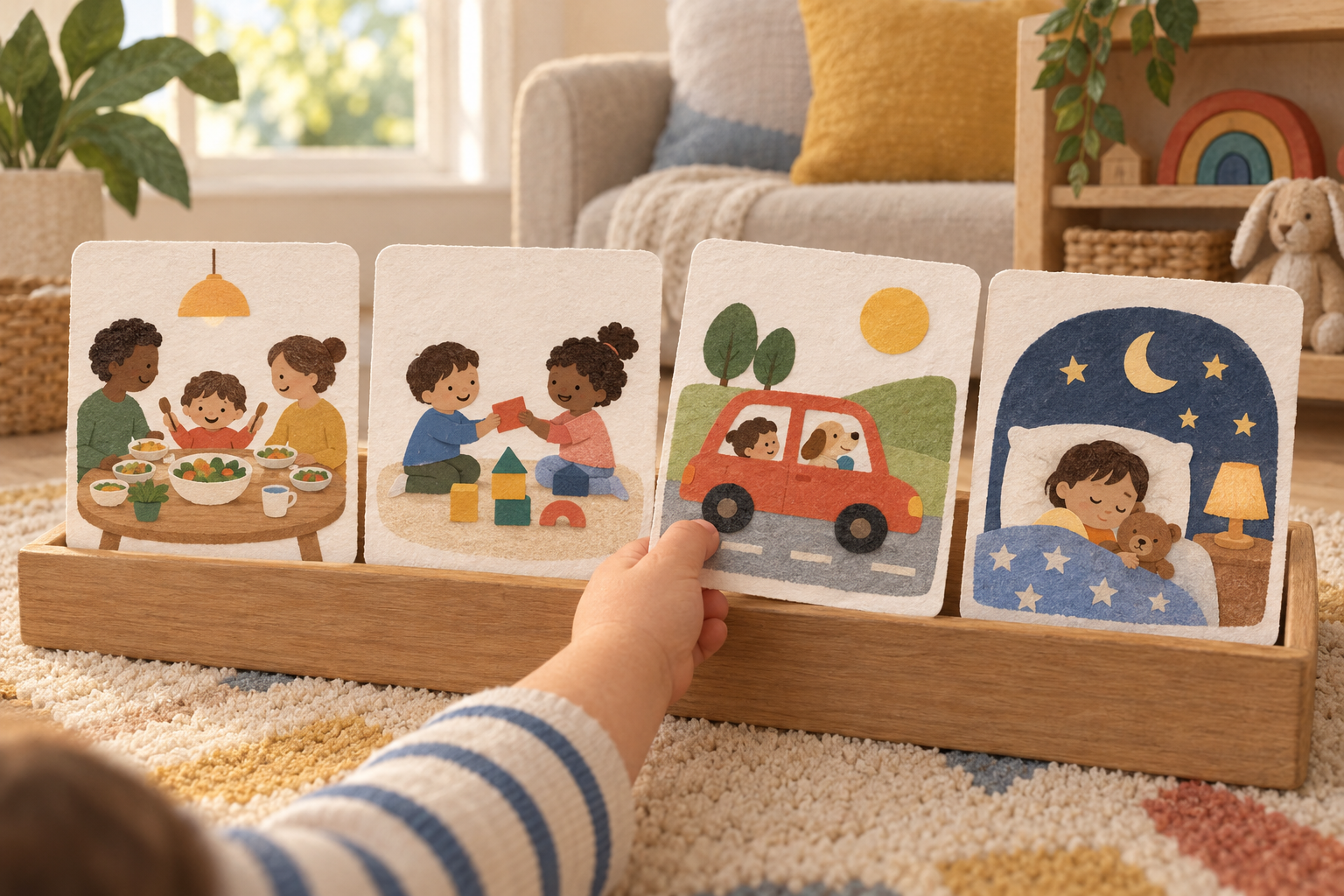
You do not have to replace Bluey. Keep it as the familiar anchor, then add one calm alternative and one interest-led alternative. A workable three-show rotation might be Bluey, Puffin Rock, and Trash Truck for a vehicle-loving child, or Bluey, Sarah & Duck, and Carl the Collector for a child drawn to quieter relationship stories.
Start your search on PBS Kids for Carl the Collector, YouTube for Sarah & Duck, and Netflix for Peppa Pig, Puffin Rock, Trash Truck, and Chip & Potato. Streaming catalogues can change and differ by country, so confirm availability before announcing a new show to a toddler who will expect it to appear immediately.
For your next viewing window, identify the one thing your child seems to want from Bluey and test the closest match for a single episode. A thoughtful second favourite is more useful than a long watchlist.
References
- Parents – 6 Shows Like ‘Bluey’ That Kids Will Love – and Parents Will Appreciate, Too
- AOL – 6 Shows Like ‘Bluey’ That Kids Will Love – and Parents Will Appreciate, Too