
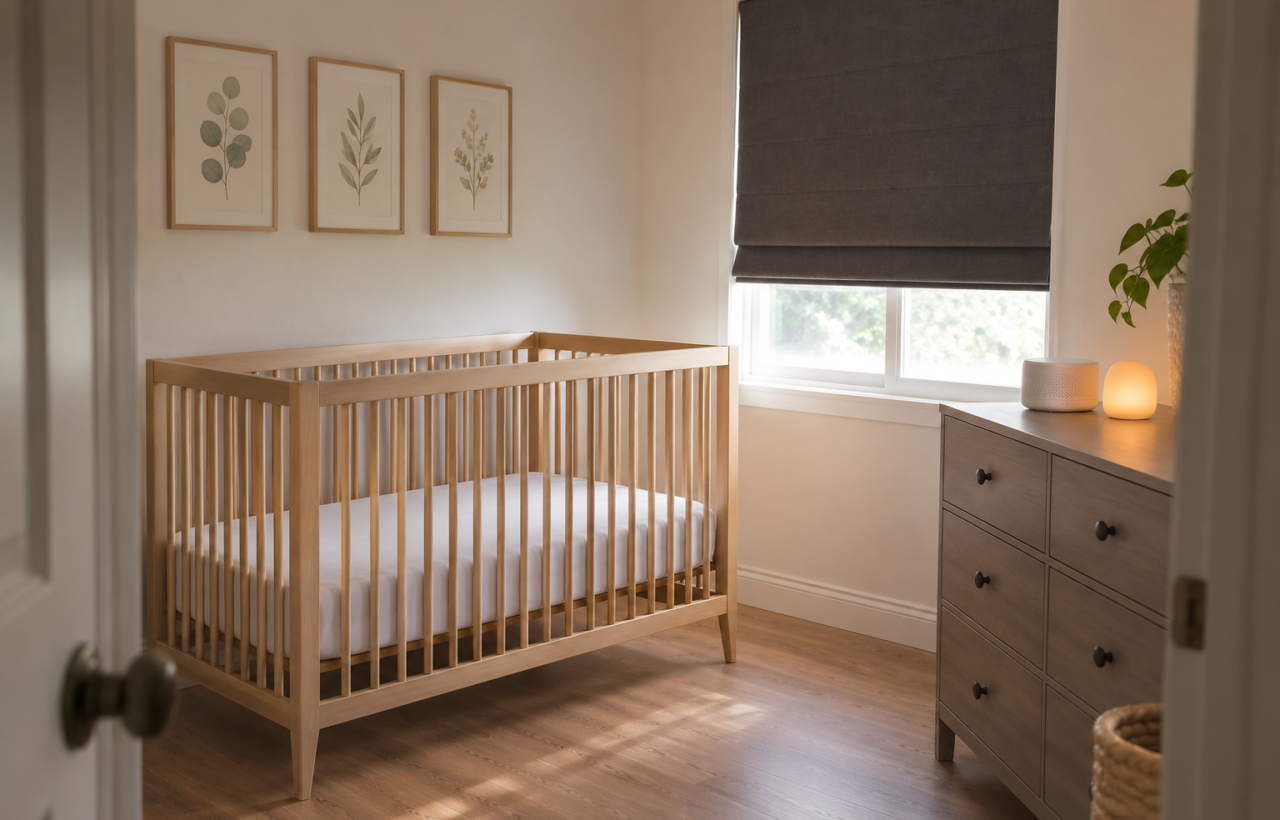
If you are standing in the nursery wondering what your baby actually needs for sleep, start by separating safety essentials from comfort extras. The essential setup is surprisingly spare: an appropriate sleep space, a firm and level mattress, a fitted sheet, and nothing loose around your baby.
Everything else – the sound machine, blackout covering, night-light, monitor, furniture, and decor – should support that foundation without adding a hazard. Here is how to make those decisions in the right order.
Build outward from the sleep surface
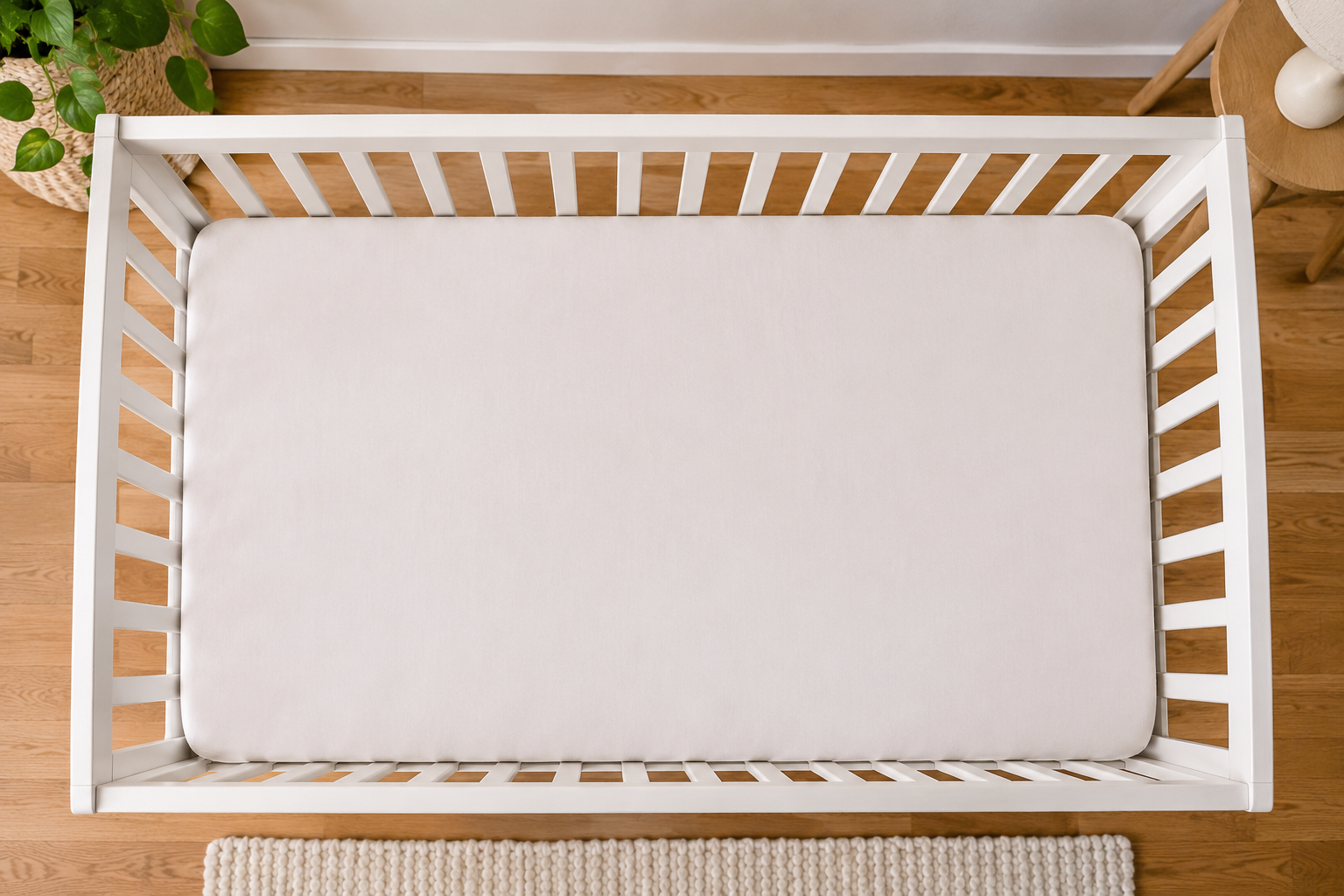
A safe sleep environment begins with a crib, bassinet, or other product specifically designed for infant sleep. An adult bed, couch, armchair, baby lounger, or improvised nest is not an equivalent substitute, even if your baby appears comfortable there.
For an infant, use a firm, flat, level mattress that fits the sleep space correctly. Cover it with a fitted sheet made for that mattress. Keep pillows, loose blankets, stuffed toys, bumpers, positioners, nests, and weighted products out of the sleep space. Place your baby on their back for every sleep unless their clinician has given you different medical instructions.
If your baby seems to sleep better on an incline or with an object supporting their body, do not reproduce that position by tilting the mattress or adding a wedge. That changes the sleep surface and can create a safety risk. Ask your baby’s clinician what to do about the underlying feeding, breathing, or comfort concern.
Make purchase decisions in this order:
- Suitability: Confirm that the product is intended for your baby’s current sleep stage and has its instructions, required hardware, and correctly fitting mattress.
- Condition: Look for damage, loose parts, gaps, unstable components, or a sheet that can pull away from the mattress.
- Fit in the room: Leave enough space to reach the crib safely without placing cords, curtains, heaters, shelves, or unstable furniture beside it.
- Convenience: Consider how easily you can change the sheet, adjust the mattress position, and reach your baby in low light.
- Appearance: Choose the finish and style after the safety and usability questions are settled. There are crib options for many nursery styles, so you should not need to trade basic function for a particular look.
A higher price, more elaborate design, or longer feature list does not make a sleep surface safer. Correct assembly, an appropriate mattress, an empty sleeping area, and use within the product’s limits matter more.
Adjust the crib for what your baby can do now

Babies change faster than nursery furniture does. A setup that worked before your baby became mobile may need attention once they can sit, pull, reach, or climb. Use developmental ability, along with the manufacturer’s instructions, rather than waiting for a convenient calendar date.
- Follow the assembly manual exactly. Do not substitute hardware, add padding, or modify the frame to solve a fit problem.
- Use the correct mattress position. Lower it when the instructions call for that change, especially as your baby gains the ability to pull up.
- Inspect the mattress fit. If it has shifted, buckled, or left an unexpected gap, stop using the setup until you identify the cause.
- Check the fitted sheet. Every corner should remain secured when you press and move your hand across the surface.
- Remove reachable decorations. A mobile, wall hanging, monitor cable, curtain, blind cord, shelf item, or decorative garland can become a hazard once your baby can grab it.
- Respect all product limits. Transition out of the sleep space when your child reaches a developmental, height, or weight limit stated by its manufacturer.
Be especially careful with a second-hand crib. Confirm that its identity and instructions are available, all original parts are present, and no component is damaged or altered. Check for applicable recalls before use. If you cannot verify what the crib is, how it should be assembled, or which mattress belongs in it, the uncertainty is more important than the bargain.
The strict bare-surface setup applies to infant sleep. When your child moves into a toddler sleep space, use the new product’s instructions and current professional guidance to decide what belongs there. Do not add bedding or comfort objects solely because your child has reached a birthday; their development and the limits of the sleep product still matter.
Use a sound machine as a cue, not a safety tool

A sound machine is optional. It may soften unpredictable household noise and create a repeatable bedtime cue, but it cannot make an unsafe sleep surface safe or guarantee that a baby will stay asleep.
Common choices include white noise, nature sounds, and devices with sleep-support features. The most useful option is not necessarily the one with the most tracks. It is the one you can operate quietly, keep safely out of reach, and use consistently without turning the room into a technology project.
Before buying, decide which functions solve a real problem in your home:
- Sound selection: Choose a steady sound you can tolerate hearing repeatedly. A large sound library is unnecessary if you will use the same setting each night.
- Controls: Make sure you can adjust the volume in low light without triggering a bright display or navigating a complicated menu.
- Power: Consider whether the machine needs a wall outlet, battery, or charging cable and where that equipment will sit.
- Timer or continuous play: Decide in advance whether you want the sound to stop automatically or continue, so the machine behaves predictably.
- Portability: A portable unit can preserve a familiar cue during travel, but only if its charging and storage routine is manageable.
Set the machine on a stable surface away from the crib, with its cord completely out of reach. Listen from where your baby’s head will be and keep the sound at a low background level. It should not overwhelm voices, alarms, or the sounds you need to hear from your baby. If you need loud sound to cover persistent household noise, address the noise source where possible instead of continually raising the volume.
Also plan for failure. A depleted battery, unplugged cable, lost connection, or changed setting should be inconvenient, not dangerous. Your baby should still have a safe sleep surface if the machine stops unexpectedly.
Make the whole room workable after dark
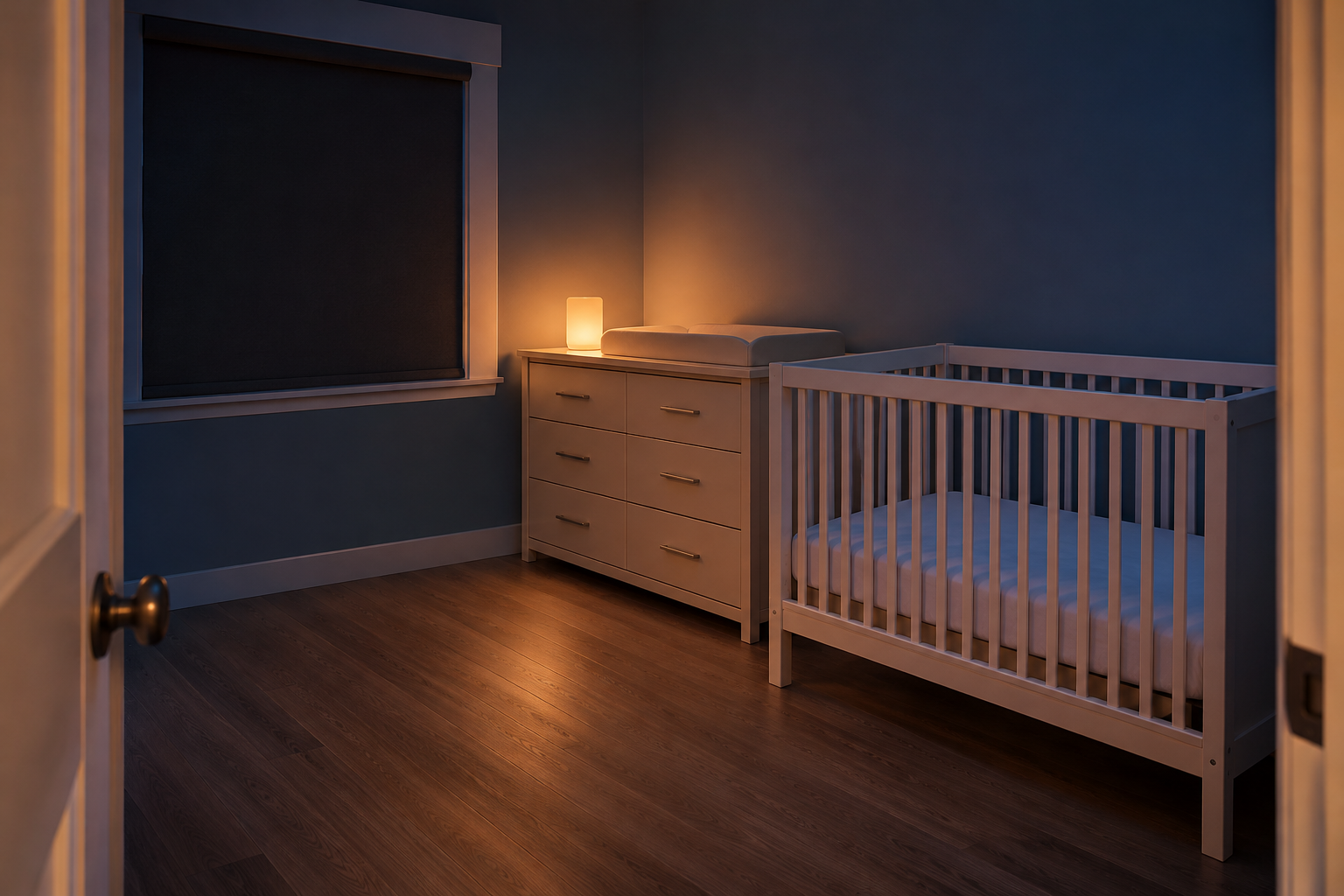
The crib is the centre of the sleep environment, but the route to it matters too. Nighttime care is harder when you must step around a laundry basket, reach across a cluttered table, or move a charging cable while holding your baby.
- Clear the walking path. Keep the route between the door, feeding chair, changing area, and crib free of bags, toys, cords, and low furniture.
- Use practical light. Choose enough light to see your baby and the floor clearly without flooding the room. Position the control where you can reach it safely.
- Secure window coverings. Keep blind cords, curtain ties, and loose fabric inaccessible from the crib at every mattress height.
- Separate storage from sleep. Store diapers, wipes, spare sheets, creams, and feeding supplies in a reachable place, but never balance them on the crib rail or leave them on the mattress.
- Anchor unstable furniture. A dresser, shelf, lamp, or monitor stand should not be able to tip or drop an object into the sleep space.
- Keep adult bedding away. A throw or pillow used in a feeding chair should remain well away from the crib and should never follow your baby onto the mattress.
If you feel you may fall asleep while holding your baby, move them to their safe sleep space before you doze. An armchair or couch does not become safer because it is in the nursery. If another adult is available, ask them to take over rather than trying to push through severe fatigue while seated with the baby.
Give the room a short reset before the first bedtime attempt. Remove anything that was placed in the crib during the day, check the sheet corners, confirm that cables remain out of reach, and clear the floor. This catches the ordinary drift that happens when a nursery is also used for changing, feeding, laundry, storage, and play.
Then use a simple, repeatable sequence: prepare the room, dim the light, set the chosen sound, complete your usual care routine, and place your baby in the safe sleep space. The environment becomes a consistent cue without depending on a complicated collection of products. It will not prevent every wake-up, and a wakeful night does not mean the setup has failed.
Key takeaways
- Start with a firm, flat, level infant sleep surface and a correctly fitted sheet.
- Keep an infant’s sleep space free of loose bedding, pillows, bumpers, toys, positioners, nests, and weighted items.
- Place your baby on their back for sleep unless their clinician has provided different medical instructions.
- Adjust the mattress and surrounding room as soon as your baby’s new abilities make an item reachable or the current configuration unsuitable.
- Treat sound, darkness, and decor as optional layers. They must not introduce cords, unstable objects, excessive noise, or clutter around the crib.
- Reset the room before bedtime so items used during the day do not remain in the crib or block your path at night.
- When discomfort or a medical concern appears to require an incline, wedge, or positioner, do not improvise. Ask your baby’s clinician for an appropriate plan.
Set up the sleep surface first, then stand where you will care for your baby at night and scan the room from that position. Remove the hazards you can see, move the supplies you will need, and add only the comfort tools that earn their place.
References
- Parents – The 14 Best Cribs We Trust and Use With Our Own Babies
- Parents – The 10 Best Sound Machines That Helped Our Babies Drift Off to Sleep



