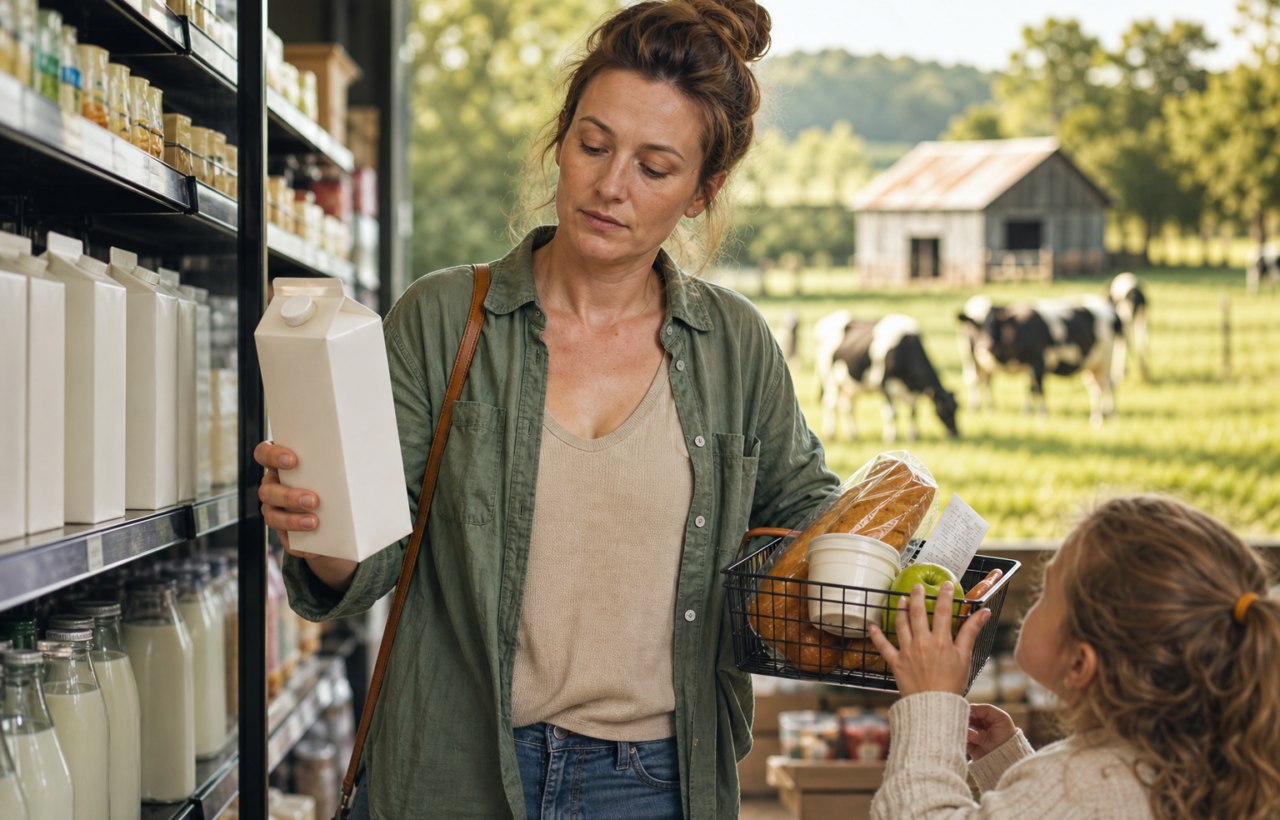
Organic food can sound like a simple grocery-store upgrade until a family budget, past food insecurity, and mom guilt enter the picture. A source article from Diary of an honest mom uses a Stonyfield organic dairy farm tour to ask a more useful question: how can parents care about food systems without pretending everyone has the same choices?
The answer is less about perfection and more about context. The source connects childhood poverty, the emotional weight of feeding children, and a closer look at organic dairy farming into a practical frame for families who want to make values-based decisions where they can.
Food Choices Do Not Start From the Same Place
According to Diary of an honest mom, the writer grew up using food banks and relying at times on local corner stores for basic items such as milk and bread. That history shaped how she experienced grocery shopping as an adult, even after leaving poverty behind.
The source describes a milestone that many food-secure families might overlook: being able to shop without adding up every item along the way. Even then, the checkout experience could still trigger anxiety because declined payments had been part of childhood memory.
That context matters because advice about organic food often lands differently depending on a parent’s resources. For a family trying to keep food in the fridge, production methods may feel distant from the immediate work of getting everyone fed. The source does not dismiss organic food, but it pushes against the idea that buying organic is an easy moral test for parents.
What the Stonyfield Farm Tour Added
The source article reports that the writer attended a Stonyfield Organic dairy farm tour and notes that the original post was sponsored by Stonyfield. The piece centers much of its reporting on Mollybrook Farm in Vermont, where the owners, Rhonda and Myles, spoke about their cows and the daily work behind organic dairy production.
As reported by Diary of an honest mom, Mollybrook Farm had won Vermont Dairy Farm of the Year 2022. The farm had been in Myles’ family for generations, and the family had made the transition to organic, a process the source says takes three years.
The details that stood out were not abstract. The source describes farmers working to produce enough certified organic feed, explaining milking routines, knowing cows by name, and naming calves with the same first letter as their mothers. Those observations helped shift the story from a supermarket label to the labor and values behind that label.
Organic Dairy as a System, Not Just a Label
In general terms, organic food labels are meant to signal that a product was made under a defined production standard. In the source’s account, learning about those standards changed the writer’s understanding of organic dairy from a premium lifestyle choice to a broader food-system decision.
The source says organic farming was presented as connected to human health, cow welfare, soil health, air quality, farmers’ livelihoods, and surrounding communities. It also lists potential benefits such as healthier soil and waterways, rural development, local economic activity, reduced carbon emissions, and climate-related impacts. Those claims are reported as part of the source’s learning from the tour, not independently verified here.
For dairy specifically, Diary of an honest mom reports that organic cows are fed organic feed, must spend time outside daily, must be on pasture for 120 days a year, and are not given hormones or antibiotics except as a last resort. The source also argues that organic farms are often smaller because they require more work to run, which can allow for more individual attention to animals.
Key Takeaways for Parents Weighing Organic Food
- Food security comes first; parents should not be shamed for prioritizing access and affordability.
- The source frames organic dairy as a farming system with implications for animals, soil, farmers, and communities.
- Specific organic dairy standards mentioned by the source include organic feed, outdoor access, pasture time, and restrictions on hormones and antibiotics.
- Small, occasional purchases can still reflect family values when buying all organic is unrealistic.
- A simple yogurt, fruit, and granola breakfast was offered in the source as one practical, low-effort example.
The Budget Reality Still Matters
One of the strongest parts of the source is its refusal to treat price as a minor obstacle. The writer notes that organic products can cost more because producing food under those standards requires more work and money. That does not make the higher price easy for families to absorb.
The source also reports a conversation with Stonyfield co-founder Gary Hirshberg about families across North America who cannot choose organic everything, even if they want to. His answer, as quoted in the source, was: “do what you can”.
That is the most practical lens for parents. Organic food does not have to become an all-or-nothing identity. A family might choose one organic dairy item, buy organic only when the price works, or simply use the information to better understand what labels represent. None of those choices cancels the basic truth that feeding children consistently is already meaningful work.
A More Useful Way to Talk About Organic
The better conversation is not whether organic food is only for the wealthy, or whether every parent should buy it. It is whether families can learn what organic production is trying to support without turning that information into another source of guilt.
Diary of an honest mom presents one parent’s shift from survival-focused grocery shopping to a more values-aware approach. The useful takeaway is modest but durable: when families have room to make a different choice, even a small one can be a way to support the kind of food system they want to see.
Inspired by this post on Diary of an honest mom.