Sleep pressure is one reason a baby who seemed content a few minutes ago can suddenly need sleep urgently. The idea is simple: awake time gradually creates a biological push toward rest, and that push has to be neither too weak nor too intense.
Drawing on guidance reported by Newton Hush, this article explains what sleep pressure means for babies, how parents can spot the useful early cues, and which daily habits can make naps and bedtime easier to protect.
Why Sleep Pressure Matters
Newton Hush describes baby sleep pressure as the tiredness signal that tells a baby’s body it is time to sleep. In babies, that pressure can build quickly, especially in infancy. As children grow, the source says it tends to build more gradually, which is why older babies can usually manage longer stretches of awake time.
The practical challenge is timing. Too little pressure, and a baby may be placed down before they are ready for a meaningful nap. Too much pressure, and the baby may become overtired, making it harder to settle even though they clearly need rest. For parents, the goal is less about forcing sleep and more about noticing when the body is already moving in that direction.
The Biology Behind the Tiredness
According to Newton Hush, sleep pressure is tied to adenosine, a naturally occurring compound that accumulates in the brain during awake time. As it builds, it helps create the drive for deeper sleep. Sleep then clears that buildup, and the cycle starts again once the baby wakes.
Several everyday factors can influence how this feels in real life. Active awake time gives the body a stronger reason to rest. Age matters because younger babies may reach their limit sooner than older babies. Developmental changes, such as learning to crawl, walk, or talk, may also disrupt sleep because the excitement of a new skill can interfere with the usual rhythm. Newton Hush also notes that illness can increase sleep pressure, which is one reason rest becomes especially important when a baby is sick.
Key Takeaways for Parents
- Sleep pressure is the body’s growing need for sleep after a period of wakefulness.
- Newton Hush links sleep pressure to the buildup of adenosine during awake time.
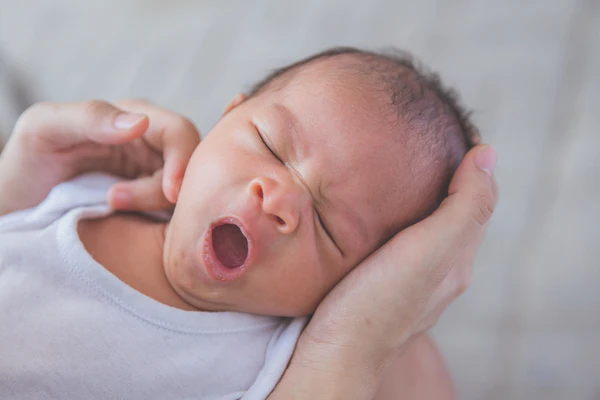
- Early cues may include yawning, eye rubbing, or staring into space.
- Stronger cues can look like fussiness, clinginess, irritability, or crying.
- Light, activity, wake windows, and the sleep environment can all affect how easily a baby settles.
Reading Cues Before the Window Closes
The most useful sleep cues are often the quietest ones. Newton Hush lists eye rubbing, yawning, and staring off as early signs that sleep pressure is present. Once a baby becomes very fussy, irritable, clingy, or tearful, the pressure may already be high.
That distinction matters because the early signs are easier to act on. A parent who notices the first yawn or a sudden blank stare can begin the nap or bedtime routine before the baby is overwhelmed. Waiting until crying begins may still lead to sleep, but the transition can be rougher for everyone.
Using the Day to Support Better Sleep
Newton Hush emphasizes age-appropriate wake windows as one way to avoid both undertired and overtired sleep. The exact timing will change as a baby grows, so parents may need to keep adjusting rather than relying on one fixed schedule for too long.
Light is another important cue. The source notes that light exposure does not directly change adenosine levels, but it helps set the body’s circadian rhythm. Morning daylight can support the wake side of the rhythm, while a dark sleep space can help signal that it is time to rest.
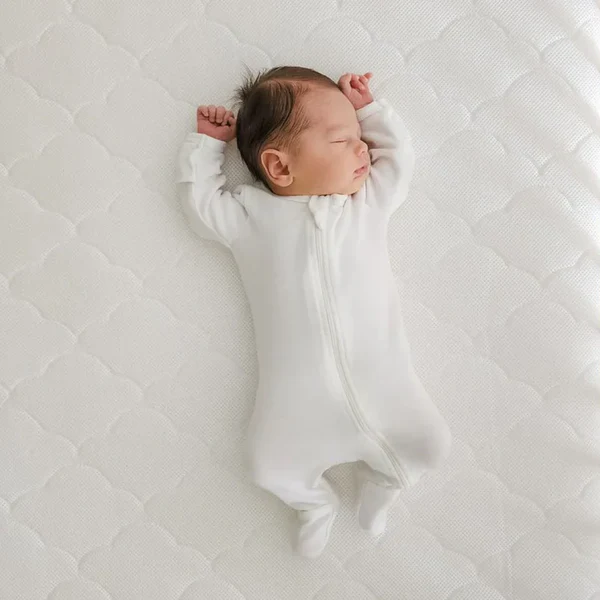
Activity also plays a role. Newton Hush suggests active play, such as time on a playmat, as a way to help build sleep pressure during waking periods. The point is not to exhaust a baby, but to make awake time genuinely awake: engaged, age-appropriate, and followed by a timely wind-down.
Making the Sleep Space Work With the Routine
Even when timing is right, the room can either support sleep or make it harder. Newton Hush recommends darkness for naps, reduced household noise, and a sound machine placed away from the baby at 50 decibels or less. The source also reports a suggested room temperature range of 68 to 72 degrees Fahrenheit and a humidity range of 30 to 50 percent, with a cool-mist humidifier as an option if the room is too dry.
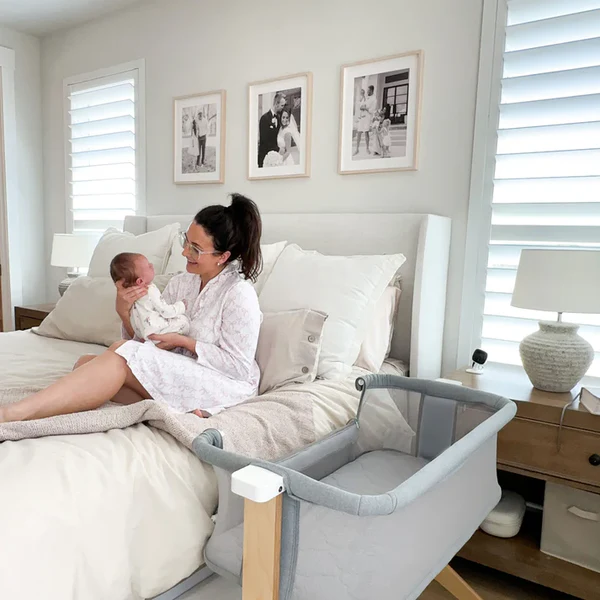
Safety remains separate from sleep pressure and more important than convenience. Newton Hush points readers back to safe sleep basics: babies should sleep on their backs in a crib, travel crib, or bassinet; the sleep space should be bare except for the mattress, fitted sheet, and baby; bed sharing is not recommended; and room-sharing is encouraged.
Sleep pressure is not a trick to control a baby’s sleep perfectly. It is a signal to understand. When parents combine age-aware timing, early cue watching, active awake periods, light and darkness, and a safe sleep setup, they give that signal a better chance to do its job.
Inspired by this post on Newton Hush.