
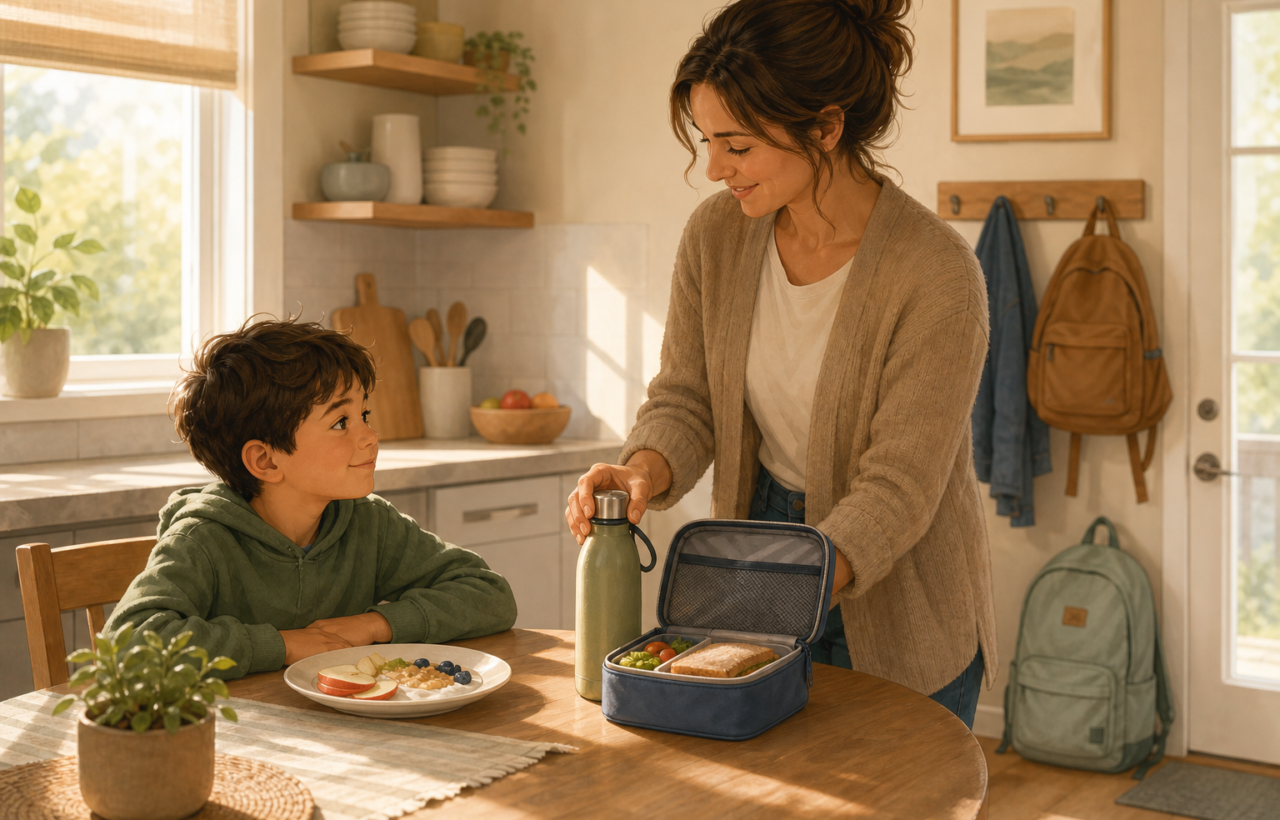
School-day eating is not just a question of what goes in the lunchbox. Across the provided source articles, the same pattern appears at breakfast, snack time, and lunch: children are eating within routines shaped by time pressure, rules, appetite, and peer dynamics.
The useful takeaway for parents is practical, not perfectionist. A calmer school food routine comes from making expectations predictable, treating snacks as part of the whole day, and recognizing that lunch can be socially complicated even when the food itself is fine.
The School Food Day Starts Before the Bell
The breakfast source frames picky eating as a common morning problem: some children are selective, while families still need to get out the door. The article does not report detailed recipes, serving sizes, named experts, or nutrition targets, so the strongest synthesis is about routine rather than a specific menu.
That matters because breakfast carries a different kind of pressure than other meals. There is usually less time to negotiate, and a child who refuses food can turn an ordinary morning into a conflict. The source points toward a lower-pressure approach: make the first meal predictable, repeatable, and less emotionally loaded.
In the larger school-day picture, breakfast is the first chance to set the tone. A child who starts the day with a familiar, manageable option may not suddenly become an adventurous eater, but the family may avoid turning food into the first battle of the day.
Snacks Are Part of the Daily Pattern, Not Extras
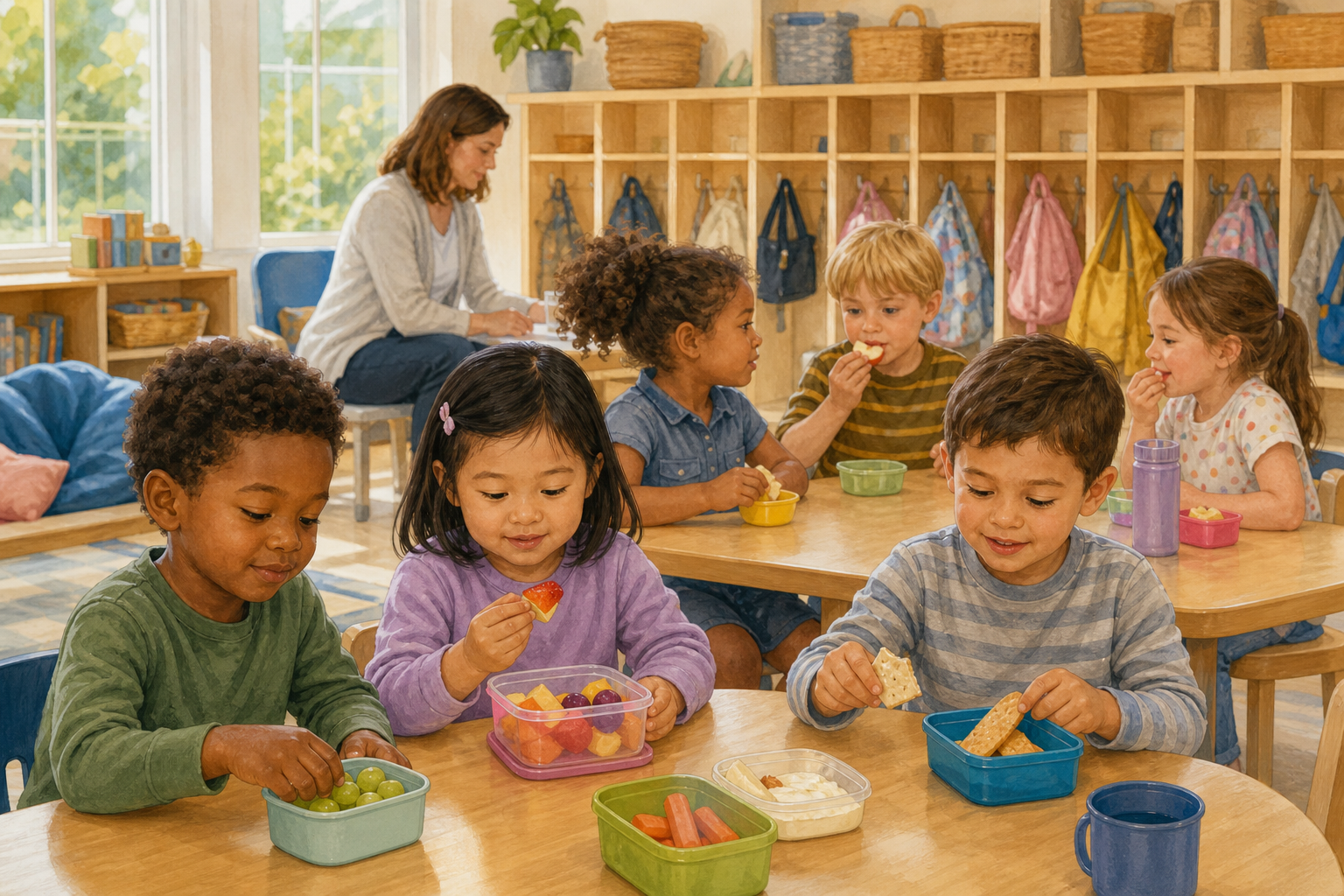
The snack source reports that children are snacking more often, including around meals and between them. It does not provide a specific food list, but it does make an important structural point: frequent snacks can affect appetite, mealtime behavior, grocery choices, and how much food planning a family needs.
This connects directly to school-day eating. A snack is not automatically a problem, especially when there is a long gap between meals or a physically active day. But when snacks become constant grazing, parents may have less clarity about whether a child is truly hungry at lunch or dinner, already full, bored, tired, or seeking comfort.
The synthesis across the breakfast and snack articles is that structure helps most when it reduces daily negotiation. Predictable snack times and ordinary, easy-to-serve options can support the day without making every eating moment feel like a test.
Lunch Rules Are Also Social Rules
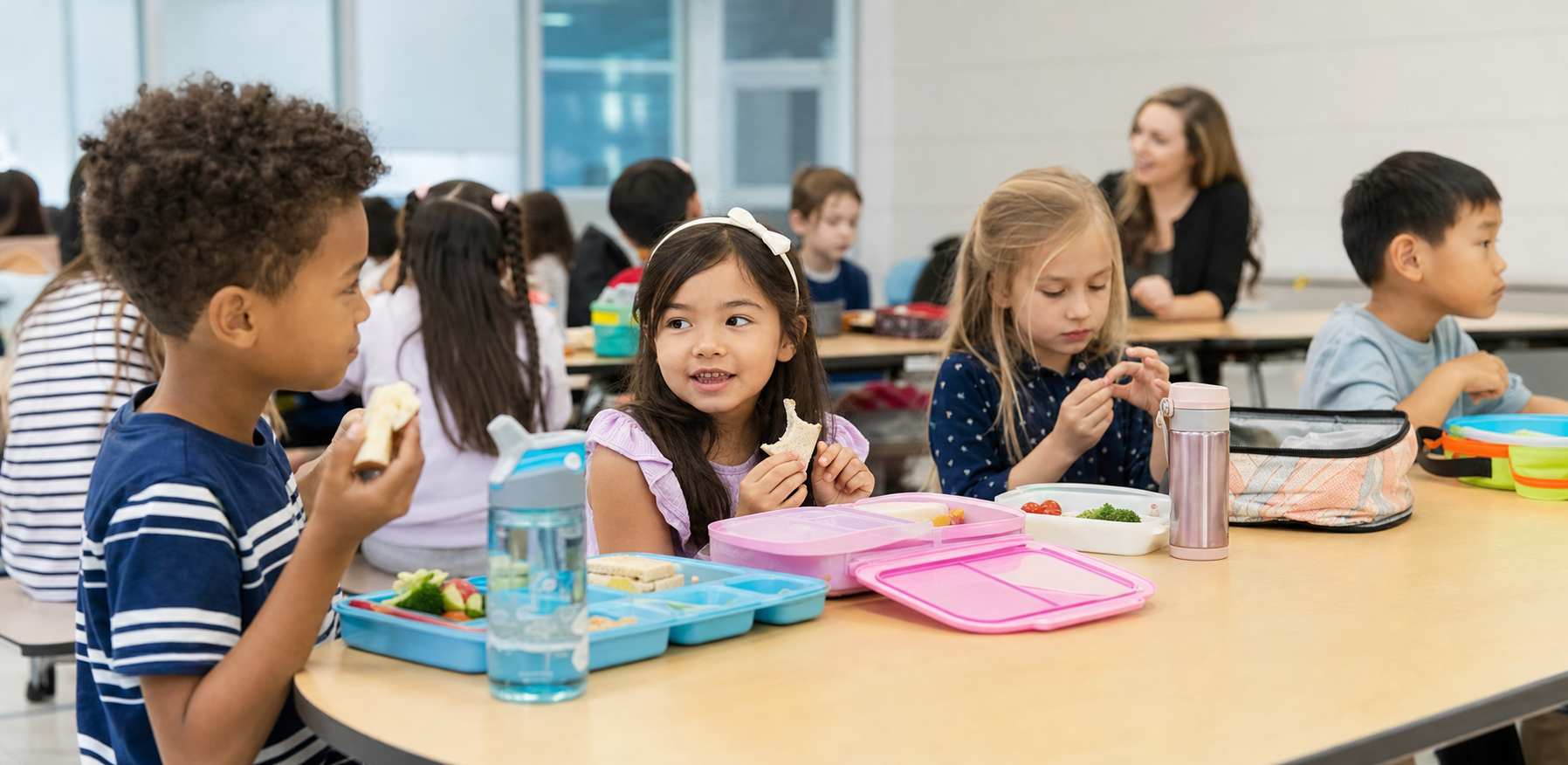
The two lunch-focused sources add a different layer: school lunch is not only about nutrition or fullness. They report that children may be dealing with food trading, seating routines, allergy precautions, peer comments, and the question of where they belong in a busy cafeteria.
One source emphasizes that the cafeteria has different social rules than the classroom. Children may have to manage noise, movement, conversation, and seating with less direct adult structure than they receive during lessons. Another source focuses on practical lunch rules, including no-sharing expectations, allergy-related seating, and the need for children to understand boundaries before they are tested by classmates.
Together, those sources suggest that lunch complaints should not be read only as food complaints. Uneaten items, sudden dislike of a familiar snack, or a child coming home hungry may involve taste or appetite, but they may also involve embarrassment, pressure to trade, difficulty opening food, or discomfort about where the child had to sit.
Parents Can Prepare Children Without Over-Managing Lunch
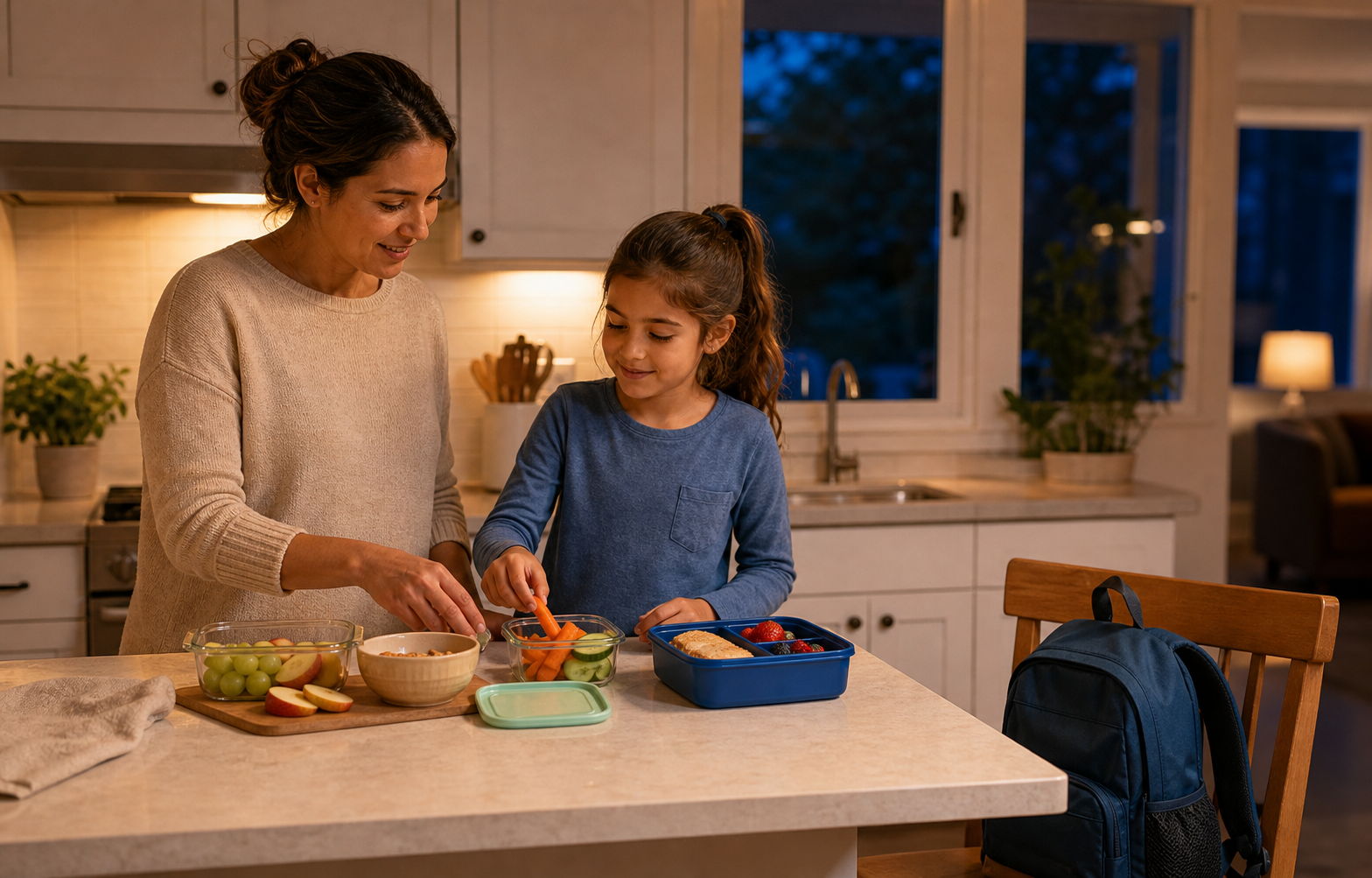
The lunch-rule source recommends clear, simple expectations before school: if food sharing is not allowed, if a child has restrictions, or if the school uses allergy-related seating, the child should know the rule and the reason in plain language. The companion lunchroom source adds that parents may get better answers when they ask about what happened around lunch, not only what was eaten.
A useful middle ground is to give children short phrases they can actually use. The lunch-rule source offers examples such as, “My lunch has to stay with me,” or, “I need to ask a grown-up if I am not sure.” Short scripts are more realistic than expecting a child to improvise a careful explanation in a noisy lunchroom.
For allergy seating, the sources are careful about balance. Safety rules may need to stay in place, but the child may still feel set apart. Parents can respect the rule while asking what part feels hardest and, when needed, checking how the school supports inclusion within the safety plan.
Key takeaways
- Breakfast, snacks, and lunch work better when expectations are predictable rather than negotiated from scratch every day.
- Frequent snacks should be treated as part of the overall food pattern, because they can shape appetite and mealtime behavior.
- Lunchbox stress may come from social pressure, seating, trading, allergies, or cafeteria rules, not only from the food itself.
- Simple before-school explanations and short refusal scripts can help children follow food rules without feeling socially stuck.
- After-school clues such as untouched food, hunger, or vague lunch complaints are worth exploring with calm, specific questions.
A More Useful Goal Than a Perfect Lunchbox
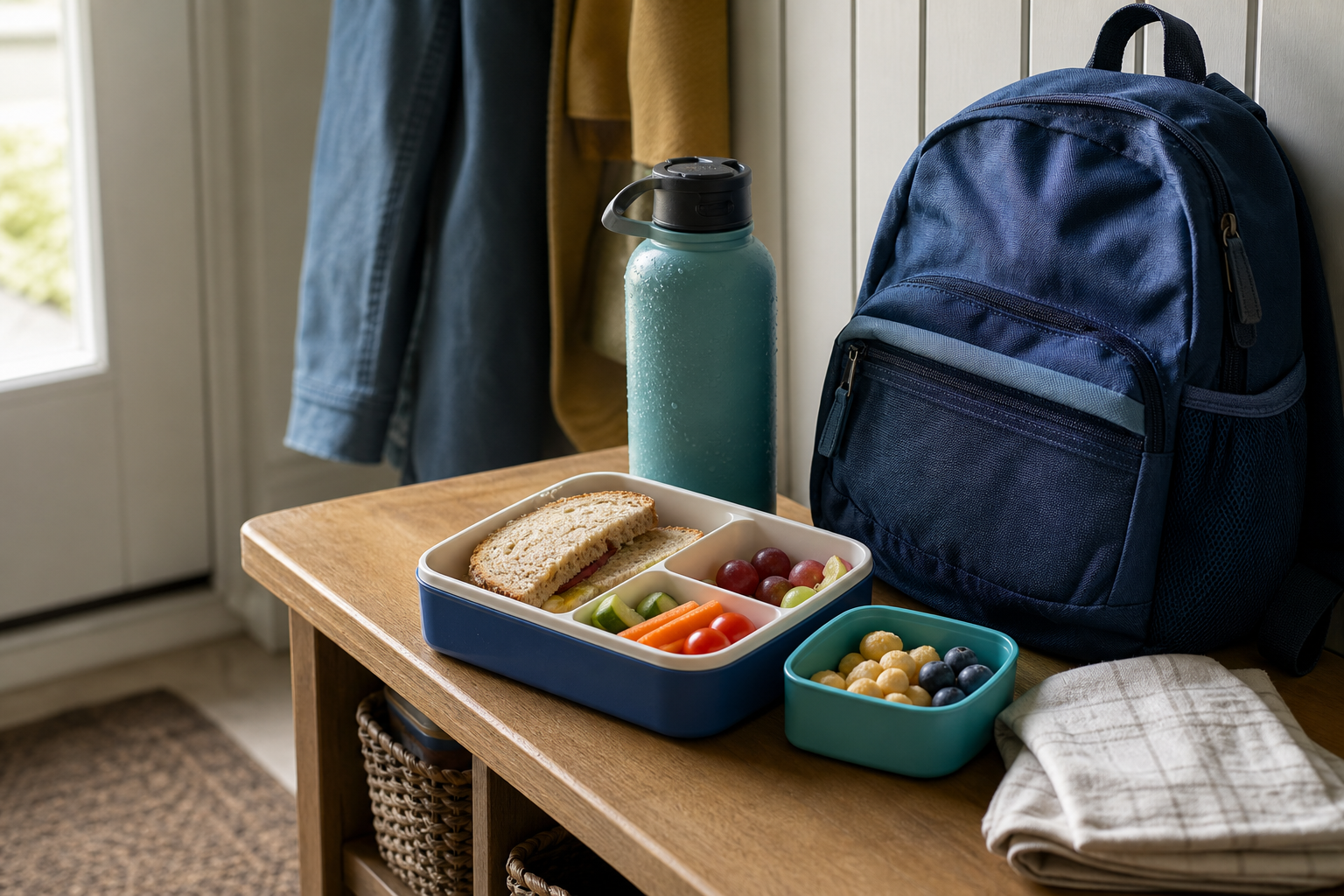
The sources do not support a single ideal school-day menu, and that is part of the point. The more useful goal is a food routine children can understand and caregivers can repeat: breakfast without a morning standoff, snacks that fit the rhythm of the day, and lunch rules that feel clear enough to handle in public.
As children move through school routines, parents can keep adjusting the system without treating every uneaten item or lunchroom complaint as a crisis. The strongest approach is steady attention: notice patterns, explain rules early, and make space for the social side of eating to be discussed at home.
References
- diapr.ai Blog — Better Breakfasts for Picky Eaters Without Morning Battles
- diapr.ai Blog — How Parents Can Think About Kids’ Snacks Without Panic
- diapr.ai Blog — When School Lunch Feels Socially Complicated For Kids
- diapr.ai Blog — Helping Kids Navigate School Lunch Rules With Confidence