School-year food planning often breaks down in the spaces between official meals: the rushed morning, the lunchbox assembly line, and the stretch after school before dinner. The sources approach that problem from two sides: one looks at healthy snack access as a food security issue, while the other treats back-to-school meal prep as a way to reduce daily household pressure.
Taken together, they point to a practical idea: snacks are not a side detail in family routines. When they are predictable, nourishing, and easy to reach, they can help children get through the school day and help caregivers manage the hours when decisions pile up.
The after-school window is where nutrition and logistics meet
The healthy snack access source identifies the period between lunch and dinner as a key pressure point for families. That window can overlap with pickup, homework, activities, commutes, chores, and dinner preparation. In that context, a hungry child is not just asking for food; the household is trying to manage timing, energy, and limited bandwidth at once.
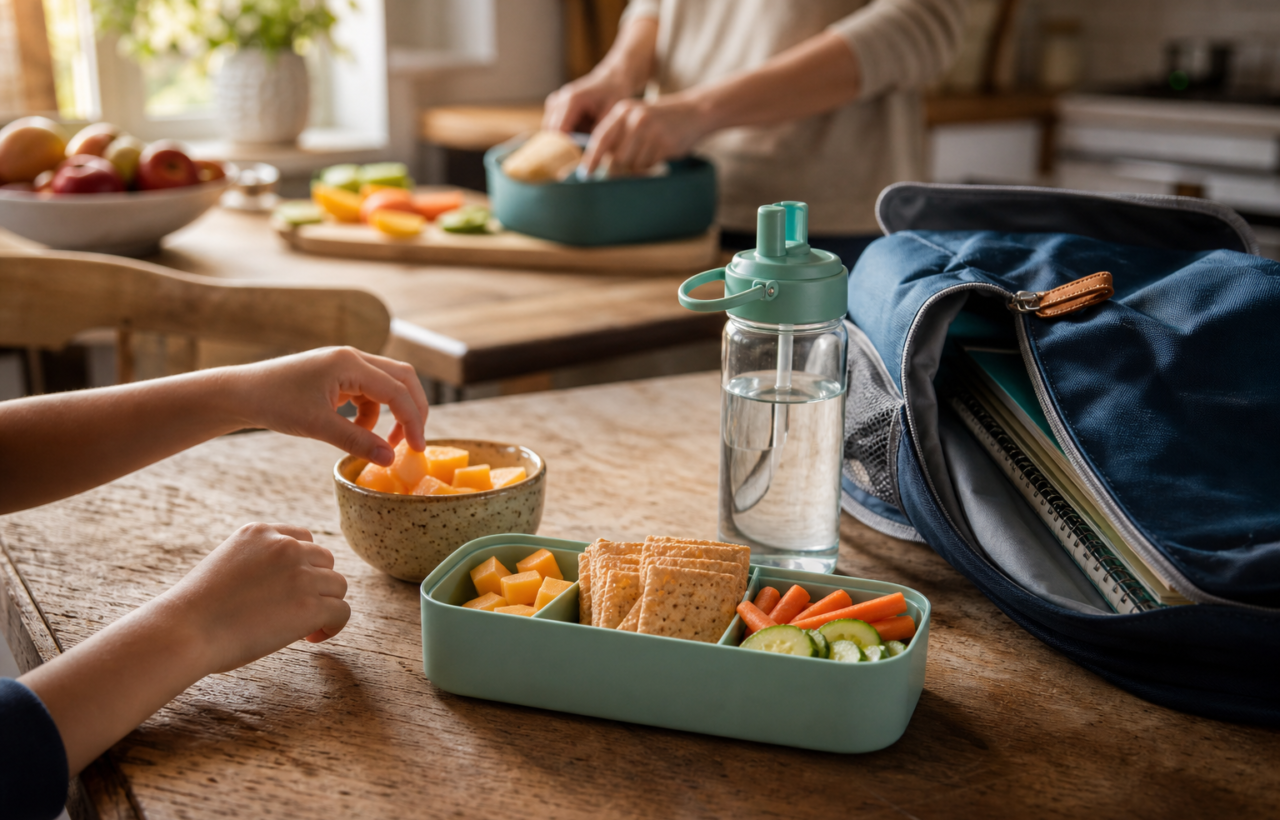
The back-to-school meal prep source reaches the same daily pressure point from a different angle. It reports that preparing grab-and-go snack portions before the week starts can make the after-school rush less reactive. Examples reported by that source include crackers, fruit, muffins, vegetable sticks, yogurt, trail mix, and granola bars.
The synthesis is straightforward: the after-school snack is both a nutrition question and a systems question. A nourishing option matters, but so does whether it is ready before hunger peaks.
Access matters as much as intention
The snack access source frames unequal access to nourishing snacks as one everyday way food insecurity can show up. It reports that some children may rely on foods that are filling but low in important nutrients, while others may have no snack at all. That distinction matters because fullness and nourishment are not the same thing.
The meal prep source focuses more on families who can prepare components in advance. It recommends lowering the number of small food decisions that land on parents during school mornings, lunch packing, snack time, and dinner prep. That advice can be useful, but it also depends on having ingredients, time, storage, and enough predictability to prepare ahead.
Read together, the sources suggest that snack planning should not be treated only as an individual discipline issue. A child needs access to food that is available at the right time, acceptable enough to eat, and nourishing enough to support the rest of the day.
Meal prep works best when it removes repeat decisions
The back-to-school prep source argues for preparing pieces rather than building a perfect menu. It reports make-ahead breakfast options such as overnight oats, egg bites, muffins, yogurt parfait ingredients, and smoothie packs. For lunches, it points to flexible components such as washed fruit, chopped vegetables, cooked pasta, rice, wraps, cheese, boiled eggs, and leftover chicken.
That component-based approach fits the snack access concern because it shifts attention from idealized food planning to repeatable routines. A prepared snack area, a few familiar lunch pieces, and a dinner shortcut can reduce the number of decisions made when everyone is tired or hungry.
The same source includes an important caveat: prepared food still has to match what children will actually eat. A fridge full of untouched ingredients does not solve the lunchbox or snack problem. Practical nutrition depends on both quality and use.
Healthy snacks are a support, not a complete solution
The snack access source is careful not to overstate the role of snacks. It does not claim that healthy snacks erase larger pressures such as cost, time, transportation, or consistent grocery access. Instead, it presents snack access as one practical piece of a wider food security problem.
The meal prep source similarly keeps the solution modest. It does not require full meals cooked in advance. It reports smaller steps, such as chopping vegetables, marinating protein, cooking a grain, or preparing one larger batch meal that can become leftovers, lunch fillings, or another quick dinner.
That modesty is useful. Families and communities do not need to pretend that snacks solve school-year food insecurity or weeknight stress. They can still treat snack access as a concrete place to reduce strain.
Key takeaways
- The after-school period is a predictable pressure point because hunger, pickup, homework, activities, and dinner prep can collide.
- The snack access source frames nourishing snacks as part of child well-being and an everyday food security concern.
- The meal prep source shows how prepared breakfast, lunch, snack, and dinner components can reduce repeat decisions during school weeks.
- Filling food is not always nourishing food, and prepared food is only useful if children will actually eat it.
- Healthy snacks can make daily routines steadier, but they do not replace broader solutions for food insecurity.
What a more useful school-year food plan prioritizes
A practical school-year food plan starts with the moment that causes the most strain. For some households, that may be breakfast. For others, it may be lunch packing or the late-afternoon snack rush. The meal prep source suggests choosing the point where the week usually breaks down, then preparing enough pieces to make that moment easier.
The snack access source adds a wider lens: the question is not only whether a family has a clever routine, but whether children can count on nourishing food during a predictable gap in the day. Schools, caregivers, and community organizations can use that framing to focus on access rather than blame.
The most durable approach is likely to be ordinary rather than elaborate: accepted foods, prepared in usable forms, available before hunger becomes urgent. That is where nutrition guidance and family logistics can meet in a way that actually supports the school week.
References
- diapr.ai Blog — Why Healthy Snack Access Matters for Kids and Families
- diapr.ai Blog — Back-to-School Meal Prep That Keeps Weeknights Manageable