

Bottle nipple selection can affect how comfortably a baby latches, how steadily milk moves, and how much air the baby may swallow during feeds. The supplied Bobbie article frames the decision as a mix of shape, material, flow rate, and close attention to feeding cues.
The practical takeaway is that the best nipple is not simply the one labeled for a baby's age. It is the one that supports a calm latch, manageable flow, and a feeding rhythm the baby can handle.
Start With the Feeding Problem, Not the Package Label
Bobbie reports that nipple shape can influence latch depth, air intake, and a baby's ability to move between breast and bottle. That makes the first question less about which nipple looks most natural and more about what is happening during feeds.
According to Bobbie, warning signs of a poor fit can include a shallow latch, milk dribbling from the corners of the mouth, or frequent breaks in suction. Those cues point to a mismatch somewhere in the feeding setup, which may involve the nipple shape, nipple size, bottle design, or flow rate.
- A breastfed baby who is also taking bottles may do better with a wide, gently sloped nipple, which Bobbie says can support a more familiar latch and rhythm.
- An older baby who already feeds well from bottles may be comfortable with a standard, narrower nipple.
- A baby with fussiness, gas, or reflux-like feeding discomfort may benefit from designs intended to reduce air intake, according to Bobbie.
Shape Changes the Latch Experience
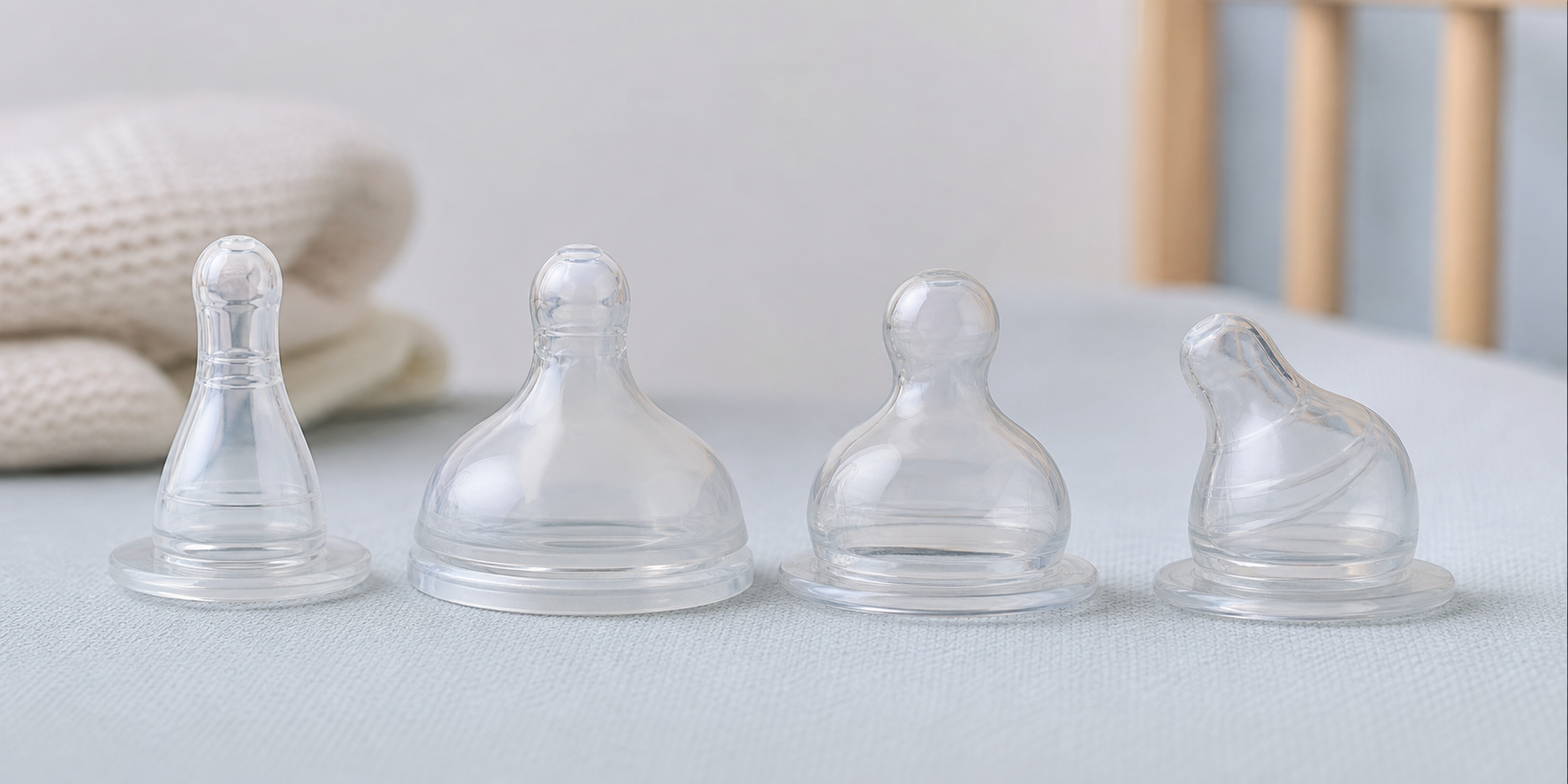
The Bobbie article describes several common nipple shapes, each aimed at a different feeding need. The differences are small on the shelf but can matter in the baby's mouth.
- Standard straight nipples: Bobbie describes these as simple, widely available, and often suitable for older babies who have already learned bottle feeding.
- Wide-neck nipples: Bobbie reports that these are designed to mimic the breast's shape with a gradual slope, which may be useful for families combining breast milk and formula or trying to limit nipple confusion.
- Angled nipples: Bobbie says these may reduce air intake and may help babies who frequently have gas or reflux symptoms during feeding.
- Flat or orthodontic nipples: Bobbie describes these as designed to support oral development and encourage a more natural latch.
- Y-cut or cross-cut nipples: Bobbie identifies these as higher-flow options for hungrier babies or thicker liquids.
The most useful way to compare shapes is to watch the baby's feeding mechanics. A nipple that looks breast-like may still be too fast, too slow, too firm, or simply uncomfortable for a particular baby.
Flow Rate Can Matter as Much as Shape

Bobbie reports that flow rate determines how quickly milk travels through the nipple opening, with brands often using age ranges or numbered levels to indicate speed. The article lists preemie or slow flow nipples, often labeled Level 0 or 1, as options for newborns learning to coordinate sucking, swallowing, and breathing. Medium flow, often Level 2, is described as better suited to older babies or those taking more formula at once. Fast flow, often Level 3 or higher, is described as a choice for babies ready for quicker feeding or thicker liquids.
Age labels can be a starting point, but Bobbie emphasizes feeding cues. A flow that is too slow may lead to long feeds, collapsed nipples, or a baby working hard for little milk. Bobbie specifically flags feeding sessions over 30 minutes in babies past 12 weeks of age as one possible sign that flow may be too slow. A flow that is too fast may show up as gulping, coughing, leaking milk, or fussiness mid-feed.
- Key takeaways: Choose the nipple by watching latch, comfort, and milk control, not by the label alone.
- Wide, gently sloped nipples may suit babies moving between breast and bottle, according to Bobbie.
- Standard nipples may be enough for older babies who already bottle-feed comfortably.
- Coughing, gulping, leaking, collapsed nipples, and unusually long feeds are practical signs to reassess flow.
Material and Wear Affect Feeding Too
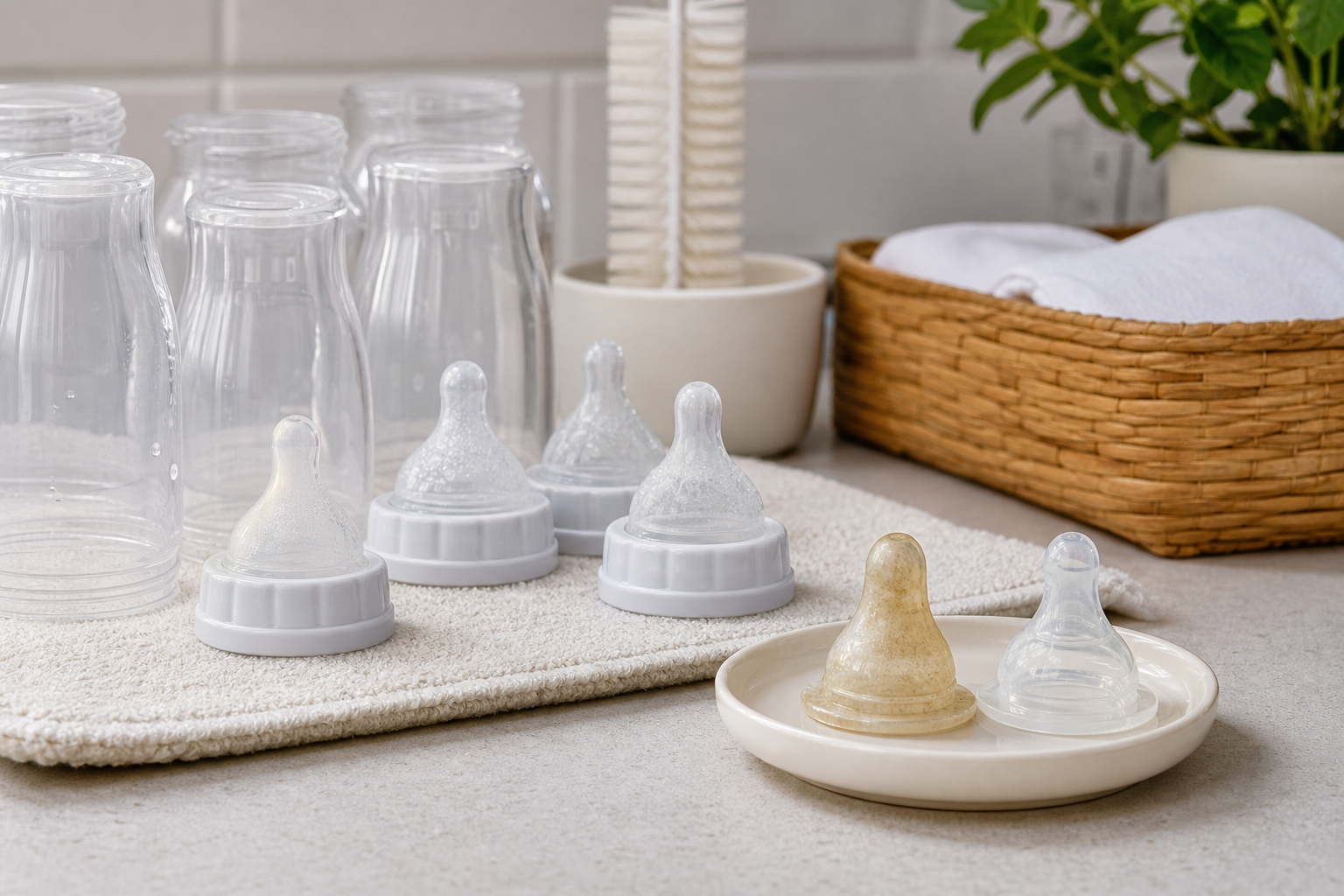
The source distinguishes between silicone and latex nipples. Bobbie reports that silicone is durable, odorless, and holds its shape well, making it a common choice for parents using plastic or glass bottles. Latex is described as softer and sometimes more natural-feeling in a baby's mouth, but Bobbie notes that it degrades faster, can carry a slight taste, and may cause reactions in sensitive infants.
Selection is only part of the job. Bobbie advises checking nipples for thinning, stickiness, and tiny tears. Those signs matter because wear can change feeding performance and may mean the nipple should be replaced.
A Practical Trial-and-Observe Approach
Bobbie recommends experimenting with different sizes and nipple types instead of buying a full set of one style right away. That advice fits the reality of infant feeding: the right setup is often found by testing one variable at a time and watching whether feeds become calmer, shorter, or better coordinated.
<!– wp:list {