

You take off your child’s swimsuit or summer clothes and see the line: protected skin on one side, unmistakable pink or red skin on the other. Before your child has said much, your mind has already built a case against you. You forgot. You failed. Other parents will notice.
The useful order is much simpler: check your child, care for the burn, decide whether medical guidance is needed, and then fix the weak point in your sun-protection routine. A missed shoulder deserves attention. It does not deserve to become a verdict on your parenting.
Your child needs a response, not a verdict
Sunburn is an injury to the skin, so dismissing it would be the wrong response. Turning it into proof that you are a bad parent is also unhelpful. Shame cannot cool the skin, assess a blister, or make the next outing safer.
The mental spiral often begins with a rapid audit: Did the sunscreen cover everything? Did the water interfere? How long ago did you apply it? Did the towel rub it away? That audit can identify what happened, but it needs a stopping point. A long, active day can expose exactly these gaps, even when sunscreen was part of the plan.
Separate three things before they blur together:
- The fact: Your child has an area of red or painful skin.
- The need: The burn must be cooled, protected, monitored, and medically assessed if concerning signs are present.
- The story: You are careless, everyone is judging you, or one mistake defines your parenting.
Deal with the fact and the need first. You can examine the story after your child is comfortable. This is not an excuse to minimize the burn. It is a way to keep guilt from consuming the attention that care requires.
What to do when you notice the sunburn
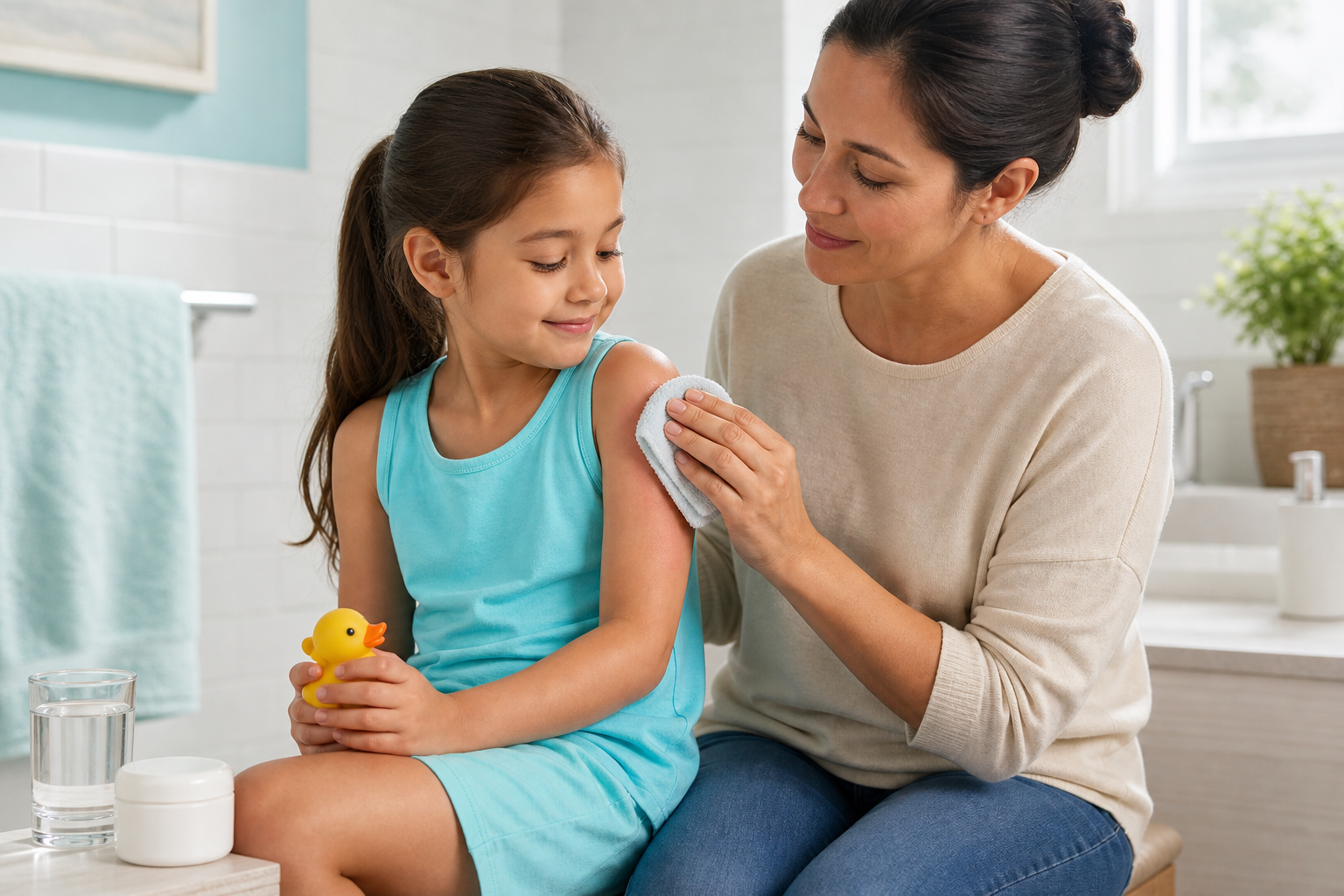
If your child is still outside, do not apply more sunscreen and continue the outing as though nothing happened. End the exposure and move to shade or indoors. Then make a calm assessment of the skin and of how your child is acting overall.
- Get out of direct sun. Cover the affected area loosely if you need to travel home. Avoid tight or rough clothing that rubs painful skin.
- Cool the skin gently. Use a cool bath or a cool, damp cloth. Do not place ice directly on the burn, and do not scrub the area.
- Offer regular fluids. Pay attention to drinking, feeding, alertness, and wet diapers, especially after a long, hot outing.
- Leave blisters and peeling skin alone. Do not pop, pick, or scrub them. Keep the area protected from further sun while it heals.
- Ask before using medicines or skin products. A pharmacist or health care professional can help you choose something appropriate for your child’s age, size, health history, and symptoms.
Call your pediatrician, a nurse line, a pharmacist, or an urgent-care service if the burn blisters, covers a large area, causes pain that is hard to settle, or involves a child who seems unwell. Fever, vomiting, unusual sleepiness, poor feeding or drinking, fewer wet diapers, increasing swelling, or worsening redness also deserve professional guidance. Use a lower threshold for a young infant, even when the visible area appears small.
Seek urgent help if your child is hard to wake, has trouble breathing, has a seizure, collapses, or otherwise appears seriously ill. Do not assume symptoms beyond the skin are merely part of the sunburn.
Turn guilt into one useful piece of information
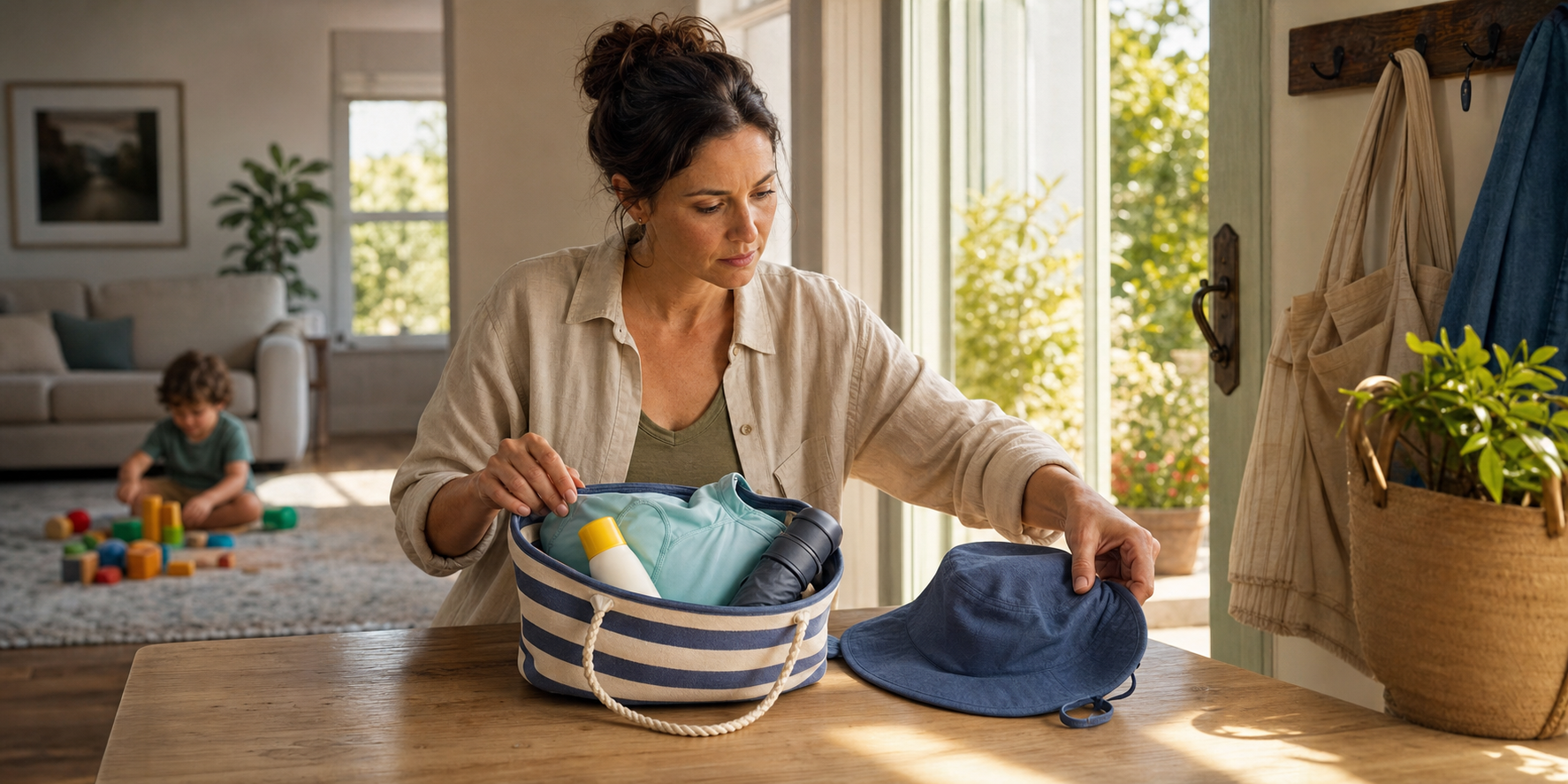
Once your child is cared for, ask what failed in the process. Keep the answer operational. The goal is not to reconstruct every parenting decision you have ever made.
- Was one body area missed during the first application?
- Did the outing last longer than expected?
- Did swimming, sweating, sand, towel drying, or clothing friction affect the coverage?
- Did you rely on memory for reapplication while managing food, water, naps, diapers, toys, and a moving toddler?
- Was the sunscreen packed somewhere inconvenient, making a quick reapplication difficult?
- Did every adult assume someone else was watching the clock?
This distinction matters because different failures need different fixes. A missed shoulder calls for a body-area checklist. A lost sense of time calls for an alarm. Sunscreen buried under the stroller calls for a reachable backup. A child who fights one format may need another child-appropriate option that can still be applied fully according to its directions.
Do not invent a universal reapplication schedule from memory. Use the instructions on the sunscreen you actually carry, and set the reminder from those directions. Add event-based prompts after water play, heavy sweating, and towel rubbing when the label calls for reapplication. Those ordinary parts of a summer day are also the moments when protection can be disrupted and time can disappear.
Useful guilt ends with a change. If you are still repeating the mistake in your head after identifying that change, you are no longer planning. You are punishing yourself.
Build a sun-protection routine that survives toddler life

A good routine should not depend on uninterrupted attention. Babies need feeding and diaper changes. Toddlers run toward water, resist getting dressed, and rarely stand still because an adult needs to cover the back of a knee. Build in prompts and backups that work during that chaos.
Before you leave
- Choose a sunscreen suitable for your child’s age and follow its label. Ask a health care professional if you are unsure what is appropriate for a young infant.
- Apply it at a predictable transition point, using any timing instructions on the product rather than waiting until your child is already running toward the water.
- Use hats, shade, and covering clothing to reduce the amount of exposed skin. These add protection; they do not make it safe to ignore exposed areas.
- Keep the sunscreen with the items you reach for during the outing, not underneath everything else in the bag.
- Create a phone reminder labelled with the action, such as “Reapply child’s sunscreen,” so the alarm still makes sense in the middle of a busy day.
During the outing
- Use both clock-based reminders from the label and event-based reminders tied to swimming, sweating, and towel drying.
- If two adults are present, name who is responsible for the next application. Shared responsibility works better when it is explicit.
- Make the coverage check systematic. Move through the same areas in the same order, including easy-to-miss edges around clothing and swimwear.
- If your child resists, divide the job: one adult can engage or steady the child while the other applies the product carefully.
- When you cannot reapply properly, move to shade, add covering clothing, or end the sun exposure. A rushed partial application should not be treated as full protection.
After you get home
- Look at exposed skin when changing your child, particularly around swimsuit and clothing lines.
- If you find redness, begin care then instead of waiting to see whether guilt or discomfort gets worse.
- Write down the single prevention change while the outing is still fresh. Keep it concrete: move the sunscreen, add an alarm, pack a hat, or assign the next application.
This system does not promise perfect control. It reduces the number of moments in which protection depends on a tired parent remembering one more invisible task.
Key takeaways
- A child’s sunburn needs prompt care, but it is not a measure of your worth as a parent.
- Move your child out of direct sun, cool the skin gently, offer fluids, and avoid ice, scrubbing, or opening blisters.
- Get medical guidance for blistering, a large affected area, difficult-to-settle pain, a young infant, or any child who seems unwell. Serious symptoms need urgent help.
- Identify the specific failure point: missed coverage, lost time, water or towel disruption, inaccessible supplies, or unclear responsibility.
- Use the product label, a named phone reminder, event-based prompts, covering clothing, and shade to make the next outing easier to manage.
For the next outing, make one change now: place the sunscreen beside the bag, create the reminder, or add the missing hat. If you are uncertain about the burn in front of you, make the medical call instead of trying to earn reassurance from an online checklist. The parenting task is not retroactive perfection. It is the next safe response.