

You reach for an old night serum, notice retinol on the label, and suddenly need a clear answer. Set that product aside while you are nursing. Retinol is not recommended during breastfeeding, and there is no reason to improvise with an elective skincare ingredient when its use can simply wait.
A prescription retinoid needs a different response: contact your prescriber or pharmacist instead of stopping treatment on your own. If you have already applied retinol, keep the packaging and gather the details a health professional will need. You do not have to turn one uncertain skincare decision into several rushed feeding or medication decisions.
Key takeaways
- Pause cosmetic products that list retinol while you are breastfeeding.
- Treat retinal, retinaldehyde, retinyl ingredients, and named retinoid medications as reasons to check with a pharmacist or clinician rather than making assumptions from the package.
- Do not independently stop a prescribed retinoid or change how you feed your baby. Ask the prescriber who knows why the medication was recommended.
- Use a simple routine built around gentle cleansing, moisturizer, and broad-spectrum sunscreen while you clarify which treatment ingredients suit you.
- Keep cosmetic skincare away from the nipple and any area your baby’s mouth will directly touch.
The recommendation is precautionary. That means a product’s low percentage, occasional use, small application area, or “gentle” marketing does not give you a reliable do-it-yourself safety cutoff. If the label says retinol, the practical choice is to pause it.
Read the ingredient list, not the promise on the jar
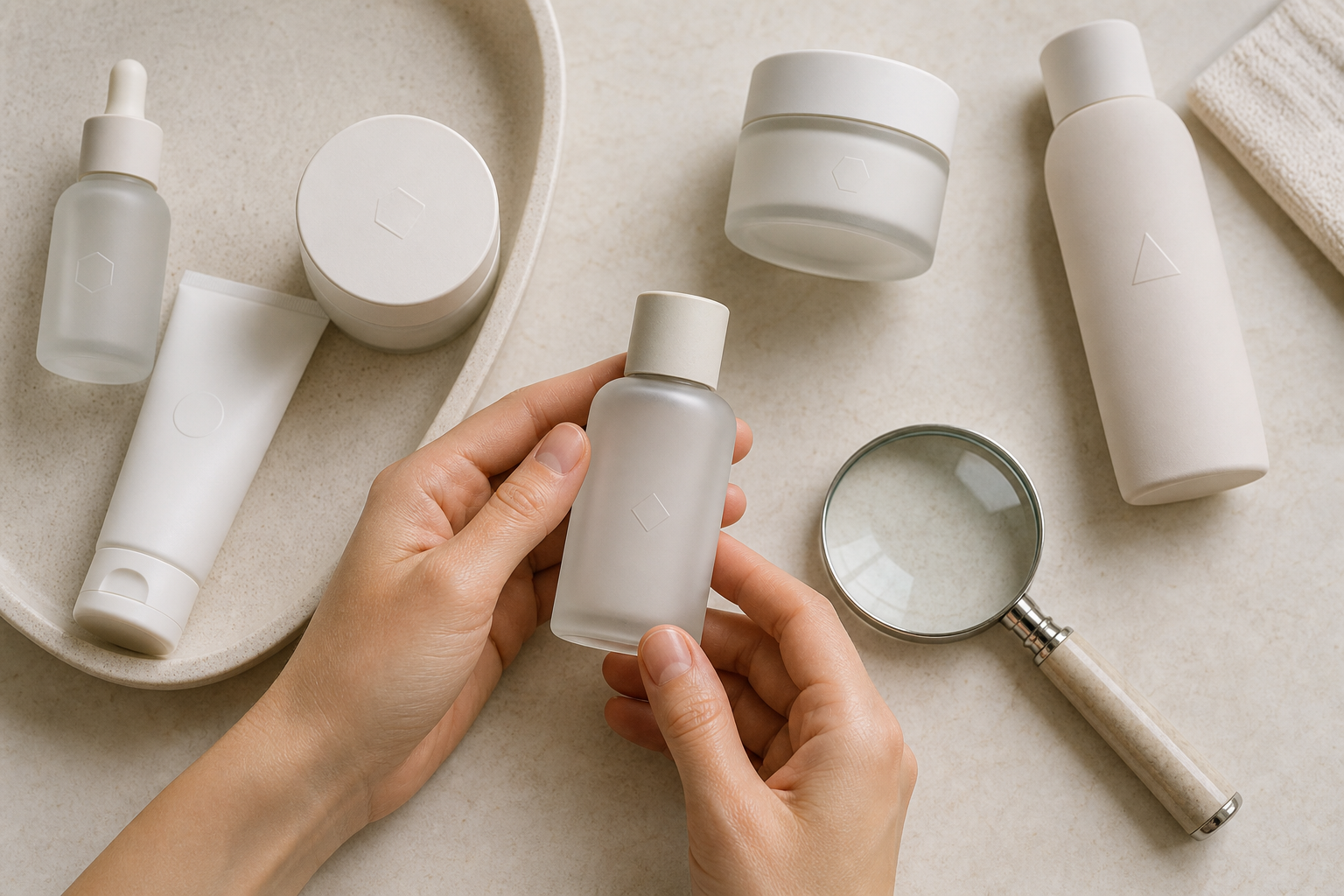
Retinoid is an umbrella term for vitamin A-derived compounds. Retinol belongs to that family, but it is not the only name you may encounter. Products marketed for fine lines, skin renewal, texture, dark spots, or acne may contain one even when the word “retinol” is not prominent on the front.
Check every treatment product separately, including night creams, serums, eye products, acne treatments, resurfacing products, and combination moisturizers. A daytime product is not automatically retinoid-free, and a rinse-off format is not permission to ignore the ingredient list.
- If the list says retinol, pause the product.
- If you see retinal or retinaldehyde, set the product aside and verify it before using it.
- If an ingredient begins with “retinyl,” such as retinyl palmitate, ask a pharmacist or clinician rather than deciding from the product’s marketing.
- If you see a medication name such as tretinoin, adapalene, tazarotene, or isotretinoin, treat it as a medication question. The route, strength, treatment area, and reason for use all matter.
- If the full ingredient list is missing or unclear, contact the manufacturer or choose a product with a complete label.
Do not rely on phrases such as “clean,” “natural,” “plant-based,” or “retinol alternative.” Those are not breastfeeding-safety classifications. A botanical product can still lack useful lactation information, and an unfamiliar active should not receive an automatic pass just because it is sold without a prescription.
Replace the job retinol was doing, not just the bottle
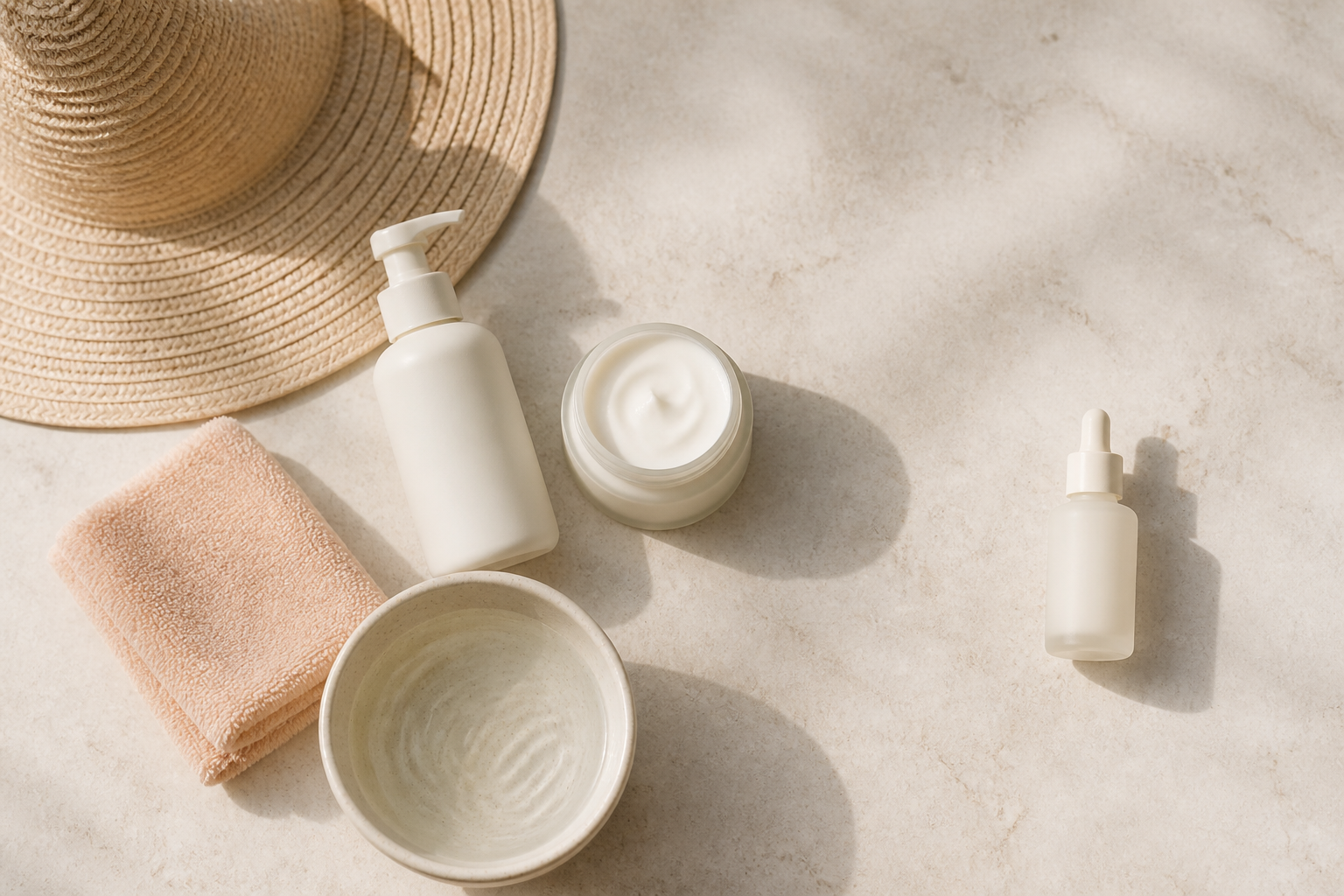
Retinol may have been in your routine for acne, uneven tone, texture, or signs of skin aging. No single substitute performs every one of those jobs. Start by identifying the result you actually want, then choose the smallest routine that addresses it.
For hydration and a disrupted skin barrier, a gentle cleanser and plain moisturizer may be enough. Glycerin and hyaluronic acid are common moisturizing ingredients, not retinoids. A fragrance-free formula can be easier to manage if your skin has become more reactive, although “fragrance-free” does not guarantee that every person will tolerate it.
For dark spots, uneven tone, or fine lines, make broad-spectrum sunscreen the foundation of your morning routine. Sun protection will not reproduce retinol’s effects, but it helps prevent ongoing sun exposure from working against your skincare goal. Choose a sunscreen you tolerate well enough to use consistently.
For acne or persistent pigmentation, ask a clinician whether a non-retinoid ingredient such as azelaic acid, niacinamide, or topical vitamin C is appropriate for you. These ingredients have different purposes and can still irritate skin. The right choice depends on what you are treating, the rest of your routine, your medical history, and where the product will be applied.
Introduce only one new treatment product at a time. If your skin reacts, you will know which product is responsible. Keep the routine away from the nipple and breast skin that contacts your baby’s mouth, wash your hands after applying an active, and let facial products settle before prolonged skin-to-skin contact.
If you already used retinol, collect facts before making changes
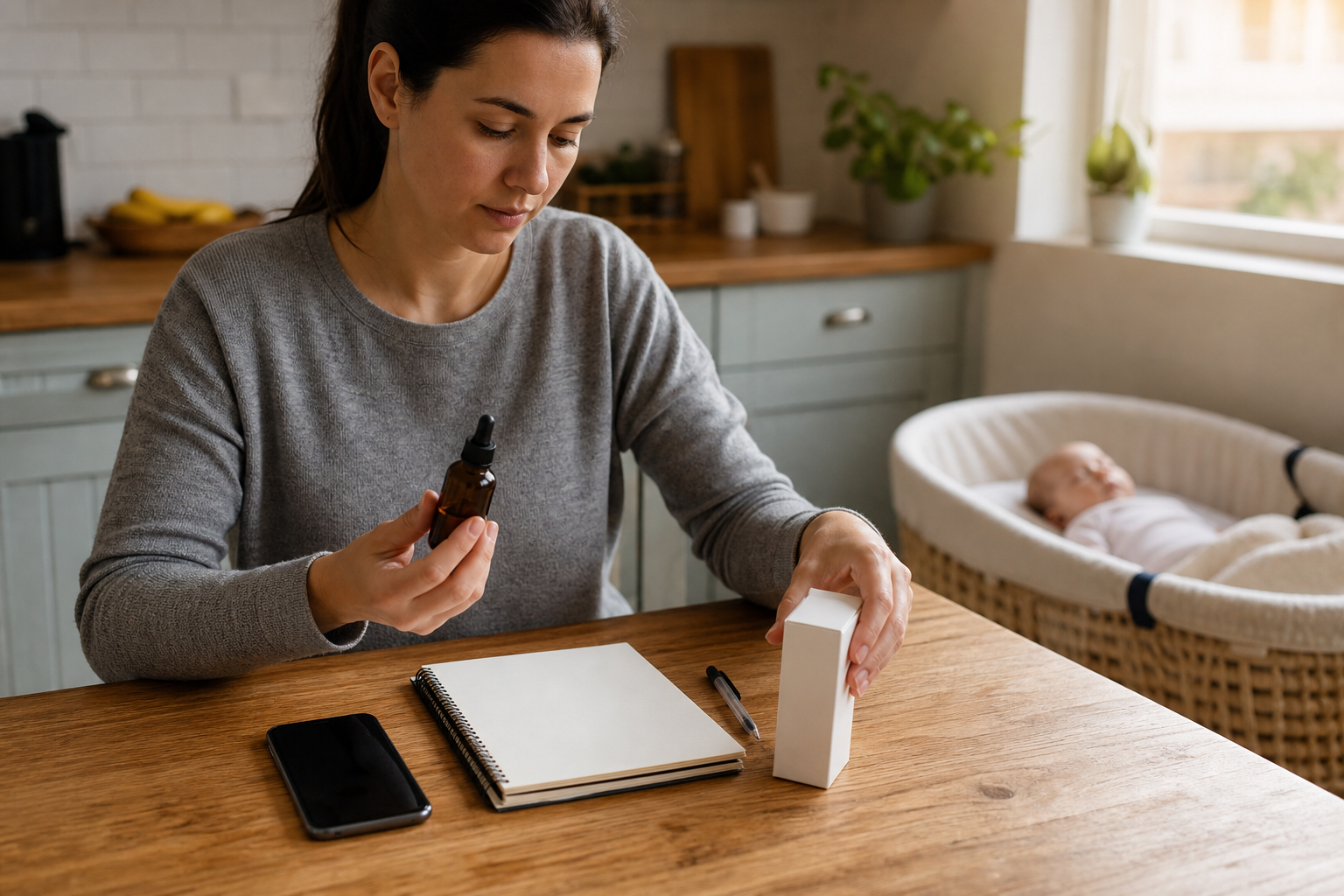
Finding retinol on a label after you have used the product can make every detail feel urgent. The useful next move is to document the exposure accurately. A pharmacist, family doctor, dermatologist, midwife, or other clinician can give better guidance when you bring the product information instead of a guess.
- Pause the product and keep the container, box, or a clear photograph of the complete label.
- Record the product name, listed retinoid, strength if shown, how often you used it, the last time you applied it, and the approximate area treated.
- Note whether you applied it to intact skin, irritated or broken skin, the breast, or the nipple. Mention any possibility of direct contact with your baby’s mouth or skin.
- Tell the clinician your baby’s age and whether your baby was premature or has a medical condition. Those details can affect an individualized assessment.
- If the product was prescribed, contact the prescriber before changing the treatment plan.
Do not begin pumping and discarding milk, skip feeds, switch feeding methods, or stop a necessary prescription solely because a cosmetic label worried you. Those choices have their own consequences and should follow advice tailored to the actual product and exposure.
If your baby swallowed the product itself, treat that as an ingestion rather than an ordinary breastfeeding question. Contact your local poison centre or urgent medical service promptly and keep the packaging beside you. Seek urgent care for concerning symptoms instead of waiting for an online answer.
Prescription and oral retinoids need individual medical review

A cosmetic retinol serum can usually be placed in a drawer without disrupting medical care. A prescribed topical or oral retinoid may be treating a condition that also carries consequences if it is left unmanaged. That risk-benefit decision belongs with the prescriber and pharmacist, not with a skincare label or a general rule pulled from social media.
Get individualized advice before starting, restarting, or continuing a retinoid medication while breastfeeding. Make that contact especially promptly if the medicine is taken by mouth, you are treating a large area, the skin is broken, the application site is on or near the breast, your baby could have direct contact with it, or your baby was born prematurely or has health concerns.
For now, place cosmetic retinol products somewhere separate from your current routine and save a photo of each label. Use a basic cleanser, moisturizer, and sunscreen, then bring your treatment goal and product list to a pharmacist or clinician. That gives you a workable routine today and a clear path back to targeted skincare when it is appropriate.
References