

Your toddler’s first birthday can turn one grocery choice into four: whole, 2%, 1%, or skim milk. For most families, age gives you the starting answer. Your child’s growth pattern, appetite, and family health history tell you whether that answer needs a closer look.
If your child is younger than 12 months, do not use cow’s milk as a replacement for breast milk or iron-fortified infant formula. Plain, pasteurized whole cow’s milk becomes an option at 12 months, provided your child does not have an allergy or sensitivity that makes it unsuitable. Turning one does not mean you need to stop breastfeeding.
Key takeaways by age

- From 12 through 23 months: Whole milk is the usual choice when cow’s milk is being introduced and your child’s clinician has not recommended otherwise.
- From age 2: Most children can move to 2% or 1% milk. A child with limited calorie intake, feeding difficulties, or growth concerns may need an individual recommendation.
- Before age 2: Reduced-fat milk may be considered when a child has excess weight or obesity, or when there is a family history of obesity, high cholesterol, or cardiovascular disease. Those factors call for a clinical conversation, not an automatic carton change.
- At any age: Milk fat is only one part of the decision. The amount of milk and the foods it may be replacing matter too.
Why whole milk is the default after the first birthday
Young toddlers need dietary fat and enough total energy to support growth and brain development. Whole milk supplies more of both per cup than reduced-fat milk, which is why it is generally used during the second year of life.
That extra energy can be particularly useful when a 12- to 23-month-old eats small portions or has an uneven appetite. It should not turn milk into the entire meal, however. Milk contributes protein, calcium, and vitamin D, but it cannot provide everything a toddler needs from a varied diet.
Many children drink about 16 to 24 ounces, or two to three 8-ounce cups, of milk per day, depending on age and how much yogurt, cheese, and other calcium-rich food they eat. Treat that as context rather than a target to force. Regularly filling up on milk can leave less room for meals and snacks.
If your toddler is a selective eater, notice what the milk is doing. Whole milk may be helping them meet their energy needs, but repeated cups between meals may also be suppressing their appetite. Write down the amount offered over one ordinary day before assuming the solution is more milk, less milk, or a different fat percentage.
What actually changes when you choose 2%
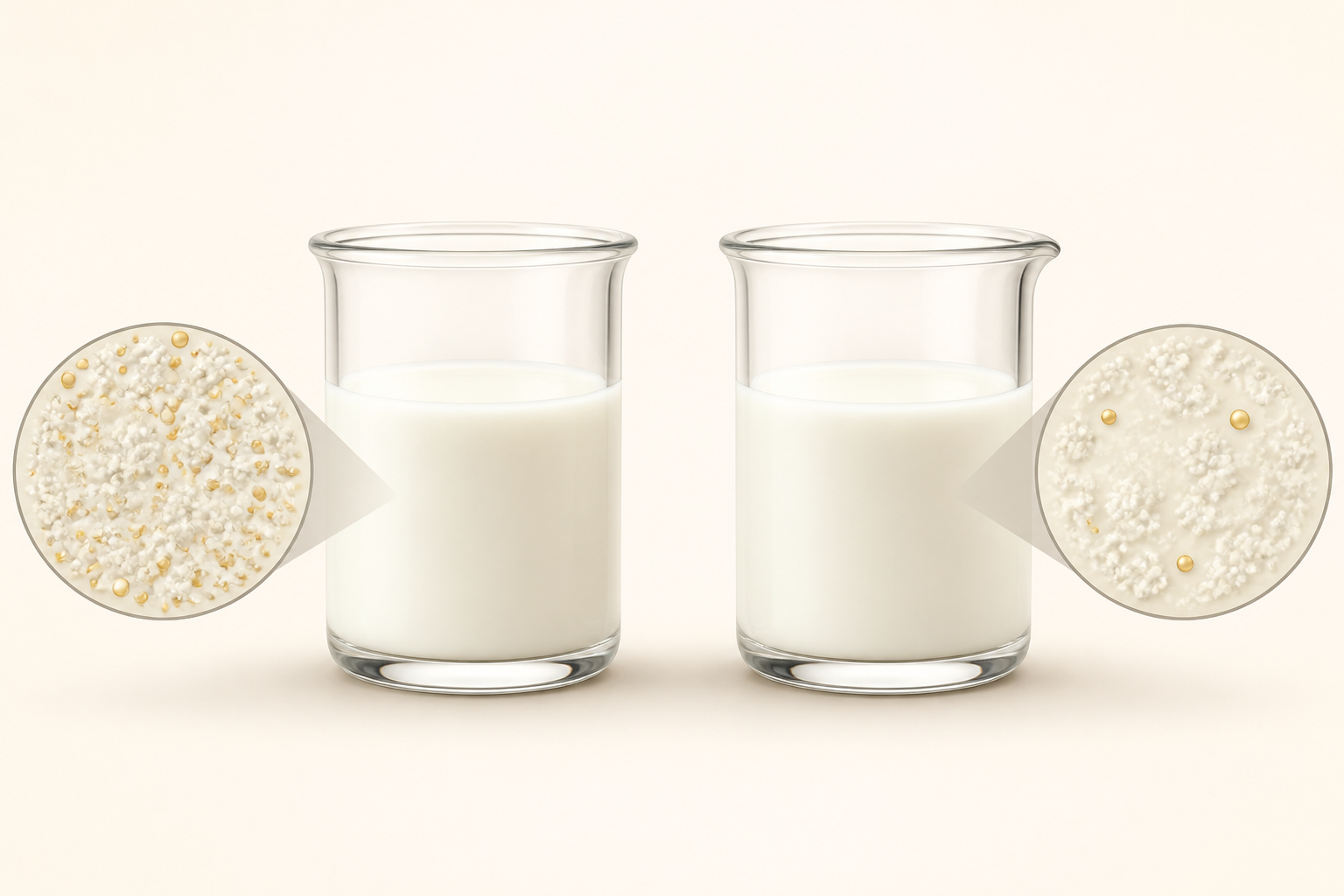
The percentage on the carton describes milk fat. A 2% carton is reduced-fat milk; 1% is low-fat milk; skim is nonfat milk. The clearest practical difference is the amount of energy and fat in each serving.
| Milk type | Calories per 8 ounces | Fat per 8 ounces |
|---|---|---|
| Whole milk | 150 | 8 grams |
| 2% reduced-fat milk | 120 | 5 grams |
| 1% low-fat milk | 106 | 2 grams |
| Skim milk | 83 | 0 grams |
Moving from whole milk to 2% removes 30 calories and 3 grams of fat from each 8-ounce cup. That difference can matter to a small child who eats very little. It does not make whole milk universally healthier, and it does not make 2% a weight-management treatment.
Plain cow’s milk remains a source of calcium, protein, and vitamin D when its fat level changes. Check the nutrition label on the carton you actually buy, particularly if products are fortified differently where you live. Compare plain milk with plain milk; a sweetened or flavoured product introduces a separate nutrition decision.
When reduced-fat milk before age 2 deserves a conversation

Reduced-fat milk may be appropriate between 12 and 23 months when a child has excess weight or obesity, or a family history of obesity, high cholesterol, or cardiovascular disease. A family-history flag is a reason to bring the question to your child’s doctor or registered dietitian. It is not proof that your toddler needs 2% milk.
Milk fat should not be changed early in isolation because the relationship between milk fat and childhood weight is not settled. A large systematic review found that reduced-fat milk might not lower childhood obesity risk. That does not prove whole milk prevents excess weight; it means the carton alone is a poor stand-in for an assessment of growth and the whole diet.
Before the appointment, collect the information that makes the discussion useful:
- Your child’s current milk type and the approximate amount consumed on a typical day.
- A simple record of one ordinary day’s meals and snacks, including other dairy foods.
- The specific family conditions that prompted your concern, such as high cholesterol or cardiovascular disease.
- Any concerns about growth, a very limited diet, feeding difficulty, or persistent refusal to eat.
Your clinician can put those details beside your child’s growth pattern instead of making the decision from one weight measurement or a general worry about fat.
How to make the switch after age 2

A child who accepts the new milk without hesitation can move directly from whole milk to 2%. If yours notices the difference, make the transition gradual and keep the rest of the routine familiar.
- Start with plain, pasteurized 2% milk. It is the smallest step down from whole milk and is usually less noticeable than moving directly to 1% or skim.
- Change one milk occasion first. Offer 2% in the usual cup at a regular meal while keeping the timing, cup, and food familiar.
- Expand once it is accepted. Use 2% at the remaining milk occasions instead of turning the change into a negotiation at every serving.
- Move through 2% before 1% if needed. A gradual whole-to-2%-to-1% transition can be easier for a child who resists the thinner taste of lower-fat milk.
- Watch the total diet, not just the empty cup. If your child eats yogurt, cheese, and other calcium-rich foods, milk does not need to carry the entire nutritional load.
If the concern is lactose sensitivity or cow’s-milk protein allergy, changing from whole to 2% does not address the underlying issue. Lactose-free cow’s milk changes the lactose, not the milk protein. Discuss a suspected allergy or intolerance with a healthcare professional before choosing a substitute, because non-dairy drinks are not automatically nutritionally equivalent to cow’s milk.
At your next grocery trip, choose for the child you have now: whole milk for the typical 12- to 23-month-old, or 2% or 1% once your child is 2. If an exception may apply, keep the current milk while you gather the daily intake and family-history details your clinician needs to make a child-specific recommendation.
References