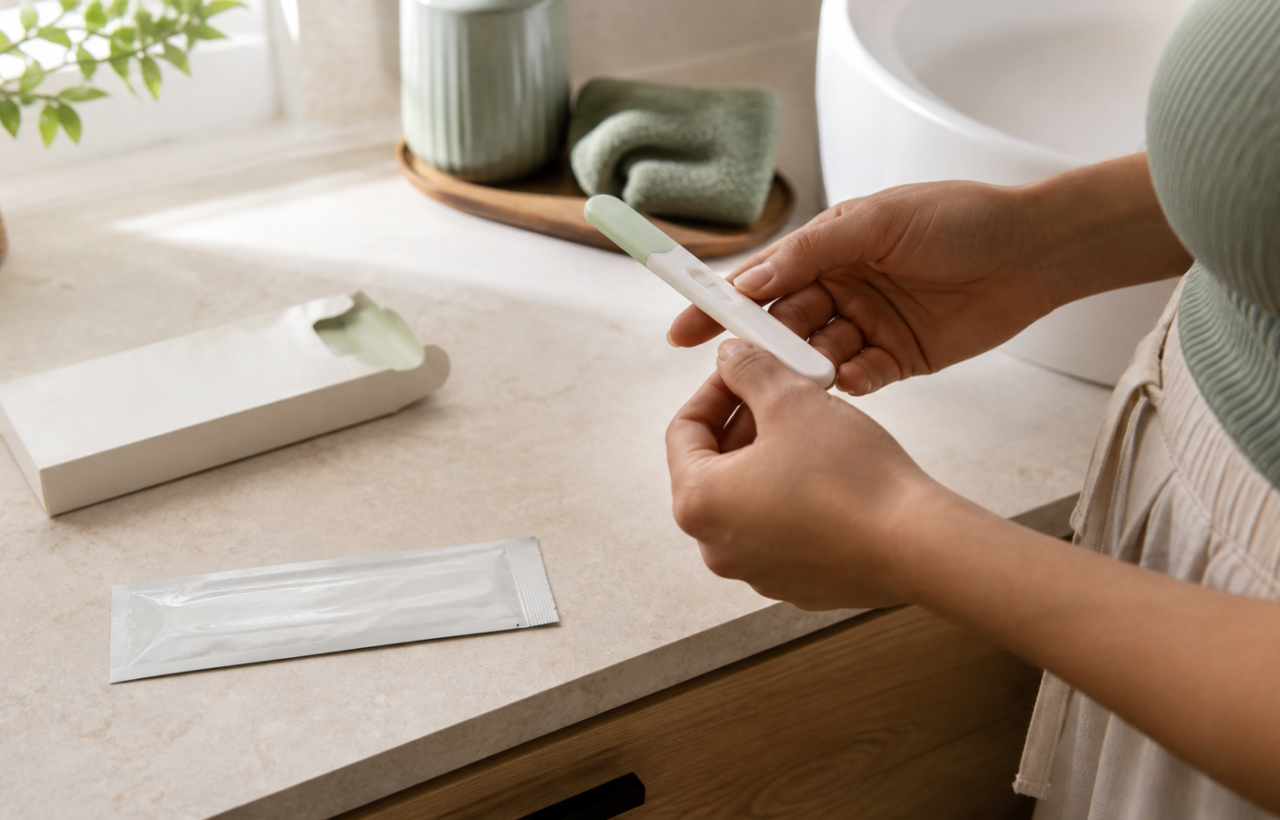
You found a pregnancy test at the back of a cabinet, used it, and only afterward noticed that it had expired. Whether the screen says “not pregnant,” a second line appeared, or the result looks unclear, the practical answer is the same: treat it as provisional.
An expired negative result cannot reliably rule out pregnancy. An expired positive may be correct, but it still needs confirmation with an unexpired test or a healthcare professional. Here is how to decide what to do next without reading more certainty into the old test than it can provide.
Why expiration makes a negative result less trustworthy
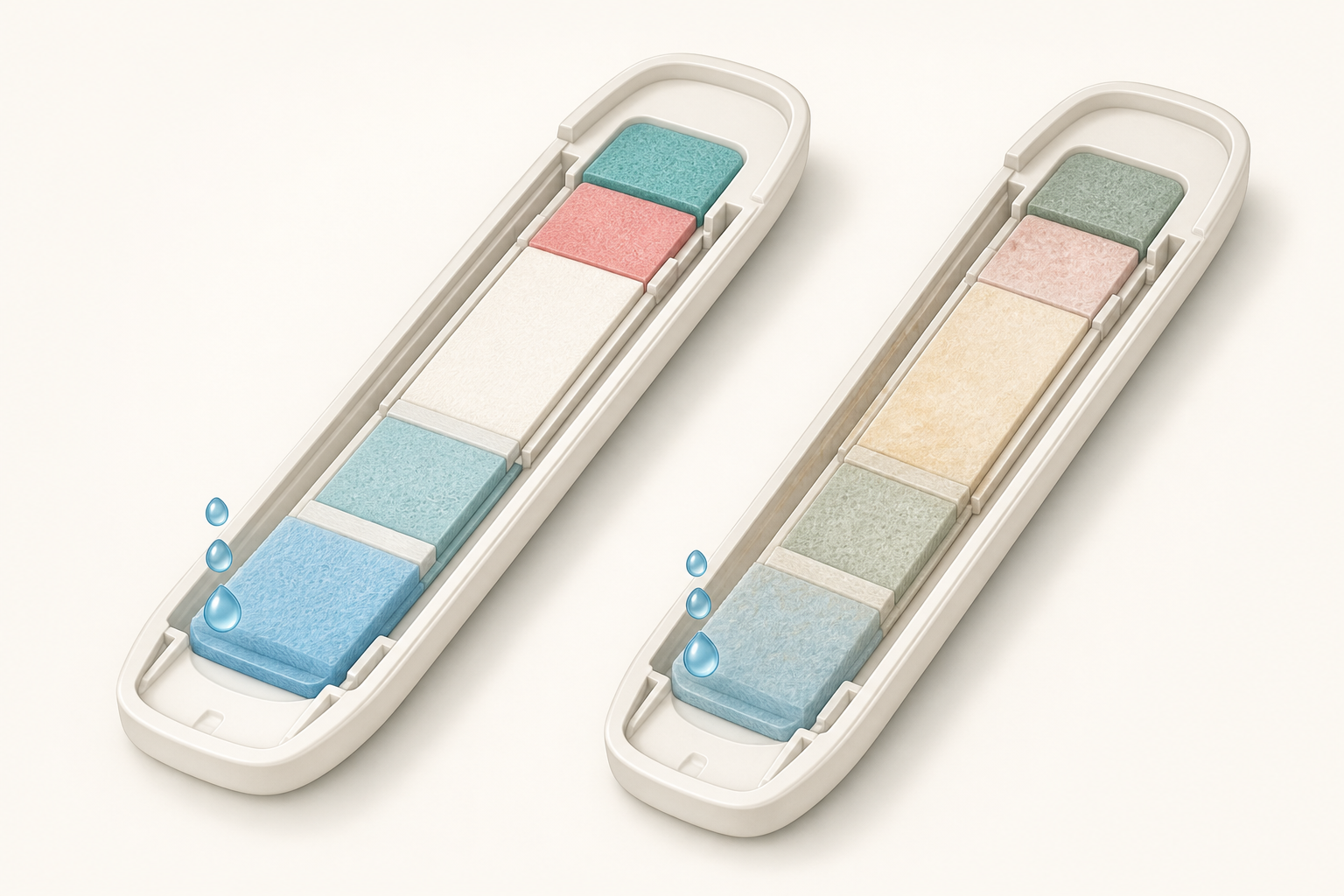
A home pregnancy test looks for human chorionic gonadotropin, or hCG, in urine. The test contains antibodies that react with hCG and produce a line, plus sign, or digital result. After the expiration date, those antibodies may degrade and become less able to detect the hormone.
That creates a particular problem: a false negative. You may be pregnant and have hCG in your urine, but an expired test may fail to register it. Expiration does not mean every test suddenly stops working on the printed date. It means the manufacturer no longer guarantees that the result is accurate, even when you follow the instructions correctly.
This distinction matters when the test appears to work normally. A visible control line or functioning digital display is necessary, but it does not restore the expired test’s original reliability. It only shows that the control part of the test ran. It cannot prove that the hCG-detecting components remain sensitive enough.
You also cannot apply the accuracy claim printed on the box to a test used beyond its validated shelf life. There is no dependable percentage that tells you how accurate your particular expired test remains.
What to do with the result you already have
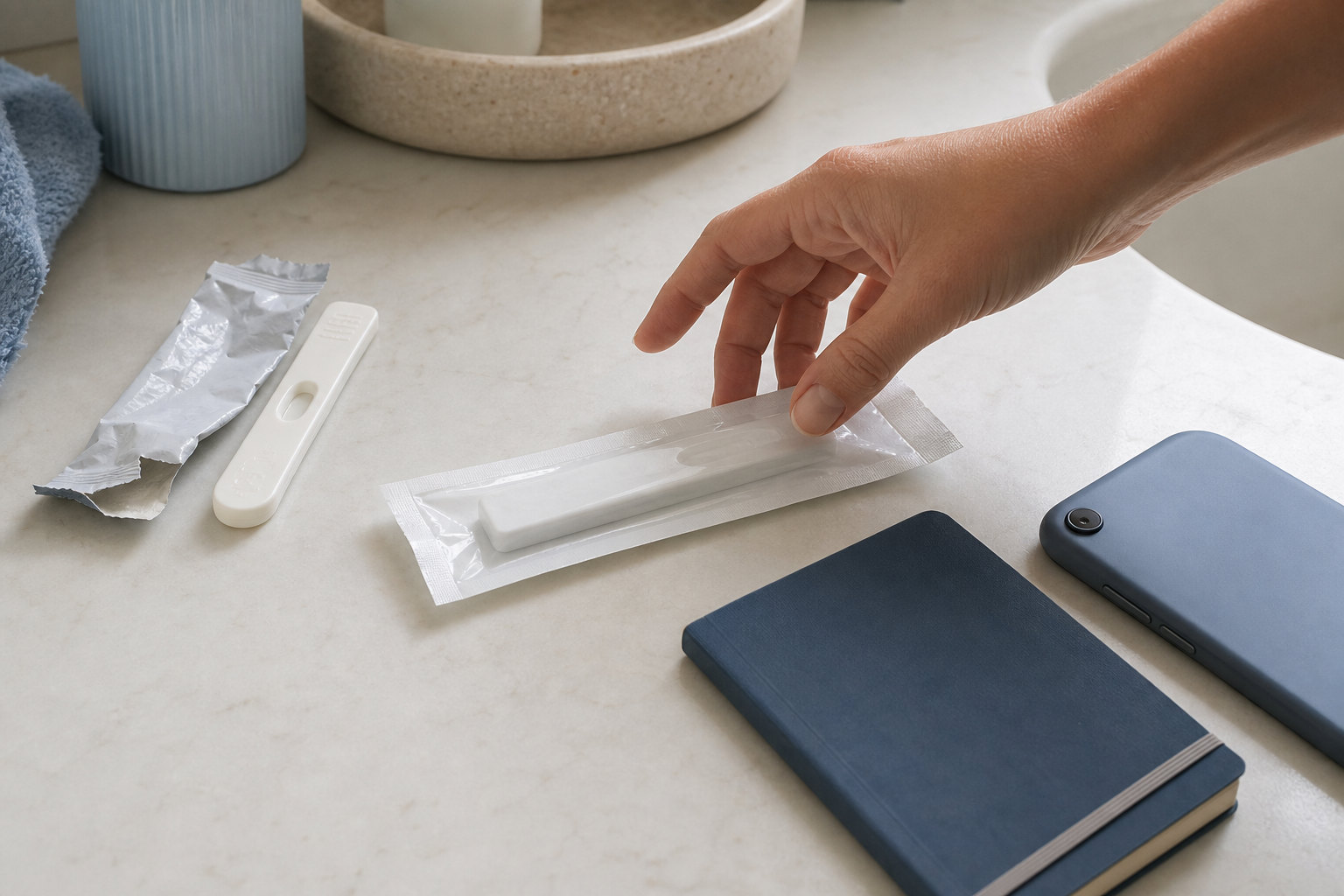
If the expired test was negative
Do not use the result to rule out pregnancy. Take another test that is within its expiration date. If you tested before your expected period, timing may be working against you as well as expiration, so test again after the first day of your missed period.
If you need a dependable answer promptly, your period remains absent, or the result does not fit your situation, contact a healthcare professional. A clinician can arrange confirmation, including a beta hCG blood test when appropriate.
If the expired test was positive
Do not dismiss the result simply because the test was old. An expired test can still produce an accurate result, but there is more room for error after its expiration date. Confirm it with a new, unexpired home test or through a healthcare professional rather than using the expired result as your final answer.
If there was no control line or the screen showed an error
Treat the test as invalid, not negative. A missing control indicator means the test did not demonstrate that it worked as intended. Discard it and start again with an unexpired test.
If two tests disagree
Do not keep taking expired tests to break the tie. Use an unexpired test under the best testing conditions, or ask a healthcare professional for confirmation. Professional confirmation is the safer route when the answer will affect an immediate health decision.
How to make your repeat test more reliable
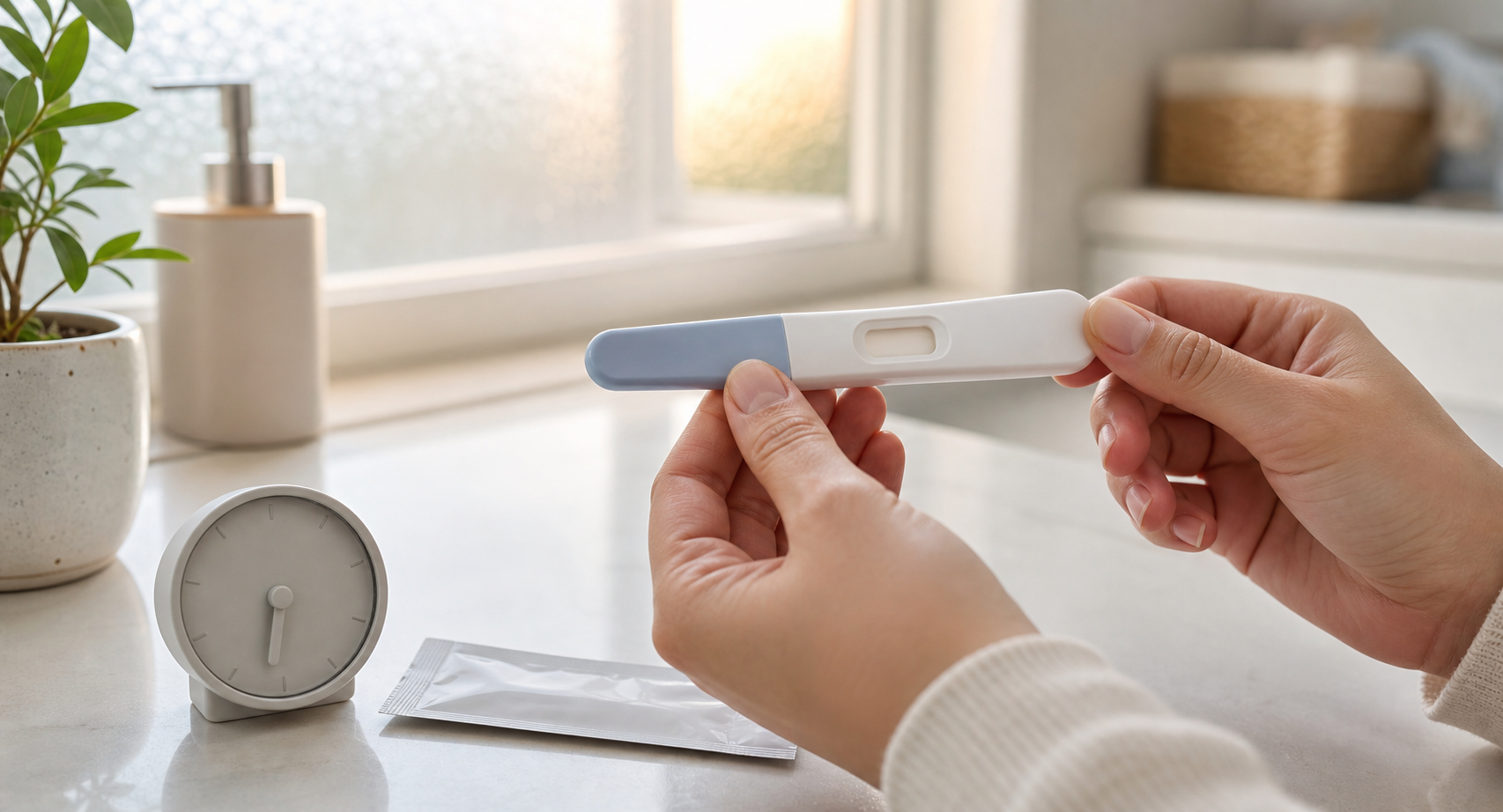
Replacing the expired test removes one source of uncertainty, but timing and technique still matter. Use this sequence for the clearest result:
- Check the expiration date before opening the test. If you cannot find or read the date, use a different test whose date you can verify.
- Test after your missed period when possible. Urine tests are most accurate after a missed period. Standard home tests may detect hCG about 12 to 15 days after ovulation, while some early-detection products are designed for roughly 7 to 10 days after ovulation. Because the exact day of ovulation is not always clear, the missed-period timing is easier to apply.
- Use your first urine after waking. Morning urine is usually more concentrated, which can make hCG easier for the test to detect, particularly around the earliest useful testing window.
- Follow that product’s instructions exactly. Use the specified method, whether that means holding the test in the urine stream or dipping it into a collected sample. Different products can require different contact and waiting times.
- Set a timer before looking at the result. Do not decide that a test is negative because nothing appeared immediately. Many tests require at least five minutes, but the correct time is the one printed in your test’s instructions.
- Verify the control indicator. If the control line, symbol, or digital equivalent does not appear, the result is invalid and you need another test.
Correctly used urine pregnancy tests can be up to 99% accurate, but that figure depends on using a test that is still within its shelf life and following its directions. It should not be carried over to an expired test.
Expired pregnancy test FAQ
Do digital pregnancy tests expire too?
Yes. Digital tests still rely on test components that detect hCG. The optical sensor, battery, and digital display do not make the underlying chemistry immune to age. Both digital and non-digital tests have expiration dates.
Where is the expiration date printed?
Look on the side or bottom of the box. Manufacturers may also stamp the date on each foil wrapper or on the test itself, which is useful if the original box is gone. Home pregnancy tests commonly have a shelf life of about two to three years from manufacture, depending on the brand. Use the printed expiration date rather than estimating from when you bought it.
Can poor storage damage an unexpired test?
Yes. Extreme temperature changes can compromise a test before its expiration date. Pregnancy tests should not be stored where the temperature falls below 36 F or rises above 86 F, approximately 2 C to 30 C. A bathroom or car that regularly becomes very hot or cold may therefore be a poor storage location. If you know a test experienced extreme temperatures, replace it even if the printed date has not passed.
The next step does not require interpreting the old result more closely. Replace the expired test, use the new one at the right time, and follow its exact instructions. If the new result is unclear, conflicting, or too consequential to leave uncertain, get confirmation from a healthcare professional.
References