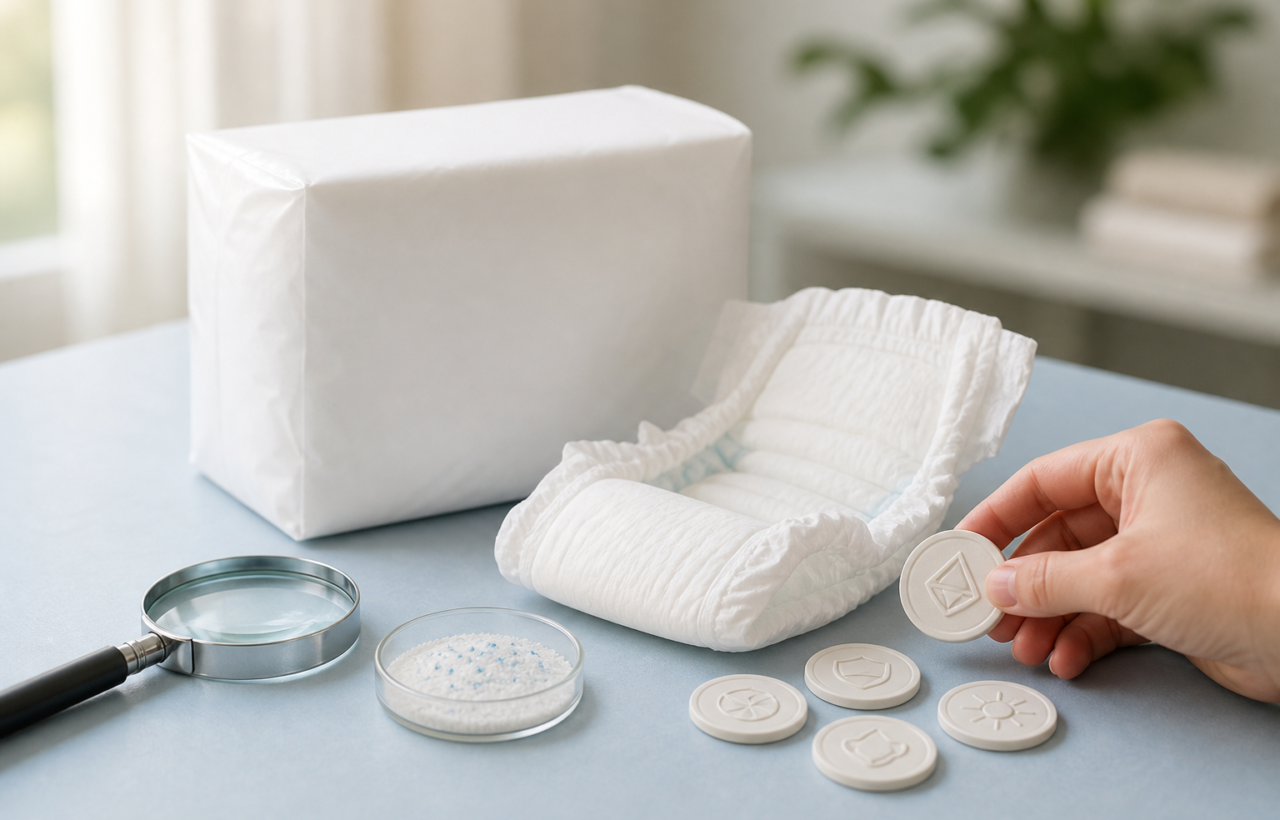
A diaper box can display the word “pure,” a leaf icon and several official-looking seals without answering the question you actually care about: what was independently checked before this product touches your baby’s skin?
The useful labels are the ones with a named issuer, published criteria and a way to verify the exact diaper. Once you know what each certification covers, you can screen a crowded shelf in minutes without treating every reassuring claim as proof.
A certification is a filter, not a guarantee
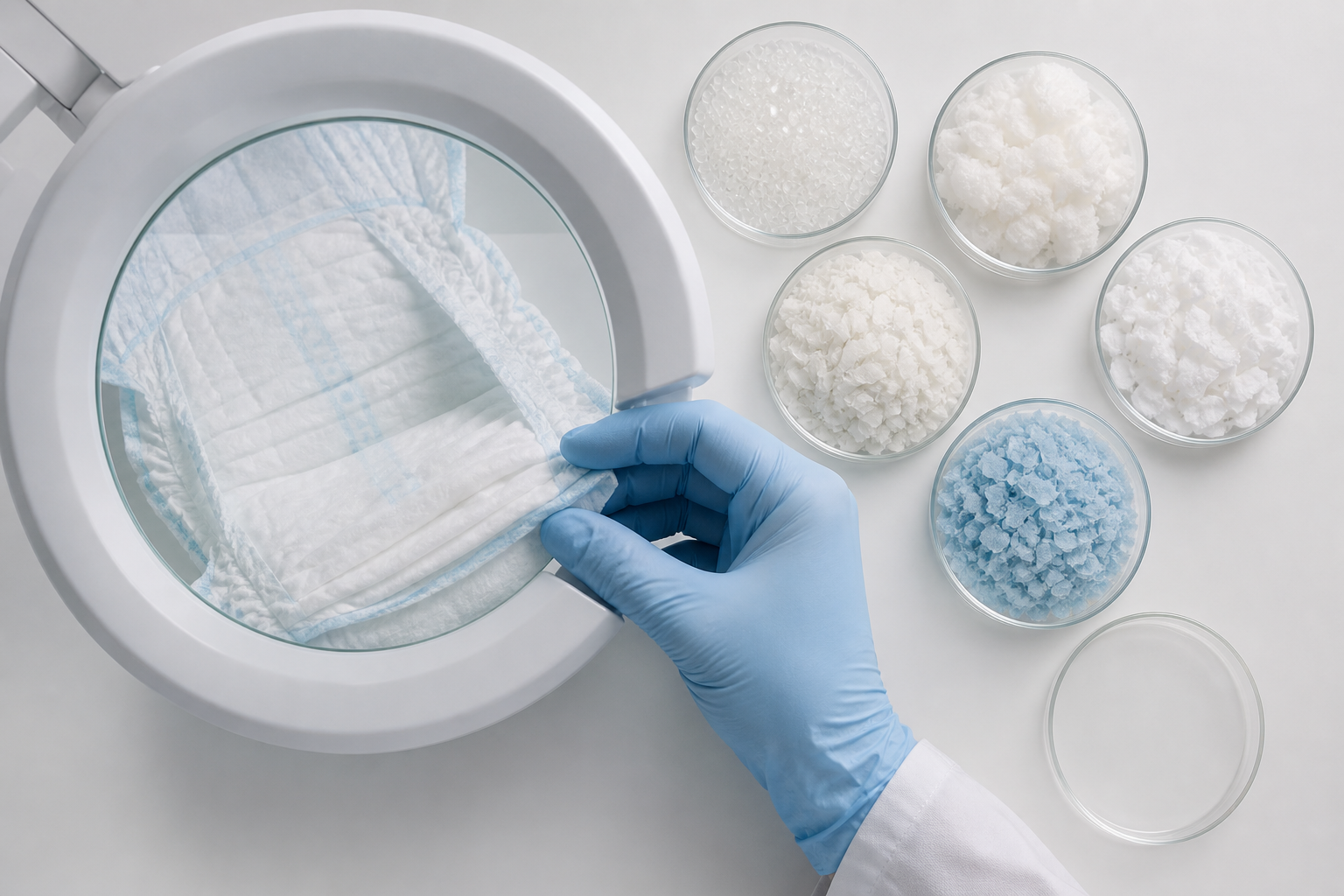
A meaningful third-party certification tells you that an organization outside the diaper company evaluated the product against defined requirements. It should also tell you what was assessed. That might be the formulation, clinical safety information or the finished diaper’s components.
That is more useful than a broad claim such as “gentle,” “natural,” “pure,” “non-toxic” or “chemical-free.” Those words do not have standardized, verifiable meanings in this context. They may express a brand’s positioning, but they do not tell you what was tested, which substances were screened or who checked the claim.
Certification still cannot promise that your baby will never react. Individual sensitivities differ, and a seal only addresses the criteria within its scope. Treat it as a way to narrow your options and reduce uncertainty, not as a diagnosis or an absolute safety guarantee.
Two labels answer different diaper-safety questions
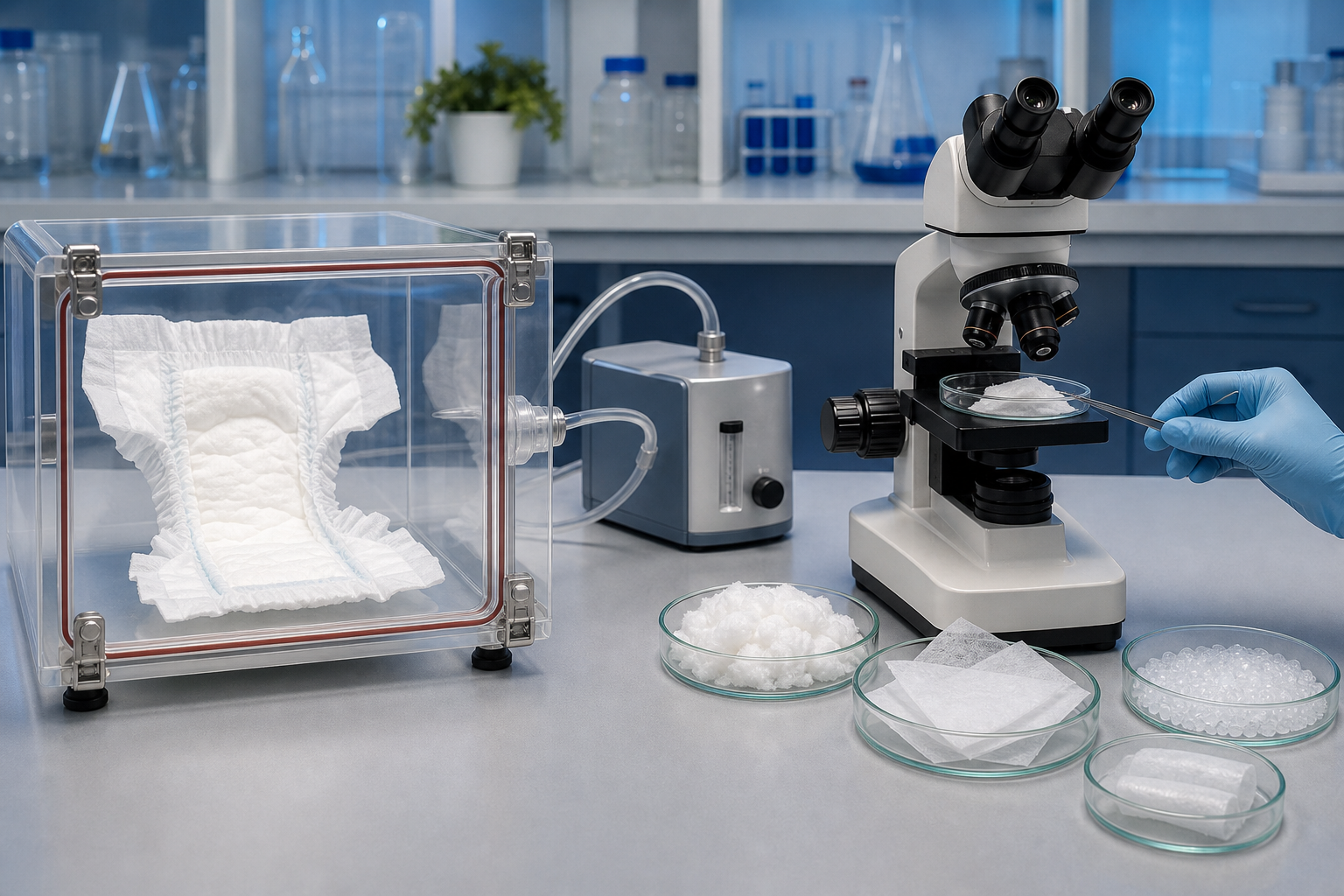
The National Eczema Association Seal of Acceptance and OEKO-TEX STANDARD 100 Class 1 are especially relevant when you are evaluating diapers for sensitive or eczema-prone skin. They are not interchangeable. Each examines a different part of the safety picture.
The National Eczema Association Seal of Acceptance
For skin that is prone to eczema or irritation, this seal addresses the most direct concern. The National Eczema Association reviews the full ingredient list and formulation against substances known to be unsuitable for eczema-prone or sensitive skin. A company must also submit clinical safety information that includes at least one evidence-based testing protocol.
The practical value is specificity. The seal applies to an accepted product, not automatically to every diaper or wipe sold by the same company. If one diaper line carries it, do not assume a similarly named line, overnight version or pack of wipes passed the same review. Confirm the full product name in the accepted-product directory.
OEKO-TEX STANDARD 100 Class 1
This certification answers a broader materials question: were the diaper’s components screened for harmful substances? Under OEKO-TEX STANDARD 100, the finished product is assessed, including components such as the layer against the skin, elastics, adhesives and printing inks. The screening covers hundreds of substances.
Class 1 is the category for products intended for babies and children up to age 3, and it has the standard’s strictest requirements. Certification must be renewed annually, so verify the current product rather than relying on an old package photo or an undated badge in a marketplace listing.
OEKO-TEX certification does not mean a diaper is hypoallergenic, and it cannot guarantee that your child will tolerate it. It shows that the submitted finished product met the applicable substance-testing requirements. A diaper carrying both OEKO-TEX Class 1 and the eczema association’s seal has answered two separate questions: one about screened substances across its components and another about suitability for eczema-prone or sensitive skin.
The made-without list is more useful than soft marketing words
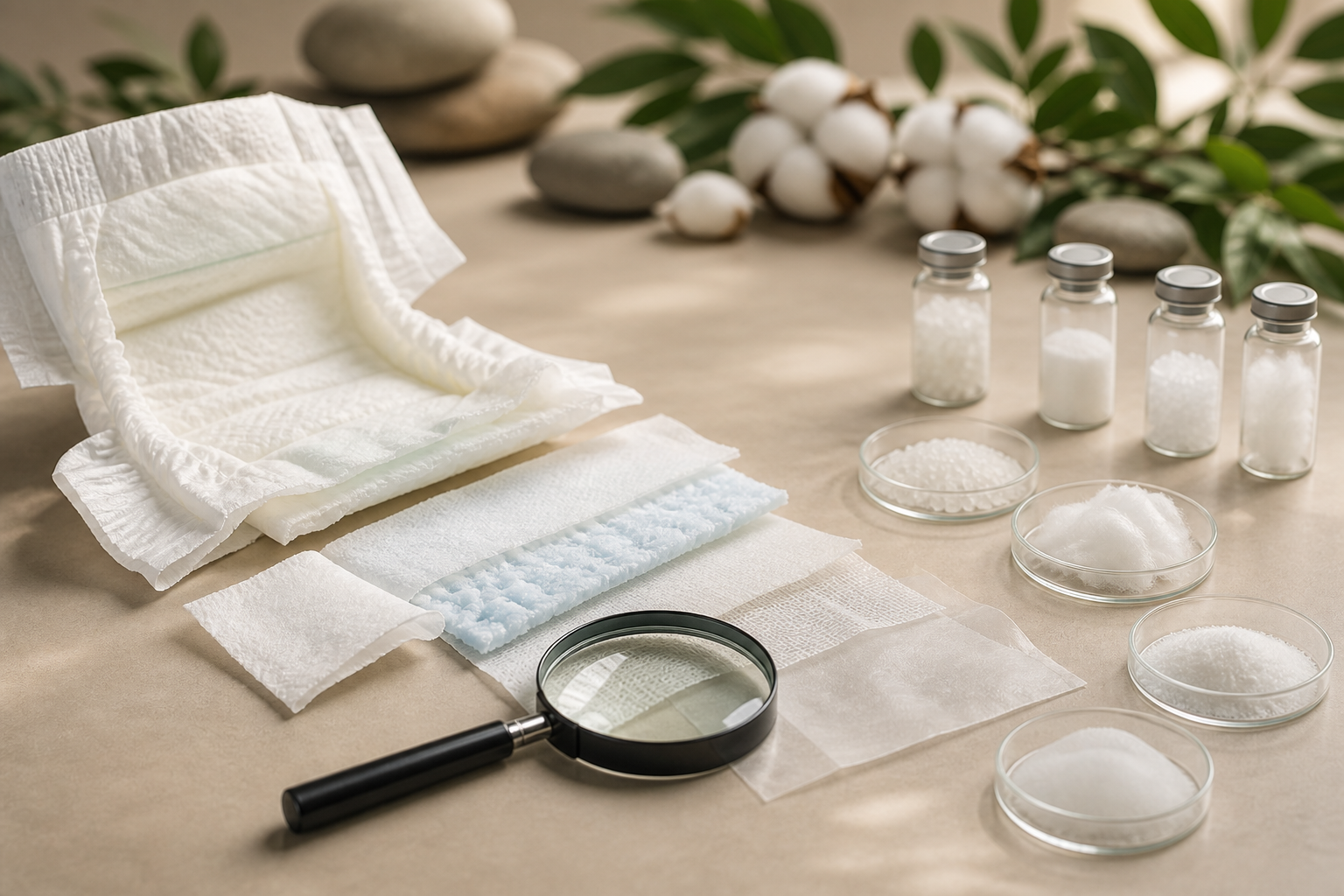
After checking certifications, turn the package over and look for exact exclusions. A statement such as “made without fragrance, lotion, parabens and latex” gives you concrete details to compare. “Designed to be gentle” does not.
Pay particular attention to the difference between “fragrance-free” and “unscented.” An unscented product may still use fragrance to mask another smell. For eczema-prone skin, fragrance-free is the more useful label. Apply the same check to wipes; a certified diaper does not tell you anything about a separately purchased wipe.
Parabens require more nuance. A 2021 study by Loreen Thurmann and colleagues in Allergy reported an association between prenatal paraben exposure and atopic dermatitis-related outcomes in children. That is suggestive evidence, not proof that parabens in a diaper cause eczema or that removing them will resolve a rash. If you prefer to avoid them, choose a package that explicitly says they are excluded instead of treating a broad “clean” claim as equivalent.
Do not make “chemical-free” your goal. Diaper fibers, absorbent materials, adhesives and water are all chemical substances in the ordinary scientific sense. The phrase does not define a testable product category. A better question is: which relevant substances were excluded or tested, by whom, and under what standard?
Other badges may matter, but they do not prove skin safety
Some logos on diaper packaging are legitimate indicators of regulatory status, manufacturing practices or responsible sourcing. The problem comes when they are mistaken for evidence that the diaper was independently evaluated for irritation or harmful substances.
| Badge or claim | What it can tell you | What it does not establish |
|---|---|---|
| FDA registration | The company has completed the relevant registration needed to ship its products in the United States. | It does not mean the FDA tested or approved that diaper. |
| CE mark | The manufacturer declares that the product meets applicable European Union requirements. | It is not, by itself, an independent third-party skin-safety certification. |
| ISO 9001 or ISO 13485 | The factory follows defined, consistent quality-management processes. | It does not show that the specific diaper is compatible with your baby’s skin. |
| FSC or PEFC | Wood pulp comes from responsibly managed forest sources. | It does not assess eczema suitability or irritation risk. |
You do not need to dismiss these marks. FSC or PEFC certification can be relevant when responsible forestry is part of your buying decision, and process standards can tell you something about manufacturing controls. Just keep each badge in its lane. A sourcing claim cannot stand in for a skin-focused review.
A five-minute check before you buy a new diaper
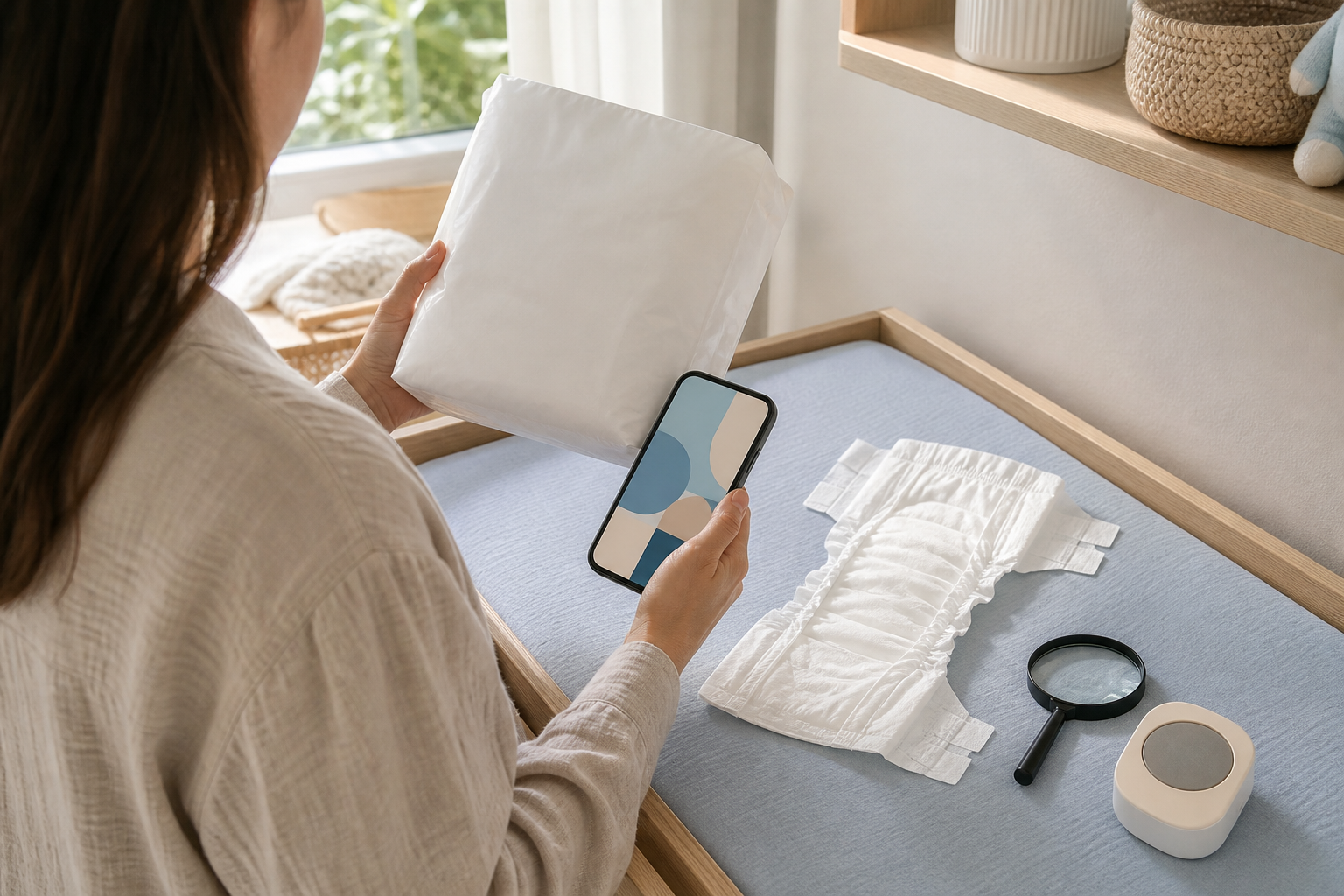
- Ignore the mood words first. Set aside “pure,” “gentle,” “clean,” “natural,” “non-toxic” and similar front-of-box language until you find a claim with defined criteria.
- Identify the issuer. Look for the National Eczema Association Seal of Acceptance or OEKO-TEX STANDARD 100 Class 1 rather than an official-looking icon with no named organization behind it.
- Verify the exact product. Search the issuer’s online directory and match the full diaper line or wipe name. Certification is product-specific, not brand-wide.
- Check what is absent. For irritation-prone skin, prioritize an explicit “fragrance-free” statement. Compare other clearly listed exclusions, including lotion, parabens and latex, according to your child’s known sensitivities and your preferences.
- Check whether the evidence is current. OEKO-TEX certification is renewed annually. Do not rely solely on an old retailer image, a review of a previous version or a seal attached to another product in the range.
If your child has severe eczema or established sensitivities, you can ask the manufacturer for current third-party laboratory results covering formaldehyde, heavy metals and phthalates. Ask which exact product was tested and when. A general statement about the brand is not the same as results for the diaper you plan to use.
If a rash persists or becomes worse, contact your pediatrician. Even a well-certified, fragrance-free diaper can cause an individual reaction, and persistent irritation may have a cause that cannot be identified from packaging.
Key takeaways
- The National Eczema Association Seal of Acceptance is the more direct check for a product intended for eczema-prone or sensitive skin.
- OEKO-TEX STANDARD 100 Class 1 screens the finished product’s components for harmful substances under requirements intended for children up to age 3.
- Neither certification guarantees that an individual baby will not react, and OEKO-TEX does not mean “hypoallergenic.”
- “Fragrance-free” and a specific made-without list are more actionable than “unscented,” “pure,” “non-toxic” or “chemical-free.”
- Always verify the exact diaper line in the certifier’s directory rather than extending one product’s certification to an entire brand.
Before your next order, save the exact name of the diaper that works, photograph its certification and exclusion panels, and verify any unfamiliar seal in the issuer’s directory. That small record makes the next purchase a repeatable decision instead of another round of decoding the box.
References
- Scary Mommy – Did You Know Diaper Safety Certifications Were A Thing? Here’s What They Mean
- National Eczema Association – Seal of Acceptance criteria and accepted-product directory
- OEKO-TEX – STANDARD 100
- American Academy of Dermatology – Eczema-Friendly Products
- Allergy – Loreen Thurmann et al., “Prenatal paraben exposure and atopic dermatitis-related outcomes among children,” doi:10.1111/all.14890