Your toddler suddenly sits up screaming, stares past you and pushes you away when you try to help. Their eyes may be open, but they don’t seem to know you’re there. Then, after an upsetting stretch of crying or thrashing, they settle back to sleep.
That pattern can fit a night terror. It looks frightening because your child appears terrified, yet the most helpful response is usually quieter and less hands-on than your instincts may suggest. Your immediate jobs are to check for anything medically urgent, prevent injury and let the episode pass without trying to force your child awake.
First, check whether the pattern fits a night terror
A night terror isn’t simply a very bad dream. It is a partial awakening from deep sleep: part of your child’s brain has become active while they remain largely asleep. That mixed state explains why a child can scream, sweat, breathe quickly, sit up or move around without recognizing you or responding normally.
The timing is an important clue. Night terrors tend to happen during the earlier part of the night, when deep sleep is more prominent. A child may have open eyes, look panicked and resist comfort. Once the episode ends, they commonly return to ordinary sleep and have no memory of it later.
A nightmare looks different. A child who has had a nightmare wakes more completely, recognizes you and can usually be comforted. An older toddler may remember an image or fear from the dream. Nightmares also tend to occur later in the sleep period. The distinction matters because comfort and conversation can help after a nightmare, while repeated questions and attempts to wake a child can intensify a night terror.
Not every episode will fit neatly. Pain, fever, breathing problems, reflux, an uncomfortable diaper and other causes of waking can also make a baby or toddler cry suddenly. Night terrors are associated more often with toddlers and young children than with young babies. If your baby is clearly awake, seems ill or behaves differently after the episode, don’t assume a night terror explains it.
What to do while your child is screaming
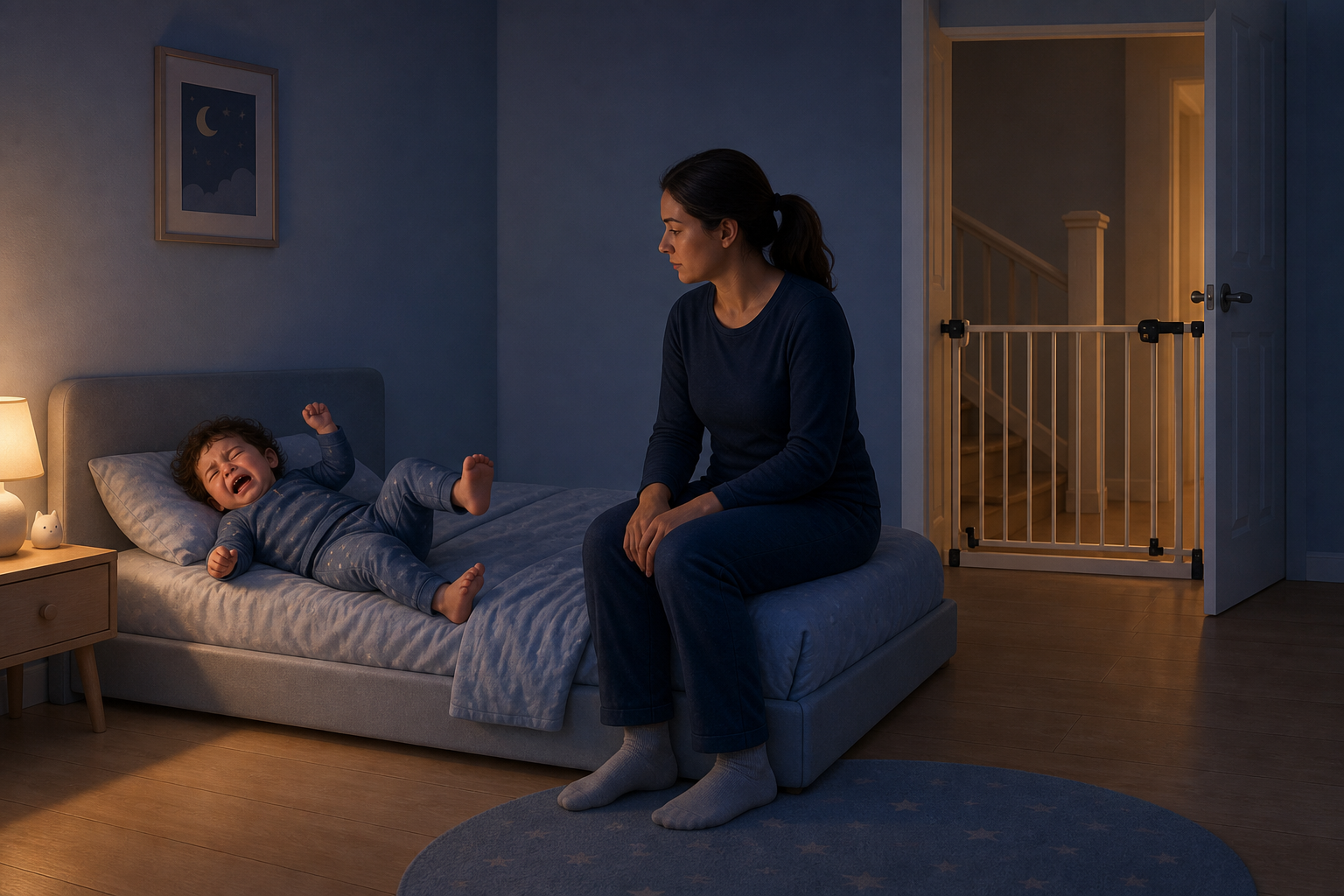
You don’t have to stand back and do nothing. You do need to choose interventions that protect your child without adding more stimulation.
- Check breathing and immediate safety. Look for normal chest movement and normal skin and lip colour. Make sure your child isn’t caught in bedding, climbing from the sleep space or close to a hard or sharp object.
- Stay close and make the area safe. Block access to stairs or furniture, move hazards out of reach and position yourself where you can prevent a fall. If your child is moving, use the least physical intervention needed to keep them safe.
- Keep the room quiet and dim. Use a low, familiar phrase such as, “You’re safe. I’m here.” Avoid bright lights, rapid questions and several people talking at once.
- Don’t shake, shout at or force your child awake. A child in a night terror isn’t choosing to ignore you. Attempts to wake them can increase confusion and prolong the agitation. Avoid restraining them unless that is the only way to prevent immediate injury.
- Wait nearby as the episode runs its course. When your child settles, help them return to a safe sleeping position if needed. You usually don’t need to wake them for a discussion.
- Write down the essentials afterward. Note bedtime, when the episode began, what you saw, approximately how long it lasted and whether your child had missed sleep, was ill or had a disrupted routine.
If your child fully wakes and seeks you, respond to the child in front of you rather than trying to preserve a label. Offer calm reassurance and help them settle. The next morning, don’t press them to remember an event they may not have experienced as a conscious memory.
Trouble breathing, blue or grey lips, a serious injury, or failure to return to their usual responsiveness after the sleep episode is over should not be treated as an ordinary night terror. Seek urgent medical help in those situations.
Reduce the trigger you can control: overtiredness
Night terrors can appear when sleep is disrupted by development, illness, stress or a changing routine. The most practical place to start is overtiredness. Too little sleep can deepen the pressure for sleep and make partial arousals more likely. In other words, keeping a child up later in the hope that they will sleep more soundly can work against you.
For the next week or two, protect sleep rather than redesigning the whole household. Keep wake time, naps and bedtime reasonably consistent. If your toddler woke unusually early or had a short or missed nap, consider an earlier bedtime instead of asking them to stretch to the usual one. Don’t drop a needed nap specifically to stop night terrors.
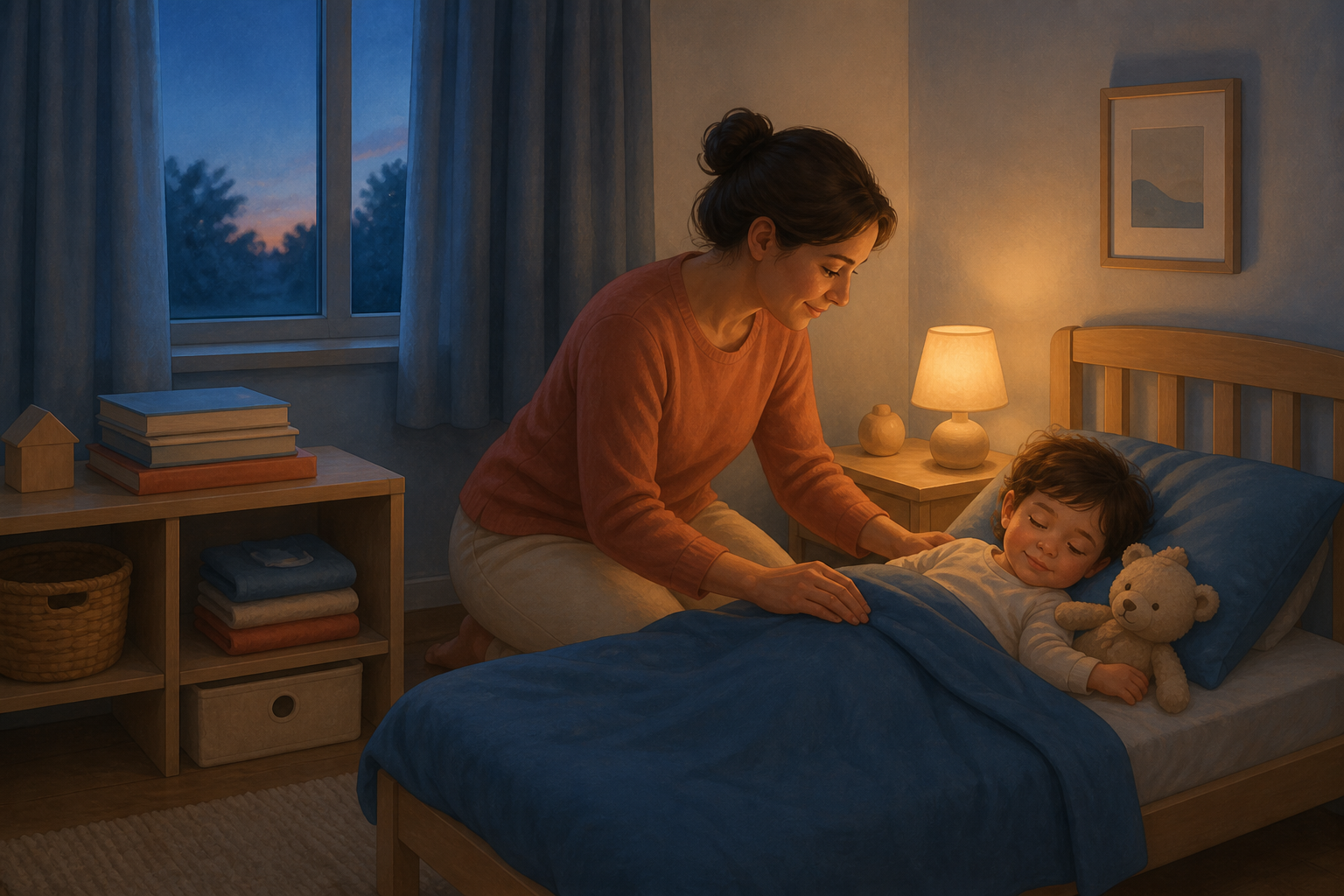
A short, repeatable wind-down also helps make sleep timing predictable. The routine doesn’t need to be elaborate: lower the lights, change into sleepwear, read or sing quietly, and move into bed in the same order. What matters is a calm transition and enough regular sleep, not a special product or a perfectly silent house.
Look at the entire day when searching for a pattern. Travel, a late event, a skipped daycare nap, illness or a major family change may explain why episodes cluster. That doesn’t mean you caused them, and it doesn’t mean your child is emotionally damaged. It gives you a practical variable to adjust before assuming something more complicated is wrong.
If an episode happens at nearly the same time on repeated nights, bring that pattern to your child’s health care professional. Scheduled awakening shortly before the usual episode is sometimes considered for a predictable pattern, but it deliberately interrupts sleep. Ask whether it is appropriate for your child rather than creating more sleep loss through repeated waking on your own.
Keep a useful record and know when to call

One isolated event that fits the typical pattern may not require treatment. A brief log becomes useful when episodes recur because it gives your child’s clinician something more reliable than a sleep-deprived recollection.
- Record bedtime, nap timing and the episode’s start and end times.
- Describe what your child’s eyes, limbs, breathing and voice were doing.
- Note whether your child recognized you, accepted comfort or remembered anything later.
- Include illness, fever, medication changes, travel, stress or lost sleep.
- Write down snoring, gasping, pauses in breathing or persistent mouth breathing.
- Track daytime effects such as unusual sleepiness, irritability or difficulty functioning.
Arrange a non-urgent appointment with your child’s pediatrician or primary care professional if the episodes are frequent, worsening, causing injury, repeatedly disrupting the household’s sleep or leaving your child tired during the day. Also call if your child snores heavily, gasps, seems to pause breathing, has unusual repetitive stiffening or jerking, or if you simply aren’t sure the events are night terrors. Those details can point to other sleep or medical issues that deserve evaluation.
For a baby under 12 months, it is especially sensible to discuss recurrent unexplained screaming with a clinician rather than applying the night-terror label yourself. Age, feeding, growth, breathing, illness and the baby’s behaviour while fully awake all affect what should be considered.
Key takeaways
- A night terror usually occurs in the earlier part of the night while a child remains largely asleep, even if their eyes are open.
- Check breathing and safety first, then stay nearby without shaking, questioning or forcing your child awake.
- Protecting naps, using a consistent bedtime and avoiding overtiredness may reduce future episodes.
- Keep a short sleep log if the events recur; timing and behaviour help distinguish a night terror from other problems.
- Seek medical advice for frequent or worsening episodes, injury, daytime effects, unusual movements, breathing symptoms or any pattern that doesn’t seem typical.
Tonight, make one small change: clear the sleep area, decide how you will respond and protect tomorrow’s nap and bedtime. If another episode comes, you will have a calm plan instead of having to make decisions in the dark.
References