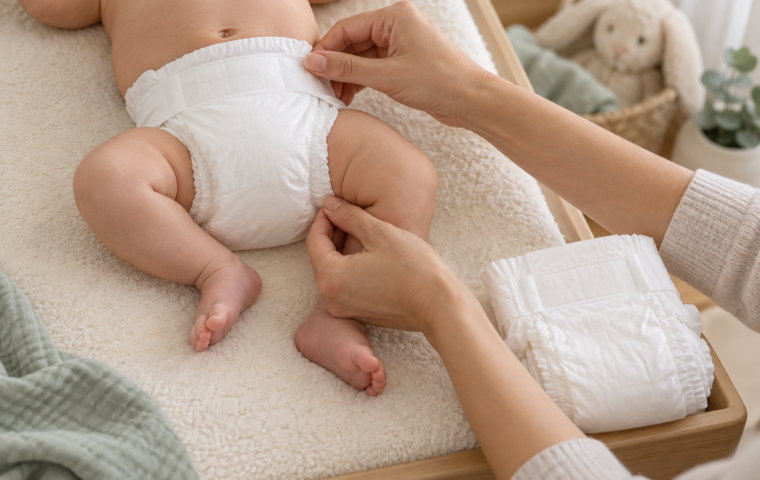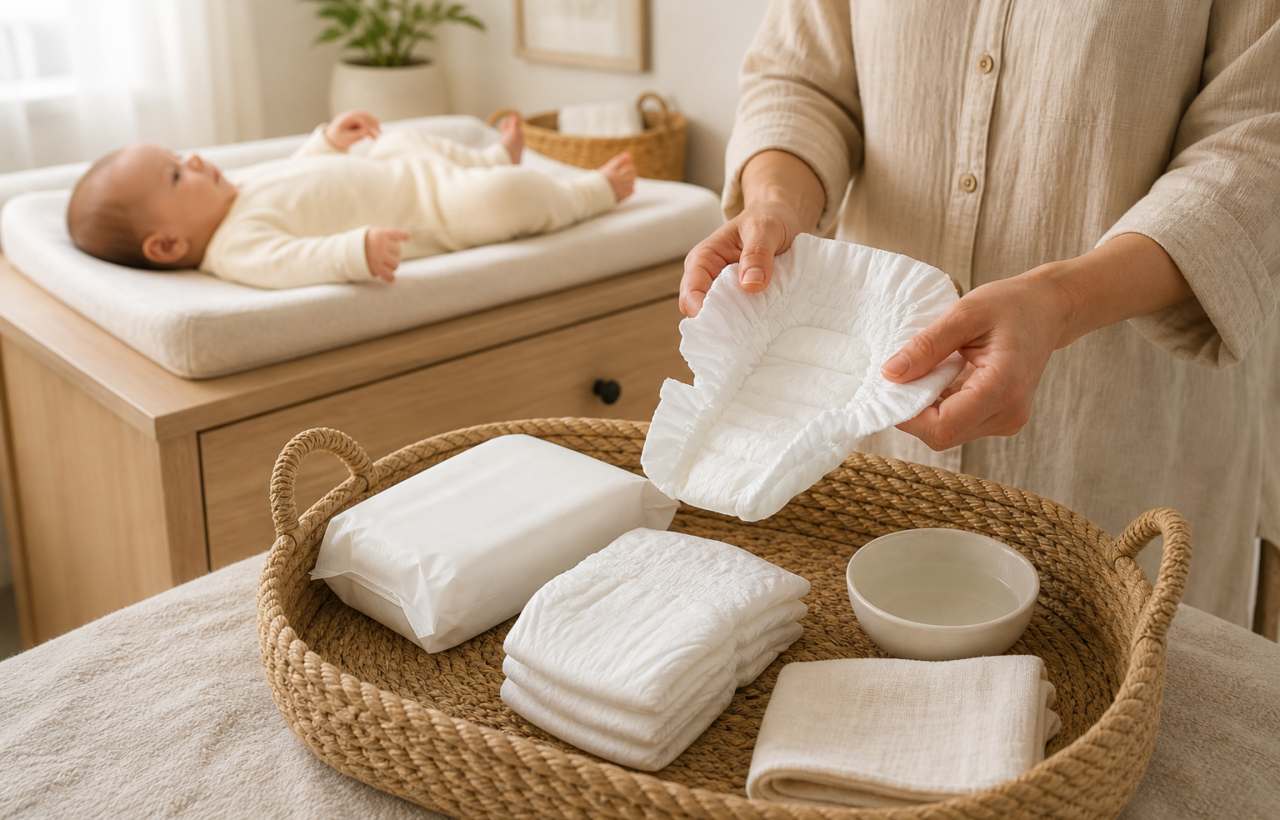
The diaper aisle makes a basic purchase feel like a permanent decision. You are comparing sizes, absorbency claims, skin labels, materials, wipe formulas, pack counts, and prices while trying to prevent the next leak or sore-looking patch.
You do not need to find a universally best brand. You need a diaper that fits your baby now, contains the messes you actually encounter, and works with your change routine. Then you need a wipe that cleans without unnecessary rubbing. A small, controlled trial will tell you more than the front of a large box.
Start with fit because absorbency cannot fix an open seal
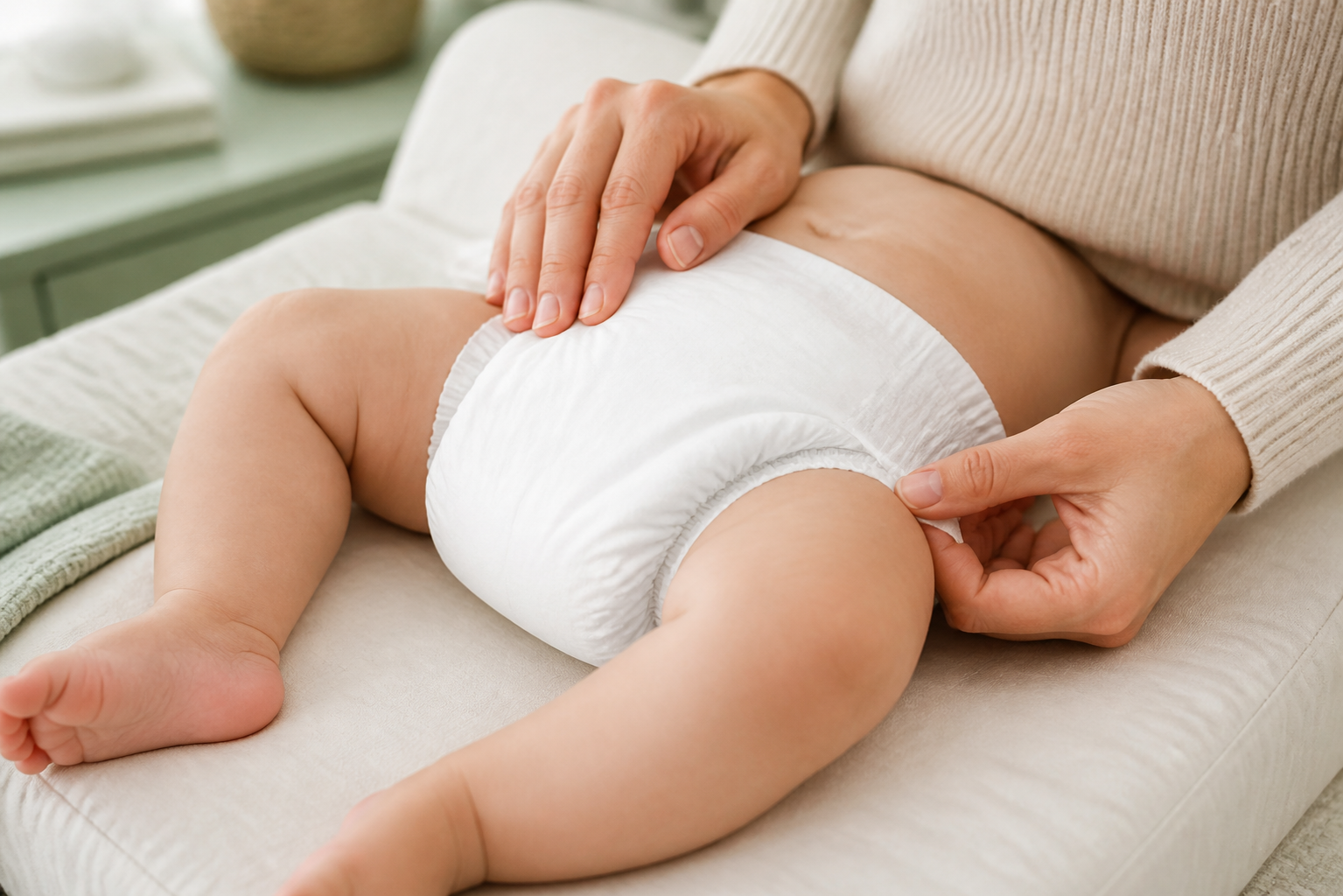
The size range on a package is a starting point, not a verdict. Babies with similar weights can have different waist, thigh, and torso proportions. Two diapers marked as the same size may also be cut differently.
Put on a fresh diaper and check it before blaming the product’s absorbency. The back should cover the area where stool tends to escape. The waistband should sit securely rather than sag, and the leg elastics should follow the creases around the thighs. Pull any tucked-in leg ruffles outward. Fasten both tabs evenly, then make sure your baby can extend, curl, crawl, or walk without the diaper shifting dramatically.
A secure diaper is not the same as a tight diaper. Repeated deep marks, tabs under obvious strain, or elastics that cut into the thighs point toward a size or shape problem. On the other hand, visible gaps at the legs or back mean the seal is not doing its job. Moving up a size can help when a diaper is too tight or lacks coverage, but it can make leaks worse if the larger leg openings gape.
Look at where a failure happens. That location is useful evidence:
| What you notice | What to inspect first | What to try next |
|---|---|---|
| Stool escapes up the back | Rear coverage, waistband contact, and whether the diaper slid down | Refasten higher and evenly; if the pattern continues, try a roomier size or a cut with better back coverage |
| Wetness escapes at one leg | A tucked ruffle, a leg gap, uneven tabs, or a diaper pulled off-centre | Correct the application first; then compare another size or shape if leaks repeat on ordinary changes |
| Wetness escapes through the front or centre | How saturated the diaper is and how long it was worn | Change earlier or trial a higher-capacity option for that particular stretch |
| Tabs strain or pop loose | Waist size, rise, and freedom of movement | Try the next size or a different cut rather than fastening more tightly |
| The diaper sags while still fairly dry | Overall size and how securely the waist is fastened | Try a smaller size or a trimmer cut if the leg openings also gape |
Do not redesign your diaper setup after one extraordinary blowout. A single very large or poorly timed bowel movement can overwhelm an otherwise good fit. Act when you see the same failure in the same place more than once. Diaper performance depends on the balance of absorbency, comfort, value, age, and stage, so the product that worked a few weeks ago may stop working as your baby’s body and movement change.
Match absorbency to the stretch, not to every hour of the day
A diaper that performs well during frequent daytime changes may not have enough capacity for a longer sleep. A highly absorbent diaper may be unnecessary for short intervals and could cost more per change. You do not have to force one product to handle both situations.
Separate your decision into the stretches you need to cover:
- Routine daytime changes: Prioritize reliable fit, easy fastening, freedom of movement, and a price you can sustain.
- Longer sleep stretches: Prioritize capacity and containment. Evaluate these diapers only under the longer conditions they are meant to handle.
- Frequent loose stools: Prioritize back coverage and secure leg barriers. Extra liquid capacity will not compensate for a gap around the body.
- An active crawler or walker: Watch the diaper during movement. A fit that looks fine on the changing surface may sag, twist, or open at the legs once your child is moving.
When a diaper leaks after becoming heavily saturated, capacity or change timing is the likely place to investigate. When it leaks while the absorbent area is still relatively dry, fit and application deserve attention first. This distinction can save you from repeatedly buying a more absorbent version of the wrong shape.
Disposable diapers contain several layers with different jobs. The inner layer sits against the skin and lets liquid move toward the absorbent core. That core holds the liquid, while the outer backing helps keep it inside. Elastic barriers, fasteners, adhesives, inks, lotions, and fragrance may also be present, depending on the product.
This construction matters more than a single front-of-package claim. A thick diaper is not automatically more absorbent, and a thin one is not automatically less capable. Judge capacity by what happens during the intended wearing stretch. If a diaper repeatedly lasts that stretch without leaking, sagging badly, or bothering your baby, it is doing the job.
For sensitive skin, simplify the trial instead of chasing labels
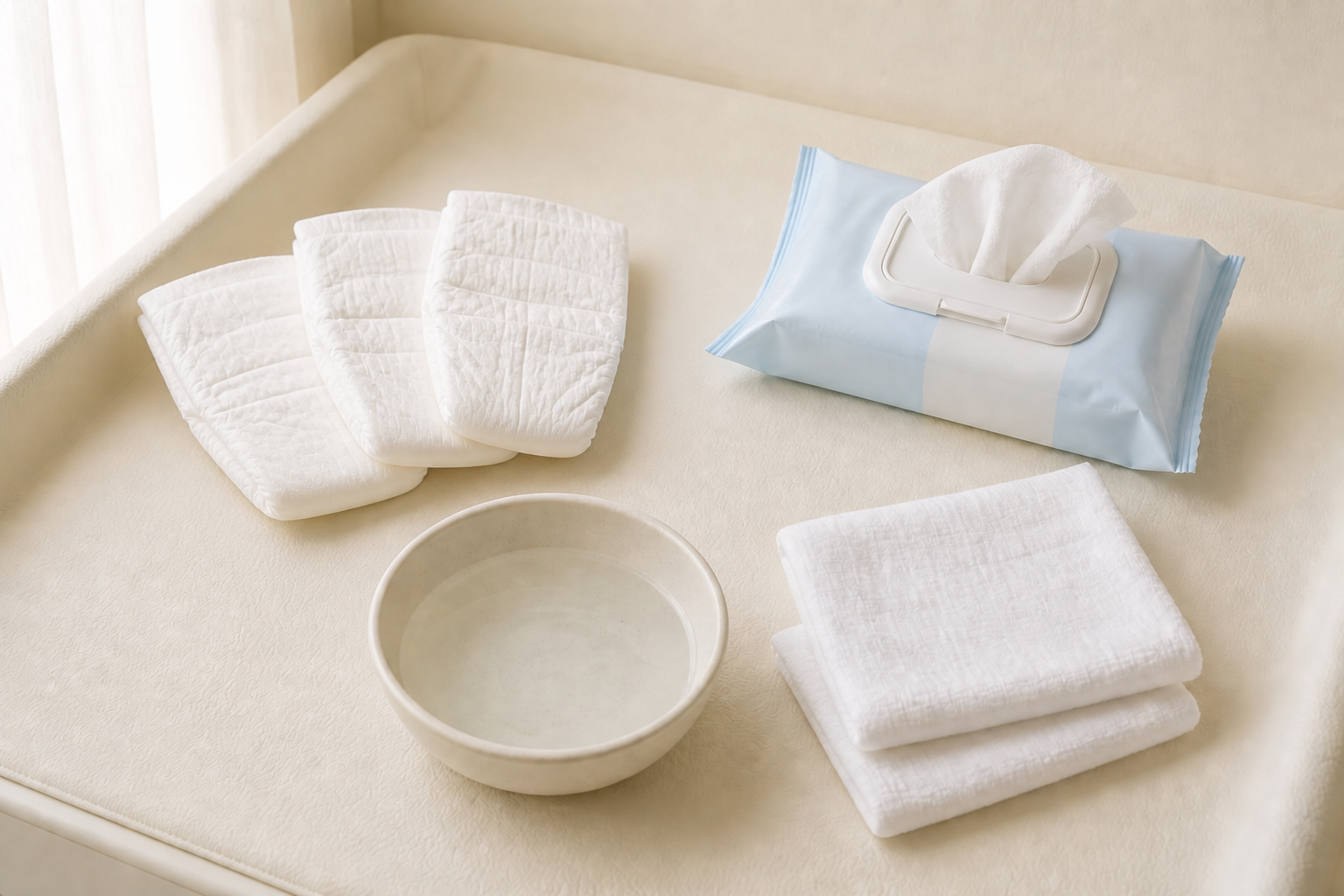
Labels such as sensitive, gentle, clean, or hypoallergenic can help you identify candidates, but they cannot promise that a particular baby’s skin will tolerate a product. Irritation may coincide with a diaper material, an added lotion or fragrance, a wipe formula, repeated rubbing, a poor fit, or prolonged contact with moisture and stool. Changing several things at once hides the cause.
Use a one-variable trial:
- Choose the problem you are solving. Write down whether it is redness, rubbing, leaks, blowouts, odour, sagging, or cost. Do not ask a new product to solve an undefined problem.
- Keep the rest of the routine stable. When trialling a diaper, continue with the same wipes and other products your baby already tolerates. When trialling wipes, keep the diaper unchanged.
- Use the product during ordinary changes. Include the situation that prompted the switch, but do not judge a daytime diaper only by an unusually long stretch.
- Note the pattern, not just the outcome. Record where a leak occurred, whether the diaper was saturated, where marks appeared, and whether irritation returned in the same area.
- Stop the trial if the reaction is clear. Do not keep exposing your baby’s skin merely to finish a package.
If your baby has reacted before, compare the ingredient and material information for the product that caused trouble with one that did not. Look beyond the large claims on the front. Manufacturer ingredient pages or package panels may tell you whether a diaper includes fragrance, lotion, inks, or other components you are trying to avoid. The goal is not to find an ingredient-free diaper; it is to identify a simpler, well-fitting option your baby tolerates.
Fit remains part of sensitive-skin shopping. A diaper can be marketed for delicate skin and still rub if its leg openings or rise do not suit your baby. It can also allow repeated stool contact if the back or leg seal fails. For babies prone to irritation, skin comfort and blowout protection belong in the same decision.
A product trial is not a substitute for medical care. Stop experimenting and contact your child’s health-care professional if the skin is broken, blistered, swollen, spreading beyond the diaper area, worsening, or clearly painful, or if your baby seems unwell. Persistent irritation also deserves professional assessment rather than an endless sequence of product changes.
Choose wipes by friction, formula, and pack design
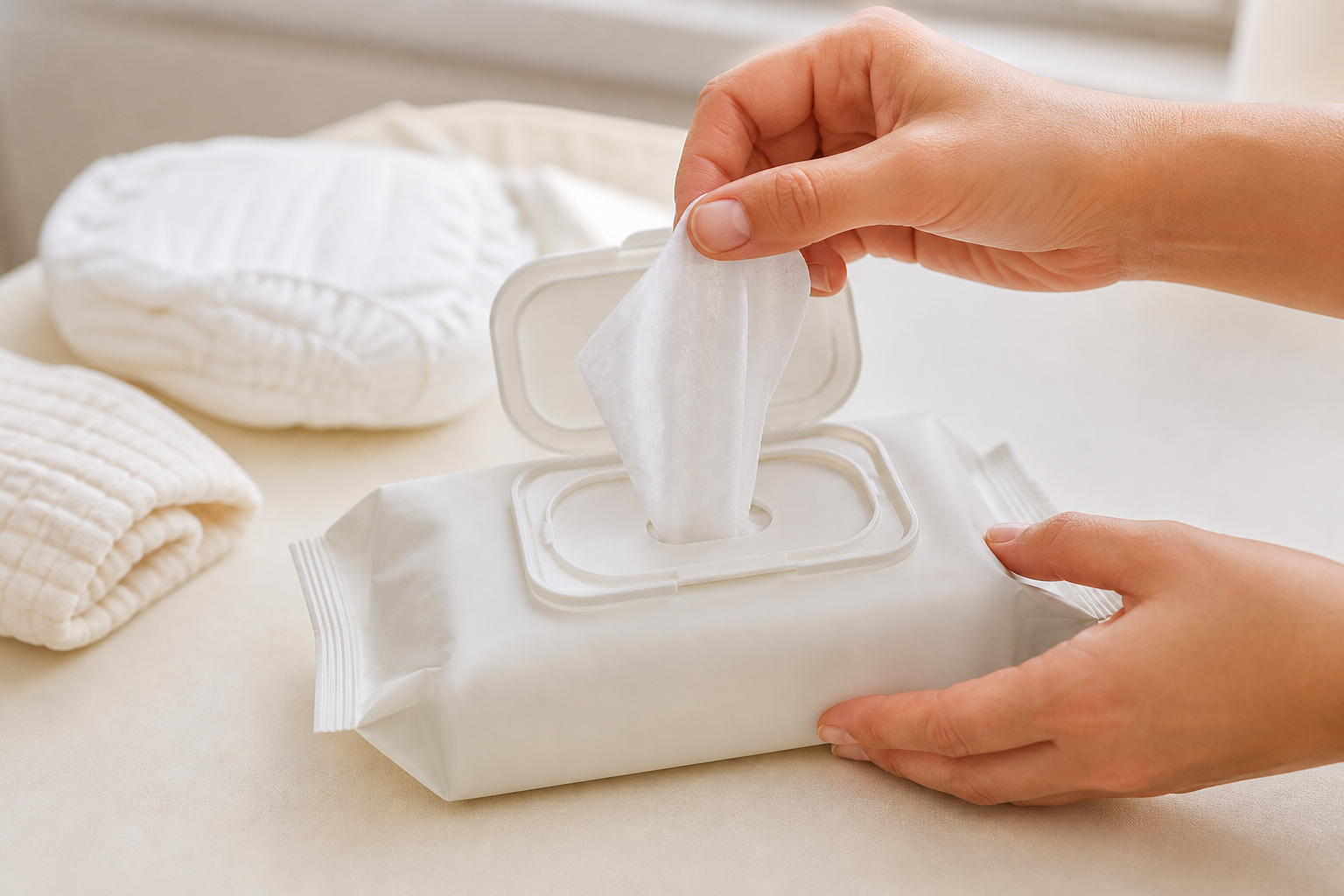
A wipe has three practical jobs: release from the pack, lift the mess, and leave the skin comfortable. A low price per wipe is not useful if each change requires a fistful of thin sheets or if the wipes cling together while you hold a moving baby.
Test wipes against these criteria:
- Wetness: The wipe should stay moist enough to clean without repeated scrubbing. It should not leave so much liquid that you have to wipe again just to remove the residue.
- Texture: A smooth wipe may be enough for routine wet changes. A sturdier or lightly textured wipe can lift stool with fewer passes, provided the texture does not feel harsh on your baby’s skin.
- Strength: The sheet should not tear, stretch into a thin string, or force your fingers through it during an ordinary change.
- Dispensing: You should be able to pull one wipe with one hand. A package that regularly releases a clump makes rushed changes harder and distorts the apparent value of the pack.
- Closure: The lid or seal should close reliably. The last wipes matter as much as the first ones; a poorly sealed pack can turn a bulk purchase into dry inventory.
- Formula: If your baby has sensitive skin or fragrance has coincided with irritation, start with a fragrance-free option and check the ingredient information rather than relying only on the product name.
Technique changes wipe performance too. Remove the bulk of the mess with one area of the wipe, fold it to expose a clean surface, and continue. Use gentle passes instead of scrubbing the same patch of skin. Before fastening the new diaper, give visibly wet skin a moment to dry.
Wipes are used for everything from an ordinary diaper change to a major blowout, which makes bulk boxes tempting. Trial one small pack first. Confirm that the formula suits your baby, the texture works for your usual messes, and the dispenser behaves properly. Only then compare case prices. A bulk discount is not a saving if you abandon the formula or dislike using it.
Run a small trial before you buy a large box
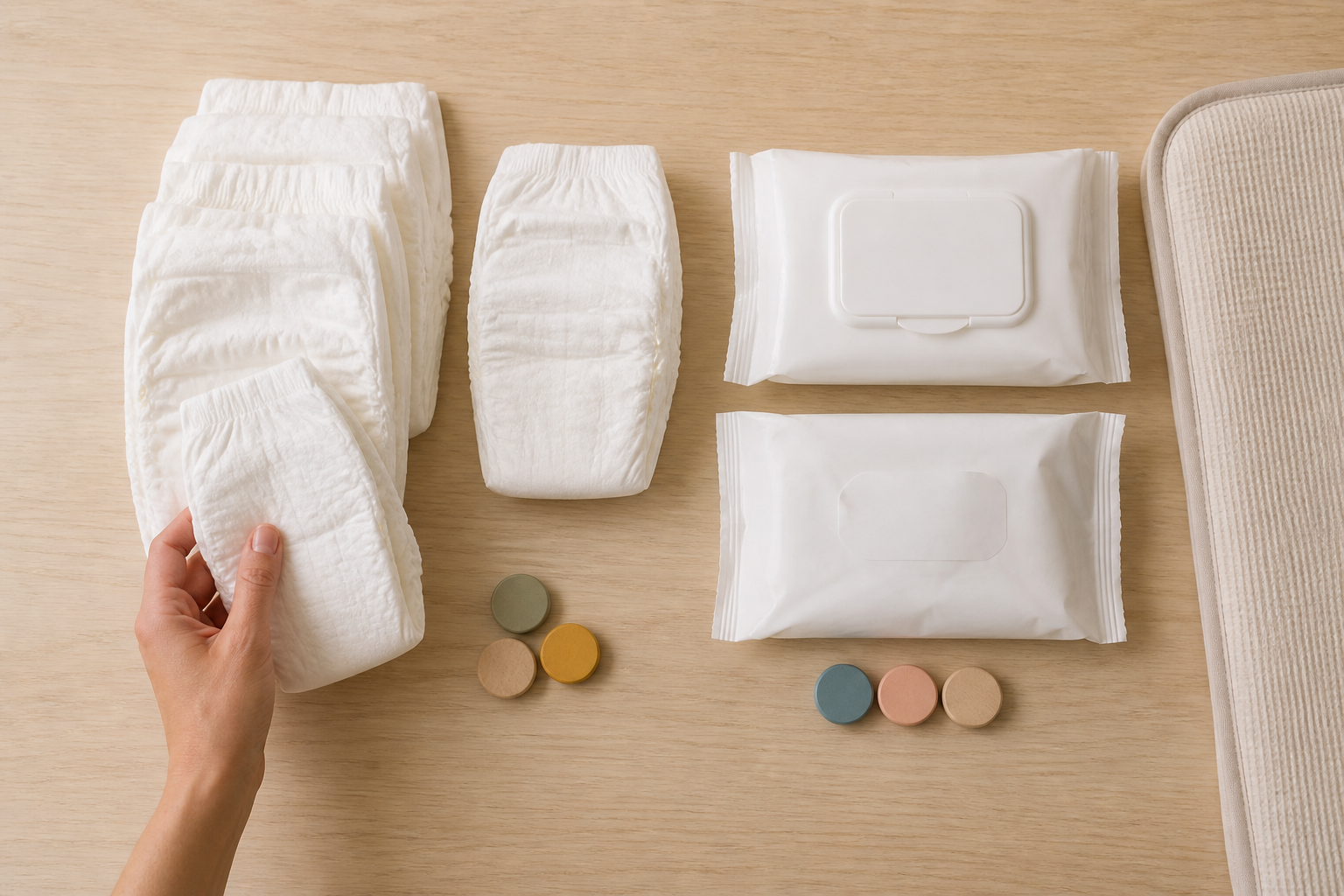
The cleanest comparison is not brand against brand. It is your current product against one carefully chosen alternative, used for the same job. Start with the smallest practical package so that a poor fit does not become a closet full of sunk cost.
- Name the failure. For example: leaks at the left leg during ordinary daytime changes, stool escaping up the back, irritation after wiping, or too many wipes needed per change.
- Change one relevant feature. Try another size or diaper cut for a seal problem, more capacity for a saturated diaper, or another wipe formula for suspected wipe irritation.
- Compare under matching conditions. Do not compare one diaper used for a short daytime interval with another used through a long sleep.
- Keep a brief record near the change area. Note fit, leak location, saturation, skin response, wipes used, and how easily the product handled the change.
- Decide on the whole change. Include extra diapers, extra wipes, clothing changes, laundry, and frustration in your assessment, not only the shelf price per item.
- Buy more only after the pattern is clear. Leave room to reassess when your baby grows, becomes more mobile, sleeps for longer stretches, or begins having different kinds of bowel movements.
This method also makes budgeting more honest. The lowest unit price may still be the economical choice if the product fits and performs well. But a slightly higher price can be justified when it consistently prevents extra changes and wasted wipes. What matters is the cost of a successful change, not the cheapest item on the shelf.
Avoid overstocking a diaper size simply because a case is discounted. Fit can change before the box is empty, and unopened-package exchange policies vary. Check the retailer’s policy before committing, keep receipts, and open one package at a time when possible.
Key takeaways
- The weight range on a diaper package narrows the options, but your baby’s waist, thighs, torso, and movement determine the fit.
- A leak from a relatively dry diaper usually points you toward fit or application; a leak from a saturated diaper points you toward capacity or change timing.
- Daytime and longer sleep stretches can require different absorbency. One diaper does not have to do every job.
- Sensitive-skin labels are starting points, not guarantees. Change one product at a time so you can identify what helps or hurts.
- A good wipe removes the mess with few gentle passes, releases one-handed, and remains moist throughout the pack.
- Trial small packages before buying in bulk, then judge value by the full change rather than unit price alone.
For your next purchase, identify the single failure you most want to fix and buy one small alternative that addresses it. Keep everything else steady. A few well-observed changes will give you a clearer answer than another hour spent comparing claims on boxes.
References
- BabyCenter – 4 best diapers for sensitive skin that prevent rashes and blowouts
- BabyCenter – Best diapers to handle every age, stage, and stinky situation
- BabyCenter – What’s in a diaper? A breakdown of layers and ingredients
- BabyCenter – The 8 best baby wipes worth buying in bulk