
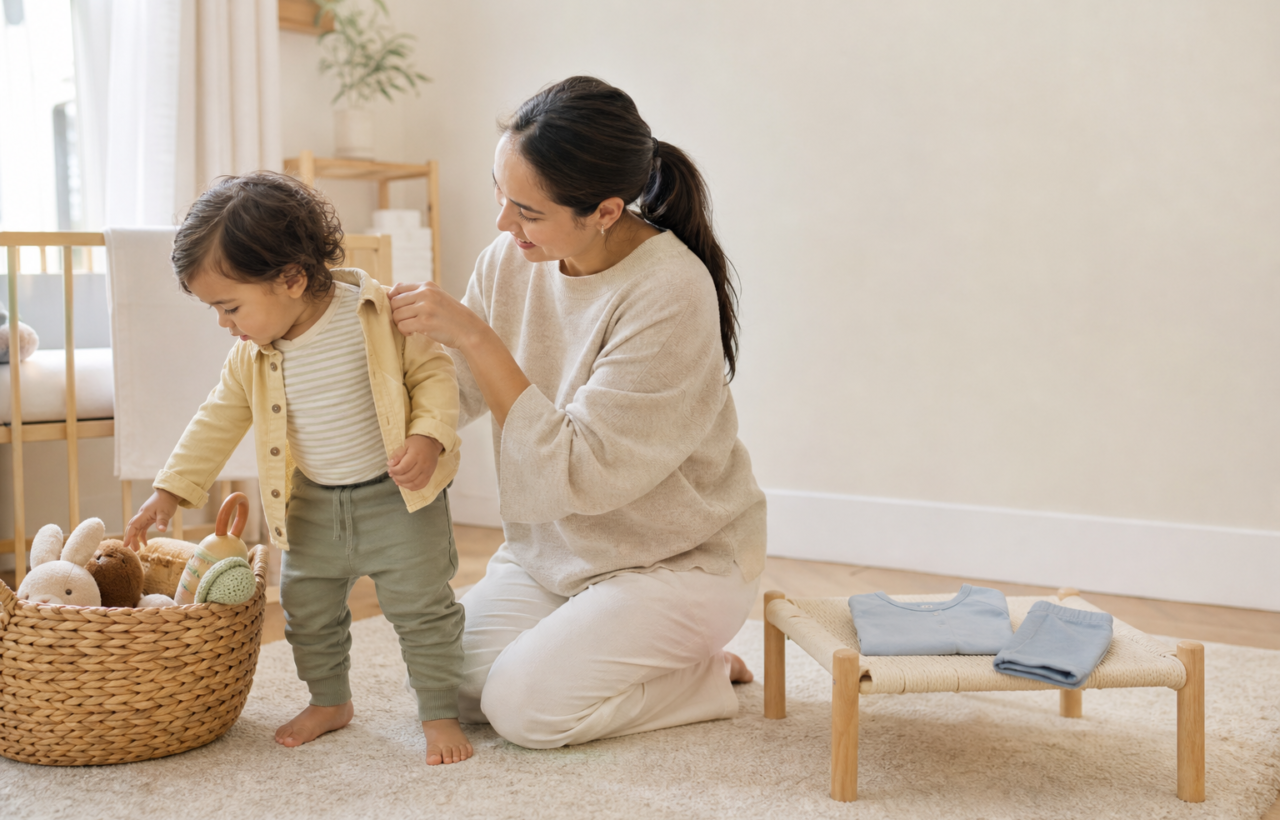
The outfit in your cart looks charming. The harder question is whether you will still reach for it when your child is wriggling through a change, crawling across the floor or insisting on getting dressed without help.
You do not have to choose between practical clothes and a wardrobe with personality. A garment can be what is hot for parents and kids and still be wrong for your routine. The useful approach is to filter for access, movement and fit first, then choose the style you like from the pieces that pass.
Give every garment a specific job before you buy it
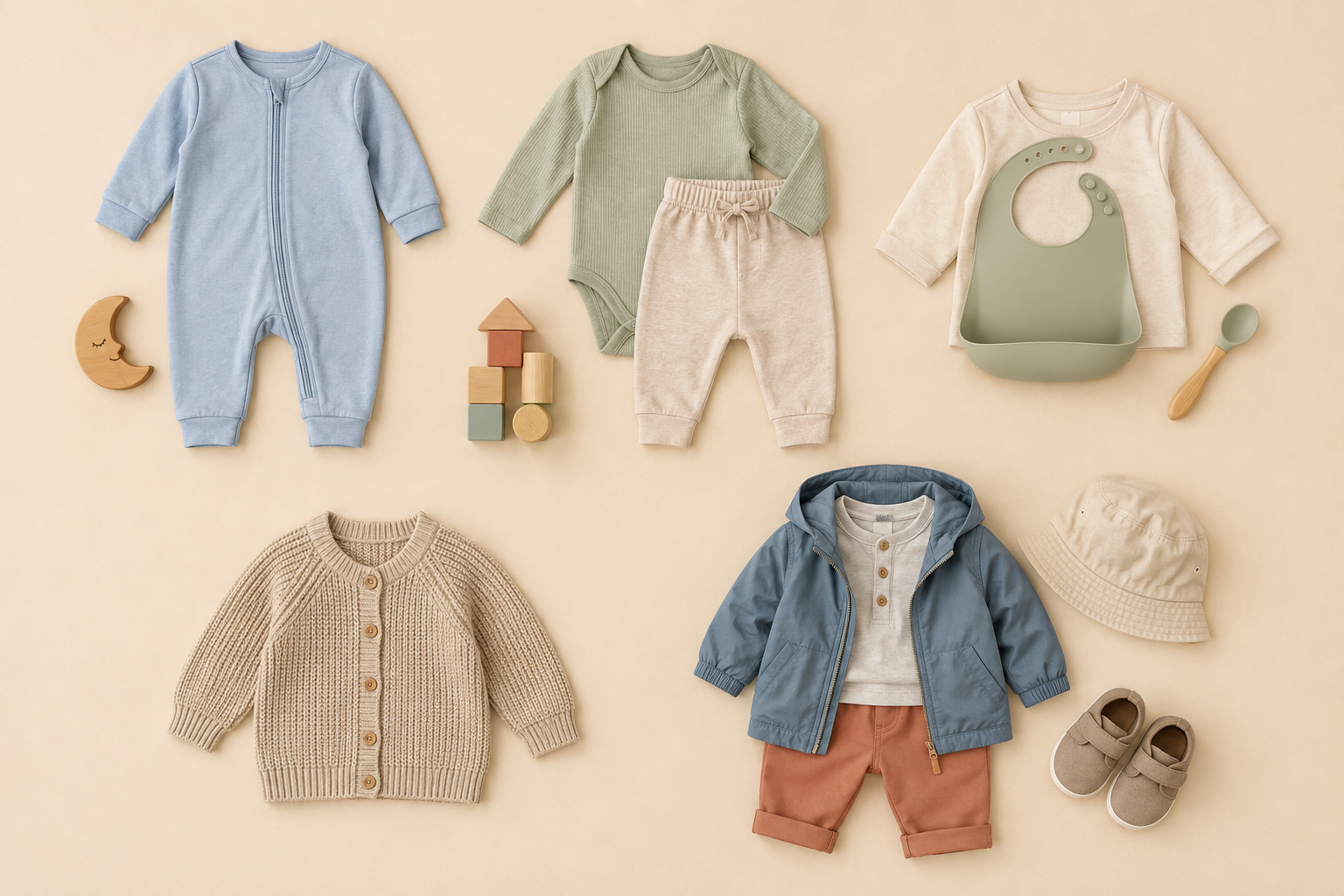
Start by naming where the item will be worn. “It is cute” describes your reaction, not the garment’s job. A clear use case tells you which compromises are reasonable and which will become daily annoyances.
- Everyday clothes: Can you open, close and reposition the garment without turning a routine change into a full undressing?
- Play clothes: Can your child sit, reach, crawl, squat or walk without the waistband sliding, the fabric pulling or the cuffs needing constant attention?
- Clothes for another caregiver: Are the fastenings straightforward, and is it obvious which pieces belong together?
- An occasion outfit: Are you consciously accepting less versatility because you have a real occasion in mind?
- A matching set: Would each piece still be useful if the other part were in the laundry?
- A parent-and-child look: Would you want the child’s garment even if you never wore the matching adult piece?
This distinction protects your budget without forcing every purchase to be plain. An elaborate outfit can be worth buying when you know why you want it. The mistake is counting an occasion piece as an everyday wardrobe solution.
If you cannot name the job, leave the item in your saved list and look at it again after checking what your child already owns. That pause often reveals whether you found a useful garment or simply a persuasive product photo.
Translate product features into real dressing tasks
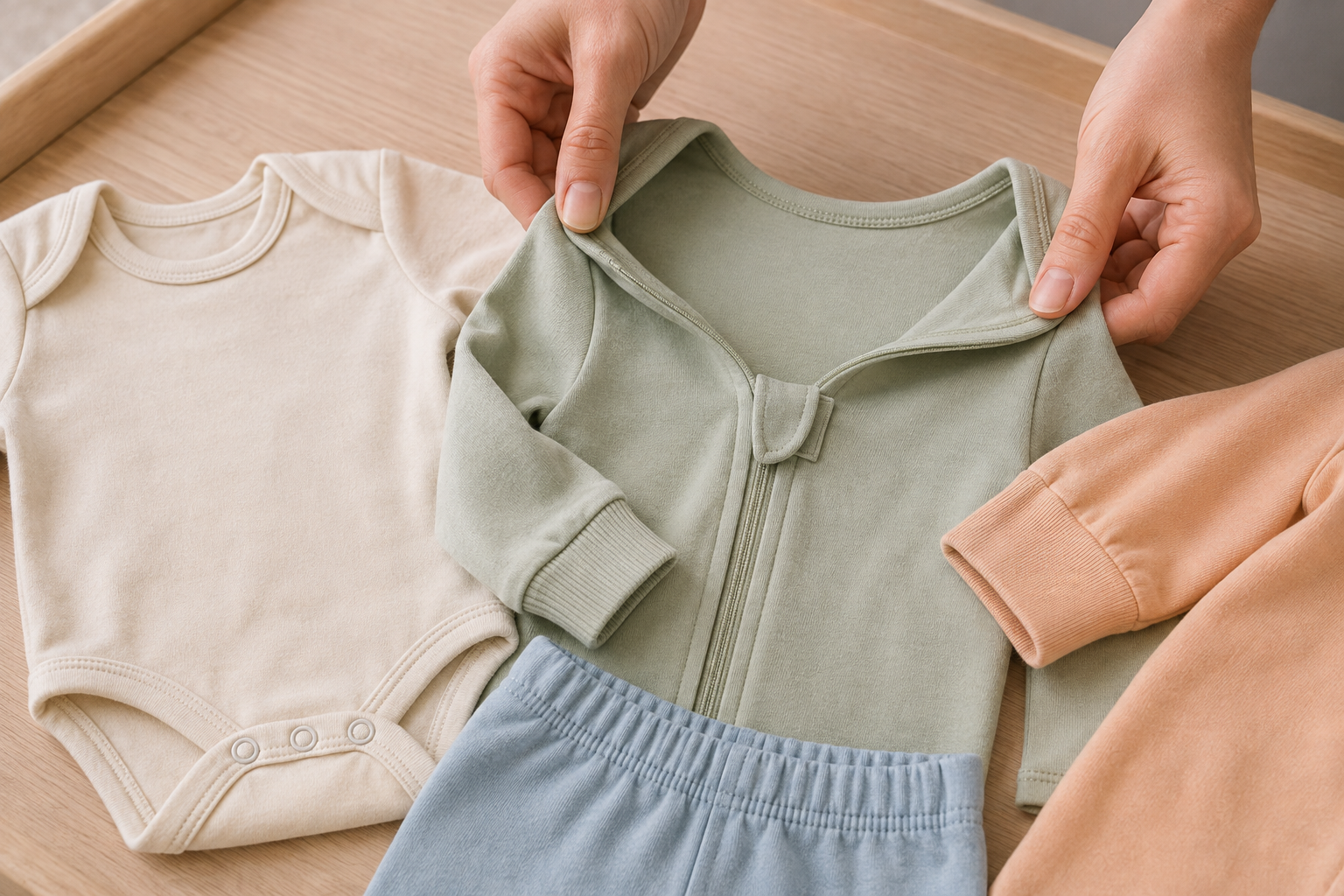
At launch, Abercrombie & Fitch’s Baby & Toddler range covered newborn through 5T and highlighted soft materials, elastic waists, snaps, two-way zippers, included bloomers and adjustable toddler denim. Those details are useful as a shopping vocabulary. They are not automatic proof that a particular garment will work for your child.
Read each feature as a prompt to inspect something specific:
- Two-way zipper: Check that both pulls move easily and that the opening exposes the part of the garment you actually need to access. The label matters less than the placement.
- Snap closure: Close every snap once. Look at how many must be handled during a change and whether the two sides line up without effort.
- Elastic waistband: Stretch it gently and let it return. It should make pull-on dressing simpler while still sitting securely on your child.
- Adjustable waistband: Confirm that the adjustment is easy to reach and that the garment remains comfortable and balanced at the setting your child needs.
- Soft fabric: Feel the inside as well as the outside. Check the seams, labels, embroidery backing and decorative areas that will sit against the body.
- Included bloomer or coordinating piece: Verify what is actually included in the purchase. Styled product photos can show pieces that are sold separately.
Closures also need to match the garment’s job. A two-way zipper may be especially useful on a one-piece outfit when it lets you open the lower section without removing the whole garment. Snaps can provide targeted access, but a long row may feel tedious when your child is moving. Pull-on waists reduce fastening, although the fit still has to be secure. There is no universally best closure; there is only the closure that creates the least friction in the situation where you will use it.
When shopping online, do not stop at the front-facing image. Look for back views, close-ups of fastenings, the fabric description, care instructions, the size chart and a clear list of included pieces. If those details are missing and returns are difficult, you are accepting more uncertainty than the product photo makes visible.
Test the current fit instead of trusting the age label

An age or size label gets you to the right part of the rack; it does not confirm fit. Use the retailer’s measurements when they are available, then test the garment with the diaper or underlayer your child would normally wear beneath it.
Before removing tags, run a short dressing-and-movement check:
- Open and close every fastening. Notice whether you need to pull hard, hunt for matching snaps or hold several sections in place at once.
- Check the neck, arm and leg openings. Dressing should not require forcing a hand, foot or head through an opening that has little give.
- Look at the diaper area. There should be usable room without so much excess fabric that the garment hangs low or needs repeated rearranging.
- Match the movement to your child’s stage. Lift a baby’s legs as you would during a change; let a mobile baby reach and crawl; let a walking toddler sit, squat and raise both arms.
- Watch the waistband, shoulders, crotch and cuffs during movement. A fit problem often becomes visible only after the child changes position.
- Pair the garment with clothes you already own. If it requires another special purchase before it can be worn, include that in your decision.
- Read the care label. A beautiful everyday item is not practical for your home if its required care does not fit your normal laundry routine.
Adjustable details can extend usefulness, but they cannot rescue the wrong basic shape. Adjustable jeans still need an appropriate rise and leg length. An elastic waist still needs to sit correctly. A generously sized top still needs openings and sleeves that work now.
Buying a larger size “for longer” deserves the same reality check. Ask whether the piece will be wearable in the intended season and whether you have a reliable way to store and find it later. Keep the size, intended season and return deadline with the garment until you are confident it belongs in the future wardrobe.
Build style on top of a practical wardrobe base
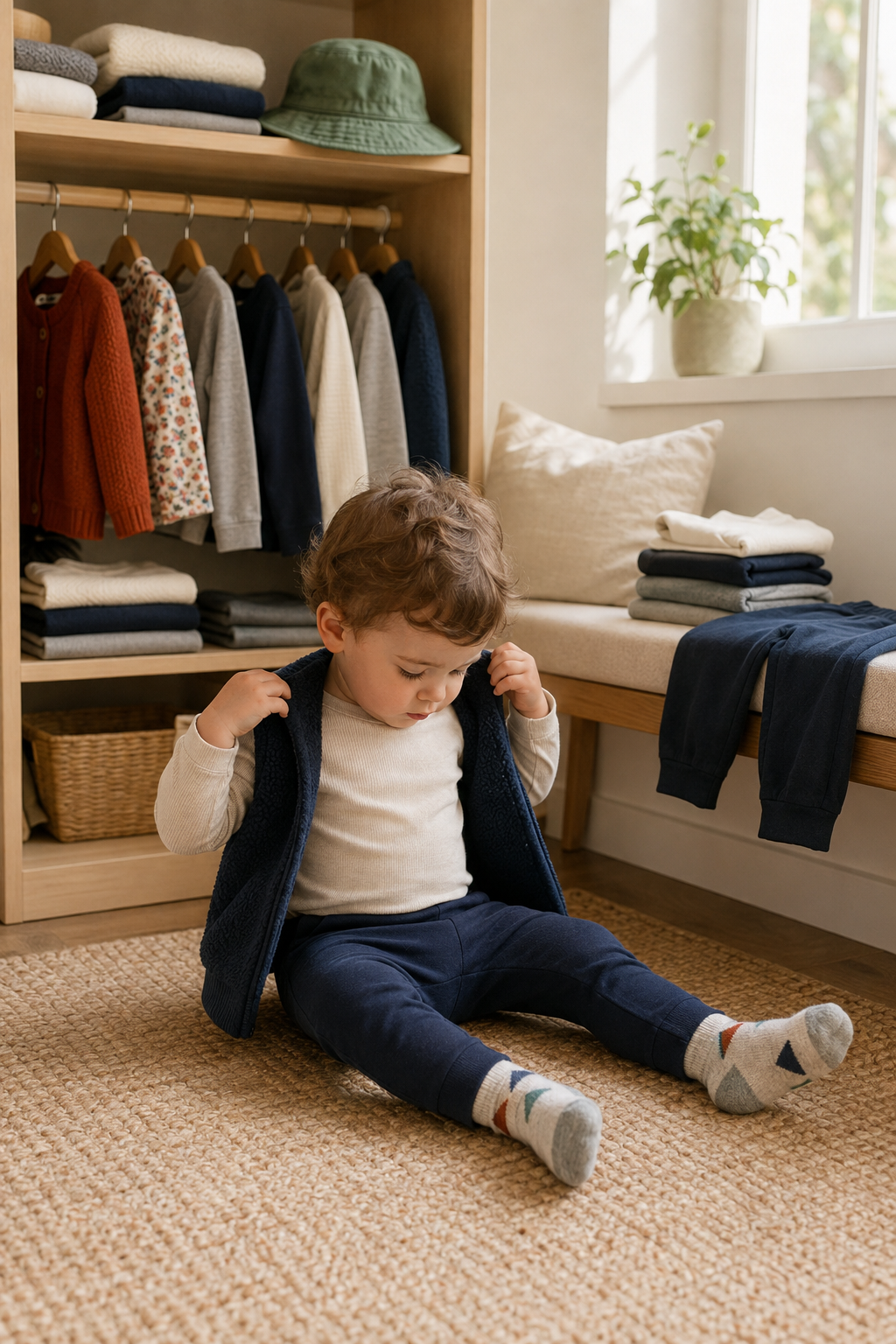
The easiest way to enjoy baby and toddler fashion is to stop asking every garment to be both a statement piece and a wardrobe foundation. Give those roles to different items.
- Start with repeatable bases: Choose tops, bottoms and one-piece outfits that are simple to put on, easy to combine and suited to your child’s usual activities.
- Add one distinctive element: A knit, dress, graphic, colour or silhouette can carry the look without making the entire outfit complicated.
- Judge sets piece by piece: A set offers more value when the top and bottom also work with clothes already in the drawer.
- Keep occasion purchases honest: Buy them as occasion clothes, not as evidence that the everyday wardrobe is complete.
- Make matching optional: Adult-inspired children’s styles can create a coordinated parent-and-child look, but the child’s item should remain useful on its own.
A simple decision screen helps when a coordinated collection is especially tempting. Ask whether the garment works with your current laundry routine, whether it combines with something already owned and whether you would choose it on an ordinary day. A “no” does not mean you cannot buy it. It means you should classify it as a special purchase and decide accordingly.
Also separate versatility from sameness. A wardrobe does not need to be colourless to mix well. Repeating a few colours, fabrics or shapes can make expressive pieces easier to combine. The aim is not a miniature capsule wardrobe built for photographs; it is a drawer in which the appealing clothes are also the reachable ones.
Key takeaways
- Name the garment’s job before judging its style, price or potential longevity.
- Treat zippers, snaps, elastic waists and adjusters as features to test, not guarantees of convenience or fit.
- Use a size chart and a movement check rather than relying on the age printed on the label.
- Make sure sets and matching styles still work as separate pieces.
- Check fastenings, inside surfaces, care instructions, included pieces and return terms before removing tags.
- Choose fashion from the garments that pass your practical filter instead of trying to make an inconvenient favourite work later.
On your next shop, read the closure, waistband, fabric, care and included-piece details before choosing a colour or print. Put only the workable options through your fit test. Then choose the one that looks most like your family’s style. That order gives you clothes you can enjoy seeing on your child without dreading the moment you have to put them on.
References
- My Baba – The Measure: What’s Hot For Parents & Kids
- Scary Mommy – Abercrombie & Fitch Just Dropped the Cutest Baby & Toddler Line




