
By the time you can start dinner, you may also be holding a baby, answering a toddler, or trying to do both. You need a meal that can tolerate an interruption without becoming bland, dry or needlessly complicated.
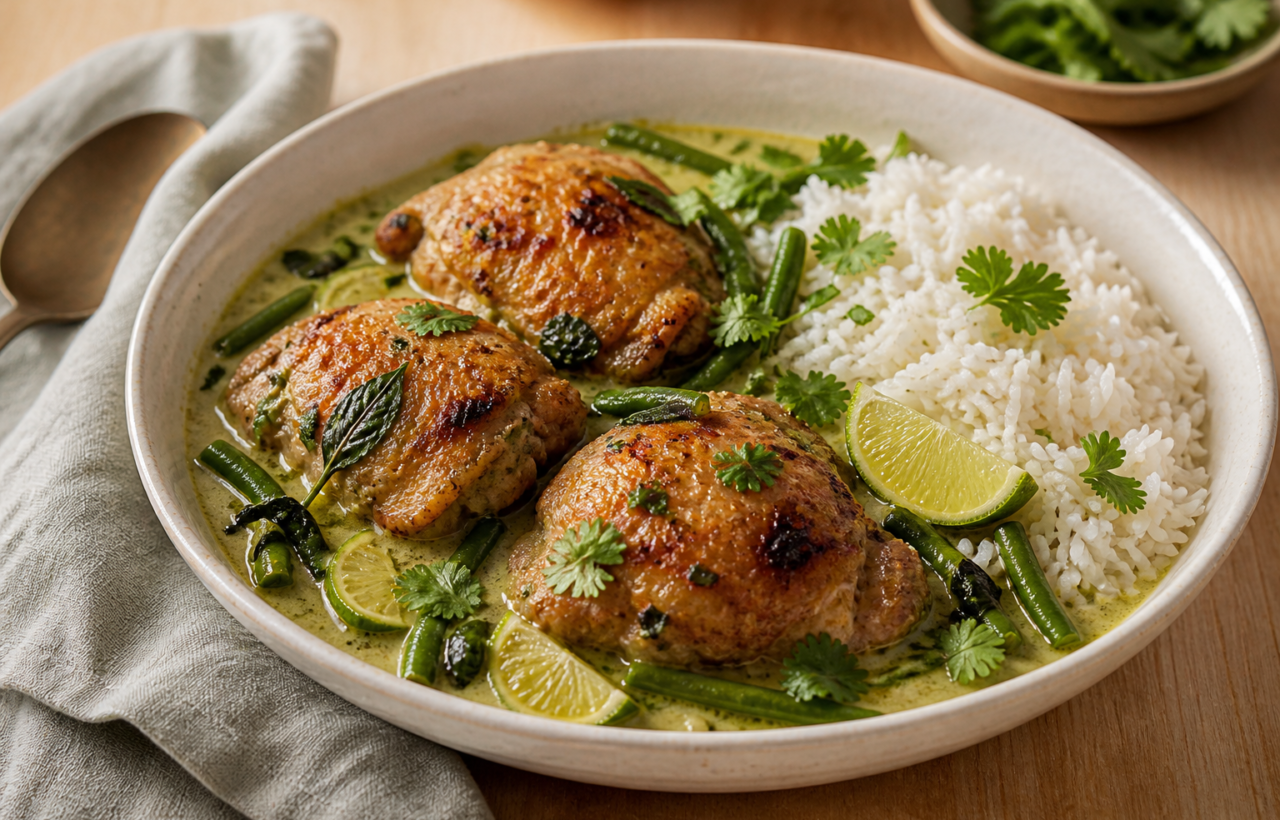
At its simplest, this is roasted chicken thighs in Thai green curry sauce with sticky jasmine rice and fresh coriander. The useful part for a busy household is the structure: the oven does most of the cooking, the heat can be adjusted by plate, and extra chicken becomes a second meal.
Set up the dinner before the chicken goes in
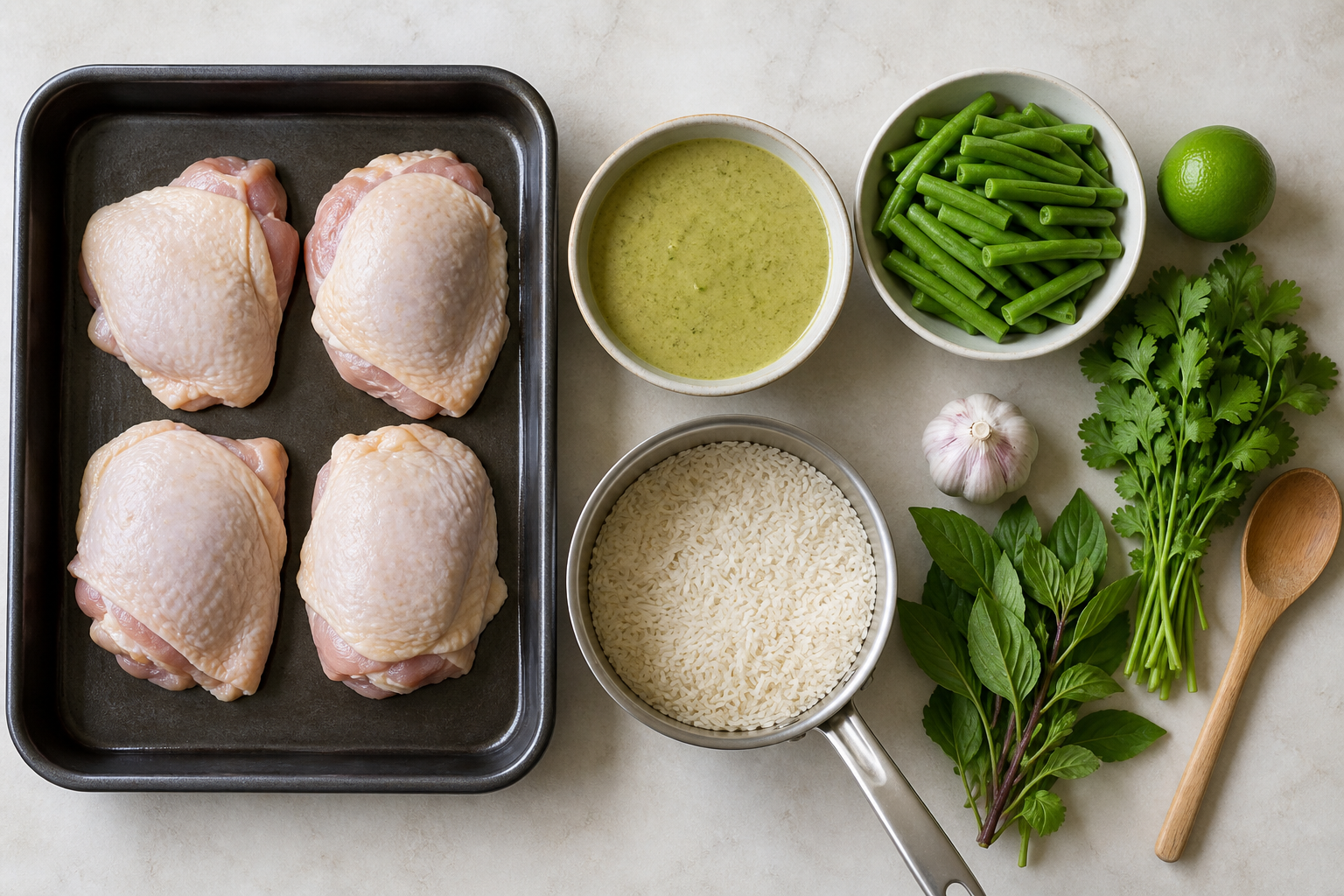
Choose how much chicken you need for tonight, then add enough for the next meal. Making that decision before cooking is what turns leftovers into a plan rather than a container everyone forgets about.
You need a short list of components:
- Chicken thighs, either bone-in or boneless, in the format your household prefers.
- Prepared Thai green curry sauce, or coconut milk and Thai green curry paste.
- Jasmine rice.
- Fresh coriander for serving.
- Neutral cooking oil and any vegetables you want to roast or steam alongside the meal.
Curry paste and prepared curry sauce are not interchangeable. Paste is concentrated and needs to be diluted according to its label; prepared sauce is designed to be used more directly. Check the ingredient list for allergens, taste the sauce before it touches raw chicken, and hold back extra salt until you know how seasoned it already is.
Read the cooking directions for the chicken and rice before starting. Begin whichever component has the longer stated cooking time. Jasmine rice can usually wait covered for a short while, so it does not need to land on the table at the exact moment the chicken leaves the oven.
Control the curry heat before it reaches every plate
Green curry can range from gently aromatic to decidedly hot. Do not assume that a green sauce will be mild, and do not coat every thigh before checking the product you bought.
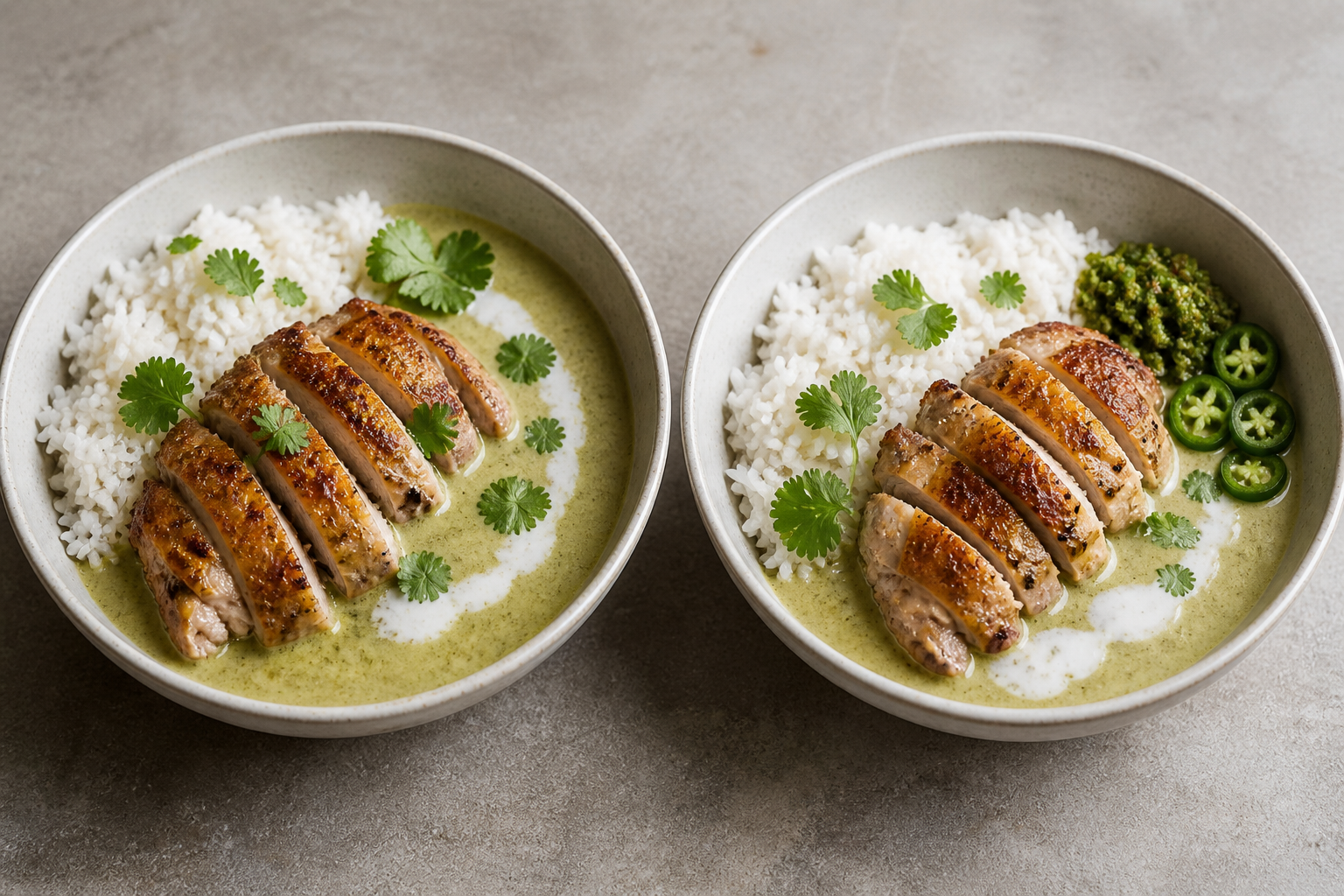
If someone at the table needs a milder serving, separate that portion at the beginning. Roast a thigh with a little oil in a separate small dish, or surround it with plain coconut milk instead of the finished curry sauce. You can spoon a small amount of sauce onto the cooked meat later if it suits them. Once the whole roasting dish is too spicy, adding more coconut milk may soften the flavour, but it cannot reliably turn it into a mild meal.
For adult plates, extra curry paste can be warmed into a little of the cooked sauce after the chicken is done. This gives you more heat without forcing it through the entire batch. Put fresh coriander on the table rather than mixing it all into the roasting dish, so each person can add as much or as little as they like.
Roast the thighs so the sauce and chicken both work
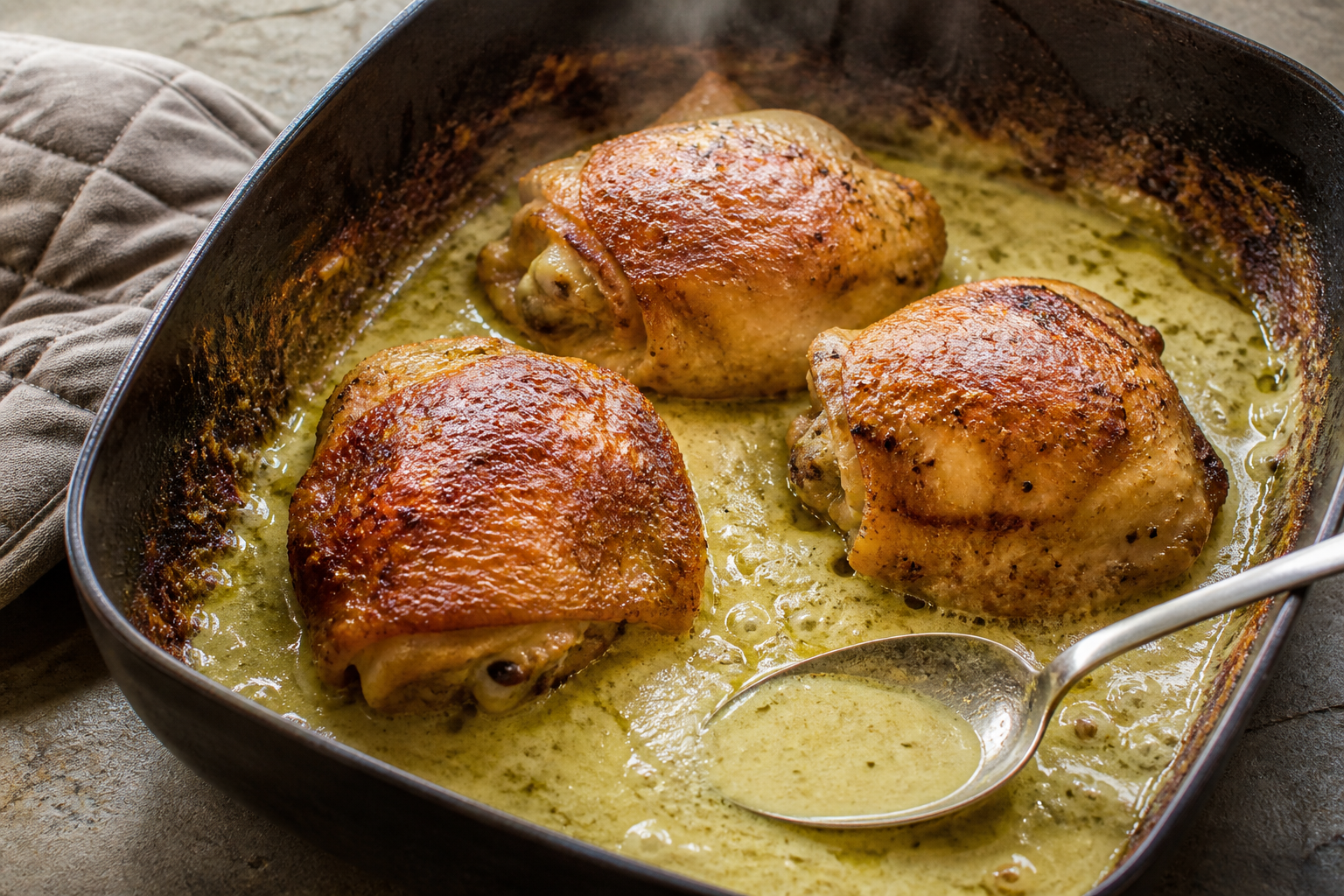
Chicken thigh size, the presence of a bone and the type of roasting dish all affect cooking time. Use the oven setting and timing for the specific chicken-thigh recipe or package you are following, then rely on doneness rather than the clock alone.
- Pat the thighs dry and arrange them in a shallow roasting dish with space between the pieces. Crowding traps steam and slows browning.
- For skin-on thighs, spoon most of the curry sauce around the meat instead of covering the skin. For skinless thighs, coating the surface is fine because there is no skin to keep crisp.
- Place the dish in the heated oven. If one side colours more quickly, rotate the dish. If sauce at the edges begins to catch, stir that area without repeatedly opening the oven.
- Begin checking at the earliest cooking time given for your type of thigh. Use a clean food thermometer in the thickest part, away from the bone, and cook until it reaches the safe internal temperature required by your local public-health guidance. Do not rely only on surface colour.
- Let the cooked chicken rest while you finish the rice. Taste the fully cooked sauce, adjust its seasoning, and add fresh coriander only when serving.
If you are adding vegetables to the roasting dish, choose pieces that will cook within the same window as the chicken. Put quicker-cooking vegetables in later rather than letting them collapse in the sauce. Steaming a vegetable separately is the easier choice when you are uncertain about timing.
Serve one dinner across the family table
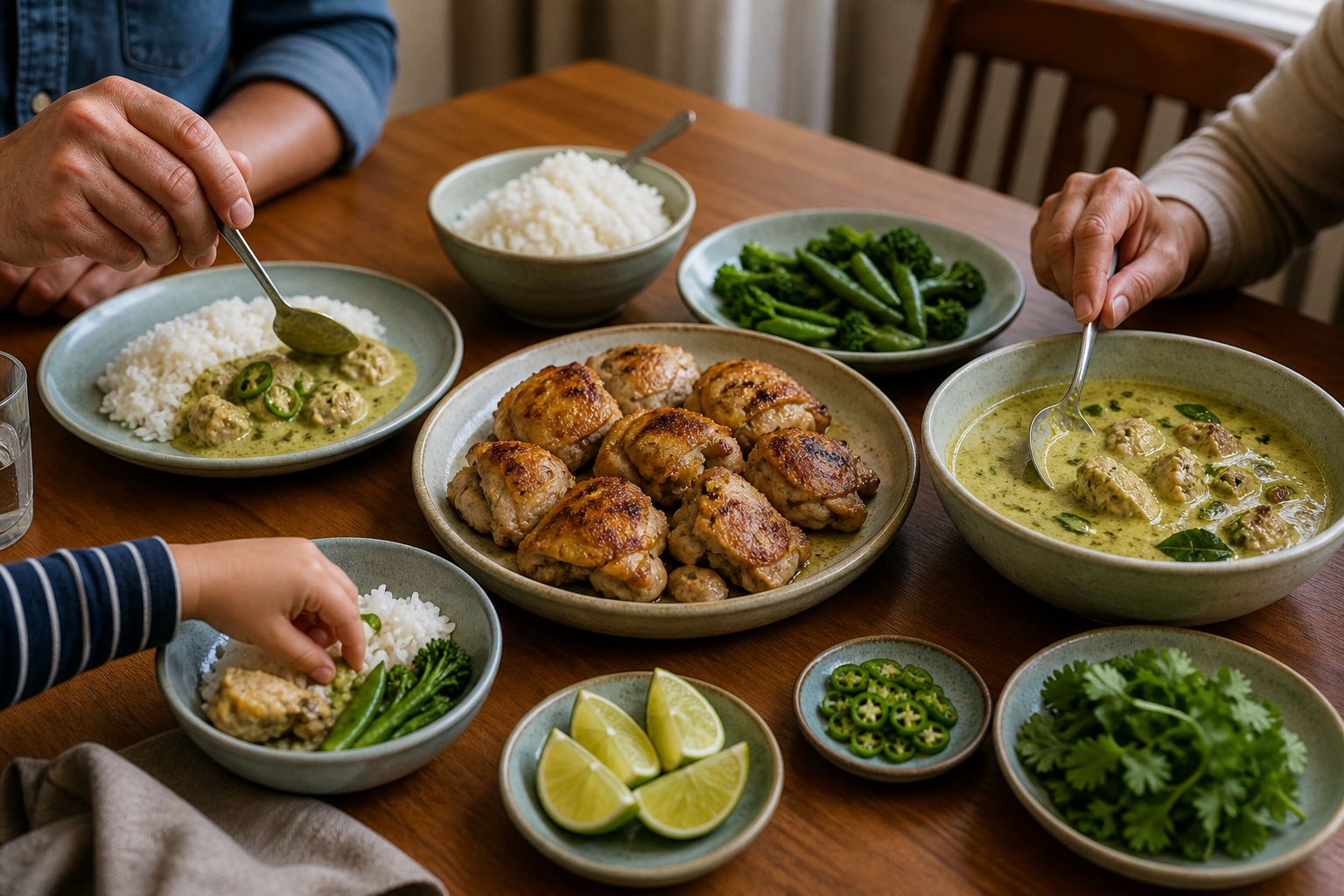
For a child who already eats family foods, plain rice and mild chicken can come from the same dinner without creating a separate recipe. Remove every bone carefully, then cut or shred the meat into a texture your child already manages safely. Leave chewy skin off their plate, and offer curry sauce on the side when you are unsure about the heat.
Serve the main meal as intended: jasmine rice, a chicken thigh, enough green curry sauce to moisten the rice, and fresh coriander. Keeping the sauce separate from a child’s serving also prevents an unfamiliar flavour from taking over the foods they recognize.
Before the extra chicken disappears into second helpings, move the amount reserved for the next meal into its own container. Refrigerate cooked chicken, sauce and rice promptly in covered containers, following your local food-safety guidance. Rice should not be left sitting at room temperature for an extended period.
For the second meal, remove the bones and shred the chilled chicken into its sauce. Reheat only what you plan to serve until it is piping hot throughout. Spoon it over safely stored reheated rice, freshly cooked rice or noodles, then add fresh coriander. The chicken is already seasoned, so the second dinner needs assembly rather than another round of cooking.
Key takeaways
- Plan the extra chicken before cooking so the second meal is protected from tonight’s portions.
- Taste the curry mixture before it touches raw chicken, and separate any mild portion at the start.
- Keep sauce mostly around skin-on thighs if you want the skin to brown rather than steam.
- Use a food thermometer and the safe internal temperature set by your local public-health guidance.
- Serve young children deboned chicken in a texture they already handle safely, with plain rice and sauce on the side.
Tonight, reserve the extra thighs before you bring the roasting dish to the table. Tomorrow’s dinner will already have its hardest part finished.
References




