
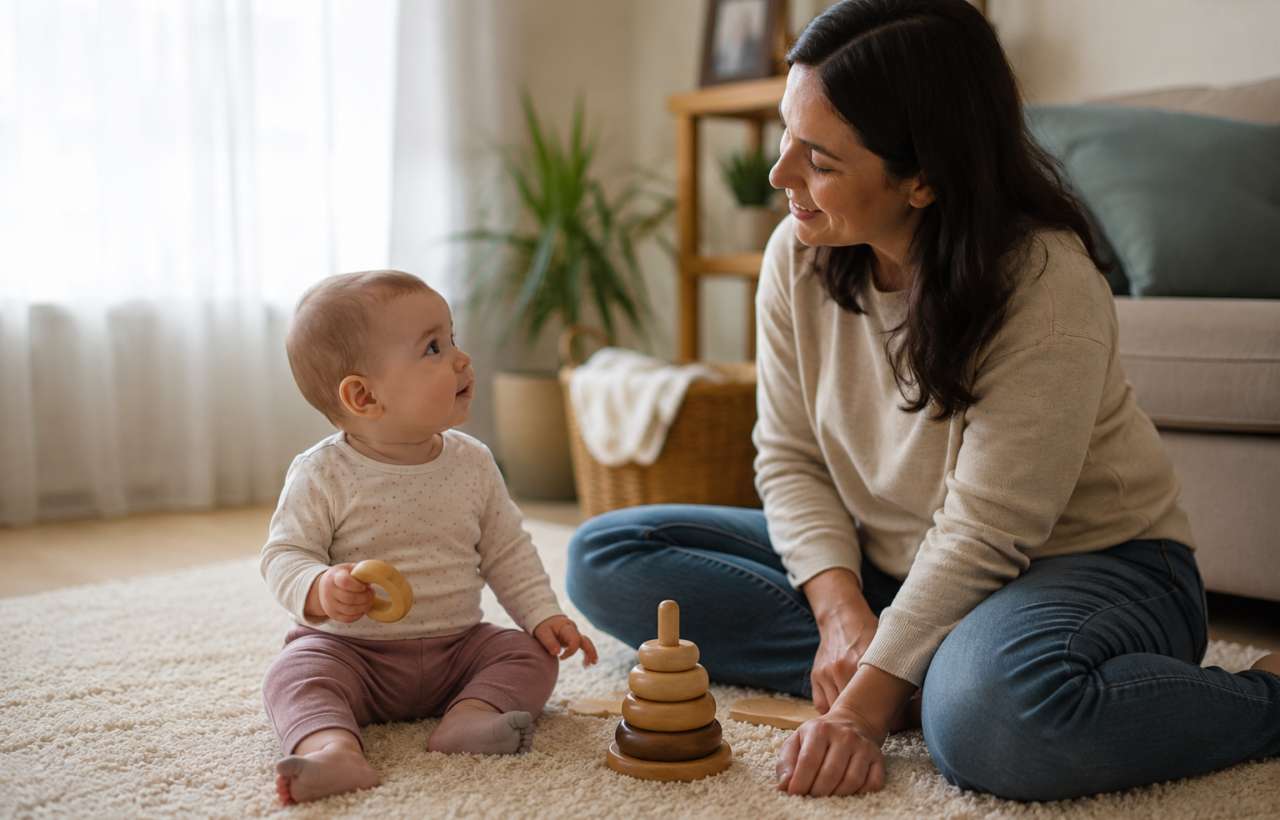
Your baby looks past you, smiles for someone else, or saves their fiercest crying for the moment you walk through the door. If you are wondering whether your bond is growing, one reaction will not give you a reliable answer.
Trust appears across a pattern of ordinary moments: your baby notices you, joins you in a back-and-forth exchange, seeks you when something feels wrong, and gradually uses your presence as a safe place from which to explore. Here is how to notice those cues without turning every smile, tear, or daycare handoff into an attachment test.
Trust is a pattern, not a performance
Attachment develops through an ongoing process. Each time your baby signals a need and you respond, they gain another small piece of experience: discomfort can change, help can arrive, and this person is familiar.
That pattern can show up through several kinds of behaviour:
- Recognition: Your baby studies your face or responds differently to your voice, smell, or presence.
- Back-and-forth interaction: They smile, make a sound, copy an expression, look away, and then return to you.
- Comfort-seeking: They lift their arms, crawl back, or come to you after getting hurt or overwhelmed.
- Exploration: They move away to investigate and check back when they need reassurance.
- Separation and reunion: They protest when you leave, brighten when you return, or release pent-up emotion once they are with you again.
- Imitation and affection: They copy something you do, offer an enthusiastic kiss, or repeat the caring behaviour they have seen from you.
None of these is a pass-or-fail test. A baby who does not cry at drop-off is not less attached. A distracted baby who misses your smile has not rejected you. Temperament, energy, surroundings, familiarity, and whatever has just happened can all shape one moment. Look for recurring ways your baby recognizes, engages with, or returns to you.
Attachment cues change as your baby develops
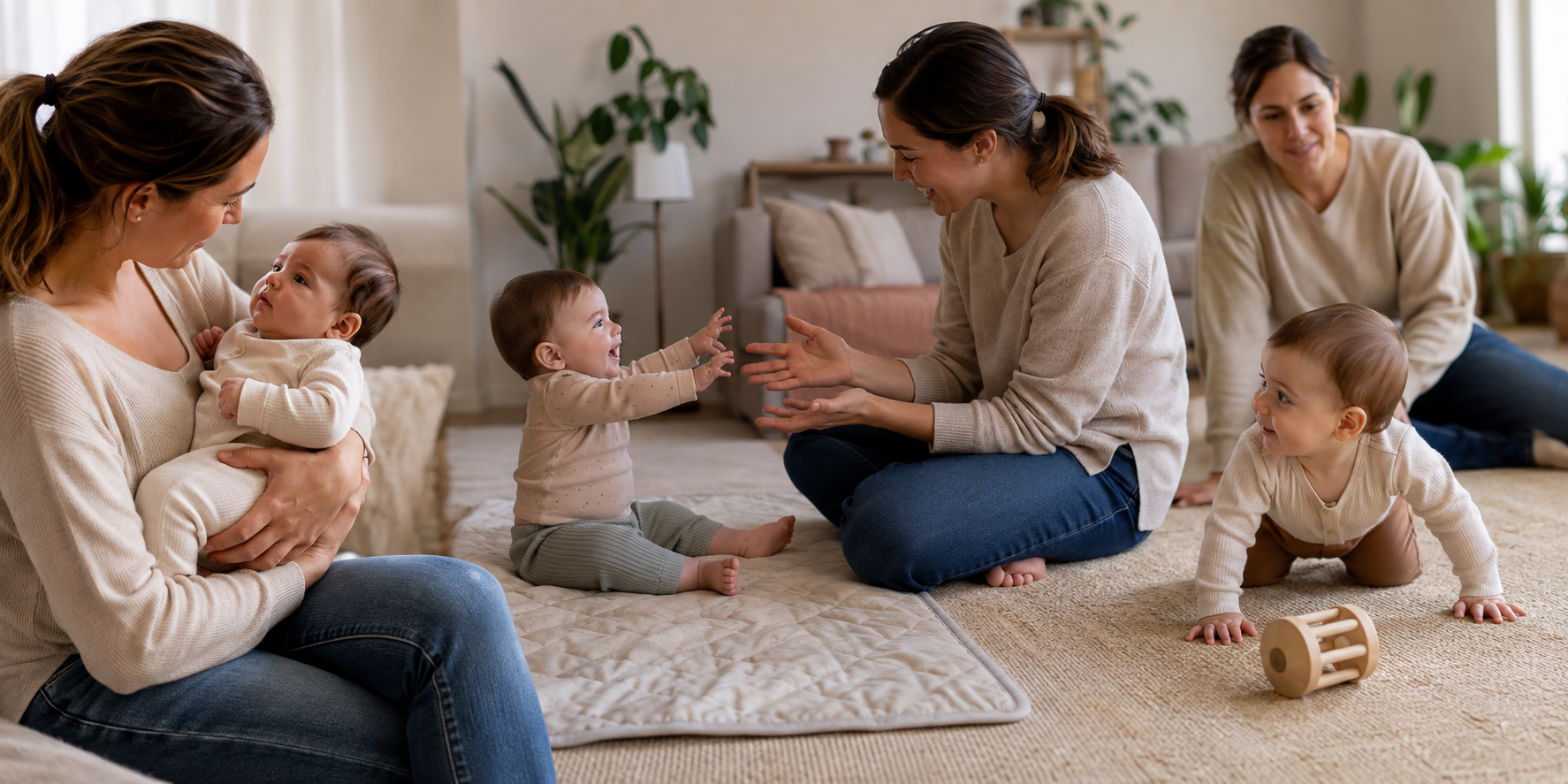
A newborn cannot reach up for you, and a young baby cannot crawl back after exploring. The form of the cue changes as perception, movement, memory, and communication develop. Use these stages as context rather than deadlines.
| Stage | What you may notice | What to do with the cue |
|---|---|---|
| Birth through the first few weeks | Babies can recognize a parent’s voice and smell from birth, and within a few weeks may recognize and prefer a familiar caregiver. | Use your face, voice, and gentle touch during care. Notice whether your baby becomes alert, studies you, or responds differently without expecting a dramatic display. |
| About 1 to 4 months | Your baby may respond to your expression within roughly the first month. Social smiles commonly begin between 6 and 8 weeks, and face-to-face interest becomes easier to see around 4 months. | Smile or copy a sound, then pause. Let your baby answer in their own way. Treat looking away and looking back as part of the exchange. |
| Around 6 months | As physical and cognitive skills come together, your baby may hold up their arms to request a pick-up. | When practical, acknowledge the request with words, eye contact, or a cuddle. The useful part is that their signal produces a recognizable response. |
| Once crawling begins | Your baby may venture away and then return when uncertain. Exploring and coming back can reflect your role as a secure base. | Babyproof the space, stay available, and allow safe movement. Moving away is not automatically rejection. |
| Around 1 year | Your child may imitate kisses or choose a favourite comfort object. A familiar object can become a portable reminder of comfort and affection. | Receive copied affection naturally. If a comfort object helps, make it available during appropriate awake transitions rather than forcing your child to give it up to prove independence. |
| Older baby and toddler stages | You may see strong reunion excitement, separation tears, imitation, comfort-seeking after a hurt, or a release of emotion once your child reaches you. | Use clear goodbyes, warm reunions, steady limits, and calm comfort. Read the whole situation instead of labelling one reaction as good or bad attachment. |
The meaning of a behaviour is not always intuitive. Crawling away can coexist with trust. Crying when you leave can happen because your baby now understands that you are a particular person who continues to exist out of sight. A toddler falling apart after pickup may be showing you that they no longer have to hold everything in. Context matters more than whether a cue looks affectionate.
Respond to the cue instead of trying to produce one
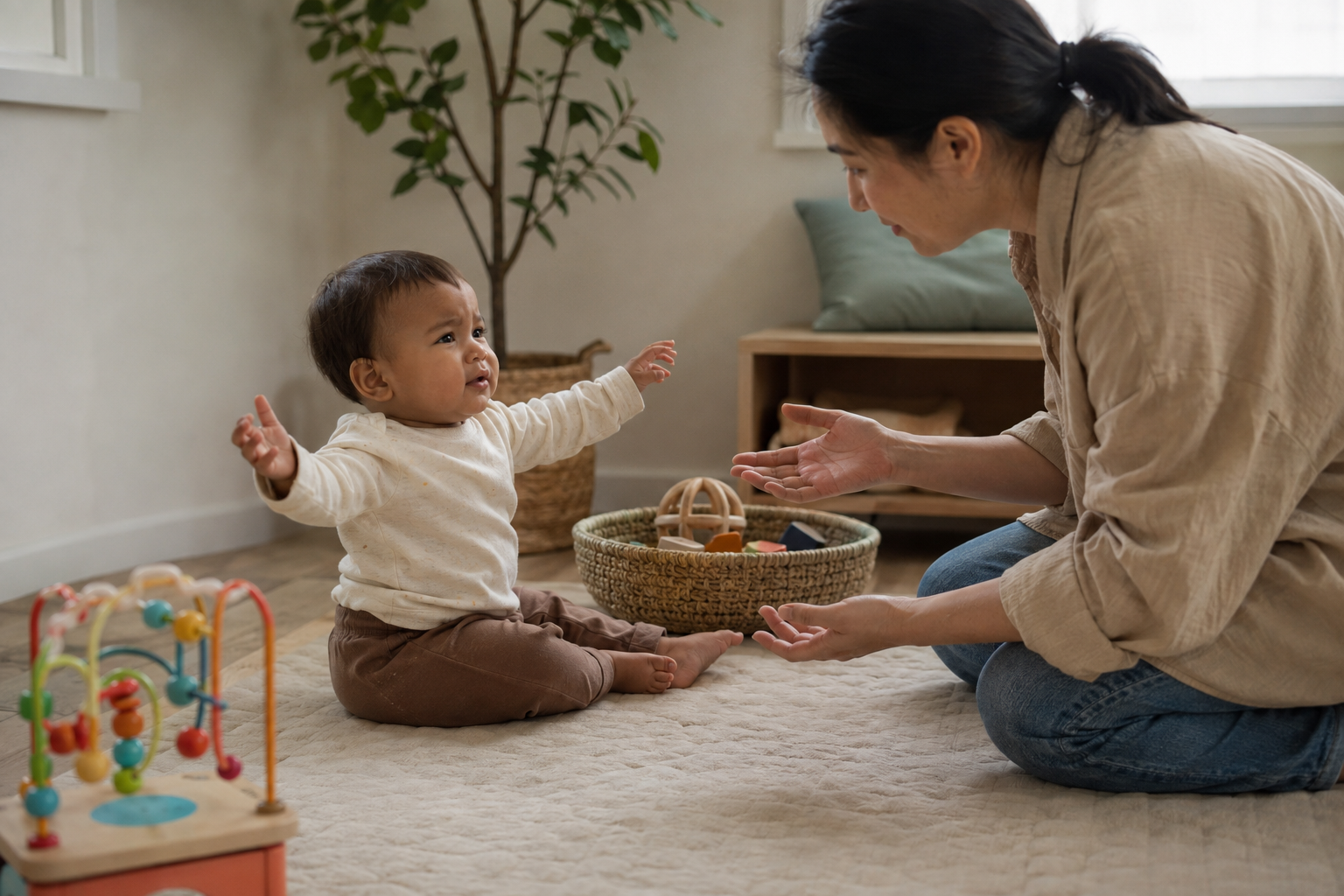
You do not need to stage special bonding tests. Feeding, dressing, floor play, settling, leaving, and returning already provide repeated opportunities to build trust. A simple response sequence keeps the focus on communication:
- Notice what happened before the behaviour. Did a noise startle your baby? Did you put them down? Did they look at you, turn away, reach, freeze, or cry? The sequence gives the cue meaning.
- Match your response to your baby’s state. A distressed baby needs care or comfort. An alert baby may want conversation or play. A baby who turns away may need a pause before reconnecting.
- Leave room for an answer. Make an expression, say a few words, or copy a sound, then wait. The pause turns your attention into an exchange rather than a stream of stimulation.
- Learn your baby’s patterns. Do not expect every cry to fit a universal code. Check likely needs, try a response, and notice what changes. Familiarity develops through this trial and adjustment.
- Repair the misses. If your first response does not help, slow down, observe again, and try something different. Caregivers and babies are reported to be perfectly synchronized only about half the time. Trust does not require flawless guessing; it grows through returning to the interaction.
Being responsive does not mean preventing every cry or answering every request in the exact way your baby hoped. It means that, across many interactions, you keep noticing, attempting to understand, and coming back after a mismatch.
When trust looks like rejection or difficult behaviour
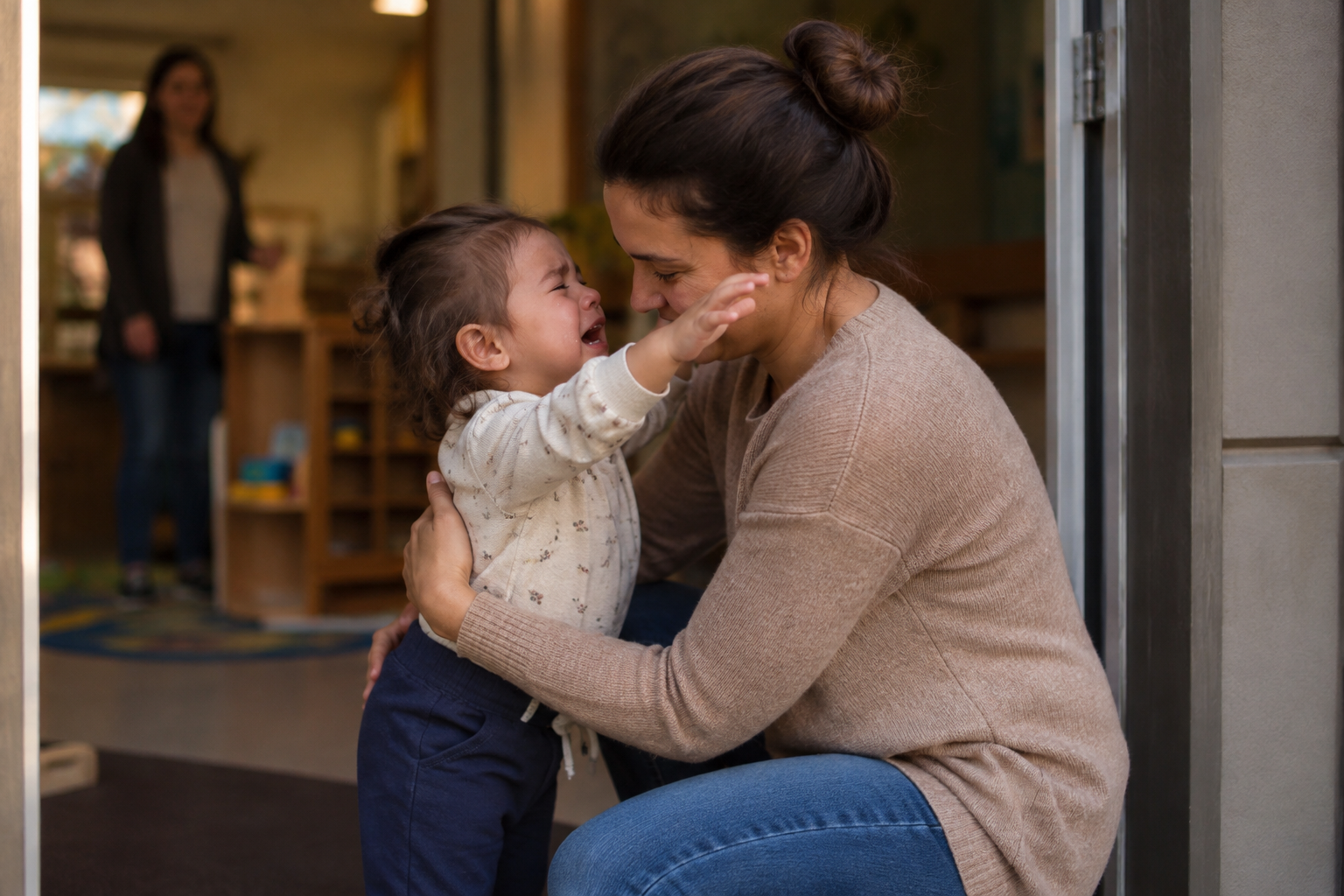
Your baby cries when you leave
Separation distress can emerge when your baby both distinguishes you from other people and understands that you continue to exist when absent. That combination makes your departure meaningful. It does not mean you damaged the bond by leaving.
Give a short, truthful goodbye. Name the person who will care for your baby and say that you will return. At reunion, reconnect without turning the amount of crying into a score. A calm handoff on another day does not mean the relationship has weakened.
Your baby crawls away from you
Mobility changes the visible shape of closeness. A crawling baby can finally act on curiosity, then return when the room, object, or person feels uncertain. Put your effort into making the area safe and staying available. You do not need to call your baby back merely to check whether they will choose you.
Your toddler falls apart after pickup
Some toddlers contain their feelings with another caregiver and release them with a trusted parent. That possibility can explain why a smooth report from childcare is followed by crying, clinging, or limit-testing at home. It does not make every tantrum proof of secure attachment; the transition itself may also be demanding.
Respond to the behaviour in front of you. Offer connection while keeping necessary limits: you can acknowledge that your child is upset without allowing hitting, throwing, or another unsafe action. Trust means your child can bring difficult feelings to the relationship, not that every behaviour must be accepted.
A cue is missing or has changed
An attachment checklist cannot determine whether your baby’s hearing, vision, communication, or overall development is on track. If you have an ongoing concern about how your baby responds to sounds, faces, comfort, or interaction – or your child has stopped using a skill they previously used – discuss the observation with a qualified health-care professional. Bring concrete details about what you noticed, when it happens, and whether it occurs in more than one setting. Do not use the presence or absence of one affectionate behaviour to diagnose the problem yourself.
Key takeaways
- Read attachment across repeated interactions, not one smile, cry, handoff, or reunion.
- Recognition and face-to-face exchange appear before reaching, crawling back, kissing, and imitation are physically possible.
- Looking away, exploring, or staying calm with another caregiver does not by itself mean your baby trusts you less.
- Separation tears and after-pickup meltdowns can occur within a strong relationship, but neither is proof of attachment on its own.
- Your job is not perfect synchronization. Notice the signal, respond, pause, and repair when your first guess misses.
For the next two days, choose one repeatable moment – the first feed, a few minutes of floor play, or pickup from childcare. Watch what your baby does first, answer that cue, and leave a pause for their response. You are looking for a conversation taking shape over many ordinary turns, not a performance your baby has to get right.
References




