
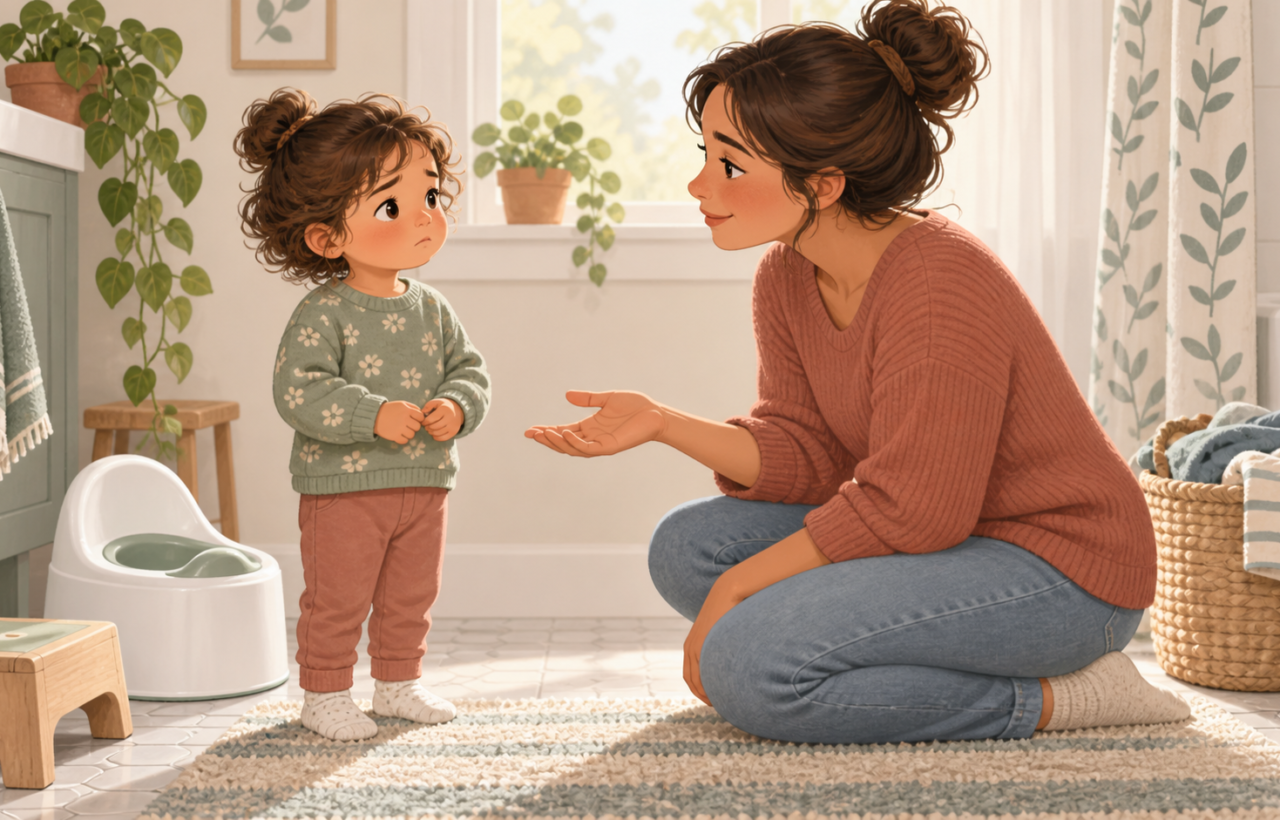
Your child sits on the potty, does nothing, and has an accident moments later. Or they happily pee there but demand a diaper to poop. These situations can look like one big potty-training failure, but they usually point to different skills that are still developing.
The useful question is not, “How do we make them try harder?” It is, “What exactly is getting in the way?” Once you identify whether the obstacle is readiness, body awareness, fear, relaxation, sleep, or a change in routine, you can choose a smaller and more workable next step.
Check readiness before changing your entire approach
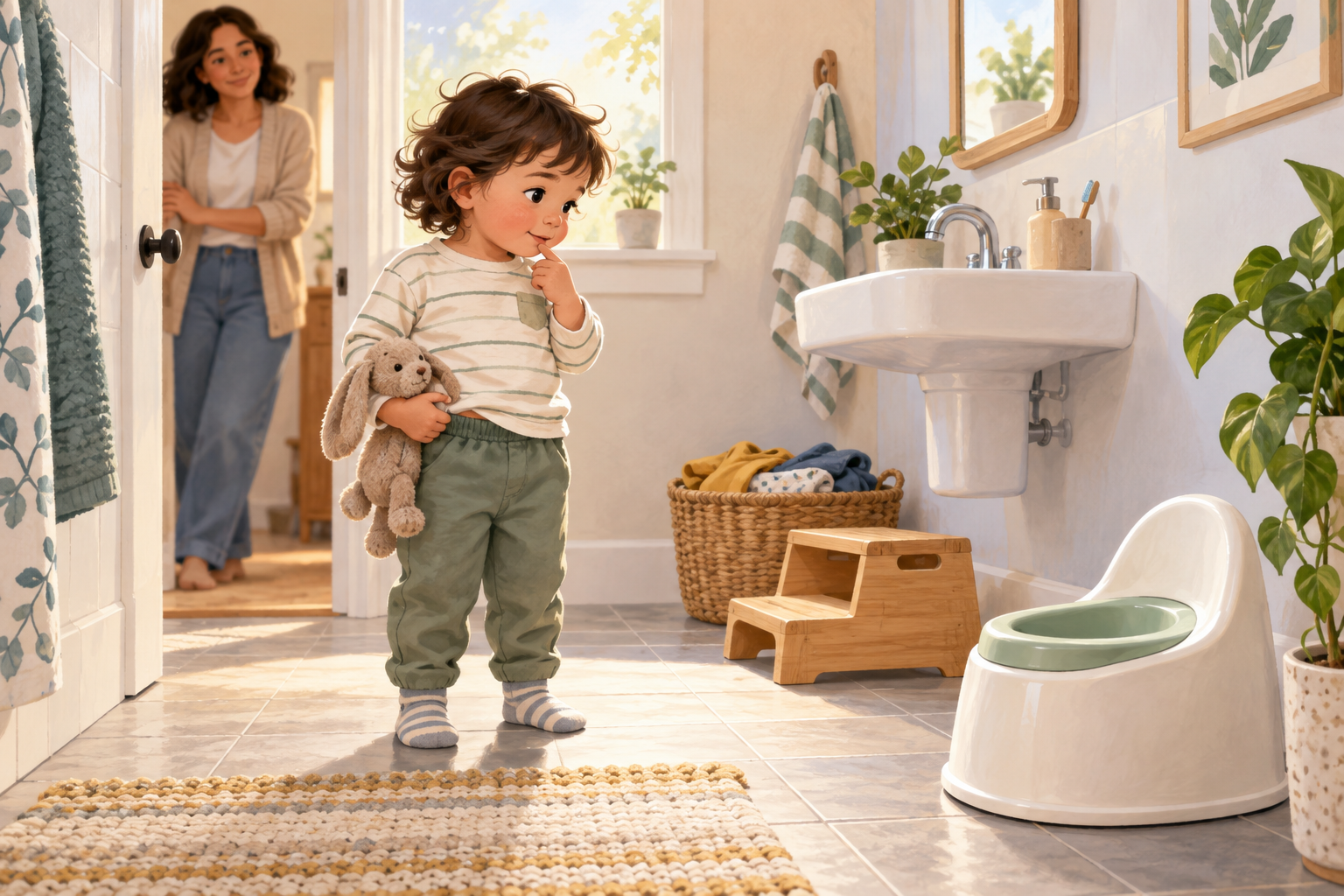
A toddler can understand what the potty is without being ready to use it reliably. They need to notice what their body is doing, communicate some part of that experience, and tolerate the routine. Cooperation on one occasion does not prove that all of those pieces are in place.
Useful signs of readiness include showing interest in the potty, showing awareness of an impending bowel movement, telling you about a soiled diaper, and staying dry for at least two hours during the day. These signs are clues, not an exam your child must pass all at once.
Look at the pattern rather than your child’s birthday or the date you hoped to stop buying diapers:
- If your child shows little interest, rarely notices an urge, and has frequent full accidents, more reminders may not help. A pause may be the better choice.
- If your child notices some urges, occasionally reaches the potty, and has scattered accidents, the skill is emerging. Keep the routine calm and simple.
- If your child uses the potty in one situation but refuses in another, do not restart everything. Work on that specific obstacle.
Hiding to poop, for example, is not proof that your child lacks awareness. It can show that they know what is happening but are not ready to do it on the potty. Treat that as information, not defiance.
There is also no hard training deadline. Even a child who is 3 years old may need more time. If you have concerns about development or health, bring those concerns to your child’s health care provider rather than trying to solve them by intensifying toilet training.
Lower the pressure and solve the specific fear
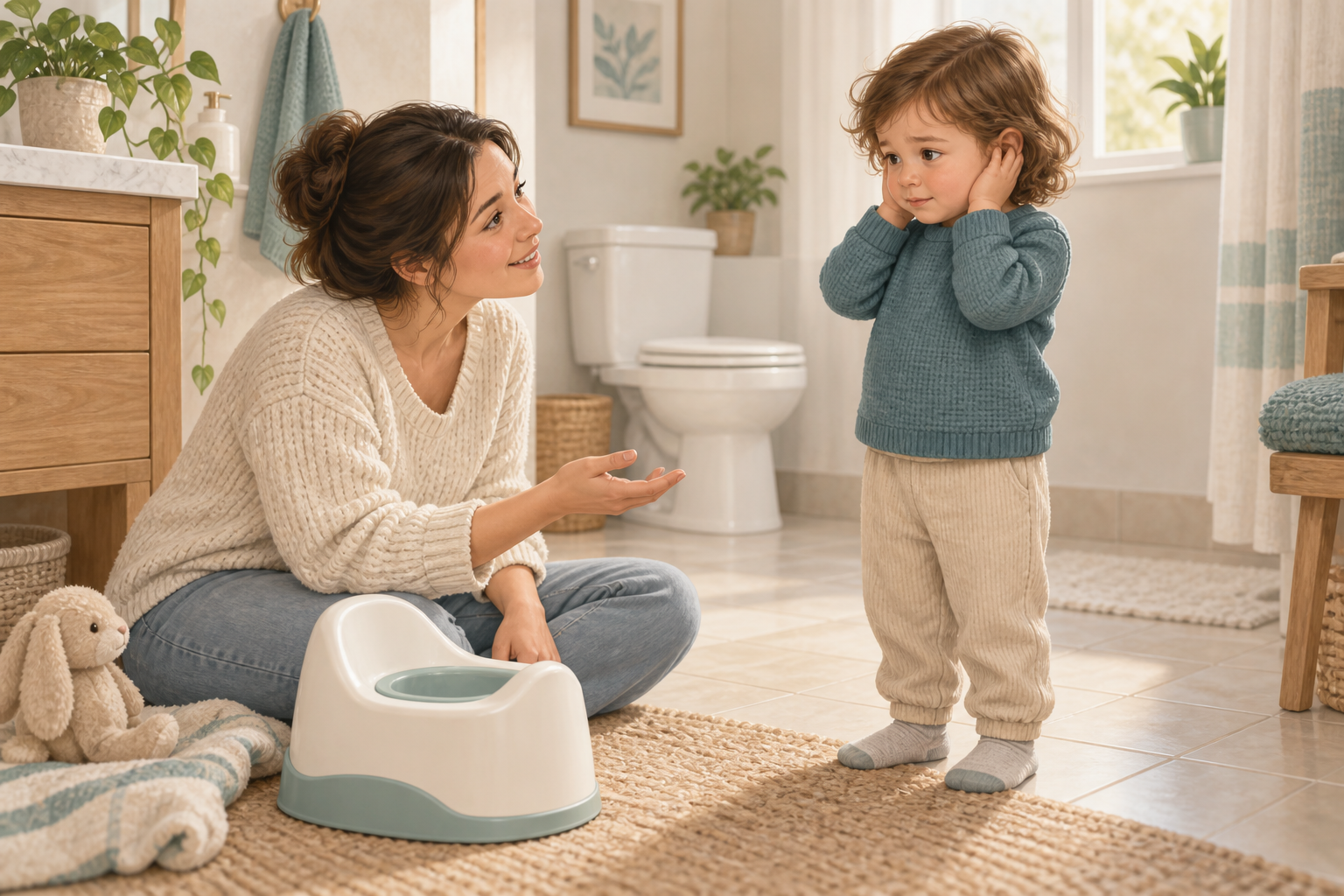
Resistance does not always mean the same thing. A child who refuses to enter the bathroom may not be ready. A child who sits comfortably but panics at the flush has a more specific fear. A child who pees in the potty but asks for a diaper to poop has already developed some body awareness but may not be emotionally ready for the next step.
Watch where the resistance begins. That moment tells you what to change:
- If the flush is frightening: Let your child get off the toilet before flushing. They can practice flushing a small piece of toilet paper while standing safely beside you. In a public washroom, cover an automatic-flush sensor with toilet paper or a sticky note so it cannot surprise them.
- If the large toilet feels threatening: Try a stand-alone potty chair or a child-sized seat that fits over the toilet. The goal is to make sitting feel secure, not to prove that your child can tolerate a particular fixture.
- If seeing stool disappear is upsetting: Acknowledge the fear and explain, in plain language, that the body is finished with the waste. Let your child decide whether to flush, ask you to do it, or leave the bathroom first.
- If every part of the routine gets a firm no: Stop turning each refusal into another negotiation. Return to the readiness question and consider a break.
Some toddlers fear that the toilet could pull them in, while others experience the disappearing stool as if something belonging to their body has been lost. The fear may not make sense to an adult, but correcting it forcefully will not make the toilet feel safer.
Keep your language brief and neutral. After an accident, you might say, “Your clothes are wet. Pee goes in the potty. Let’s get you dry.” That gives your child the needed information without turning the accident into a character judgment.
Avoid scolding, punishment, disgust, or a disappointed performance. Making a child feel bad about accidents can prolong the struggle. It can also shift their attention away from body signals and toward your reaction.
Praise actions your child can control: noticing an urge, telling you, walking to the bathroom, pulling down clothing, sitting, or accepting help. If you use stickers or another small reward, attach it to a clearly defined step such as completing part of the routine independently. Do not make producing pee or poop on demand the only way to succeed.
Decode the accident pattern before deciding what to do
An accident is not just a miss. Its timing and size can show you which part of the sequence is difficult.
- A small leak followed by most of the pee reaching the potty: Your child may be recognizing the signal late but is beginning to respond. Continue calmly and leave room for the skill to develop.
- Full accidents more often than successful trips: Your child may not be noticing the signal early enough to act. Going back to diapers and trying again later can be more productive than increasing pressure.
- An accident immediately after sitting on the potty: Your child may not yet know how to relax the muscles involved while sitting there. This can happen early in training. If it happens often or continues beyond the first several days, readiness may be the issue.
- Occasional accidents between successful trips: These are compatible with normal learning. Keep the response uneventful and continue the routine.
The difference between small urine leaks and repeated full accidents matters. A child who gets most of their pee into the potty is not in the same place as a child who usually does not recognize the urge at all. They should not automatically receive the same response.
Use the same short cleanup routine every time:
- State what happened without blame.
- Help your child change and clean up.
- Invite them to complete one age-appropriate task, such as placing wet clothing in its usual spot. Present it as part of care, never as punishment.
- Return to the day. Do not demand a compensatory potty sit or keep discussing the accident.
Avoid asking, “Why didn’t you tell me?” Your child may not know. Instead, notice what happened just before the accident. Were they deeply involved in play? Did they object when prompted? Did they sit but stay tense? That observation gives you something concrete to work with.
Treat poop, sleep, and caregiver dependence as separate skills
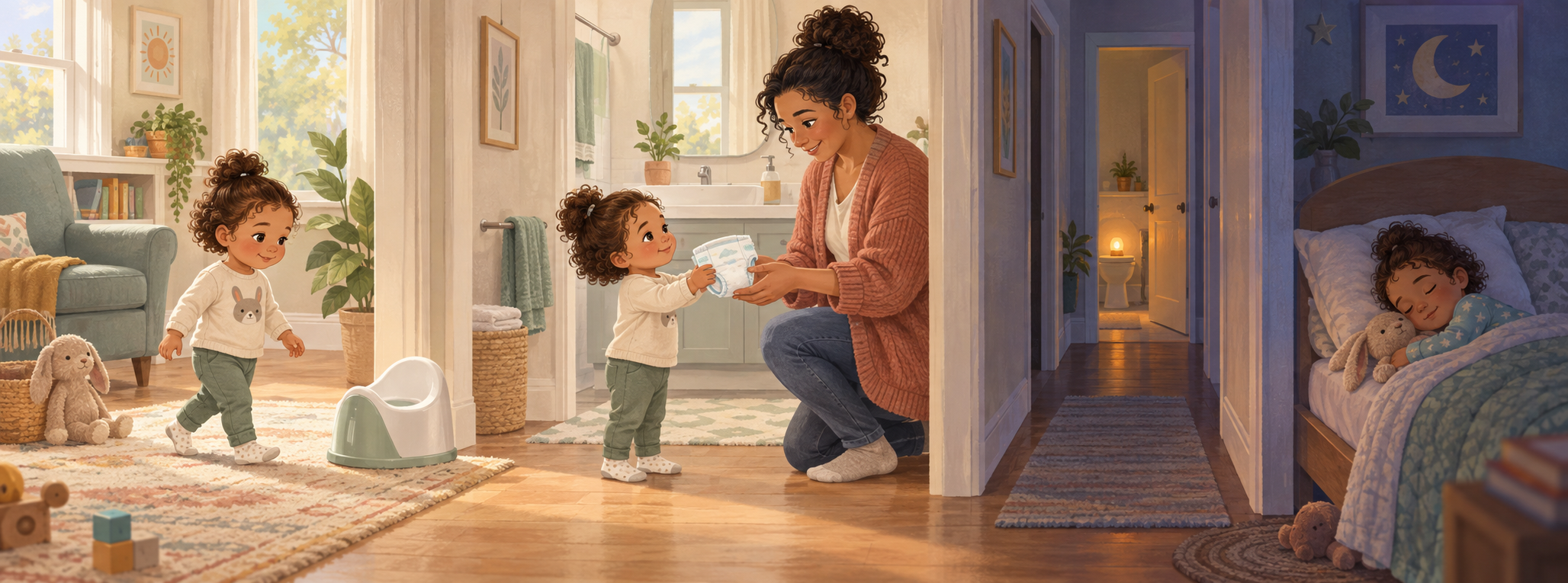
Daytime peeing, bowel movements, staying dry while asleep, and using the bathroom with different adults do not have to arrive together. Treating them as one all-or-nothing milestone creates unnecessary conflict.
When your child will pee but not poop
Learning to poop on the potty is often more difficult than learning to pee there. A child who asks for a diaper or hides before a bowel movement may understand the urge and have some control but still feel uncomfortable with releasing stool into the potty.
Keep successful pee routines in place rather than declaring the whole process unsuccessful. Praise your child for recognizing the bowel movement and telling you. One gradual bridge is to allow the bowel movement in a diaper while your child is in the bathroom. This changes the location without removing the protection they still want. You can work toward the potty later, stepping back if distress starts to rise.
If bowel movements appear painful or you suspect constipation or another health problem, contact your child’s health care provider. Do not treat pain-related avoidance as a discipline problem; a stricter potty routine cannot resolve an underlying health issue.
When your child wets during sleep
Wet naps or nights do not erase daytime progress. Sleep dryness commonly takes longer than awake toilet use. You can keep a pull-up specifically for naps and bedtime, putting it on just before sleep and removing it after waking. Offer the potty immediately before bed and again after waking.
Explain the arrangement plainly: underwear is for awake time and the pull-up helps during sleep. That distinction keeps sleep protection from becoming a verdict on daytime ability.
When your child will only go with one person
Dependence on one trusted person can happen early in training. Build independence by handing over one part of the routine at a time instead of abruptly disappearing.
- The preferred adult walks to the bathroom while another caregiver helps with clothing.
- The preferred adult walks to the door but waits outside while the other caregiver stays nearby.
- The other caregiver handles the familiar routine from the beginning.
Keep the words, potty location, and cleanup expectations consistent. Practice the handoff during an ordinary potty opportunity, not for the first time when your child is urgently trying to hold it.
Respond to regression without restarting the battle
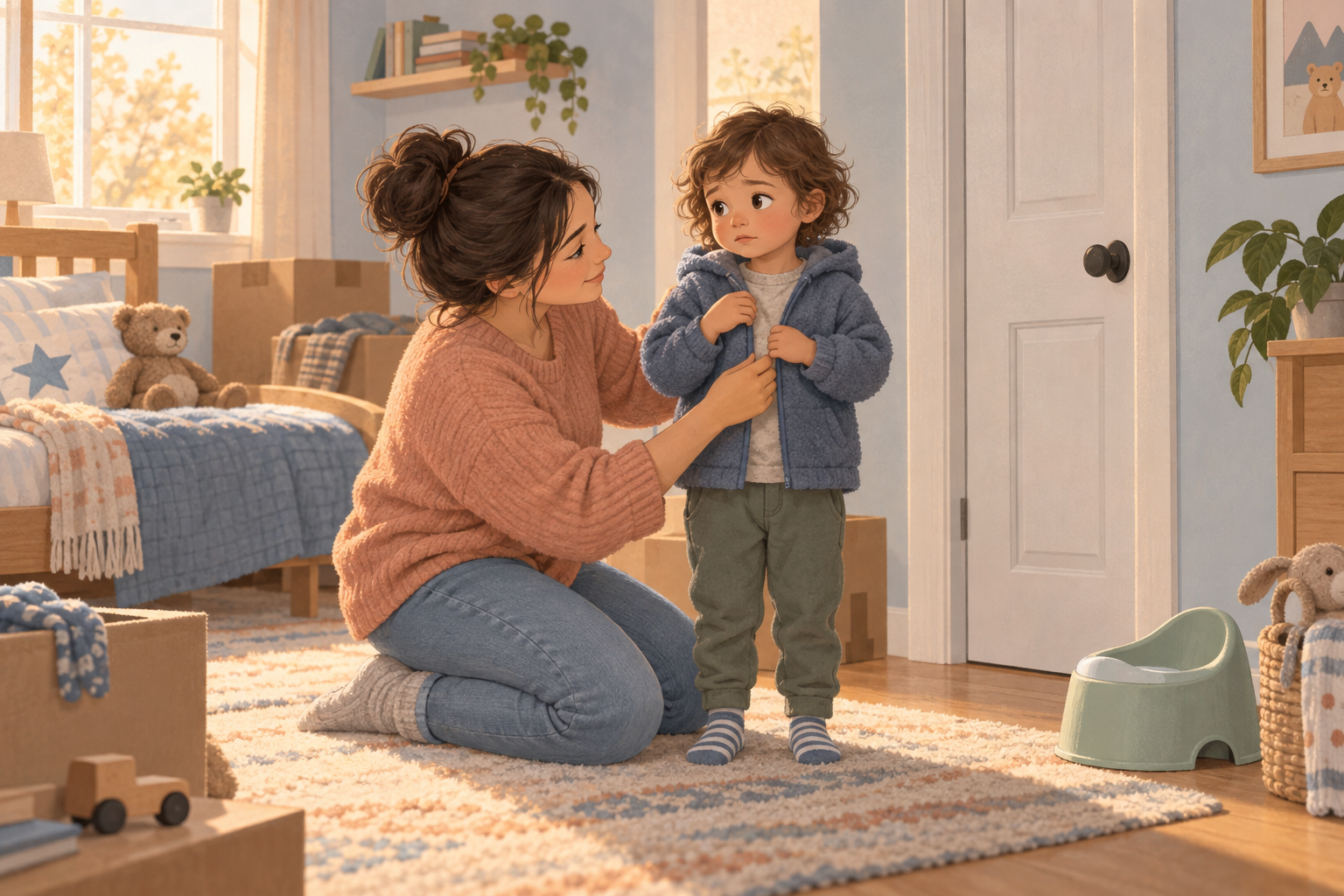
A child who was making progress may have more accidents after a disruption. Illness, a new baby, a change in caregivers, moving from a crib to a bed, and moving house can all coincide with regression. Fear of the potty and constipation can also contribute.
Before introducing stricter rules or a larger reward, ask what changed. Your first move might be restoring a predictable routine, offering more help with clothing, removing an automatic-flush surprise, or temporarily reducing demands while your child adjusts.
Pause training if there is little interest, frequent full accidents, escalating fear, or repeated conflict. A break of about a month can give everyone room to reset before trying again. Use diapers neutrally during the pause. Do not present them as a punishment or threaten your child with a return to training.
Talk with your child’s health care provider if you are worried, if constipation or another health issue may be involved, or if you need help deciding whether your child’s pattern reflects typical readiness. Potty-training strategies are not a substitute for assessing a possible medical problem.
Key takeaways
- Judge readiness by interest, awareness, communication, and emerging control, not by a calendar deadline.
- Treat resistance as information. Identify whether your child is unready, afraid of the flush, uncomfortable with the toilet, or hesitant specifically about poop.
- Read the accident pattern. Small leaks, frequent full accidents, and accidents immediately after sitting point to different challenges.
- Keep daytime toileting separate from sleep dryness, and transfer the routine between caregivers in small steps.
- Pause when training has become a repeated conflict. Ask a health care provider about suspected constipation, other health concerns, or a pattern that worries you.
For the next several potty opportunities, observe what happens before, during, and after the difficult moment. Choose one pattern and make one change. Keep that response consistent across caregivers. If your child becomes more fearful instead of more capable, step back and give readiness more time.
References




