
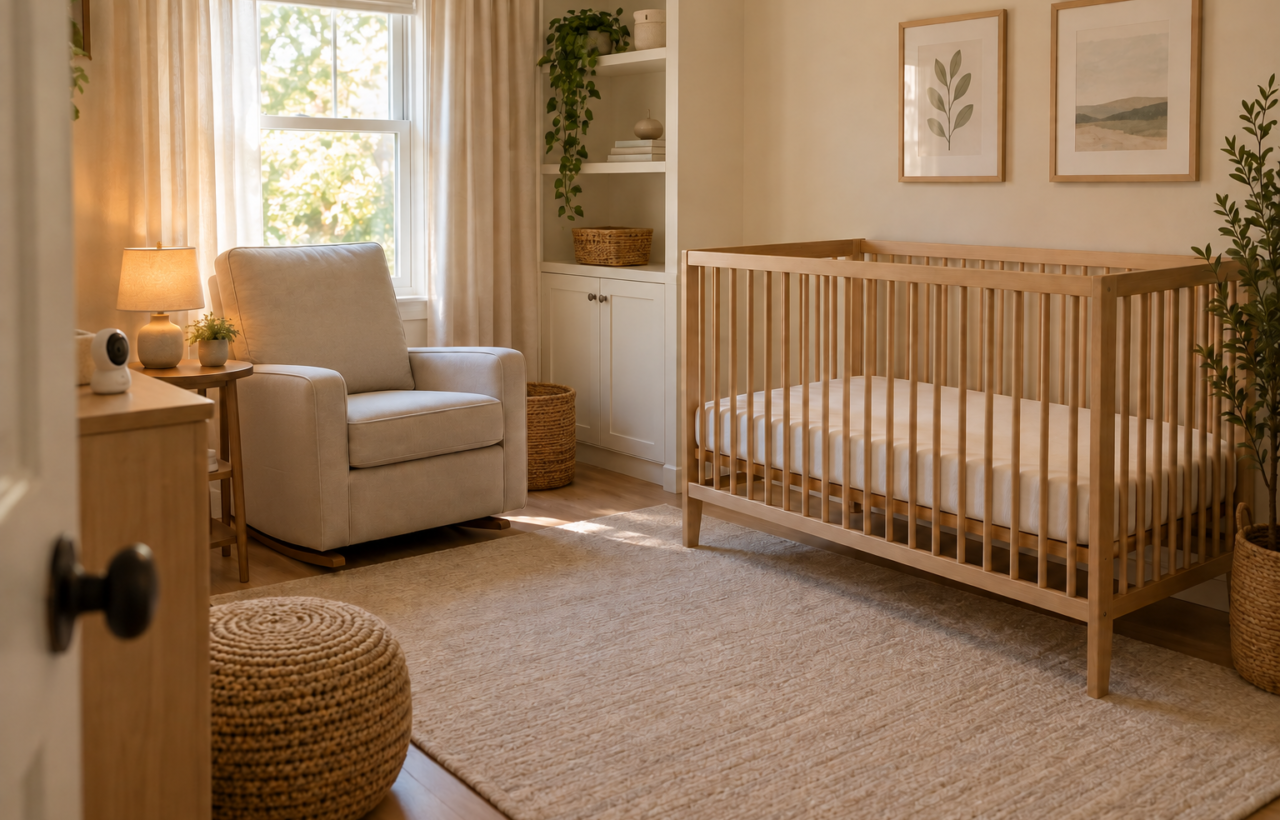
You do not need a nursery full of gadgets before your baby arrives. You need a safe sleep space, a setup that works during tired night wakings, and, if it solves a real problem in your home, a monitor you understand and trust.
Start with the mattress and the physical room. Add technology only after you can name what you want it to do. That order keeps marketing features from distracting you from the essentials.
Buy the sleep surface before the sleep gadgets
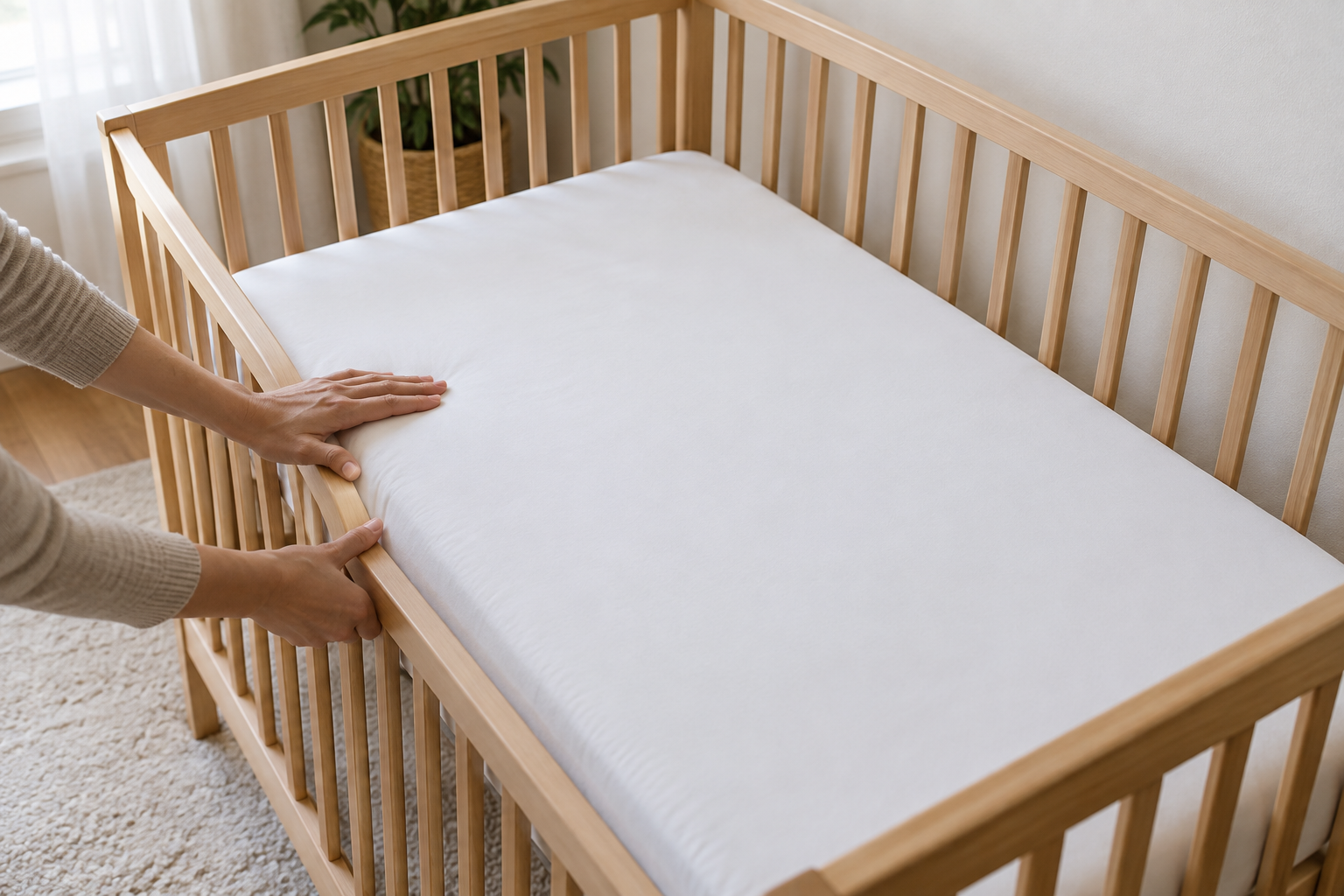
The crib and mattress do the most important work in the nursery, so settle them before choosing decor, storage, or electronics. Use a crib, bassinet, or other infant sleep product only as its manufacturer directs. Pair it with the mattress made for that product or one explicitly confirmed as compatible.
A safe setup should have a firm, flat sleep surface and a fitted sheet that stays smooth and secure. Keep pillows, bumpers, loose blankets, positioners, toys, and improvised padding out of the sleep space. A topper cannot correct an unsuitable mattress, and adding layers may change the fit or firmness the product was designed to provide.
Safety, comfort, durability, breathability, and cleanability are useful crib-mattress filters, but the final decision must match your crib and its instructions. Treat breathable as a product feature, not permission to add soft bedding or depart from safe-sleep practices.
- Confirm compatibility by checking the exact crib and mattress models. Do not rely on the word standard by itself.
- Install the mattress and inspect every edge. It should sit as intended without bunching, bowing, or requiring extra material to fill space.
- Put on the fitted sheet you plan to use. If it pulls up at the corners, changes the mattress shape, or will not stay smooth, choose another sheet.
- Read what washable actually means. The removable cover may be machine washable even when the mattress core is not. Check the washing and drying instructions before a nighttime accident forces you to improvise.
- Keep a spare fitted sheet ready. Use a mattress protector only if the sleep-product instructions permit one, and make sure it does not change the fit or create a soft layer.
Ease of cleaning matters because the best nursery setup is one you can restore safely while tired. If a cover takes a long time to dry or is difficult to reinstall, decide in advance what your approved backup setup will be.
Choose a monitor by the problem you need it to solve
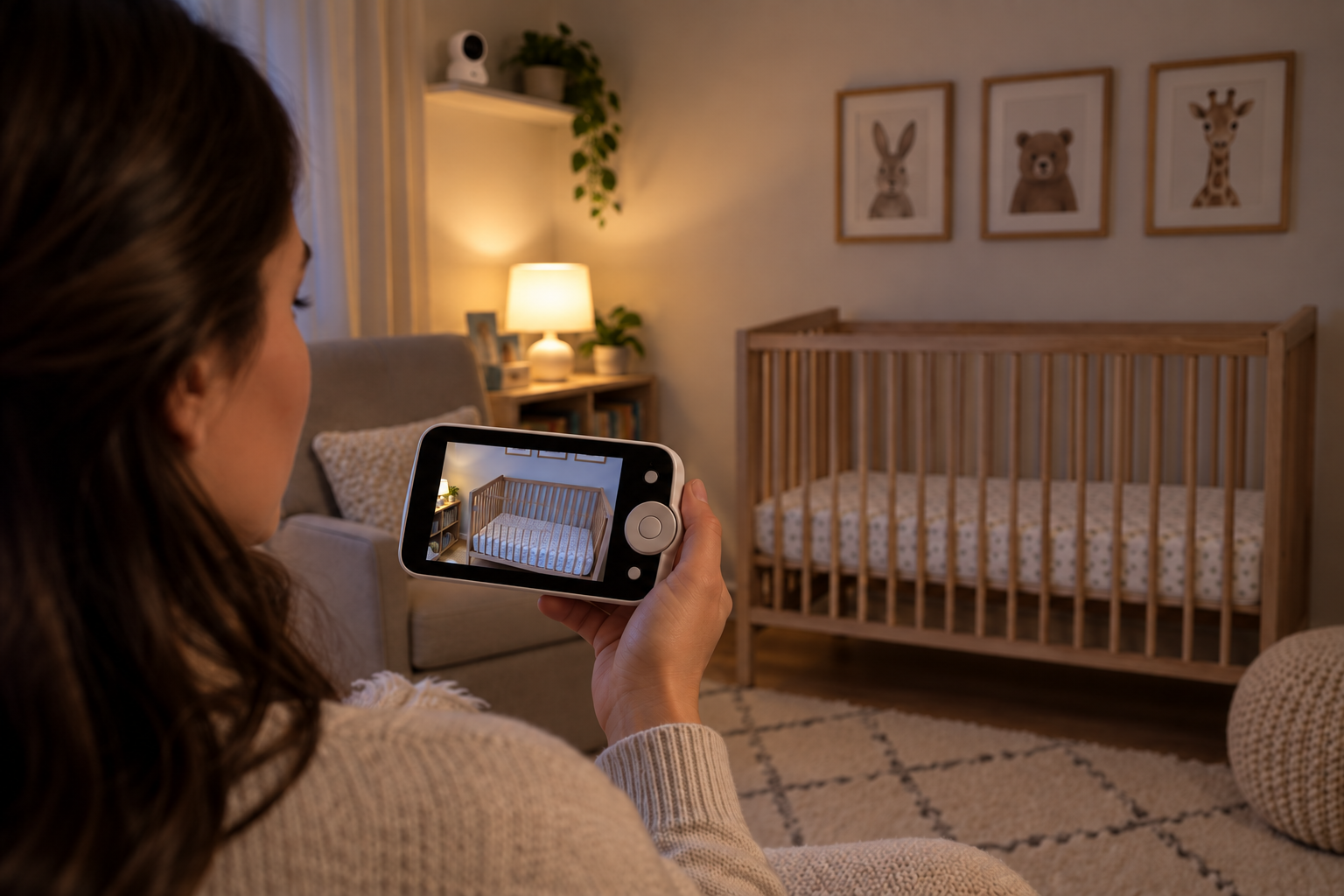
A baby monitor is optional. It can help you hear or see your baby from another room, but it does not make an unsafe sleep space safe and cannot replace direct checking or attentive care.
Begin with your home’s layout. If you can reliably hear your baby from where you spend the evening and sleep, you may need nothing more. If the nursery is on another floor, household noise masks quiet sounds, or you want to check whether your baby is settling without repeatedly opening the door, a monitor may solve a clear problem.
- Choose audio when your main need is knowing that your baby has woken or is crying.
- Add video when seeing position and movement will answer a useful question that sound cannot.
- Consider a temperature display if the room tends to change noticeably, but treat it as information about the room rather than a measurement of your baby’s body temperature.
- Use talk-back or lullaby controls only if they fit the way you settle your baby. A feature that goes unused adds complexity without reducing work.
- Choose sleep analytics only if you have a plan for the information. Trends may help you notice patterns, but they do not explain why a baby woke and should not be treated as a diagnosis.
Temperature readings, lullabies, and detailed sleep analytics now sit alongside audio and video in many monitors. More information is not automatically more useful. If alerts make you check the app more often without changing how you care for your baby, simplify the settings.
Connected monitors also create a privacy and reliability decision. Find out whether the camera works only through an internet connection, who can access the account, how household members are invited or removed, and whether the device receives software updates. Use a unique password, enable stronger account protection when offered, and know what you will do if Wi-Fi or power fails.
No monitor should determine whether you respond to an obvious concern. If your baby appears to have trouble breathing or is difficult to rouse, check them directly and seek urgent medical help rather than waiting for a device or app to classify what is happening.
Organize for a night waking, not a showroom photo

A nursery can look finished and still be frustrating to use. The practical test is whether you can enter quietly, see what you need, complete a feed or change, and leave without searching through drawers or stepping around furniture.
- Create a clear route between the doorway, sleep space, chair, and change area. Remove baskets, trailing cords, and small furniture from that path.
- Use a low, dependable light that lets you see the room safely without turning on every fixture. Place its control where you can reach it before crossing the room.
- Keep diapers, wipes, a change of clothing, and disposal supplies together. Refill that station during the day rather than discovering an empty package overnight.
- Store a clean fitted sheet where it can be reached quickly, but never inside the crib or bassinet.
- Put adult items such as drinks, medicine, charging cables, and headphones somewhere stable and inaccessible to a mobile child.
- Anchor unstable furniture as directed by its manufacturer, and reassess anything that could become climbable as your child becomes more mobile.
Monitor placement belongs in this room plan. Position the camera only as its instructions allow. Keep the unit and every part of its power cord out of the child’s reach; do not attach either to the crib unless the product was specifically designed and approved for that installation. Check the placement again when the crib mattress position changes or your child starts reaching, pulling up, or climbing.
Test the nursery before relying on it overnight
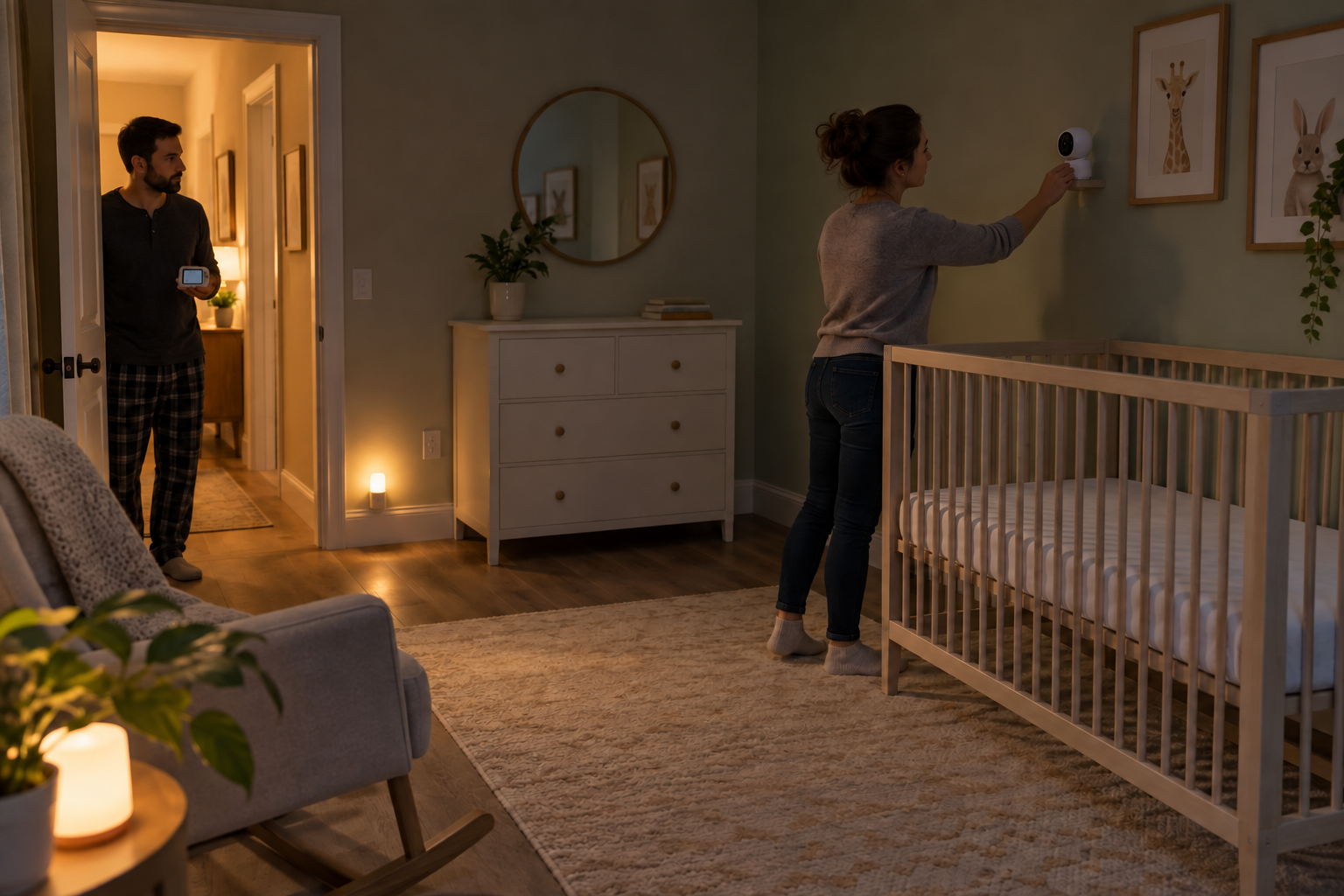
Setup problems are easier to fix in daylight. Run a short rehearsal after the furniture, mattress, sheets, and monitor are installed.
- Make the sleep space completely. Check that the mattress is installed in the correct orientation, the sheet stays fitted, and nothing extra has been left in the crib or bassinet.
- Practice changing the sheet. Confirm that you can remove the soiled layers and rebuild the approved sleep surface without hunting for supplies.
- Walk through the room with the main light off and the night light on. Move anything that becomes a trip or collision hazard.
- Test the monitor from every place where you expect to use it. Check sound, video, range, alert volume, camera angle, and what the parent unit or app does when its connection is lost.
- Set only the notifications that call for a decision or action. Leave optional alerts off until you know they provide useful information.
- Show every regular caregiver how the sleep space, lighting, and monitor work. Write down essential device instructions if the controls are not obvious.
Repeat the check whenever your child reaches a new mobility stage. A shelf, cord, monitor, or piece of furniture that was inaccessible to a newborn may become reachable later. Follow the crib instructions when changing mattress height or configuration, and stop using any sleep product once your child reaches its stated limit.
Key takeaways
- Prioritize a compatible crib and mattress, a secure fitted sheet, and an uncluttered sleep space before buying convenience features.
- Verify fit and cleaning instructions at home; marketing terms such as breathable or washable do not replace the product manual.
- Buy a monitor only for a problem you can name, such as hearing your baby from another floor or checking the room without opening the door.
- Treat temperature displays and sleep analytics as limited information, not medical assessments or guarantees of safety.
- Secure monitor cords, protect connected accounts, and retest the entire room as your child becomes mobile.
Start by standing at the nursery door with the lights low and tracing the path you will take during a waking. Fix the first point of friction you notice. Once mattress fit, cord safety, cleanup, and access are settled, every extra purchase can be judged by a simple question: will this make caring for your baby clearer or easier?
References
- Parents – The 10 Best Baby Monitors We Trust to Keep an Eye on Our Own Babies
- Parents – The 10 Best Crib Mattresses We Tested for Safety, Comfort, and Durability




