

If bottle feeds have suddenly become messy, slow, or stressful, it is reasonable to question the nipple flow. The next numbered size is not automatically the answer. A baby who coughs, gulps, leaks milk, or repeatedly pulls away may need a slower flow, while a baby who works hard without getting enough milk may need a faster one.
Use the age printed on the package as a starting point, then watch how your baby manages the feed. The right nipple is the one that supports comfortable suck-swallow-breathe coordination, not necessarily the one marketed for your baby’s exact age.
Key takeaways for choosing a nipple flow
- A nipple’s size or stage usually describes its flow rate, not how large it should be for your baby’s mouth.
- Age recommendations are starting points rather than deadlines. You do not need to move up just because your baby has reached a new age band.
- Coughing, gulping, milk spilling from the mouth, or repeatedly pulling away can mean the flow is too fast.
- Frantic sucking with few swallows, nipple collapse, persistent frustration, or feeds that regularly drag on can mean the flow is too slow, but first check for a blocked nipple or venting problem.
- Change only one flow level at a time. Keep the new size only if feeding becomes easier without creating fast-flow signs.
- Do not cut, stretch, or puncture a nipple to increase its flow.
Nipple numbers are not universal measurements
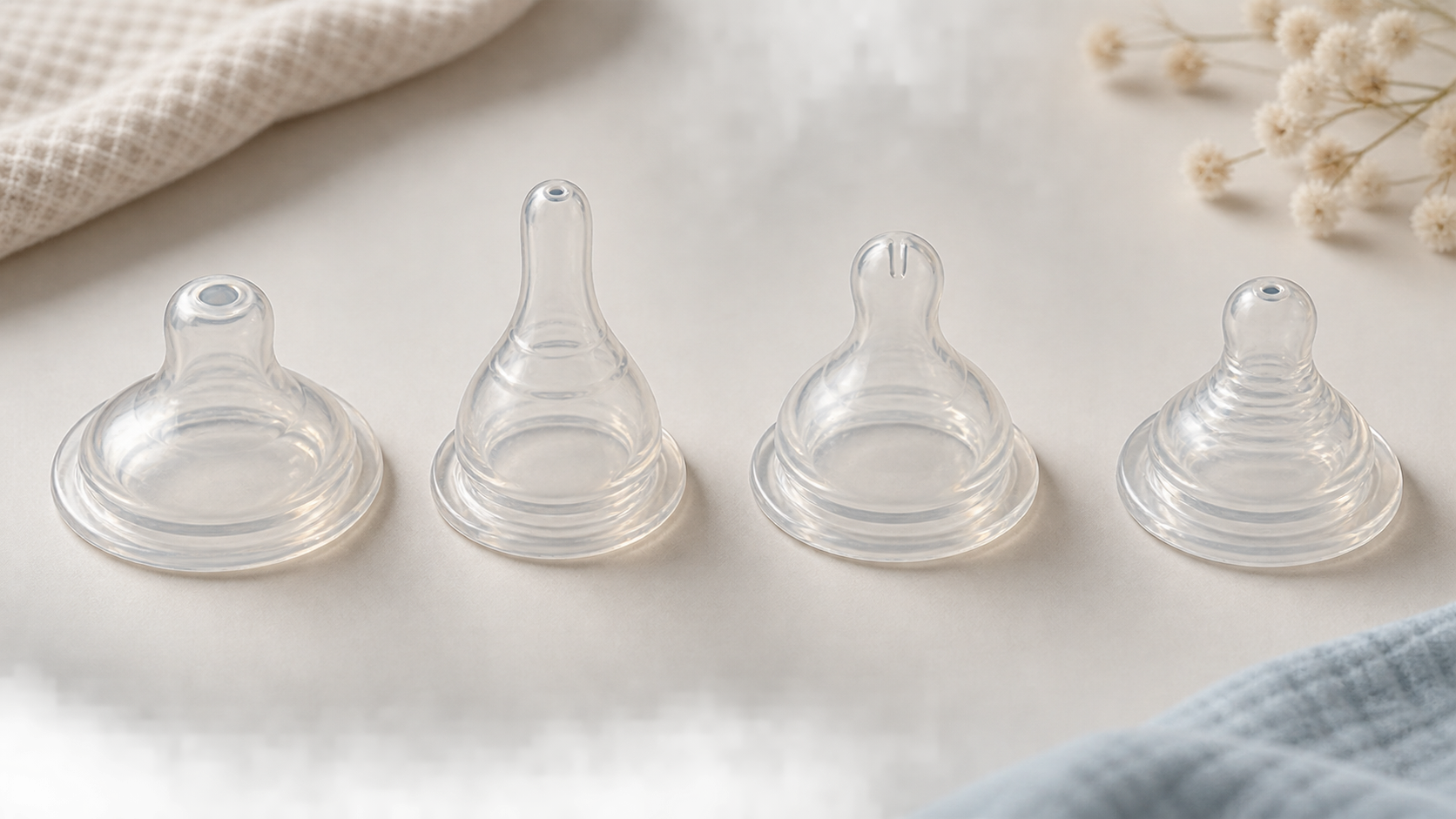
Depending on the manufacturer, you may see words such as slow, medium, or fast; numbered stages; or age ranges. These labels help you choose within one bottle system, but a Stage 2 nipple from one brand may not flow like a Stage 2 from another. If you change brands, treat the new nipple as a new flow rather than assuming the numbers match.
Age still has a role. It gives you a sensible place to begin when you open a bottle system for the first time. But nipple choice depends on both age and the flow your baby can comfortably manage. Some babies remain on a slower level longer than the package implies. Others show that they are ready for a change sooner. Advancing to a faster nipple is not a developmental milestone, and staying with a slower one does not mean your baby is behind.
Compatibility matters too. Use nipples, collars, and venting parts intended to work together unless the manufacturer explicitly says otherwise. A nipple that appears to fit is not necessarily functioning or sealing as designed. Incorrect assembly can cause leaking, poor venting, nipple collapse, or an inconsistent flow that looks like a sizing problem.
Read the whole feed, not one isolated moment

A single cough or distracted pause does not prove that the nipple is wrong. Look for a pattern that repeats during feeds. Pay particular attention to the beginning, when a hungry baby may suck most vigorously, and later in the feed, when fatigue can make coordination harder.
| What you notice | What it may mean | What to do next |
|---|---|---|
| Your baby gulps, coughs, sputters, repeatedly pulls off, or has milk running from the corners of the mouth. | The milk may be arriving faster than your baby can comfortably coordinate sucking, swallowing, and breathing. | Stop and let your baby recover. If breathing is normal and the pattern is not an emergency, try the next slower manufactured flow at a later feed. |
| Your baby sucks and swallows in a manageable rhythm, pauses to breathe, keeps a comfortable seal, and finishes without persistent leaking or distress. | The current flow is probably a workable match. | Keep using it. There is no reason to size up solely because of age or because a faster nipple exists. |
| Your baby sucks hard but makes few audible or visible swallows, becomes frustrated, or repeatedly flattens the nipple. | The flow may be too slow, but the nipple hole or vent could also be blocked. | Inspect and reassemble the bottle first. If the problem continues across feeds, test the next faster flow. |
| Feeding feels different after replacing an old nipple with a fresh one of the same level. | The previous nipple may have softened, stretched, or become damaged with use. | Judge the fresh nipple by your baby’s coordination rather than assuming its label guarantees an identical experience. |
| Your baby struggles with several nipple levels or shows similar problems across bottles. | The difficulty may involve feeding coordination, positioning, illness, discomfort, or another issue rather than flow alone. | Stop cycling through sizes and discuss the pattern with your baby’s health professional. |
Feed duration can provide context, but the clock alone is a poor sizing test. A faster nipple is not better simply because the bottle empties sooner. Likewise, one slow feed during a sleepy or distracted period does not automatically justify moving up. The useful question is whether your baby can take milk efficiently while remaining able to pause, breathe, and stay comfortable.
Test a different flow without changing everything else
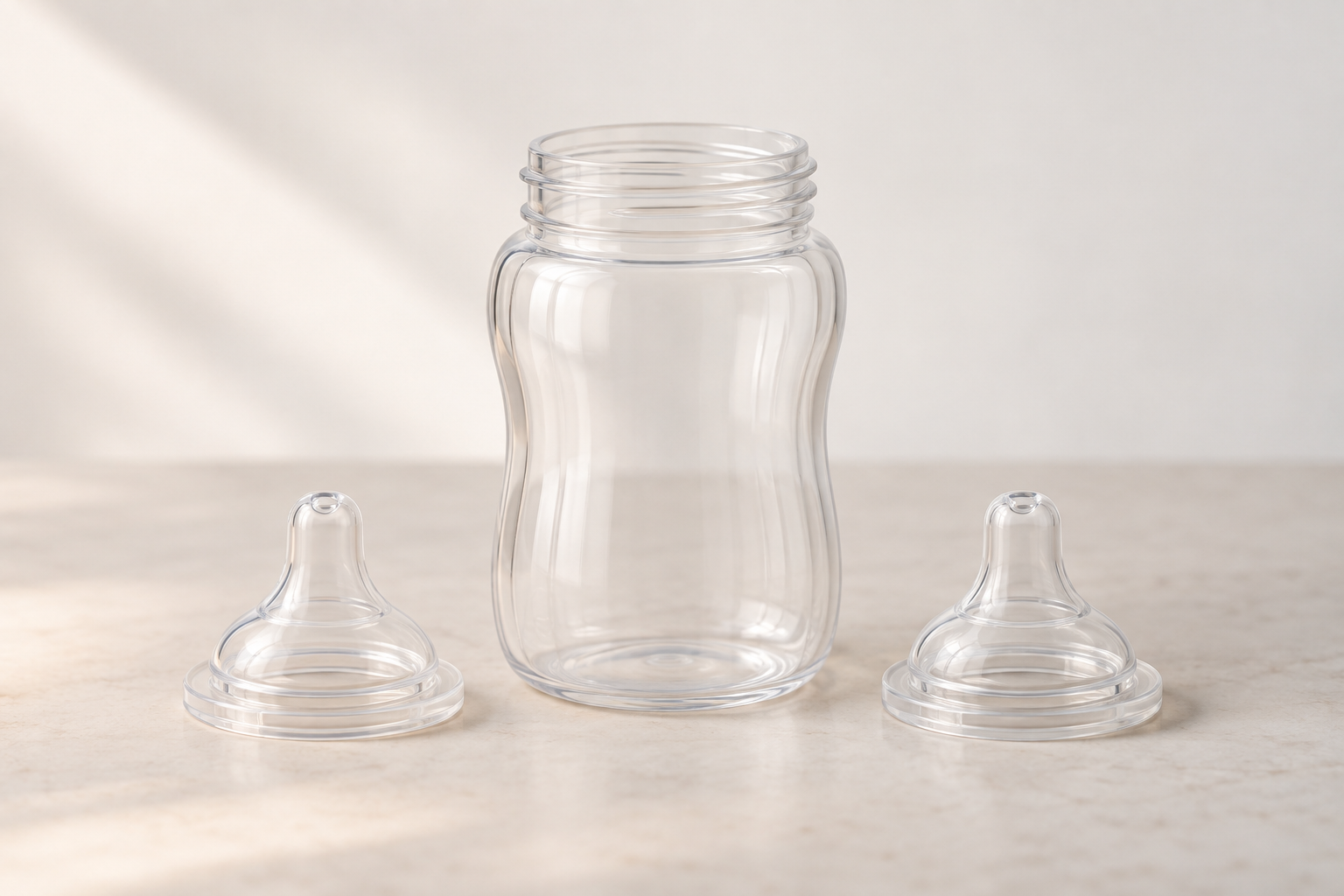
A careful test helps you tell the difference between a true flow mismatch and a temporary bad feed. Work through these steps before buying several stages or switching bottle systems.
- Inspect the current nipple. Look for a split, enlarged opening, thinning, stickiness, swelling, or any other damage. Replace a worn nipple instead of using its altered flow as your baseline.
- Check the setup. Confirm that the nipple is seated correctly, the collar is assembled as directed, and any venting components are clean and unobstructed. Make sure dried milk is not blocking the opening.
- Consider what changed. A new bottle, a different nipple brand, a change in the liquid’s consistency, or unfamiliar assembly can change how a feed behaves even when the printed stage looks familiar.
- Choose one adjacent level. If the recurring signs point to a slow flow, test the next faster manufactured level. If they point to a fast flow, move down one level. Avoid skipping multiple stages unless a qualified feeding professional has given you a specific plan.
- Keep the rest of the feed familiar. Use the same bottle system, usual liquid, and a familiar feeding position so you are testing the nipple rather than several changes at once.
- Watch for the trade-off. A successful move up should reduce excessive effort or frustration without causing coughing, gulping, leaking, or repeated pulling away. A successful move down should improve coordination without leaving your baby working hard for very little milk.
If the new flow creates obvious difficulty, stop the trial rather than waiting for your baby to adapt. Return to the safer, better-tolerated level and ask for help if neither option works well.
Never enlarge a nipple with a needle, scissors, or a knife. A handmade opening can produce an unpredictable flow and damage the nipple. Use a commercially manufactured flow level instead. If your baby has been prescribed thickened feeds, ask the clinician who made that plan which nipple and preparation method to use; do not change the feed’s consistency or alter a nipple on your own.
Know when nipple sizing is not the whole problem
Repeated coughing, choking, distressed feeding, refusal, unusual breathing sounds during or after feeds, persistent pain, difficulty taking enough milk, or concerns about growth deserve professional attention. A pediatrician or other primary-care clinician can assess the broader picture and, when appropriate, refer you to a qualified feeding or swallowing professional. A lactation consultant can also help when bottles are being used alongside breastfeeding, especially if flow changes are affecting how your baby feeds at the breast.
Stop feeding and seek urgent help if your baby cannot breathe normally, develops blue or grey colouring, becomes limp, or is unresponsive. Those are not nipple-selection problems to troubleshoot at home.
For your baby’s next bottle, note the current brand and flow, inspect the nipple and vent, and watch the first part of the feed without rushing to intervene. If the same mismatch appears repeatedly, make one adjacent flow change and observe the result. That small, controlled test is more useful than following the age label automatically, and it gives you a clear pattern to describe if you need professional help.
References




