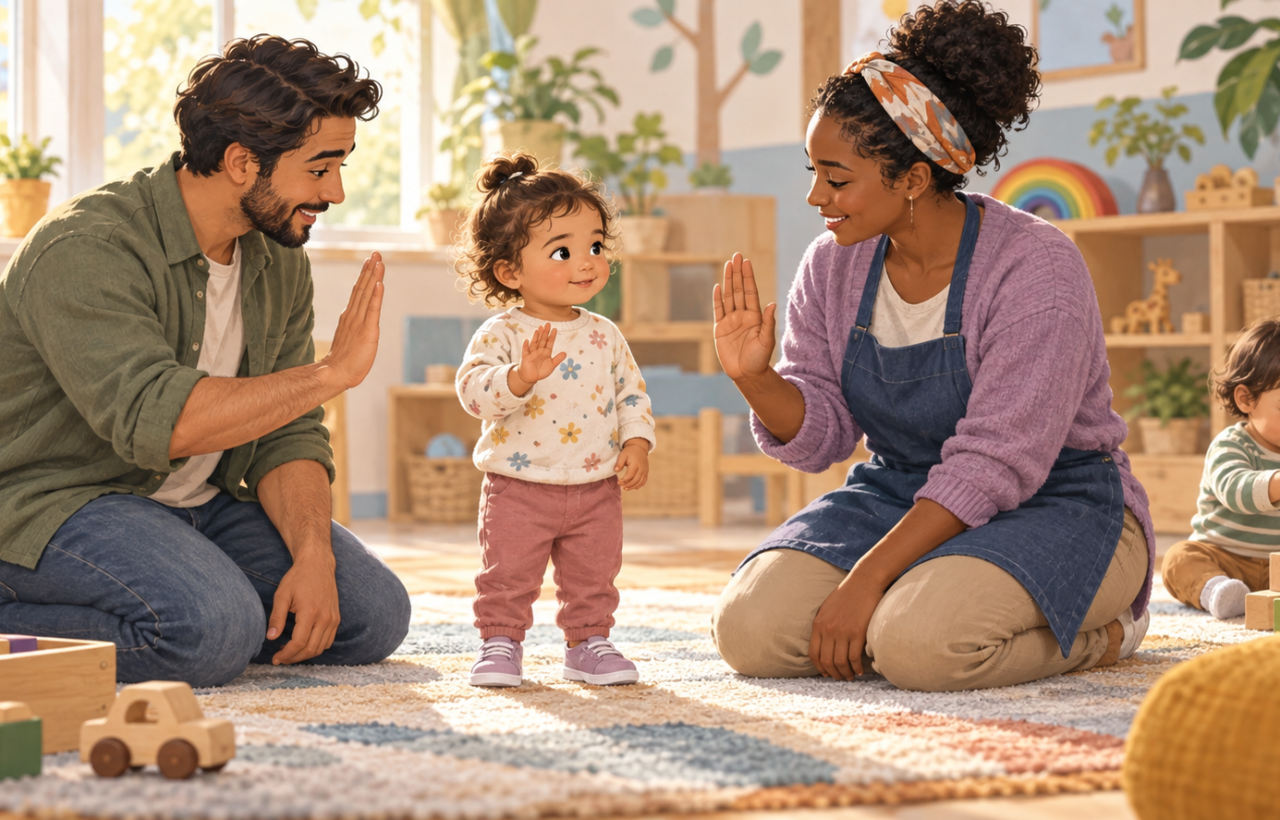
Your daycare tells you that your toddler hit another child again. By pickup, the moment is already over, your child may not be able to explain it, and a punishment at home feels disconnected from what happened.
The most useful response is a shared plan: daycare stops the hitting the same way each time, you look for the situations that set it off, and everyone teaches one simple action your toddler can use instead. That gives you something more constructive to work toward than telling a young child to “be gentle” and hoping the message carries into a difficult moment.
Start with the pattern, not a label
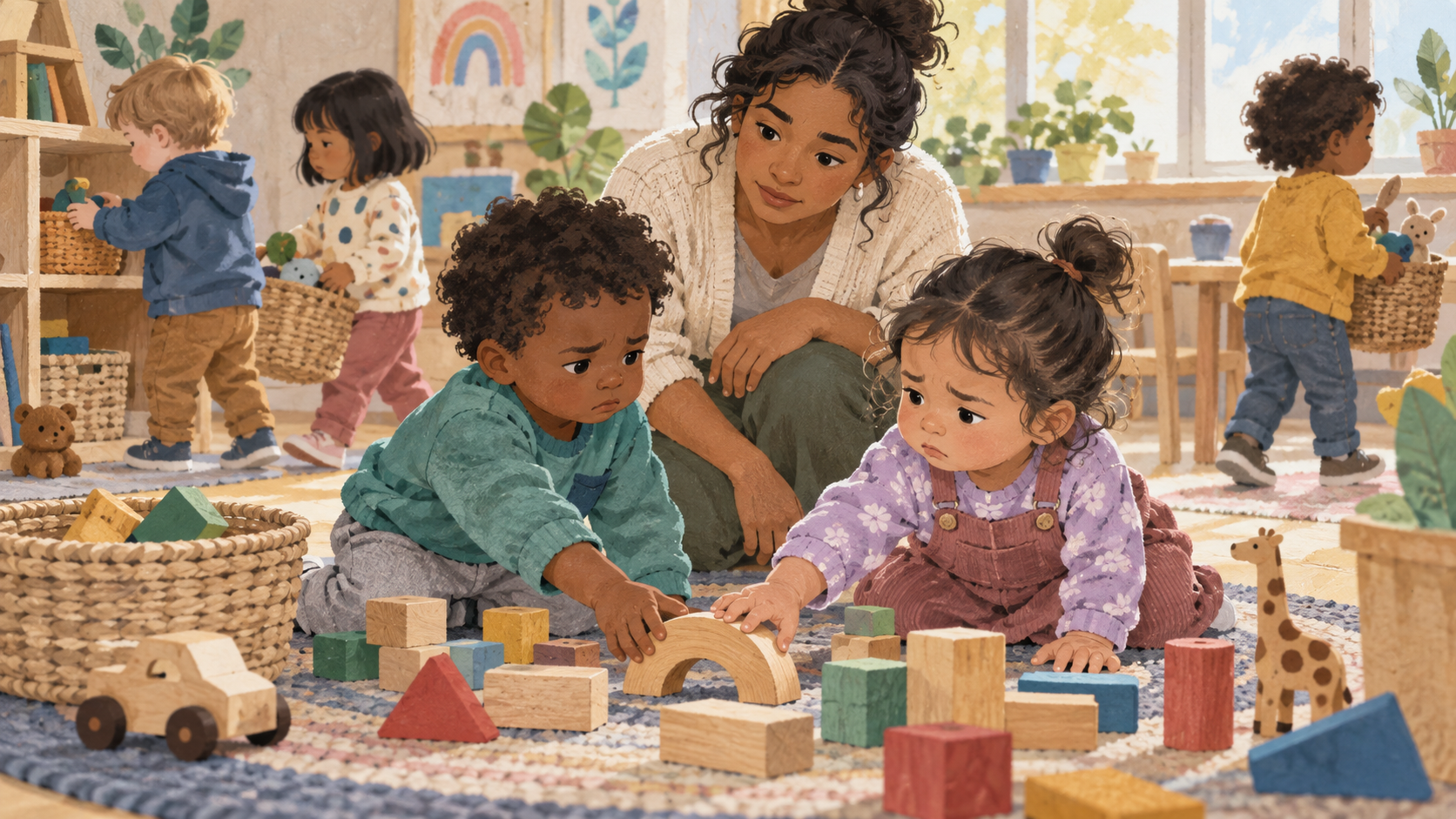
For young children, aggressive behaviour can be developmentally common without being acceptable. That distinction matters. You should stop the behaviour firmly, but hitting does not by itself mean your toddler is cruel, that daycare has failed, or that you have been too permissive.
A toddler may hit when wanting a toy, protecting personal space, resisting a transition, seeking an adult, or reacting faster than words and self-control can keep up. Those possibilities are starting points, not conclusions. The job is to identify what happens around your child’s incidents.
Instead of asking only, “Why did my child hit?” ask daycare for a description that you can use:
- What activity was happening immediately beforehand?
- What did the other child do, if anything, just before the hit?
- Was your toddler reaching for something, being approached, waiting, or moving between activities?
- What did the educator say and do?
- What happened next: did your child get the toy, leave the activity, receive attention, or calm with help?
- Does the behaviour appear around the same activity, child, transition, or part of the day?
Ask for observable details rather than an interpretation such as “he was angry” or “she wanted attention.” “He hit when another child picked up the truck” is more useful because it shows everyone which moment needs a new skill.
Your toddler’s answer at pickup may not settle the question. Remembering an earlier event, explaining an impulse, and taking another person’s perspective are demanding tasks for a young child. Avoid turning the drive home into an interrogation. Get the sequence from the adults who saw it, then keep your conversation with your child short and concrete.
Agree on one immediate response with daycare
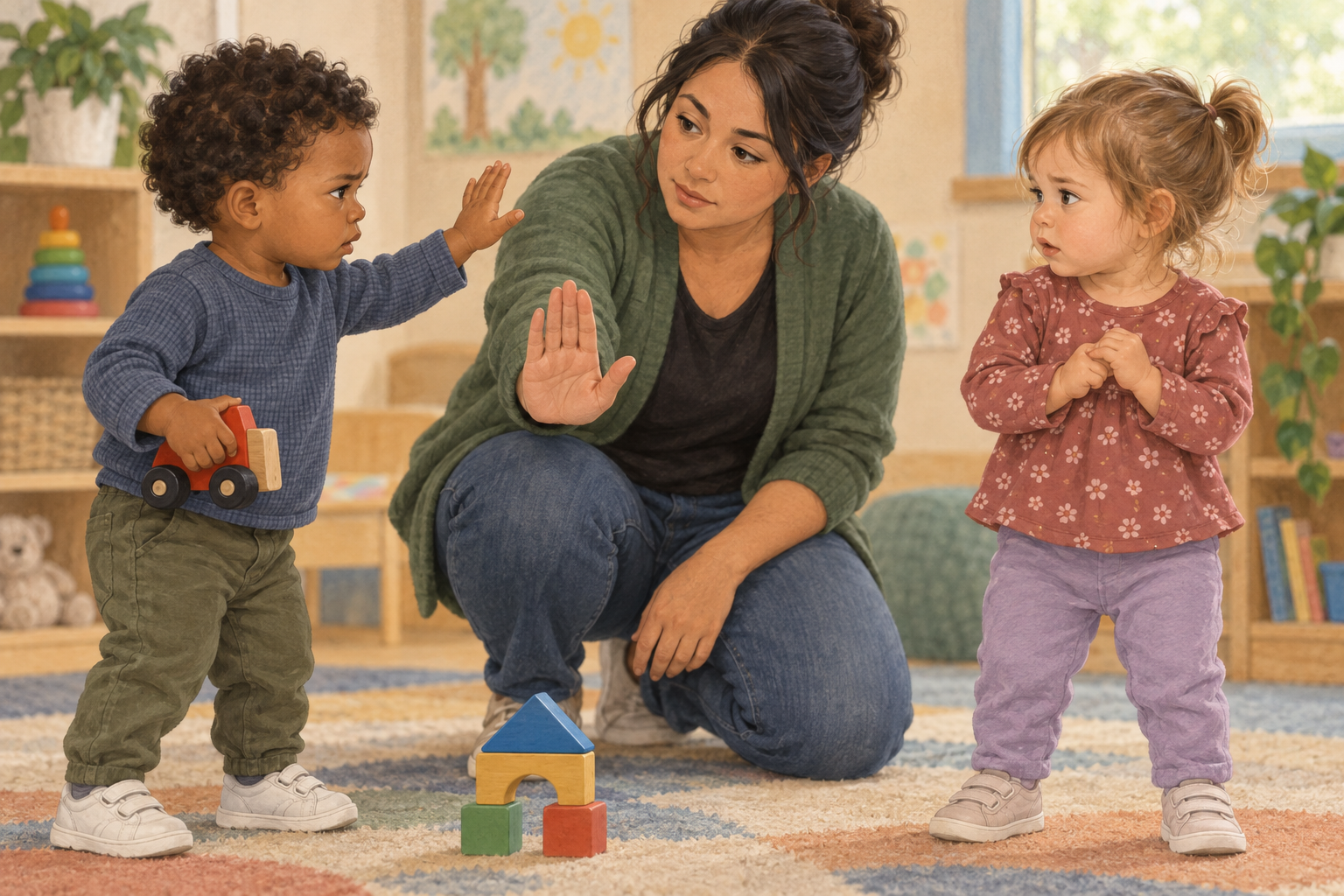
Consistency does not mean every adult has to sound identical. It means the sequence stays recognizable: stop, state the limit, attend to safety, help the child settle, and practise the alternative.
- Stop further contact. The educator moves close, blocks another hit when possible, and separates the children if needed under the centre’s safety procedures.
- Use one brief limit. “I won’t let you hit. Hitting hurts.” A long explanation is unlikely to land while your toddler is highly upset.
- Check the child who was hit. This keeps the immediate priority on safety rather than making hitting a reliable route to an extended burst of adult attention.
- Help your toddler regain control. The educator can stay nearby, reduce stimulation, and use the calming support that already works for your child.
- After your child is calm, prompt the replacement action and an appropriate repair. The teaching belongs here, not in the peak of the incident.
Any consequence should be immediate and connected to the event. If two children are fighting over a toy, for example, the educator can hold the toy while everyone becomes safe and then help them re-enter play. A large punishment imposed hours later at home does not show your toddler what to do when the same daycare trigger appears again.
Repair can be simple: checking whether the other child is okay, returning an item, helping rebuild something that was knocked down, or saying sorry when your child can do so meaningfully. Do not force a hug or make a prompted apology the entire lesson. The other child may not want physical contact, and your toddler still needs to practise the action that could prevent the next hit.
At pickup, you can say, “Your teacher helped you stop hitting. Hitting hurts. When you want the truck, say ‘help.’ Let’s practise.” Then rehearse once and move on. This reinforces the plan without requiring your toddler to give an account they may not be able to produce.
Teach a replacement that works in the difficult moment
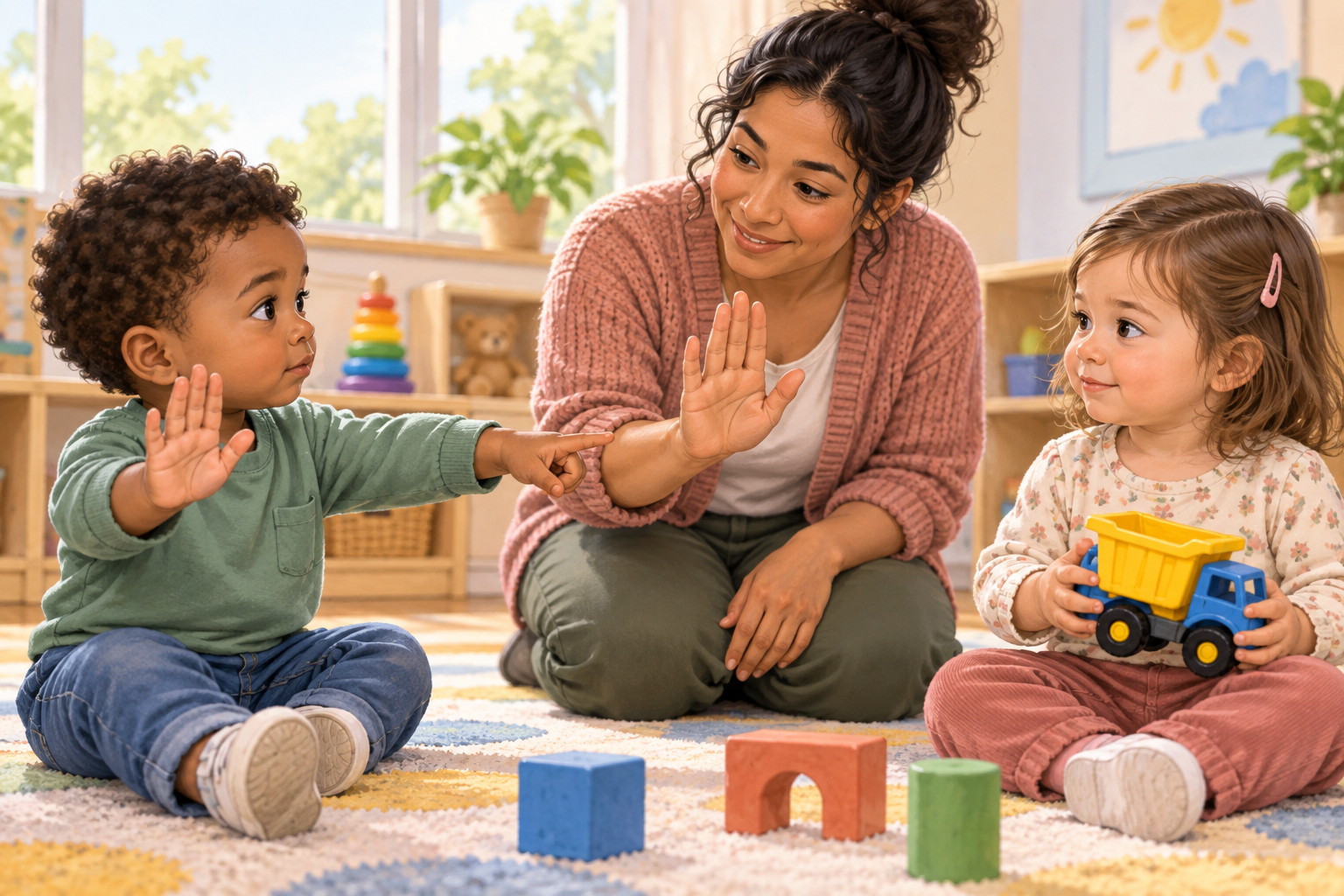
“Use your words” is too broad if your child does not know which word to reach for. Match the replacement to the pattern daycare is seeing:
- If hitting happens over toys, teach “My turn,” “Help,” or handing the toy to an educator.
- If another child gets too close, teach “Stop,” “Space,” or moving toward an adult.
- If transitions are difficult, have the educator give the familiar transition cue and prompt your child to ask for help.
- If excitement becomes physical, practise an allowed action such as clapping, a high-five with permission, or squeezing their own hands together.
- If spoken language is still limited, agree on a gesture, sign, picture, or single word that both home and daycare will recognize.
Practise when your child is calm. Use dolls, stuffed animals, or a quick pretend conflict: one character reaches for a toy, the other says “help,” and an adult steps in. Then let your toddler try the same sequence. Keep the rehearsal short enough that the desired action remains clear.
Adults also need to prompt the skill before hands make contact. If educators know that crowded play around a favourite toy is difficult, they can move closer and cue “say ‘my turn'” as the conflict begins. Preventing one hit while your toddler performs the alternative is more instructive than discussing the rule after another incident.
Notice the replacement specifically. “You asked for help when you wanted the truck” tells your child exactly what worked. “Good job” does not. Ask daycare to acknowledge the same small successes, including stopping a raised hand, moving away, or approaching an educator before the situation escalates.
Use a simple daycare log to see whether the plan works
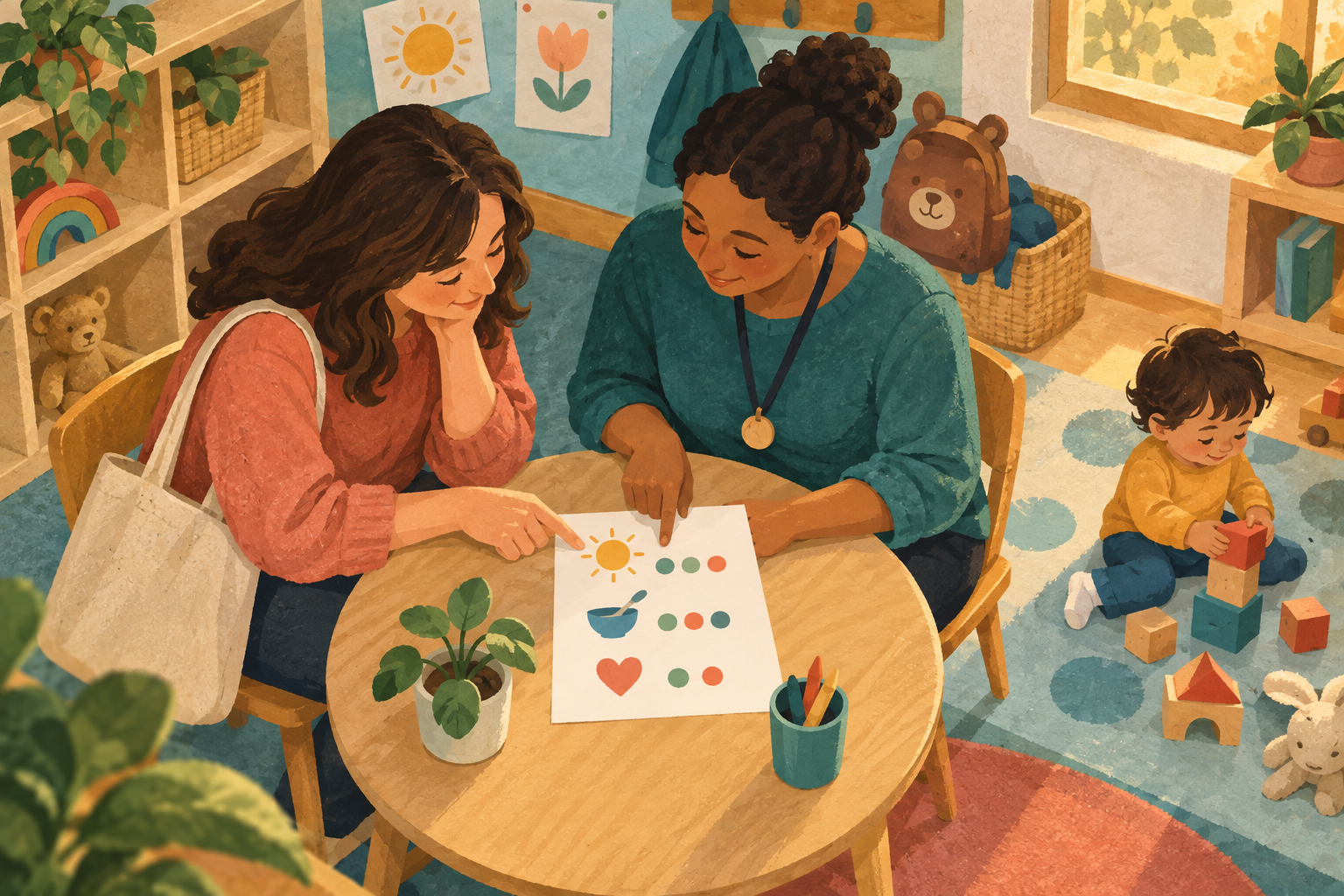
A vague daily report such as “rough day” raises concern without showing what to change. Ask the centre to record a few facts for a short, agreed period. The entry can be brief and does not need to identify the other child by name.
- Date, time, and activity.
- What happened immediately before the hit or attempted hit.
- What your child did.
- How the educator responded.
- How your child recovered and whether a replacement skill was used.
Review the notes with one question in mind: what can the adults change or prompt just before the usual problem point? If incidents cluster during a transition, the plan might focus on that transition. If they occur during competition for a particular toy, educators can supervise that play more closely and prompt the agreed phrase early.
Change one part of the plan at a time when practical. Switching scripts, consequences, classroom arrangements, and rewards all at once makes it hard to know what helped. A consistent response also gives your toddler a fair chance to learn what will happen and what to do.
Progress is not limited to an instant end to every incident. Look for fewer attempts, less force, an adult interrupting earlier, quicker recovery, or your child beginning to seek help. Those changes show which skills are developing and where support is still needed.
You can open the conversation with daycare this way: “We want to use the same plan you use in the room. Can we agree on one short limit, one replacement action, and a simple way to note what happens before each incident?” That frames educators as partners while keeping the discussion centred on safety and learning.
Know when the plan needs extra support
Ask your child’s pediatrician or another qualified child-development professional for guidance if the hitting is causing injuries, becoming more intense, continuing across settings despite a consistent plan, or appearing alongside concerns about communication, development, or your child’s ability to regulate. Hitting alone is not a diagnosis. A professional can help you decide whether any underlying needs deserve closer attention.
If daycare cannot keep the children safe, ask for an immediate written safety plan while you pursue additional help. It should identify the high-risk situations, the supervision or environmental changes the centre can provide, the response educators will use, and when you will review the plan. Work within the centre’s policies; do not ask educators to use physical restraint or another intervention outside their training.
If the centre says it has “tried everything,” request the specifics. Which triggers were observed? Which replacement was taught? Did every educator use the same response? What changed, if anything? Exact answers reveal whether your child needs a different level of support or whether the existing plan has simply been too inconsistent to evaluate.
Key takeaways
- Treat hitting as a behaviour to stop and teach through, not as your toddler’s identity.
- Ask what happened immediately before and after each incident instead of relying on a general daily description.
- Use the same brief sequence at daycare: protect, state the limit, help everyone settle, then practise the replacement.
- Teach one usable word, gesture, or action that matches the most common trigger.
- Track small signs of progress and seek professional support when safety, intensity, persistence, or broader developmental concerns warrant it.
At the next daycare handoff, agree on three things: the words adults will use, the replacement your toddler will practise, and the details educators will record. That is enough to turn the next incident from another upsetting report into useful information and a consistent teaching moment.
References