
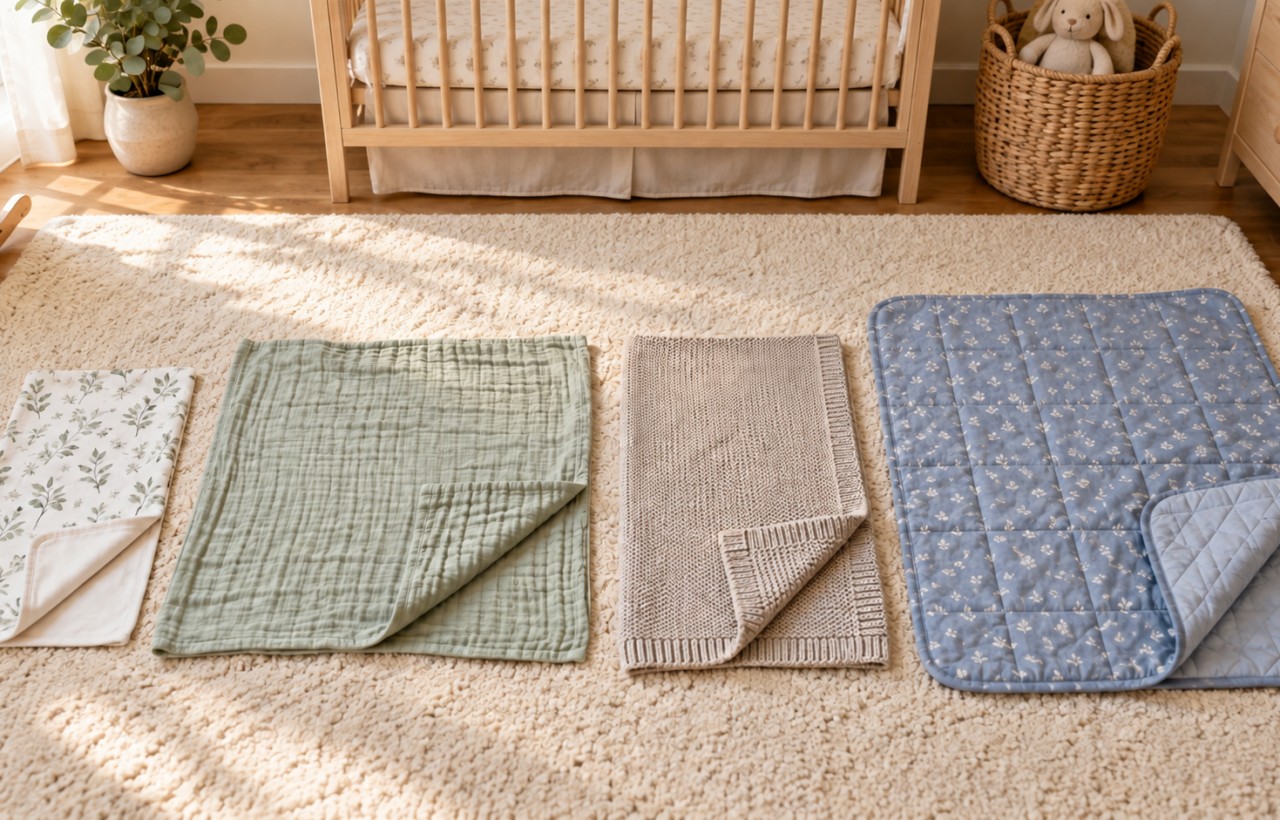
You are choosing between a neat little receiving blanket, a roomy square labelled for swaddling, and a stroller blanket that looks large enough to last for years. The names sound helpful, but they do not tell you whether the blanket will fit the job you actually have in mind.
Start with the use, then check the unfolded dimensions. That one change makes the decision simpler and helps you avoid two common mistakes: buying a swaddle with too much loose material or assuming that anything called a crib blanket is suitable for a newborn’s sleep space.
Match the blanket’s dimensions to the job
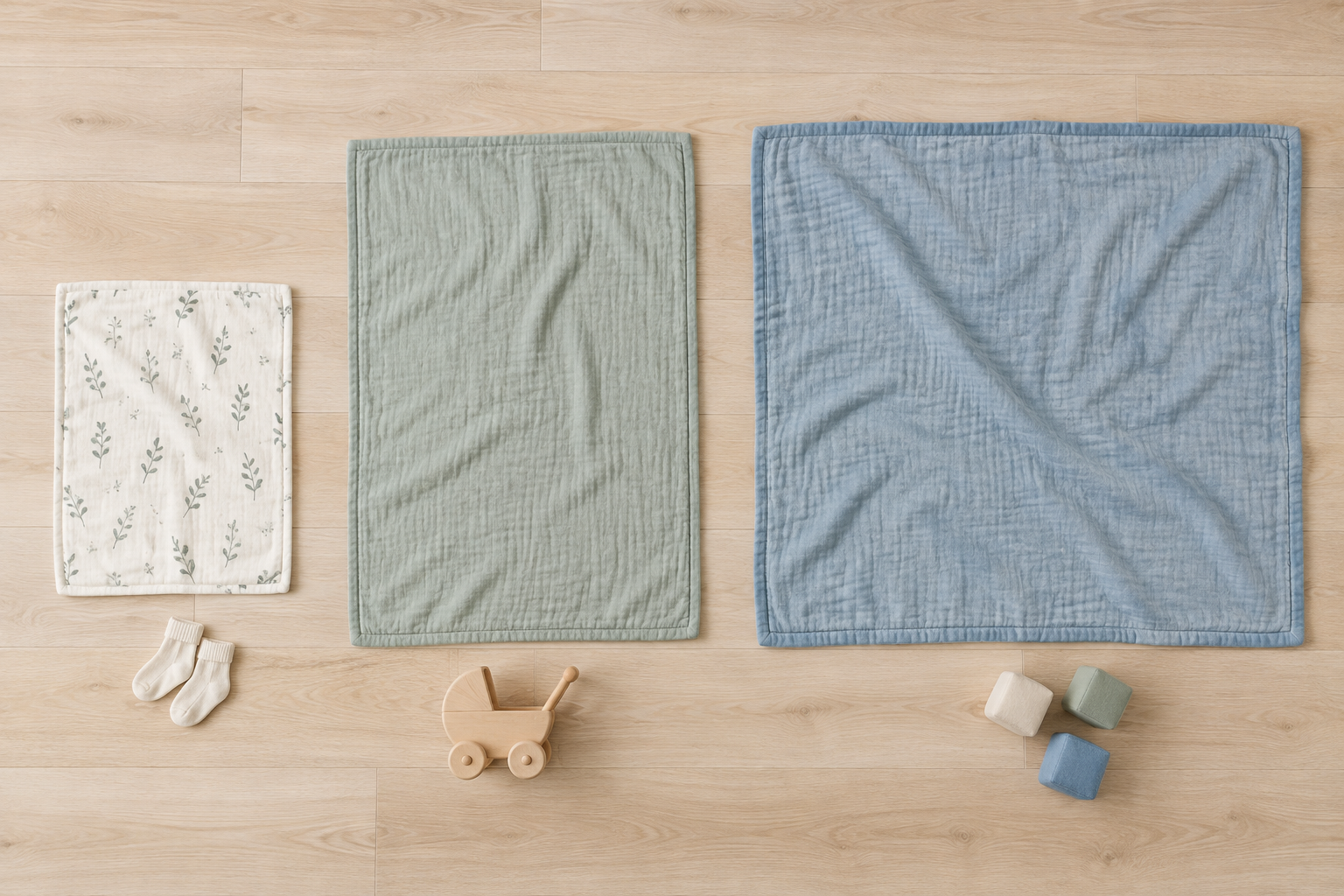
Baby blanket sizes are not standardized, so two products with the same name may have different measurements. Read the label for the actual unfolded size rather than relying on terms such as receiving, crib, or multi-use.
| Blanket type | Typical dimensions | Best suited to | What to check |
|---|---|---|---|
| Swaddling blanket | About 40 to 44 inches square | Wrapping a young baby snugly | A square larger than 48 inches may leave excess material that is difficult to tuck securely. |
| Receiving blanket | Usually 30 to 32 inches square; some newborn versions are as small as 18 inches square | Diaper changes, awake tummy time, burping, and cleaning small messes | The smallest versions are useful cloths and surfaces, but they may not provide enough coverage for other jobs. |
| Crib blanket | About 30 to 40 inches on one side and 40 to 60 inches on the other | Keeping an older child warm in a crib once a blanket is appropriate | The product name does not make it safe for a baby younger than one year. |
| Stroller blanket | About 40 to 50 inches on the short side and 60 inches on the long side | Covering a baby in a stroller or car seat after the harness is secured | Keep the material away from the baby’s face and manage the extra length. |
| Multi-use blanket | About 30 to 40 inches on a side, in a square or rectangle | A soft play or crawling surface, with occasional use in a stroller or car seat | These tend to be thicker, so decide whether you need a play surface or a light covering. |
The measurements are ranges, not rules. A 30-inch square can be a receiving blanket or a multi-use blanket depending on its thickness and construction. That is why the intended task matters as much as the number on the package.
Apply the sleep-safety rule before considering size
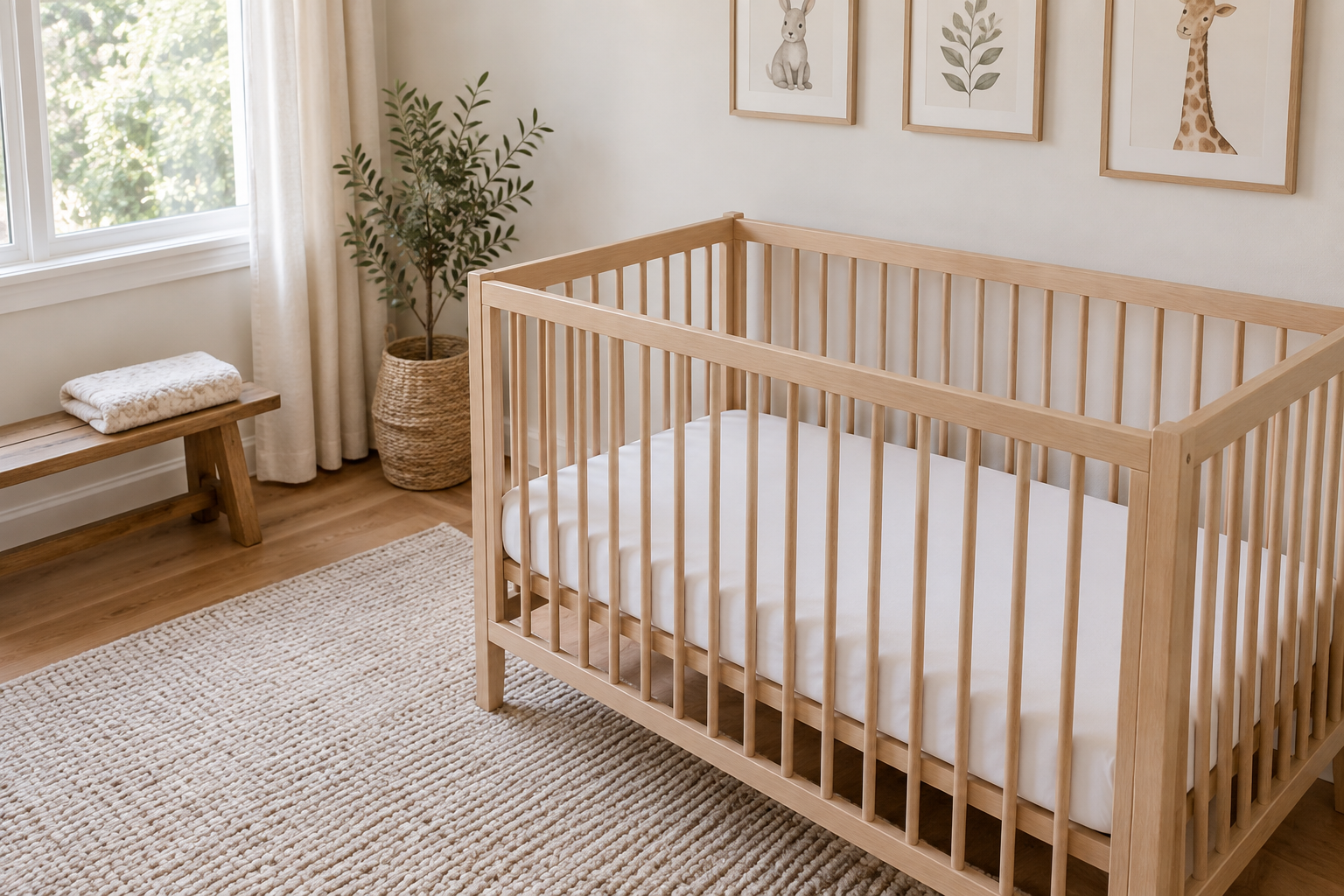
For a baby younger than 12 months, the right size of loose sleep blanket is none. The American Academy of Pediatrics recommends waiting until your child has passed their first birthday before placing blankets or toys in the crib. Keeping those extras out reduces the risk of suffocation and entanglement.
This restriction applies even when a product is sold as a crib blanket. Put that blanket aside for later, or use it only for an appropriate awake activity. A category name on packaging does not override the age-based safety boundary.
After the first birthday, adding a blanket is an option rather than a milestone you must meet. Notice how your child sleeps. A child who moves constantly may handle loose bedding differently from one who stays in roughly the same position. If your child already sleeps comfortably without a blanket, there is no need to introduce one simply because the calendar permits it.
For a younger baby who needs warmth at night, a properly chosen sleep sack can be easier to use than trying to master a large swaddling square. If you do use a swaddling blanket, stay near the usual 40-to-44-inch range. A square over 48 inches can create excess fabric that does not tuck neatly and may become a safety concern. Do not leave any swaddling blanket loose in the sleep space.
Choose by situation, not by the biggest size available
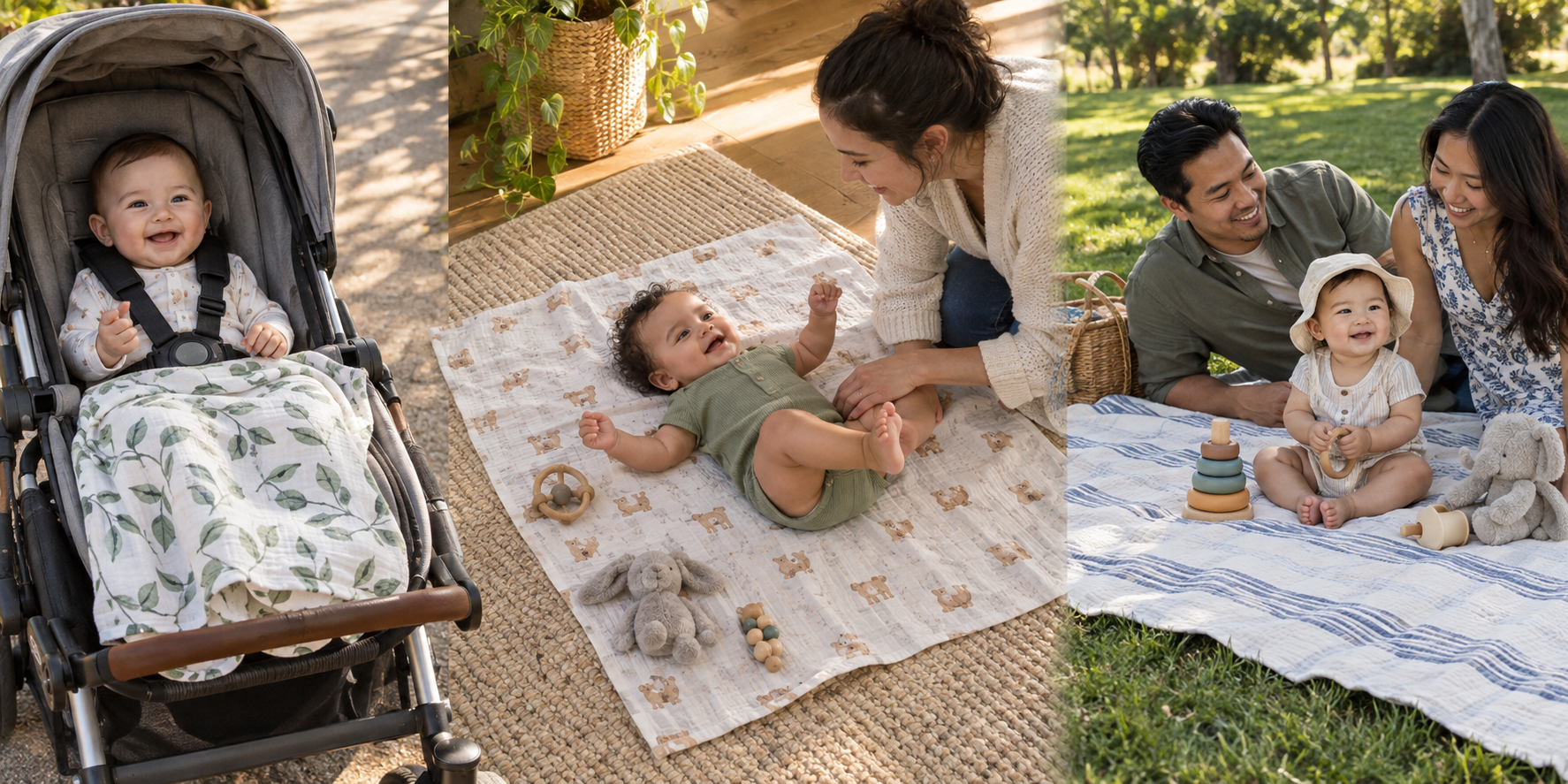
Buying the largest blanket so your baby can grow into it sounds economical, but it does not work equally well for every purpose. Extra fabric is useful in a stroller and potentially troublesome in a swaddle. Use these decision points while shopping:
- You need a swaddle: Look first for a square around 40 to 44 inches. Do not treat a larger square as better value if the additional fabric will be hard to tuck.
- You need an everyday newborn helper: A 30-to-32-inch receiving blanket can cover a changing surface, support awake tummy time, catch spit-up, and handle routine messes. Check carefully if the package says “newborn,” because some versions measure only 18 inches square.
- You need something for outings: A stroller blanket’s longer shape provides more coverage as your child grows. Secure the stroller or car-seat harness first, place the blanket over the baby afterward, and keep it clear of the face.
- You need a floor surface: Choose a thicker multi-use blanket around 30 to 40 inches on a side. Its job is to create a clean, soft area for awake play or crawling, not to become loose bedding for a baby under one.
- You are buying for later crib use: A rectangular blanket between 30 and 40 inches by 40 and 60 inches is within the common crib-blanket range. Store it until your child is past the first birthday and you have decided that loose bedding suits the way they sleep.
- You are building a registry: Register by function instead of choosing several matching blankets with vague names. A swaddle, an everyday receiving blanket, and a larger outing or play blanket solve different problems.
Before paying, imagine the blanket fully open. Where will its corners go? If you are swaddling, can the material tuck without a bulky remainder? If you are using it in a stroller, can you keep the longer edges controlled and away from the face? If it is for the floor, does it create enough usable space for your awake baby? Those questions tell you more than the age range printed on the front of the package.
Key takeaways
- There is no universal baby blanket sizing standard, so always check the unfolded measurements.
- For swaddling, about 40 to 44 inches square is the useful target; more than 48 inches square may leave difficult-to-manage excess fabric.
- A receiving blanket is usually 30 to 32 inches square, although some small newborn versions measure only 18 inches square.
- Crib blankets are for older children, not newborn sleep. Keep loose blankets out of the crib until after the first birthday.
- Stroller blankets are intentionally larger. Secure the harness before adding the blanket, and keep the fabric away from your baby’s face.
- If one blanket must cover several daytime jobs, a thicker 30-to-40-inch multi-use blanket is the most flexible starting point.
Choose the job first, use the measurements to narrow the shelf, and apply the sleep rule separately. You will end up with a blanket that is useful now instead of one whose generous size creates more fabric to manage.
References




