
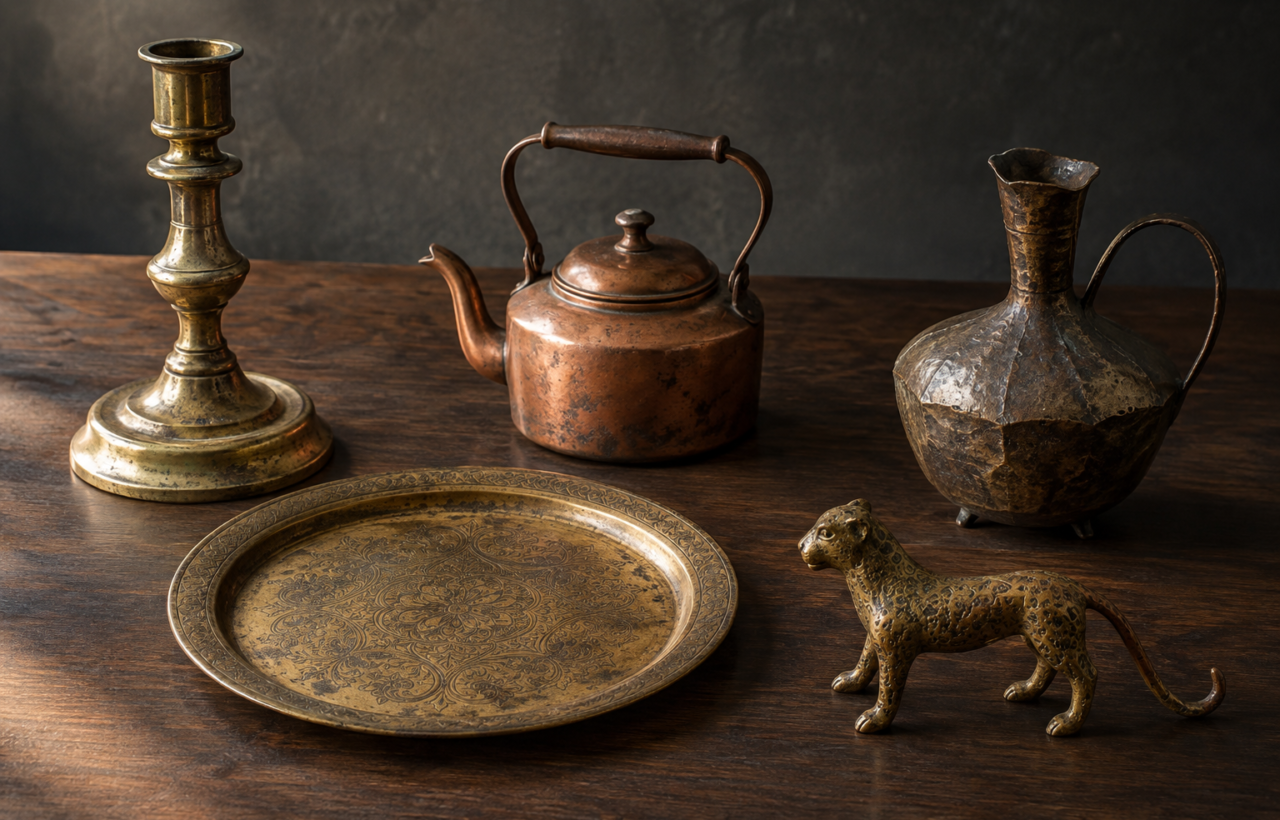
You have a heavy candlestick, tray, kettle, figurine, or mystery object taking up space, and you want to know whether to sell it, donate it, or put it back in the cupboard. Do not reach for metal polish yet. The first few minutes of inspection can preserve the very details that help identify it.
Some brass and copper objects have collectible value beyond the metal itself. The difference usually comes from identification, design, condition, completeness, and demand rather than colour or weight alone. Here is a practical way to investigate what you have without damaging it or mistaking an optimistic asking price for market value.
Key takeaways
- Do not polish, scrub, scrape, or chemically test an unidentified object. An original surface can matter to collectors.
- Photograph the entire piece, its underside, every mark, construction details, and all damage before doing anything else.
- Colour, weight, and a magnet test provide clues, but none of them proves that an object is solid brass or copper.
- Estimate value from genuinely comparable sold items, not from the highest active listing you can find.
- Keep heavy objects, detachable parts, sharp edges, and cleaning products completely inaccessible to babies and toddlers.
- Use a specialist when a maker, unusual design, provenance, or strong comparable sale suggests that a casual sale could leave substantial value behind.
Identify the object before you clean it
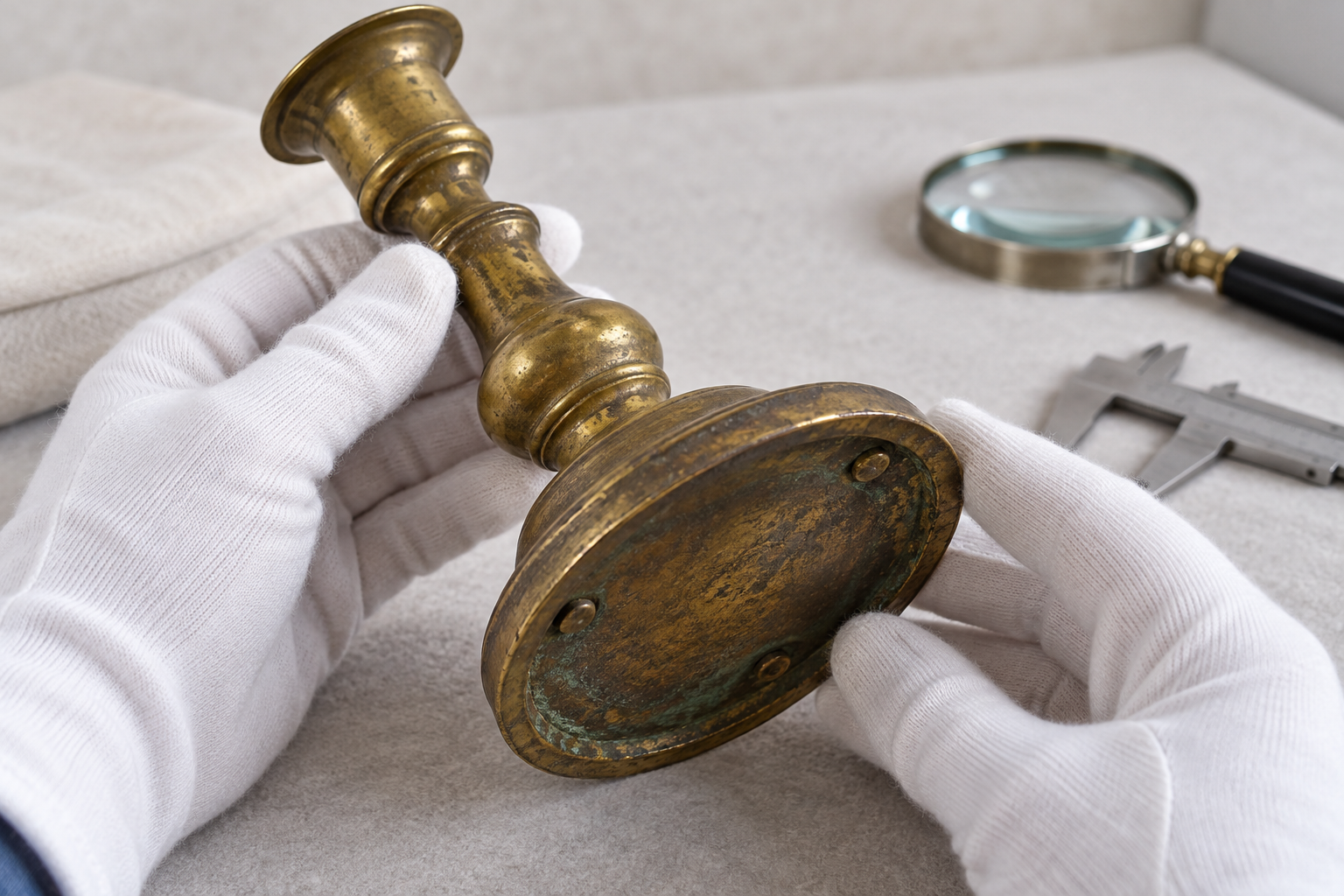
Good identification begins with documentation, not shine. Set the object on a stable surface away from your child, then work through this sequence.
- Photograph the full object from several angles. Include the top, base, underside, interior, handles, feet, fasteners, and any removable components.
- Take close-ups of every mark. Look for stamped names, initials, numbers, symbols, paper labels, signatures, inscriptions, and handwritten inventory marks. Photograph them in normal light and again with light coming from the side.
- Record measurements. Note height, width, depth, diameter, and weight. Measure individual pieces as well as the complete set.
- Describe the construction. Record seams, hammer marks, casting texture, solder, screws, rivets, hinges, liners, and repairs. These details can separate otherwise similar objects.
- Keep all parts together. Put a loose foot, finial, screw, lid, chain, clapper, or handle in a labelled bag. A small original part can make the difference between complete and incomplete.
Next, describe what you can actually see. Copper commonly has a reddish tone, while brass is generally more yellow or gold. Age, tarnish, polish, coatings, and plating can disguise both, so colour is only a starting clue. A silvery area beneath a scratch or worn edge may indicate plating or a different base metal, but do not create a new scratch to investigate it.
A magnet can help without altering the surface. Copper and common brass alloys are not strongly magnetic, so a strong pull indicates that the object contains ferrous metal somewhere. That may be a steel body, an internal support, a screw, or another component. A magnet that does not stick still does not prove that the object is solid copper or brass.
Avoid filing an edge, scratching the base, or applying acid. Those tests can permanently damage a collectible and still produce a misleading answer on a plated, repaired, lacquered, or multi-part object. If the material must be established, let a knowledgeable dealer, auction specialist, appraiser, or conservator choose a non-destructive method.
Read marks exactly rather than interpreting them too quickly. Search the complete wording, preserve the original spelling, and note the direction and arrangement of symbols. A mark may identify a maker, retailer, owner, pattern, model, foundry, or later repairer. It is evidence, but it is not automatically a maker’s mark or proof of age. An unmarked piece is not automatically worthless either; it simply requires more evidence from its form and construction.
Build value from evidence, not shine
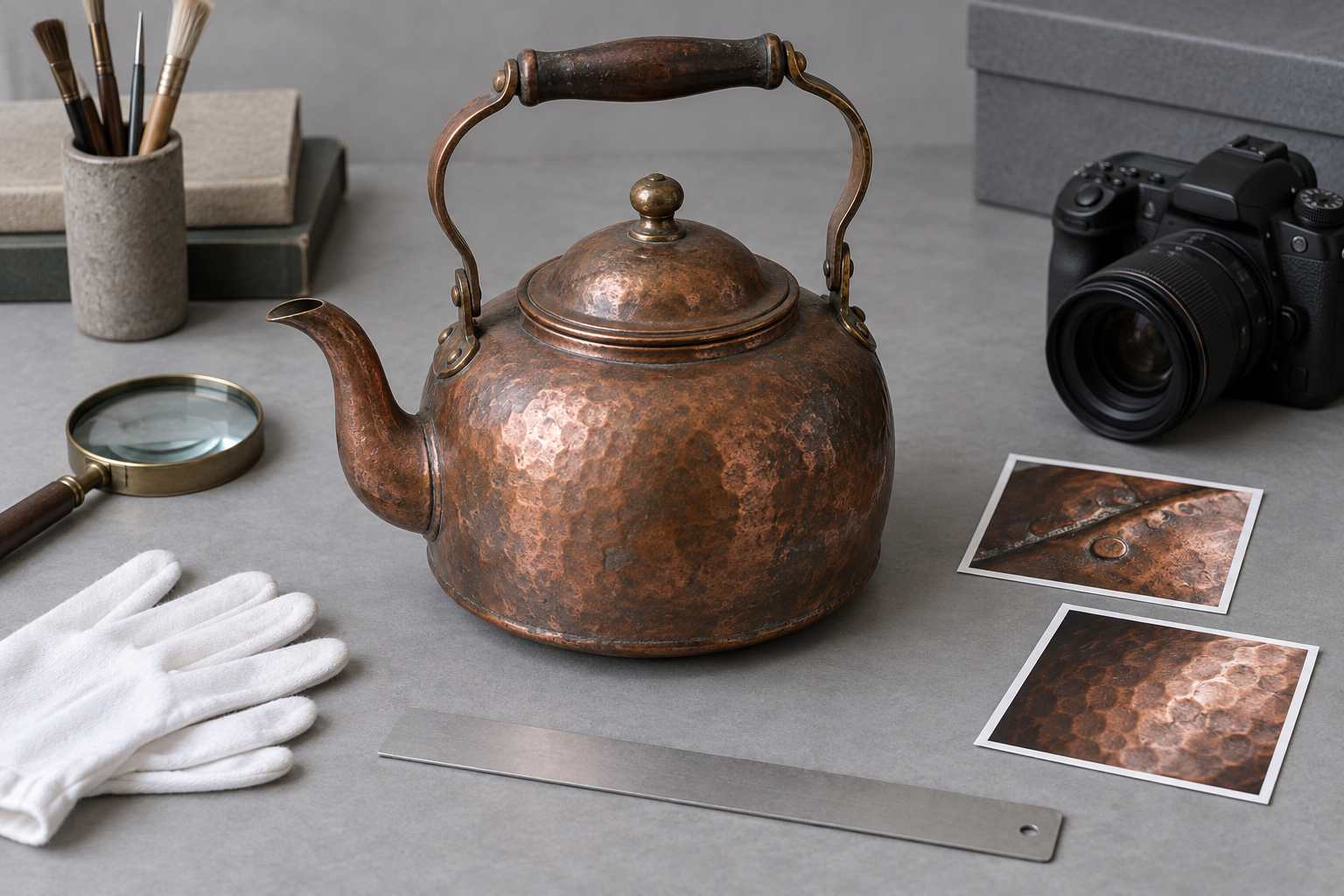
Brass and copper objects can have several different kinds of value. A collector may care about the maker or design. A decorator may care about shape and scale. A recycler cares primarily about recoverable material. Do not let a scrap calculation stand in for a collector-value investigation.
| Value factor | What to notice | What to do with the information |
|---|---|---|
| Maker or designer | A signature, stamp, label, documented pattern, or distinctive construction | Search the exact name with the object type, dimensions, and mark text |
| Form and design | The object’s actual purpose, proportions, decoration, and manufacturing method | Compare it only with the same form rather than every object made from the same metal |
| Condition | Dents, cracks, splits, corrosion, missing parts, repairs, drilled holes, and aggressive polishing | Match comparable sales with similar condition and disclose every material flaw |
| Completeness | Original lids, liners, shades, finials, handles, mounts, companion pieces, and packaging | Research the complete configuration before selling a loose component separately |
| Provenance | Receipts, photographs, old labels, correspondence, or a documented ownership history | Keep the evidence with the object and distinguish family tradition from verifiable documentation |
| Current demand | Recent purchases of closely matching objects | Use actual sale results and note when comparable examples are scarce |
Age by itself does not guarantee value. Nor does heaviness. A newer decorative object can be heavy, and a desirable handmade object can be relatively light. Patina can support the visual character of an older piece, but surface colour alone cannot authenticate its age. You need several clues that agree with one another.
Turn sold listings into a realistic range
- Write a precise search phrase. Combine the mark or maker, object type, shape, decoration, approximate dimensions, and material. Replace vague descriptions such as old brass pot with the most accurate terms you can establish.
- Look for completed sales. Active listings reveal what sellers hope to receive. Sold results provide better evidence of what buyers have accepted.
- Reject weak matches. A similar colour is not enough. Prioritize the same maker, form, pattern, size, construction, completeness, and condition.
- Read the full description. Check whether the comparison was sold as a single item, pair, set, attributed work, reproduction, damaged object, or restored example.
- Build a range. Keep the closest lower, middle, and higher results instead of anchoring your expectation to one exceptional sale.
- Date your notes. Demand changes. Saving links, screenshots, sale dates, and condition notes makes your estimate easier to revisit or show to a specialist.
If you cannot find a close sale, the honest result is not a made-up price. It is an unresolved identification. Search again using the object’s function and construction, ask a specialist in that category, or seek a formal appraisal when the likely stakes justify the cost.
Sell through the channel that fits the object
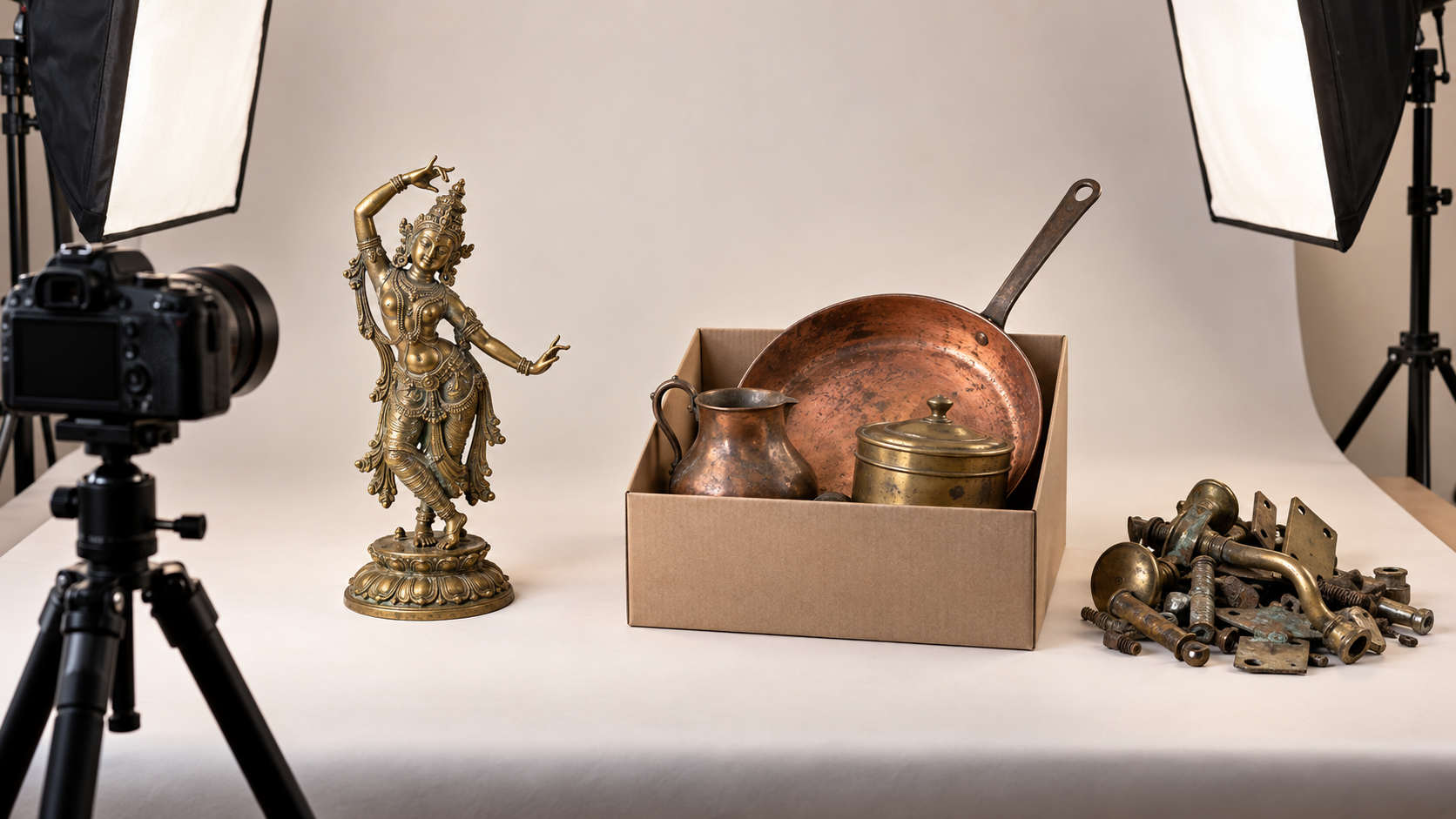
The highest visible price is not necessarily the highest amount you will keep. Selling fees, packing materials, insured shipping, return risk, time, and the chance of breakage all affect the result. Choose a channel after identifying the object, not before.
- A specialist auction may suit a well-attributed or unusual piece. Ask about commission, photography, insurance, reserve terms, withdrawal charges, payment timing, and unsold items before consigning.
- A knowledgeable dealer can simplify the transaction. A dealer’s offer normally has to leave room for research, overhead, holding time, and resale risk, so compare the convenience with the amount you might net elsewhere.
- An online marketplace can reach niche buyers. Give exact measurements and weight, photograph flaws clearly, describe only what you can support, and price the packing and shipping before accepting an order.
- A local sale avoids shipping. It may work well for large, heavy, or primarily decorative pieces. Protect your family’s privacy by using a safe exchange arrangement rather than publishing unnecessary details about your home.
- Recycling is a last valuation route, not a first one. Consider it after you have ruled out collector, decorative, and reuse value, especially when an object is damaged or unidentified.
Photographs are part of the sale, not decoration. Show the front, back, underside, mark, scale, interiors, attachment points, and every flaw. Do not hide a split in shadow or call a repair original. A careful description reduces disputes and helps the right buyer recognize the object.
Pause for specialist help when you find a recognizable maker, a documented ownership history, an unusual sculptural form, very few close comparisons, or sale results high enough to make an error consequential. For insurance, estate, donation, or tax purposes, ask the relevant institution or a qualified personal-property appraiser what form of written valuation is required before relying on an informal estimate.
Protect the surface and make the object child-safe
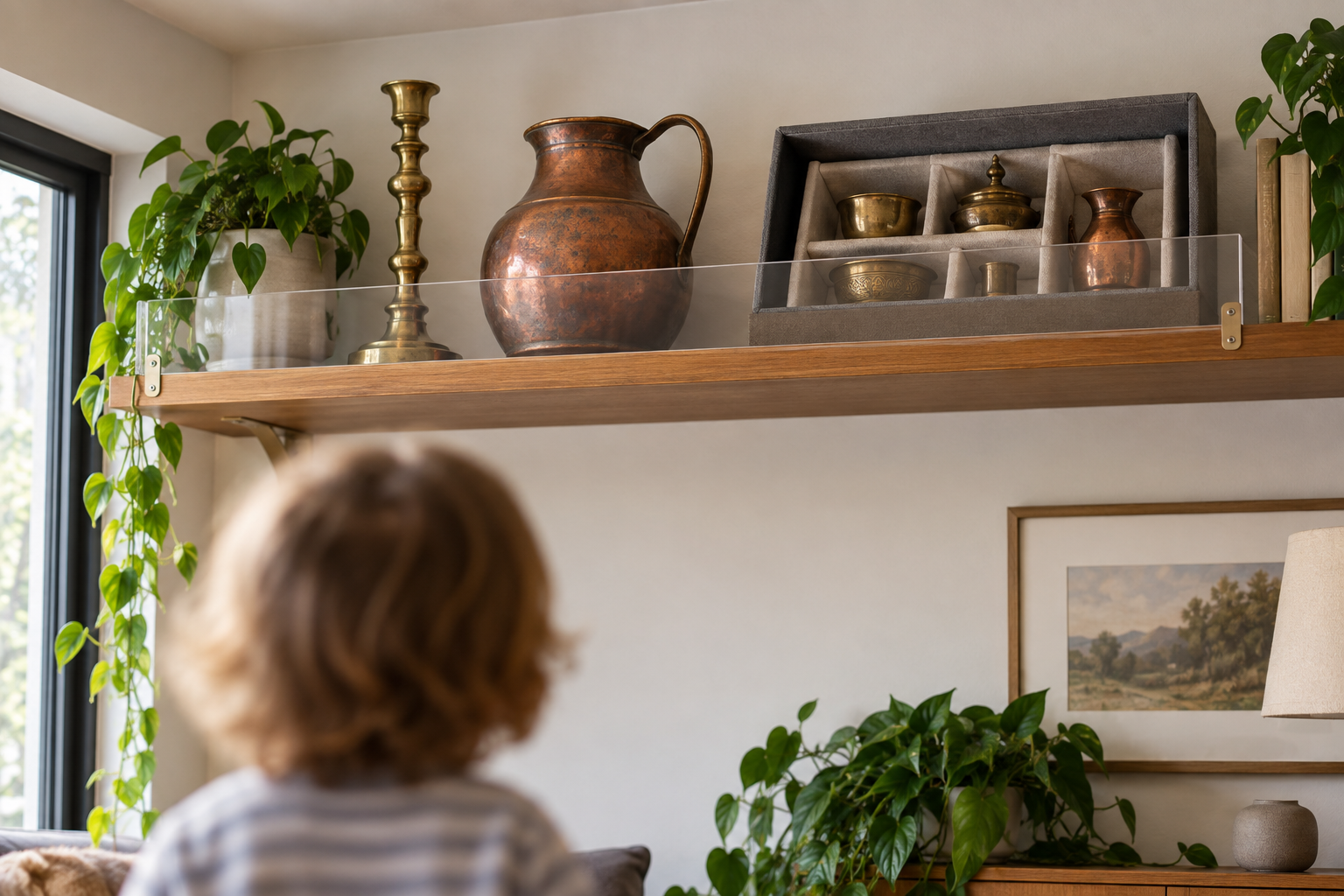
The safest first cleaning is often no cleaning. Remove loose dust gently with a clean, soft cloth or brush only when the surface is stable. Stop if material flakes away, decoration lifts, or the cloth catches on damaged metal. Abrasive pads, steel wool, harsh cleaners, and vigorous polishing can remove patina, plated surfaces, deliberate finishes, fine details, or evidence of age.
Green or blue material can be associated with corrosion on copper-containing objects, but appearance alone does not tell you how stable the surface is or how it should be treated. Keep a potentially important piece dry, separate it from other objects, and consult a metal conservator before attempting a chemical treatment. If you eventually use a commercial cleaner on an ordinary decorative item, follow its label and keep the product, residue, cloths, and object away from children throughout the process.
- Treat every heavy metal object as a fall hazard. A high shelf is not safe if the shelf, cabinet, or nearby furniture can be climbed, shaken, or pulled over. Use secure storage and anchor furniture where appropriate.
- Check for small detachable parts. Finials, screws, chains, feet, clappers, decorative mounts, and fragments do not belong within a baby or toddler’s reach.
- Keep sharp or damaged edges inaccessible. Thin metal can split, and old repairs may leave points that are hard to see in a listing photograph.
- Do not use an unidentified collectible as a toy or teether. Its alloy, coating, polish residue, repairs, and detachable components may be unknown.
- Do not assume an old vessel is food-safe. Decorative finishes, solder, liners, repairs, and previous use may be uncertain. Keep it out of food preparation and serving unless its construction and suitability have been established.
Once you have documented and researched the piece, make a deliberate decision. Keep it if it is meaningful and can be stored safely. Sell it if the likely return is worth the work. Seek expert help if the evidence points to something important. Donate it if another household can use it and the time required to sell it outweighs its likely value.
Start with one object. Photograph the base, transcribe the marks, record its dimensions, and find three genuinely comparable sold examples before you polish or price it. That small pause is what protects both the collectible and your decision.
References




