
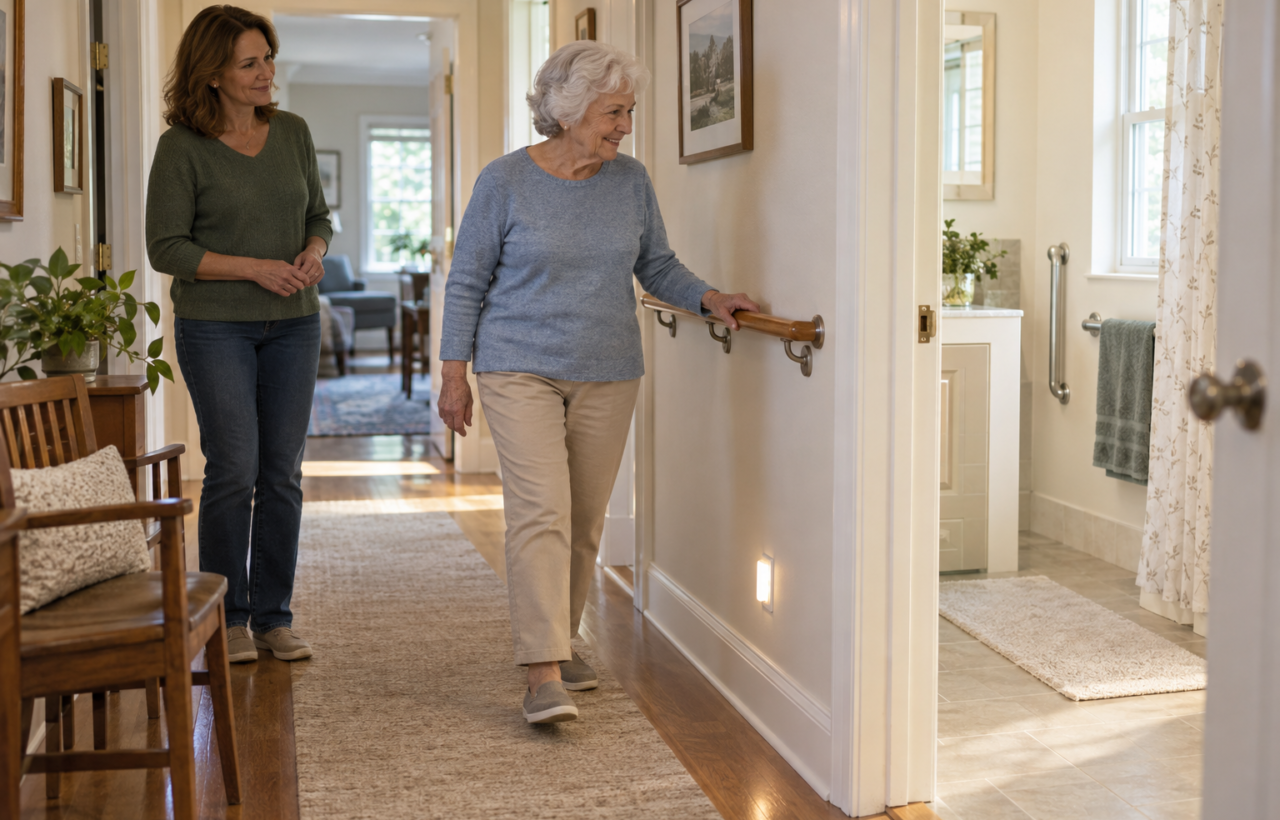
You notice a parent hesitating at the edge of the tub, reaching for furniture on the way to the bathroom, or avoiding the stairs when carrying laundry. You know the home needs to be safer, but a major renovation may be unnecessary, unaffordable, or simply more than either of you is ready to consider.
Start with the movements that are already difficult. Many useful safety improvements do not require a costly remodel. A clear path, dependable lighting, secure handholds, and better placement of everyday items can remove hazards while preserving the person’s routines and independence.
Audit the routes the person actually uses
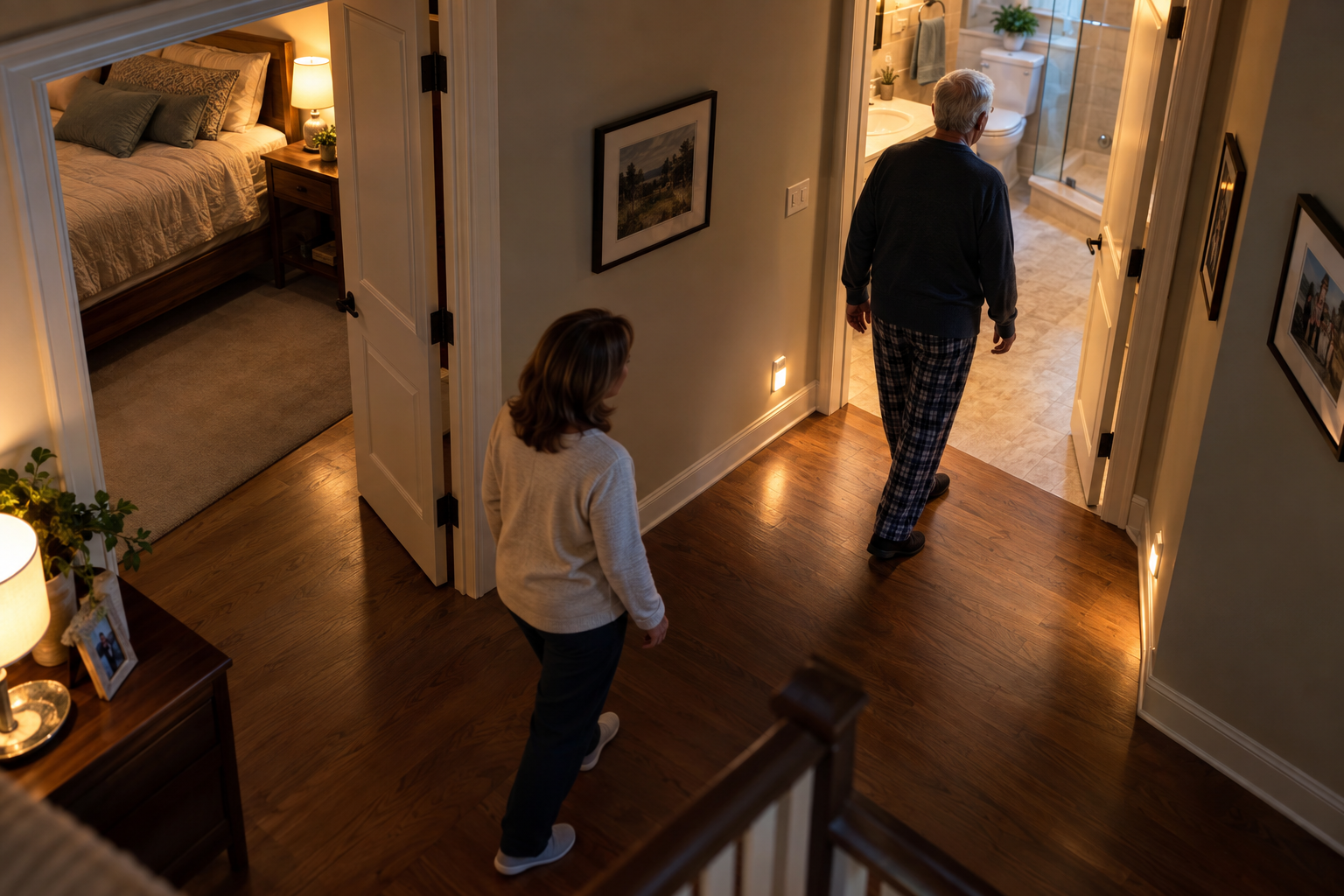
A room can look tidy and still be difficult to navigate. Instead of inspecting it from the doorway, follow the person’s usual routes: from the entrance to a favourite chair, from the bed to the bathroom, and from the kitchen counter to the table. Check those routes under the conditions in which they are normally used, including after dark.
Ask the person to move at their normal pace. Do not turn the audit into a balance test or ask them to demonstrate something they already consider unsafe. Watch for practical signs of friction:
- A hand searches for a wall, counter, towel rail, or piece of furniture.
- A foot catches on a rug edge, threshold, cord, or change in flooring.
- The person takes a longer route to avoid a narrow passage or difficult step.
- They pause where the lighting changes or where a step is hard to distinguish.
- They climb, bend deeply, or stretch overhead for something used regularly.
- They carry objects in both hands while using stairs or crossing an uneven surface.
Record the location, the task, the exact point of difficulty, and the smallest plausible fix. “Bathroom is unsafe” is too broad to act on. “There is no secure handhold while stepping out of the tub” tells you what needs attention.
Include the person who lives there in every decision. Moving furniture or removing familiar objects without asking can make the home less predictable. The goal is not to produce a showroom. It is to make ordinary movement easier and safer.
Fix hazards in an order that reduces risk quickly
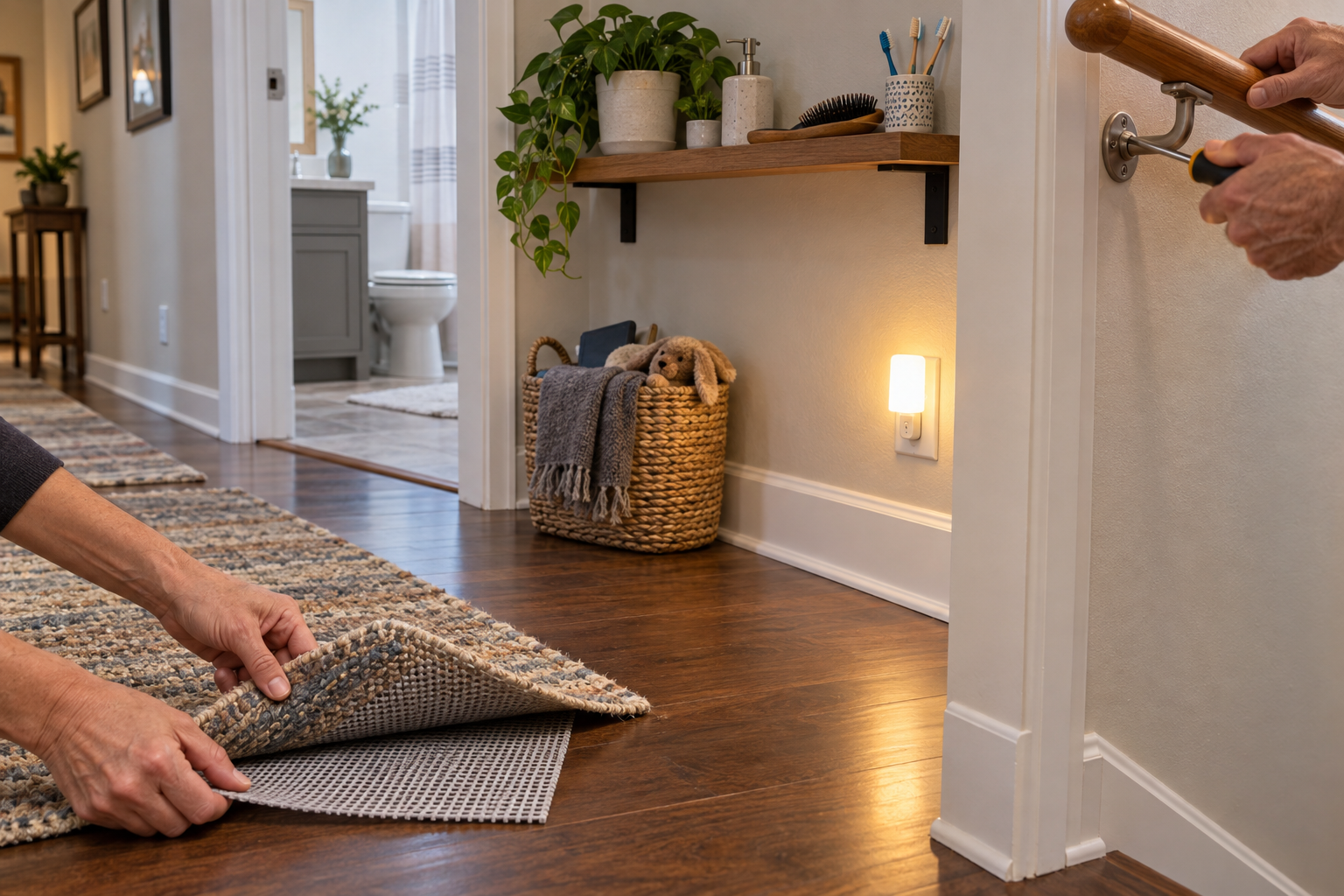
Begin with hazards that can cause an immediate fall, then address the features that make everyday tasks unnecessarily demanding. This order keeps an ambitious home project from delaying simple changes that can be made now.
- Clear walking surfaces. Remove loose objects, shoes, toys, bags, and electrical cords from established paths. Repair or isolate damaged flooring rather than expecting someone to remember the hazard.
- Deal with rugs individually. Remove any rug that slides, bunches, curls at the edge, or forces a mobility aid off course. If a rug remains, it needs a genuinely secure, low-profile backing.
- Improve usable light. Replace failed bulbs, use bulbs that are compatible with the fixture, reduce glare, and place lamps where they can be switched on before a person enters a dark route.
- Add stable support where the person transfers, turns, or changes level. A towel rail, countertop edge, or lightweight table is not a substitute for a properly installed handhold.
- Reduce unnecessary reaching and carrying. Put frequently used items where they can be reached without a stool, deep bend, or overhead stretch.
Recheck the route after each change. If someone still braces against furniture or struggles to rise, the problem is not solved by reminding them to “be careful.” They may need a more appropriate support, a different furniture arrangement, or a professional assessment.
Use a room-by-room checklist without losing sight of movement
Entrances, hallways, and stairs
- Keep the landing clear enough to unlock the door, turn around, and handle a bag without stepping backward toward an edge.
- Provide a stable place to sit when putting on or removing footwear if that task is difficult while standing.
- Check that railings do not shift under pressure and that the handhold continues through the part of the route where support is needed.
- Light the full stairway rather than only the top or bottom. Switches should be reachable before someone commits to the stairs.
- Make step edges easy to distinguish. Any contrasting strip or repair must be durable and completely flat; lifting tape can become a new trip hazard.
- Move packages, shoes, pet items, and folded strollers away from the door swing and walking line.
Bathroom
- Use a slip-resistant surface where water is expected, including inside the bathing area. Remove any bath mat that moves when stepped on.
- Install grab bars into suitable structural support. Their position should match the way the person enters, exits, sits, and stands.
- Do not treat a towel rail or an unsecured suction handle as a weight-bearing safety device. Failure at the moment it is needed can be worse than having no apparent support.
- Keep soap, towels, and toiletries within comfortable reach so the person does not have to twist, stretch, or step on a wet surface.
- Consider a suitable shower seat if standing through a shower is tiring or unsteady. It must be stable, fit the bathing area, and not obstruct safe entry and exit.
- Light the route into the bathroom as well as the room itself. A bright bathroom does not help if the hallway leading to it is dark.
Kitchen, living area, and bedroom
- Move everyday dishes, food, clothing, and supplies out of very high or very low storage. Reserve awkward shelves for items that someone else can retrieve.
- Choose a firm, stable chair with supportive arms if standing from a soft or low seat is difficult. Avoid relying on a chair with wheels for support.
- Arrange furniture so there is a direct route rather than a slalom around coffee tables, plant stands, and footstools.
- Place a lamp, phone, and other nighttime essentials where they can be reached before getting out of bed.
- Keep the path from the bed to the bathroom free of bedding, charging cables, baskets, and furniture corners.
- Store commonly carried items near where they are used. A laundry basket or stack of dishes should not routinely leave someone with no free hand on the stairs.
Homes shared with babies and toddlers
Childproofing and aging-in-place changes can conflict if they are planned separately. A gate that an adult must step over, a floor covered with toys, or a stroller parked in a hallway may protect or serve a child while creating a hazard for a grandparent.
- Use child gates that allow the adults in the home to pass through safely, and install them exactly as the manufacturer directs, particularly near stairs.
- Give toys a storage place outside the main walking route and reset that route before visits, bedtime, and nighttime bathroom trips.
- Anchor furniture where child safety requires it, but do not leave straps, tools, or displaced furniture obstructing the floor.
- Keep medicines locked away from children in a location the older adult can reach without climbing or kneeling.
- Choose a permanent parking place for the stroller, diaper bag, and portable baby gear rather than allowing them to migrate into entrances and hallways.
Know which changes need professional help
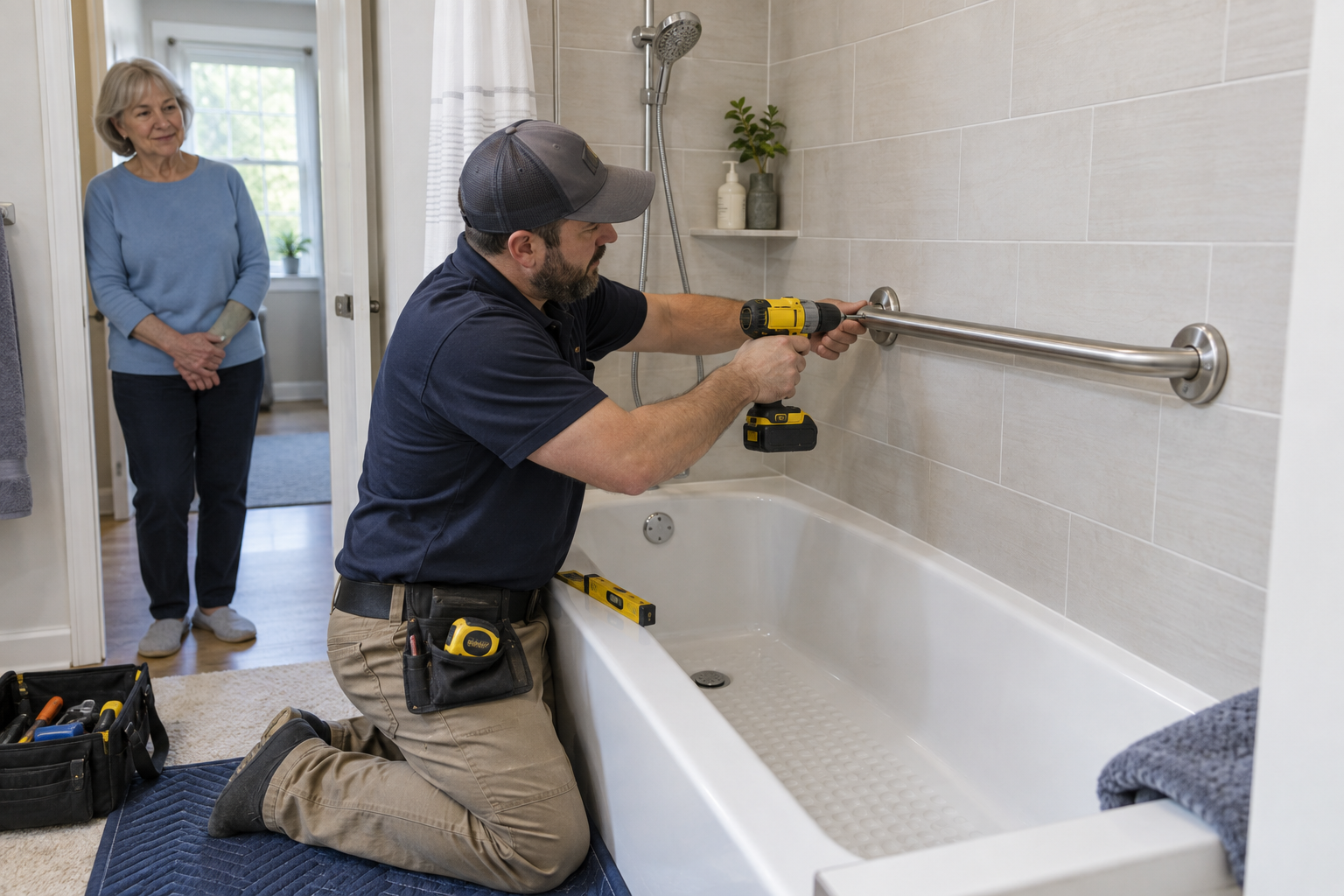
Low-cost does not have to mean improvised. Clearing clutter, relocating supplies, replacing a compatible bulb, and removing an unstable rug are reasonable household tasks. Work involving structural support, damaged building surfaces, or electrical changes should be handled by someone qualified for that job.
Bring in a qualified contractor or appropriate tradesperson for loose railings, grab-bar installation, damaged stairs, uneven flooring, electrical additions, and changes to doors, plumbing, or cabinetry. A safety feature that pulls out of the wall under load creates false confidence and can cause serious injury.
If the person uses a cane, walker, wheelchair, shower seat, or other mobility equipment, an occupational therapist or qualified home-safety professional can assess the home while watching the actual tasks that are difficult. That is especially useful when several rooms need changes, when a previous fix has not helped, or when family members disagree about what is safe.
A home modification cannot explain or treat a sudden change in strength, balance, vision, alertness, or mobility. New dizziness, fainting, unexplained falls, sudden weakness, or an injury warrants medical attention. Address the physical hazard, but do not assume the house is the only cause.
If the home is rented, ask the landlord or property manager about structural modifications and obtain any required permission in writing. Do not substitute a loose or temporary device for a properly installed support simply because drilling is restricted.
Key takeaways
- Follow the person’s real daily routes and note where they reach, hesitate, detour, or lose a free hand.
- Clear trip hazards and improve lighting before buying a collection of safety products.
- Treat grab bars, railings, flooring, stairs, and electrical work as safety-critical installations.
- Place frequently used belongings where they can be reached without climbing, deep bending, or overhead stretching.
- Plan childproofing and aging-in-place changes together in a multigenerational home.
- Seek a professional home assessment when the right change is unclear, and medical care when mobility or balance changes suddenly.
Choose one route today: the entrance, the path to the bathroom, or the trip between the kitchen and a favourite chair. Remove the clearest hazard immediately, then assign an owner and a date to every repair that remains. A safer home is usually built through specific fixes, not a vague promise to renovate someday.
References




