
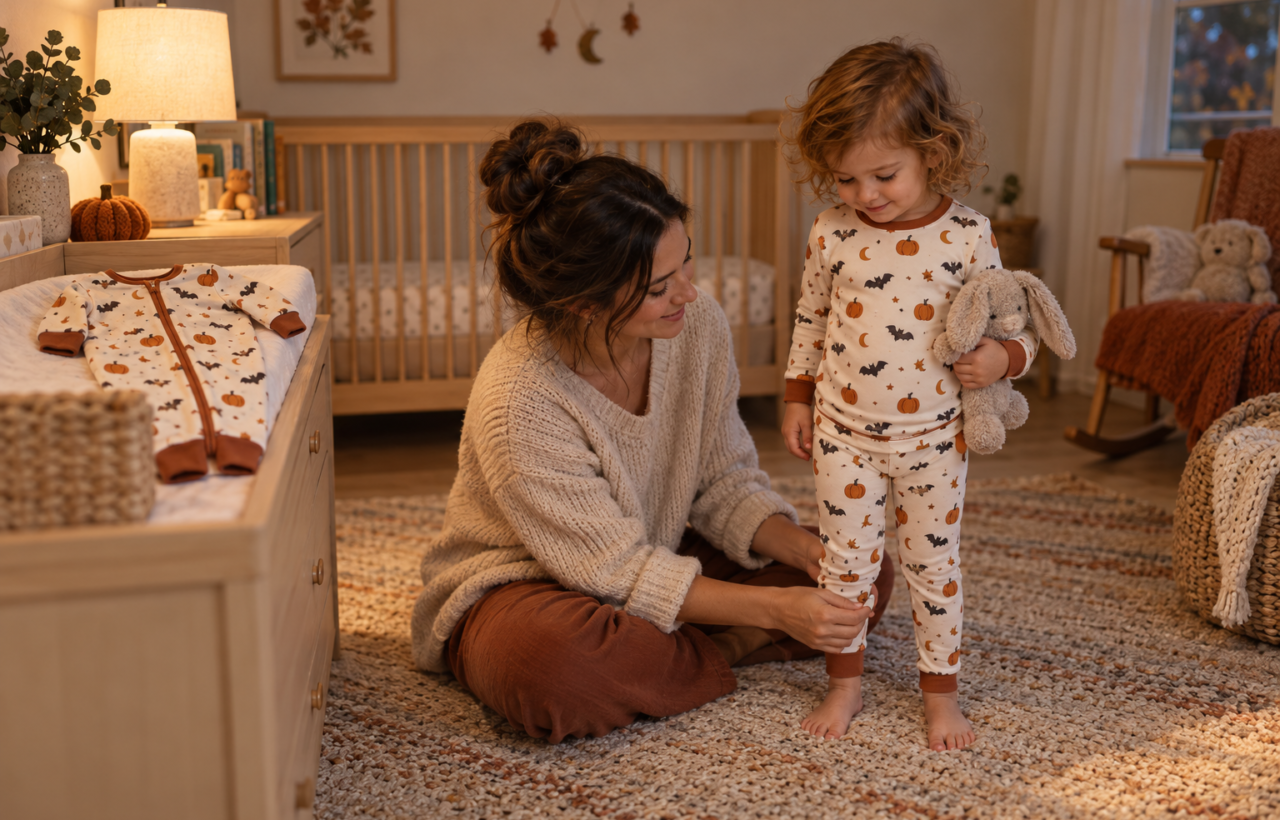
If you are looking at a tiny skeleton sleeper and wondering whether it will be a useful purchase or a bedtime nuisance, start with your child’s current sleep routine. The best seasonal pajamas are not simply the ones that photograph well. They are the ones that work with the diaper changes, room temperature and bedtime habits you already manage.
For babies and toddlers, the important details are usually found at the zipper, cuffs and care label rather than in the print. This guide will help you assess those details before a charming Halloween design follows you to the checkout.
Choose the shape for your child’s stage, not the print
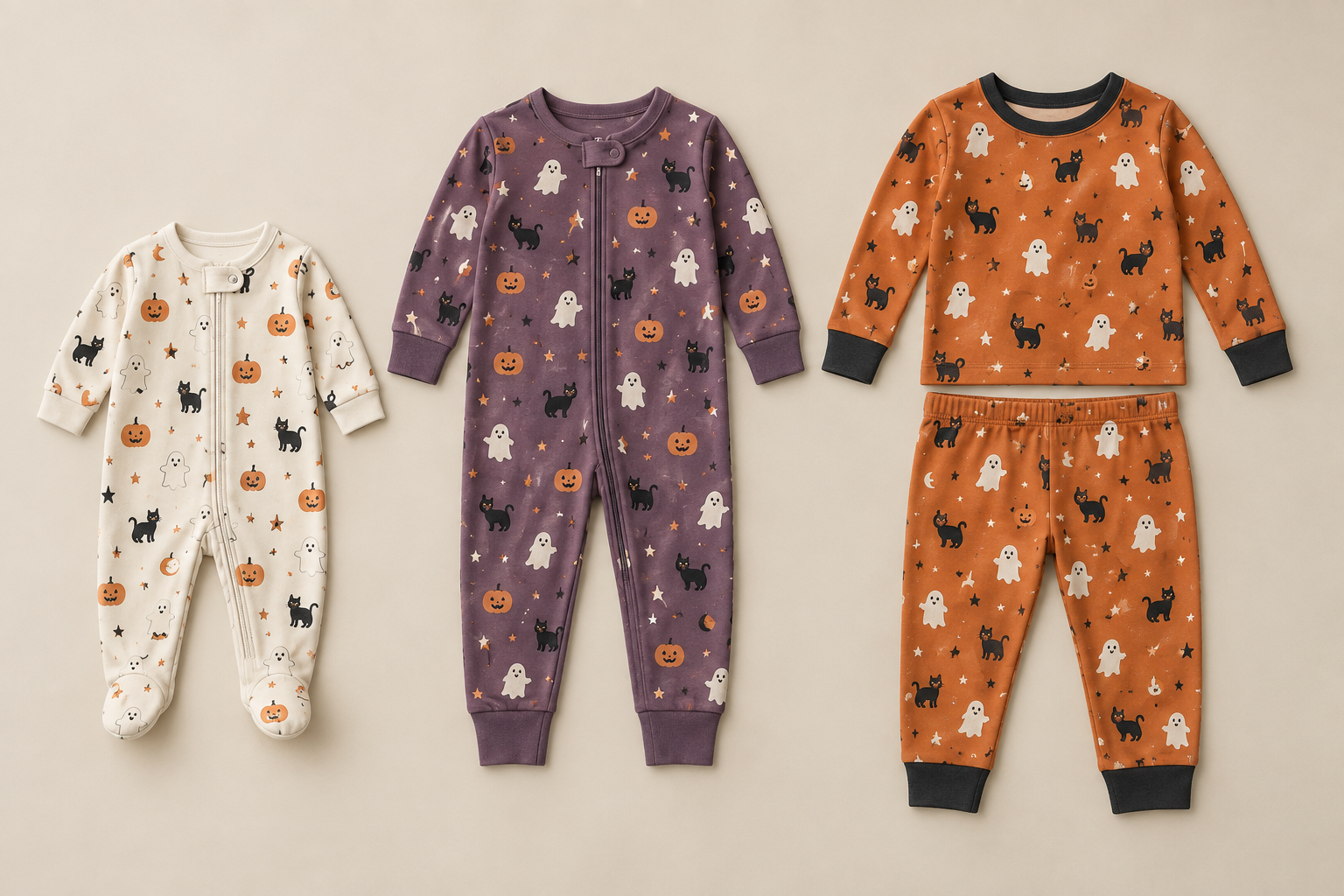
Seasonal sleepwear is available for babies, toddlers and older children, but one print may be offered in several very different constructions. A zipper sleeper, footed one-piece and two-piece set can look coordinated while serving different needs.
- For a young baby: Look for a one-piece that opens far enough to make diaper changes straightforward. Check whether the zipper or snap area feels smooth against the body and whether the neckline closes without pressing under the chin.
- For a crawling baby: Prioritize stretch through the hips and knees. Fasten the pajamas over the diaper your baby normally wears at night, then check that the fabric does not pull sharply across the seat or restrict a full leg bend.
- For a child who is standing or walking: Decide whether footed or footless pajamas suit your floors and established bedtime routine. Do not assume fabric-covered feet will provide the same traction as bare feet or your child’s usual indoor footwear.
- For a toddler: A two-piece set may simplify toileting, but only if the waistband is comfortable and the top remains long enough when your child reaches, bends and curls up. Let your toddler squat and raise both arms during the fit check.
- For matching siblings: Give each child the construction that works for their stage. Matching prints matter less than having the correct access, fit and movement for each body.
Decorative extras are the dividing line between sleepwear and a costume. Masks, capes, wings, headbands, tutus and clip-on pieces can be fun while a child is awake and supervised, but they do not belong in bed. At bedtime, use the pajamas exactly as labelled and remove the costume parts.
Read the sleepwear label before choosing a size
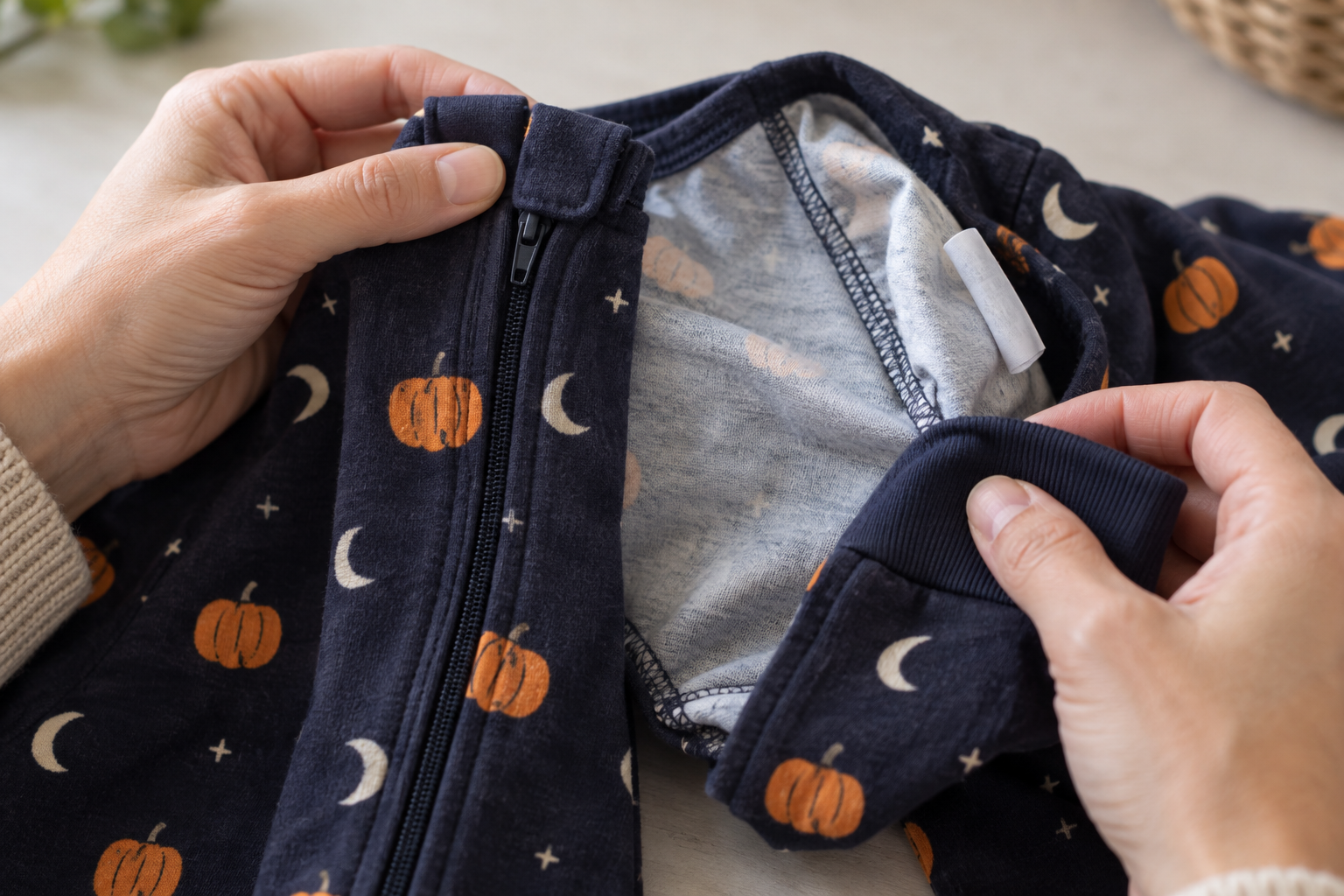
A seasonal set may be cut differently from your child’s daytime clothes. In particular, sleepwear described as snug fitting is supposed to look closer to the body. Buying it deliberately loose so it lasts longer can defeat the way the garment was designed to be worn.
- Confirm that it is sleepwear. A costume, loungewear set or novelty outfit is not automatically suitable for sleeping. Read the product description and the sewn-in label rather than relying on how the item looks online.
- Use that brand’s size chart. Compare your child’s current measurements with the chart for the exact garment. Do not rely only on the age printed in the size name, and do not automatically size up when your child falls between categories.
- Test it over the usual nighttime diaper. Close every zipper, snap or button while your child is awake. Have a mobile child crawl, sit, reach and squat. Fabric should move with the body rather than pulling the neckline, waistband or crotch out of place.
- Inspect the contact points. Look at the neck, wrists, ankles and waist. Check that closures do not press into the skin, cuffs do not leave pronounced marks and seams do not twist when your child moves.
- Check footed styles with straight legs. Toes should not be pushed against the end when your child extends their legs. If the torso fits but the feet do not, a footless style may be more practical than changing the overall size.
If the pajamas pass only when a zipper is left partly open, a waistband is folded down or a cuff is repeatedly adjusted, the fit is not doing its job. Exchange the set instead of planning to manage the problem every night.
Let the bedroom determine the fabric and layers
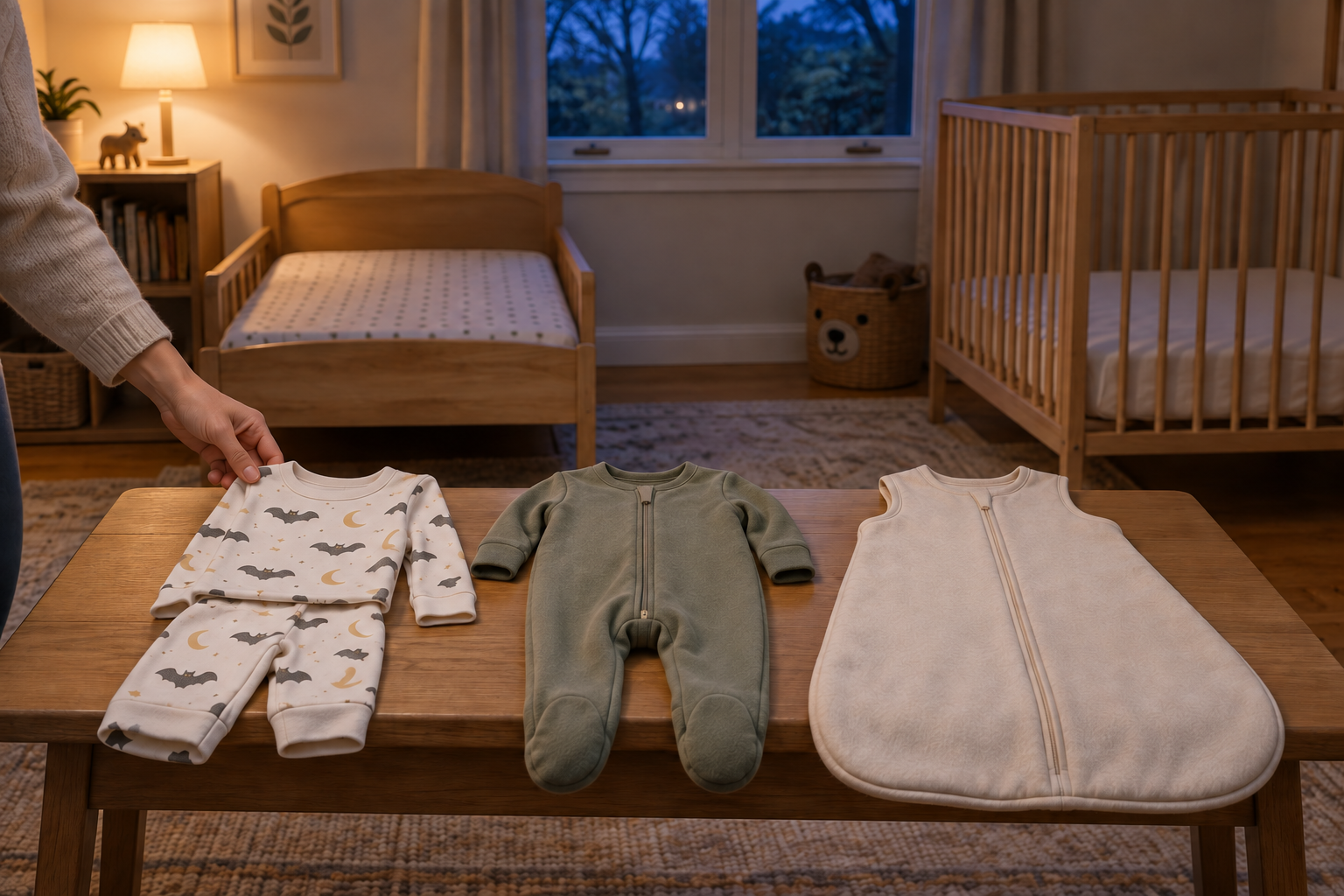
The outdoor October temperature is not the right basis for bedtime clothing if your child sleeps in a heated room. Start with the combination that already keeps your child comfortable indoors, then look for Halloween pajamas with a similar weight and construction.
- Compare the fabric in person when possible. Material names alone do not tell you how thick, stretchy or soft a finished garment will feel. Hold the new set beside pajamas that already work well.
- Run your hand over the inside. Feel the reverse side of embroidery, appliques, printed areas, labels and seams. A decoration that looks smooth from the outside may feel stiff against the skin.
- Account for the whole sleep outfit. Consider the diaper, pajamas and any sleep sack your child normally uses as one system. Do not add a loose costume accessory or improvised covering to make thin seasonal pajamas warmer.
- Choose realistic care instructions. If the set requires a laundry routine your household will not follow, it is unlikely to earn many wears. Check the washing and drying directions before removing tags.
Glow effects, glittery graphics and large decorative panels deserve an extra inside-out inspection. They are not automatically a problem, but the print should not make the garment rigid, scratchy or difficult to move in. Comfort is determined by the finished pajamas, not by the fibre name on the listing.
Plan for ordinary October life, not one perfect photo
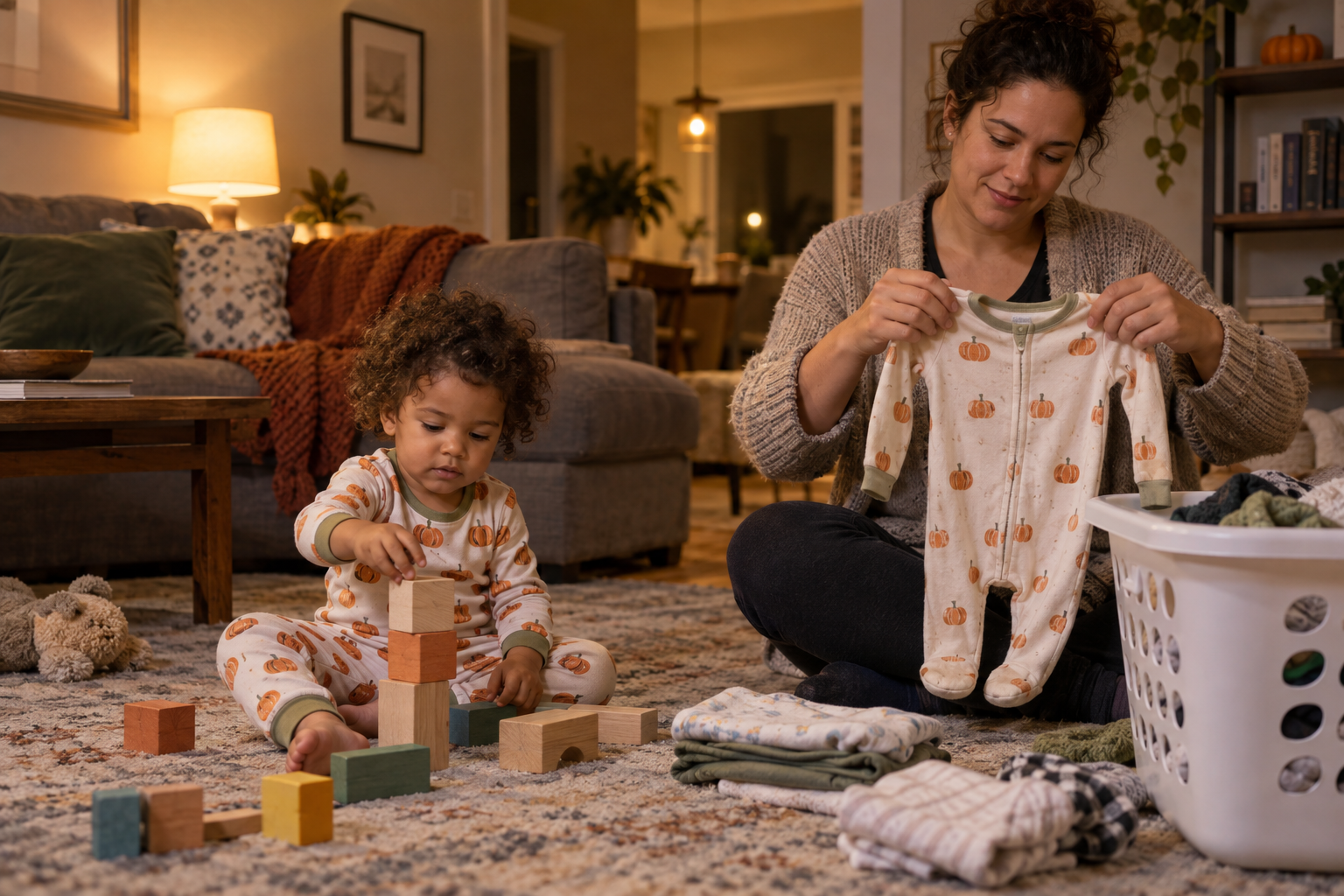
Decide what you want the pajamas to do before you shop. A set intended for nightly use has a different job from a coordinated family-photo outfit or an easy costume substitute. Trying to make one garment satisfy every purpose often produces unnecessary compromises.
- Name the main use. If it is bedtime, fit and laundering come first. If it is a daytime pajama event, consider diaper or toilet access and the activity rules. If it is for a photo, your child still needs to sit and move comfortably.
- Choose a print with the useful life you want. Pumpkins, moons, cats and friendly ghosts can feel seasonal without being limited to a single date. A milestone message may be meaningful, but it offers fewer opportunities for repeat wear or passing the garment along.
- For a matching set, begin with the hardest size. Secure the appropriate baby or toddler style first, then coordinate siblings and adults around it. Do not put the youngest child in the wrong construction just to preserve an exact match.
- Check the return policy before washing. Complete the unwashed fit and construction inspection while an exchange may still be possible. Once you decide to keep the pajamas, wash them according to the label before the important event.
- Schedule one ordinary trial wear. Use the set for a normal evening before a photo session, childcare event or Halloween night. That reveals an awkward zipper, rolling waistband or irritating decoration while there is still time to choose something else.
If you are buying Halloween pajamas as a gift, ask the parent for the child’s current size, preferred closure and footed or footless preference. A gift receipt is more useful than guessing a larger size for future growth.
Key takeaways
- Choose the garment shape for your child’s current movement, diapering or toileting needs before choosing a Halloween print.
- Confirm that the item is labelled as sleepwear; keep costume accessories out of bed.
- Use the exact brand’s size chart and test the closed garment over the usual nighttime diaper.
- Match the fabric weight to the bedroom and your established sleep layers, not the weather outdoors.
- Inspect the inside of prints and decorations, read the care label and try the set during a normal evening before an important occasion.
Put your favourite set through that ordinary-bedtime test before asking it to carry a Halloween tradition. If your child can move naturally and you can handle the usual routine without adjusting, improvising or negotiating with the garment, you have found the right pajamas.
References




