

You have changed the diaper, cleaned the skin and applied cream, but the redness is still there – or it keeps returning as soon as it seems better. At that point, using more of the same product is not necessarily the answer. The useful next step is to tighten the diaper-change routine, look closely at the rash and set a clear limit on home care.
Most diaper rashes are caused by moisture, urine, stool and friction irritating the skin. Those rashes often improve within a few days when the irritant is removed and the skin is consistently protected. A rash that persists despite that routine may need a different treatment, particularly if it has features of yeast or infection.
Key takeaways
- Clean irritated skin with warm water or fragrance-free, alcohol-free wipes, using as little rubbing as possible.
- Let the skin dry completely before applying a thick layer of zinc oxide paste or plain petrolatum.
- During an active rash, check the diaper every 60 to 90 minutes and change it promptly whenever it is wet or soiled.
- A vivid red rash with defined edges and small spots around its border can be a yeast pattern; ask your pediatrician about it instead of relying on barrier cream alone.
- Call your pediatrician if the rash is worsening or has not improved after 3 to 5 days of consistent care. Call sooner for fever, pustules, blisters, open sores, marked swelling or rapid spreading.
Give an ordinary irritant rash a consistent reset
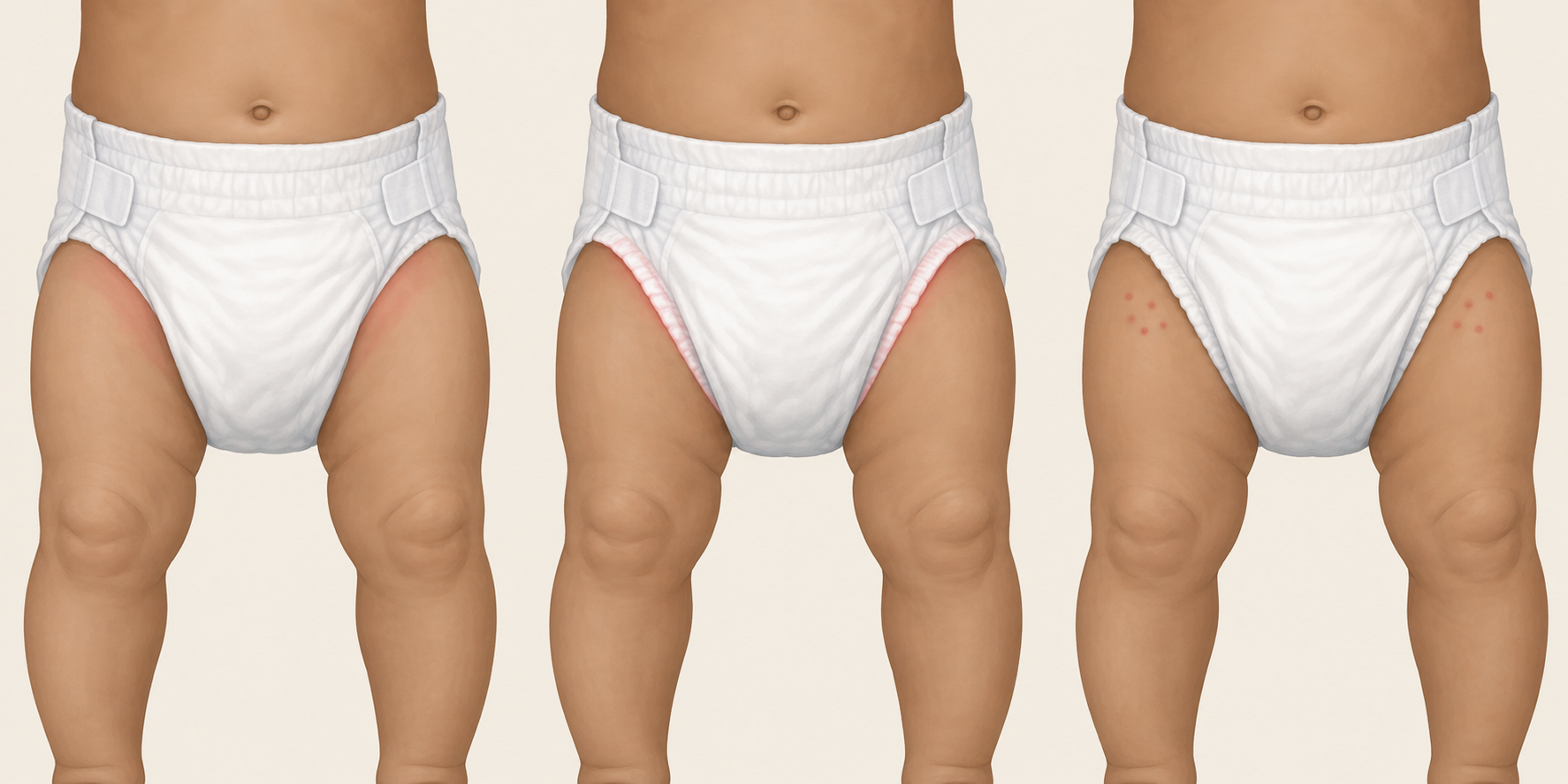
An irritant rash is usually spread broadly across the diaper area. It may look pink to red, shiny or slightly raised in places. The problem is cumulative: moisture weakens the skin barrier, stool and urine continue to irritate it, and rubbing during changes adds more friction. An occasional careful change cannot overcome long stretches in a wet diaper, so consistency matters more than finding a complicated product.
- Check frequently. During an active rash, check every 60 to 90 minutes rather than waiting for the diaper to feel full. Change a soiled diaper immediately.
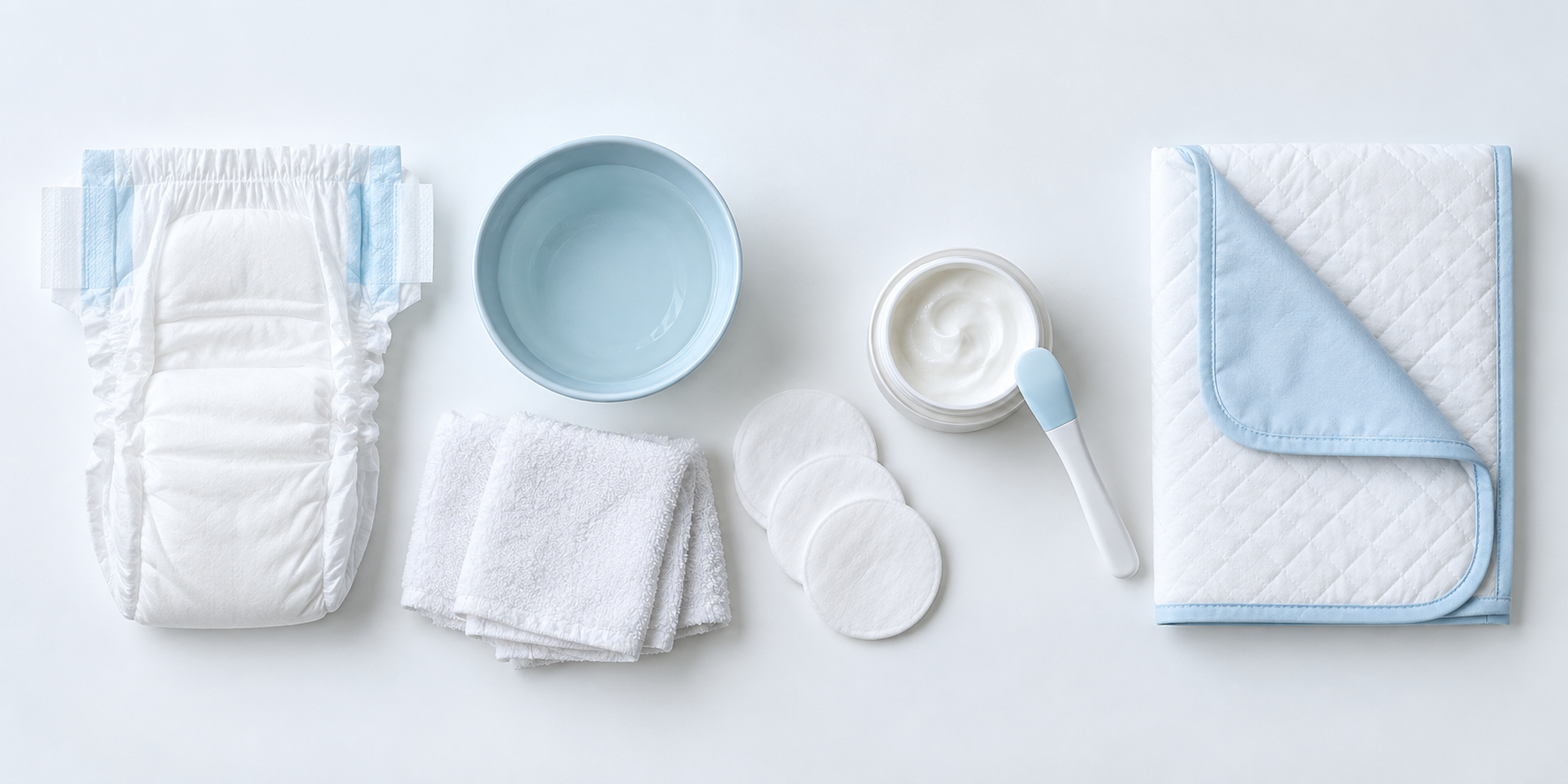
- Clean without scrubbing. Rinse with warm water or use fragrance-free, alcohol-free wipes. Pat or dab rather than repeatedly wiping raw skin.
- Dry the entire area. Give the skin a few moments to air-dry before using cream. A barrier applied over damp skin can trap the moisture you are trying to remove.
- Apply a real barrier, not a faint coating. Use a thick, even layer of zinc oxide paste at every change. Plain petrolatum also creates a moisture barrier and may be easier to remove at the next change.
- Add short periods without a diaper. Put your baby on a waterproof pad and allow about 10 minutes of diaper-free time a few times during the day. This gives the skin more time to become fully dry.
- Check the fit. A tight diaper increases friction and holds moisture close to the skin. A loose one can allow stool to spread farther. Reassess the size and fit as your baby grows.
You do not need to use several active products at once. That can make it harder to tell what is helping and may expose already irritated skin to more ingredients. Start with gentle cleaning, complete drying, frequent changes and one dependable barrier. Then judge the result over the next few days.
Two common attempts can make matters worse. The American Academy of Pediatrics advises against talcum powder for babies because the particles can be inhaled. You should also avoid medicated cortisone cream unless your pediatrician recommends it; repeated use in the diaper area can thin the skin, and a clinician should determine the amount and duration.
Look for clues that the rash needs different treatment
Persistence alone does not prove that a rash is caused by yeast or bacteria. Its appearance, recent antibiotic use, illness and response to careful barrier care all help your pediatrician decide what is more likely. Use the patterns below as reasons to ask for help, not as a diagnosis you have to make at home.
| Pattern | What you may notice | What to do |
|---|---|---|
| Irritant contact dermatitis | Broad pink-to-red irritation across the diaper area; the skin may look shiny or slightly raised in patches. | Use frequent changes, gentle cleaning, complete drying and a thick barrier consistently. |
| Possible yeast rash | Vivid redness with sharp, defined edges and small satellite spots around the border. It may appear after antibiotics or a period of illness. | Contact your pediatrician. A barrier protects the skin, but it does not treat yeast. |
| Possible bacterial involvement | Pustules, blisters or a rash that is spreading rapidly. | Call your pediatrician promptly rather than continuing to experiment with home treatments. |
If your pediatrician believes yeast is involved, they may recommend an antifungal cream. Follow their instructions rather than choosing a treatment based only on a photo or description. When an antifungal has been recommended, it is generally applied after gentle cleaning and complete drying, before the protective barrier layer. If the treated rash is worsening or has not started to improve within 3 to 5 days, contact the clinician again so another cause or treatment can be considered.
Know when home care has reached its limit
A diaper rash does not have to become an emergency before you ask for medical help. If you have followed the same gentle routine at every change and there is no improvement after 3 to 5 days, call your pediatrician. Continuing an ineffective routine can delay the treatment needed for yeast, bacterial infection or another skin problem.
Contact your pediatrician sooner if you see any of the following:
- Pustules or fluid-filled blisters
- Open sores or broken skin
- Significant swelling or skin that appears infected
- A rash spreading beyond the diaper area or expanding rapidly
- Fever occurring with the rash
These signs are not a cue to add stronger creams on your own. They are a cue for professional assessment. If you are uncertain whether the skin is open, infected or changing quickly, calling earlier is safer than waiting for the full 3-to-5-day window.
Prevent the next flare by finding the repeated exposure
Once the skin improves, look at what repeatedly brings moisture or friction back. Prevention is mostly a matter of shortening wet contact, preserving the skin barrier and noticing changes in your baby’s routine.
- Keep a predictable changing rhythm. For newborns, changing every 2 to 3 hours is a reasonable baseline. For older babies, check at each feeding and change immediately after a bowel movement.
- Use a barrier before redness returns. A layer of zinc oxide or plain petrolatum at each change can maintain protection instead of waiting until the skin is inflamed.
- Pat rather than rub. Friction matters even when the skin looks healthy, and it matters more once redness begins.
- Recheck diaper size regularly. Red marks, tight elastic or recurring friction in the same area can indicate that the fit needs attention.
- Notice changes after solids. New foods can change the character and acidity of stool. Some parents notice flares around the introduction of citrus, tomatoes or berries. If the timing repeats, slow the introduction and mention the pattern to your pediatrician rather than removing broad groups of food without guidance.
- Remember recent antibiotics or illness. If the rash appears during or after either one, tell your pediatrician. That context can help them evaluate a possible yeast rash.
At the next change, keep the plan simple: clean softly, let the skin become fully dry, apply a thick barrier and set the next check for 60 to 90 minutes. If you have already done that consistently for 3 to 5 days without improvement, make the pediatrician call now rather than buying another cream and restarting the clock.


References




