
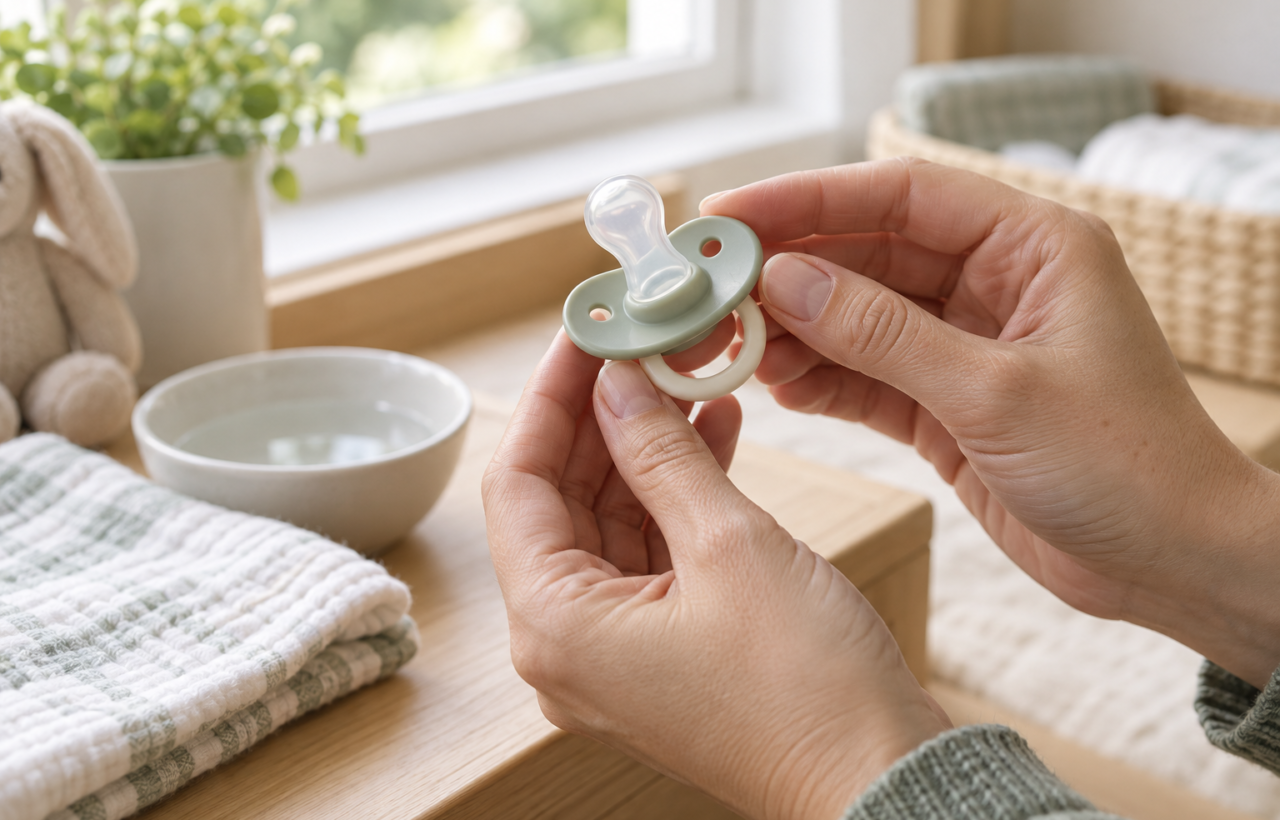
A dummy can look clean and still be due for a closer look. If you’re deciding whether to wash the one in your hand or open a new one, use two separate tests: cleanliness tells you whether it needs cleaning; condition tells you whether it must be replaced.
That distinction makes dummy care much simpler. Cleaning deals with everyday contamination, but it cannot reverse stretching, weakness, stickiness or a tear. If the teat has changed or been damaged, take the dummy out of use immediately, no matter how recently you opened it.
Key takeaways
- Inspect the dummy before every use. Look closely at the teat and gently pull it in every direction.
- Replace it immediately if you find a rupture, crack, weak area, brittle or sticky texture, enlargement, or a noticeable change in size, shape or surface.
- BIBS recommends replacing dummies every four to six weeks, even when they appear undamaged. This is manufacturer guidance rather than a universal expiry date, so the instructions for your baby’s particular dummy come first.
- Clean and sterilise the dummy using the method specified by its manufacturer, with particular care during your baby’s early months.
- Check more attentively once teething begins because small teeth put additional pressure on the teat.
Do a visual check and pull test before every use
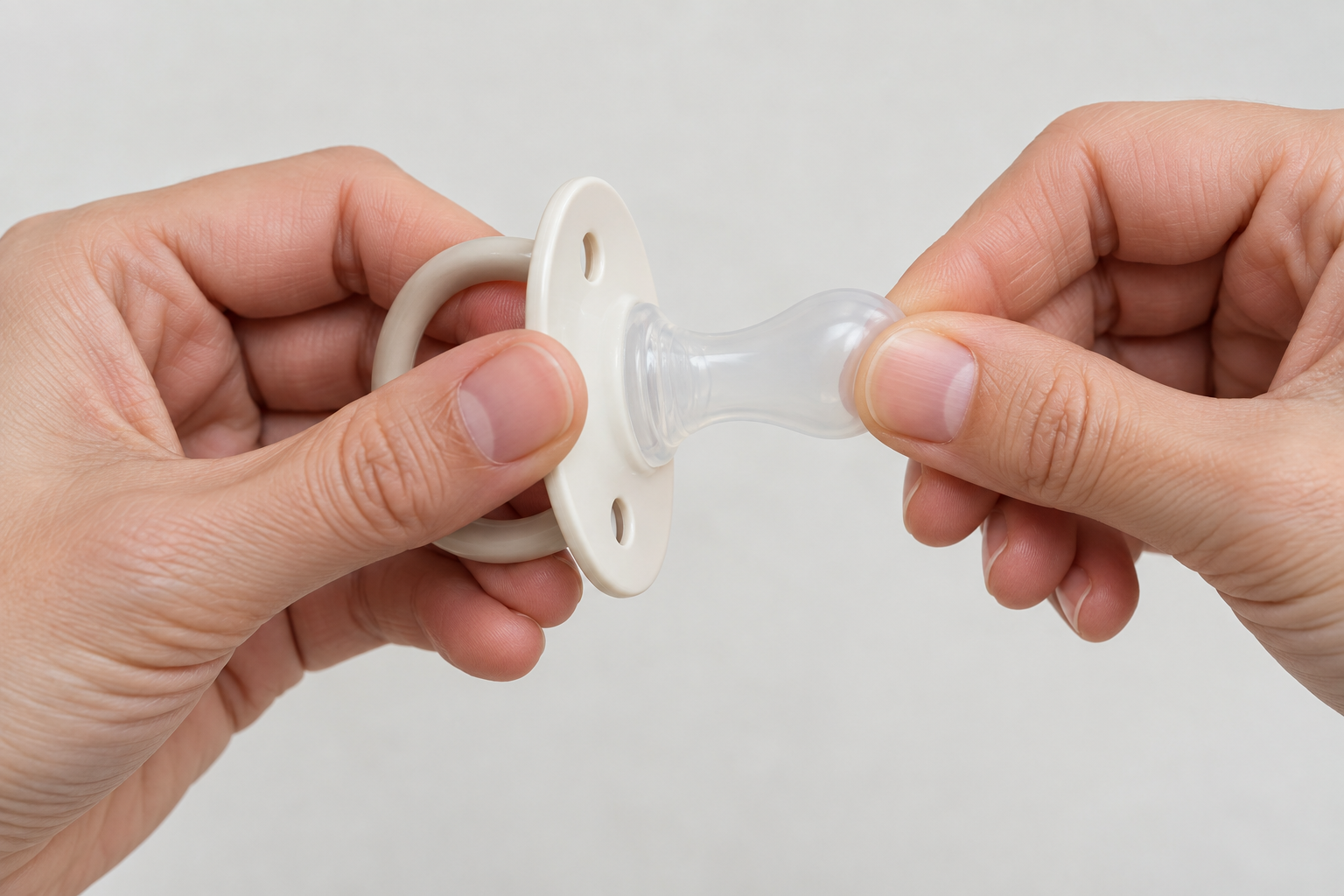
A quick inspection is more useful than relying on memory. A dummy can deteriorate before your next planned replacement date, especially when it is used frequently or chewed during teething.
- Wash and dry your hands before handling the teat.
- Hold the dummy securely by its shield or handle.
- Gently stretch the teat in every direction. You are checking whether the material still feels intact and returns to its usual shape.
- Turn it under good light and examine the whole surface, including the area where the teat meets the shield.
- If anything looks or feels different, put the dummy aside so it cannot accidentally return to your baby’s rotation.
Warning signs include changes in the surface, size or shape, ruptures, brittleness, stickiness and an enlarged teat. Do not wait for a split to become obvious. A new weak spot or texture change is enough reason to replace the dummy.
The calendar never overrides this inspection. A dummy opened yesterday should be discarded today if it is damaged; one approaching its routine replacement date still needs to be checked before every use.
If a dummy has broken and any part appears to be missing, remove it from your baby’s reach and seek urgent medical advice. Trouble breathing is an emergency.
Cleanliness and condition require different decisions
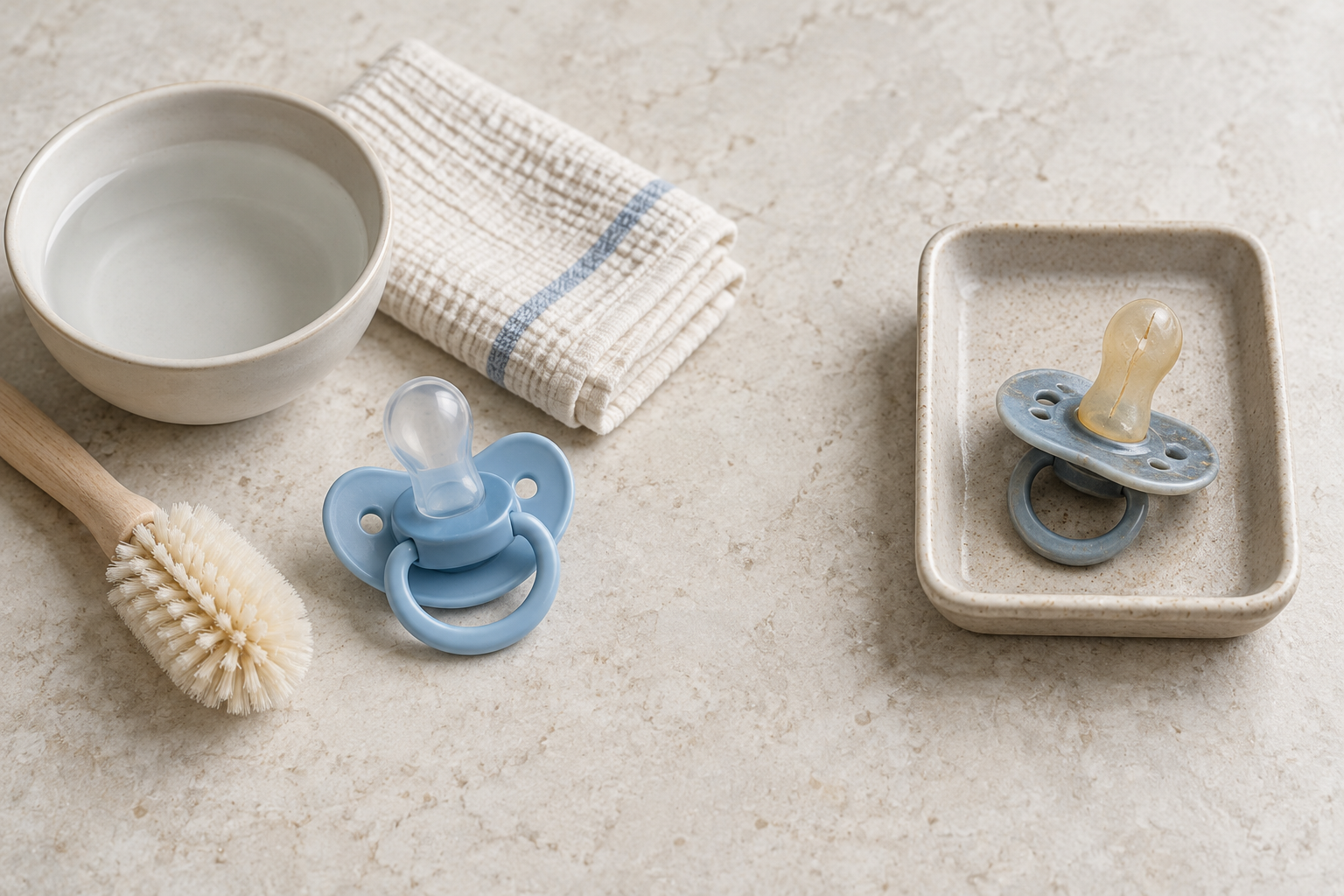
It helps to sort the dummy in front of you into one of three categories:
- Dirty but intact: clean it according to the instructions for that exact product before offering it again.
- Clean but changed: replace it. A clean teat can still be worn, weakened or damaged.
- Dirty and changed: discard it. Cleaning cannot restore deteriorated material.
The correct cleaning method depends on the dummy’s material and construction. Keep the packaging or save a clear photo of its care instructions. Do not assume that boiling, steam, a microwave steriliser or a dishwasher is suitable unless the manufacturer explicitly permits that method.
Regular cleaning and sterilising are particularly important in the early months, when a baby’s immune system is still developing. If your healthcare professional has given you stricter hygiene instructions for your baby, follow those instructions.
When a dummy becomes dirty away from home, put it in a separate place rather than returning it to the clean-dummy container. Offer a correctly prepared spare and clean the used one later. This avoids having to improvise a cleaning method while your baby is waiting.
Natural rubber latex and silicone show wear differently
Natural rubber latex
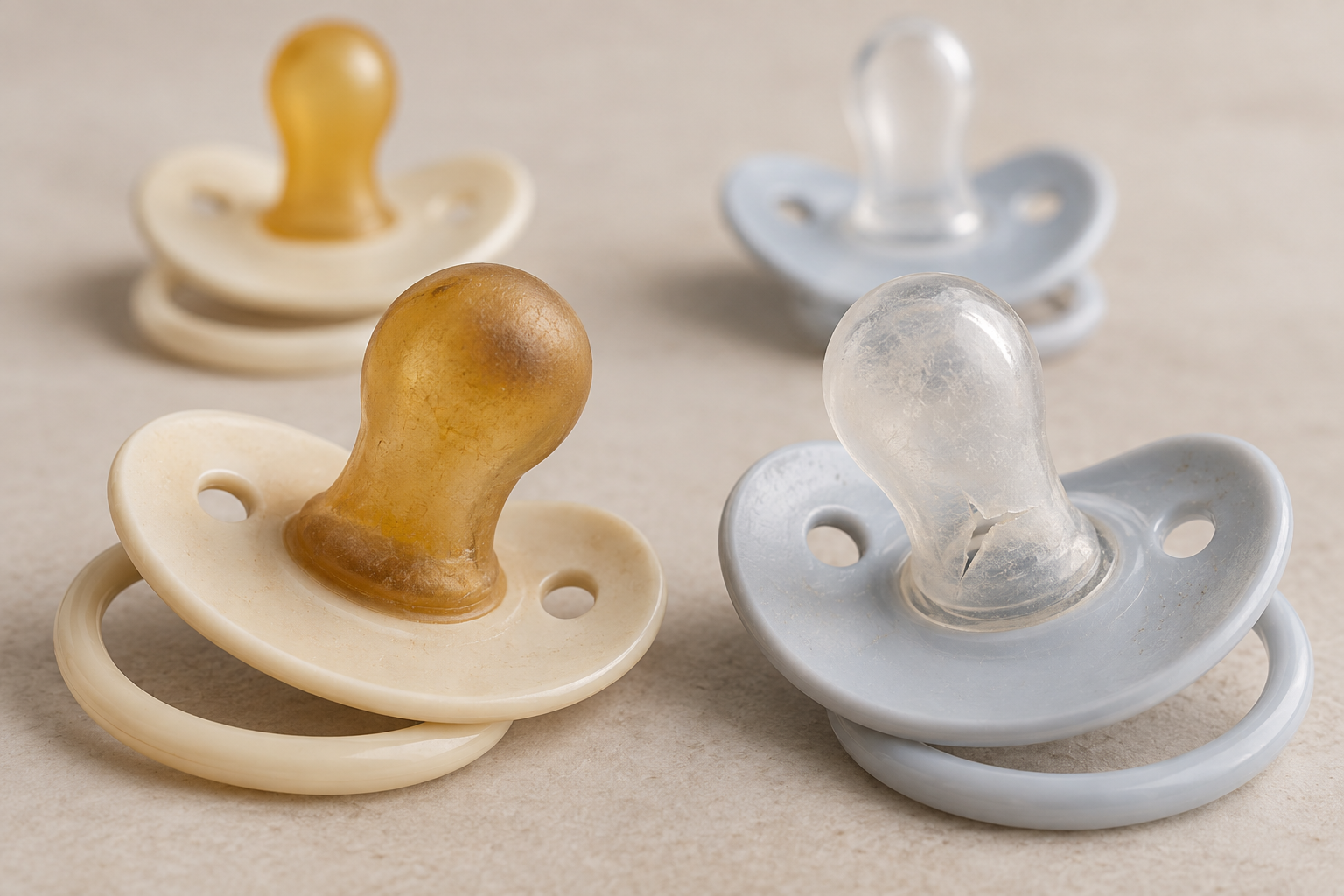
Natural rubber latex can be affected by sunlight, heat, moisture and saliva. With use, its teat may become darker, softer, sticky, swollen or enlarged. An enlarged or sticky teat is not merely an appearance issue; it is a material change, so replace the dummy rather than trying to clean it back to its original condition.
Keeping an unused dummy of the same type can make changes easier to notice. Compare the used teat with the fresh one without opening the spare unnecessarily. You are looking for a clear difference in size, shape or texture, not expecting a used teat to remain cosmetically perfect.
Silicone
Silicone generally retains its shape and structure longer than natural rubber latex, but that does not make it maintenance-free. Check for surface changes, cracks, tears and changes in size or shape. Do not use silicone’s slower visible ageing as a reason to ignore the product’s replacement instructions.
The same practical rule applies to both materials: replace at once when the teat changes or becomes damaged. Routine replacement is the backstop; inspection is the immediate safety check.
Make timely replacement easier to remember
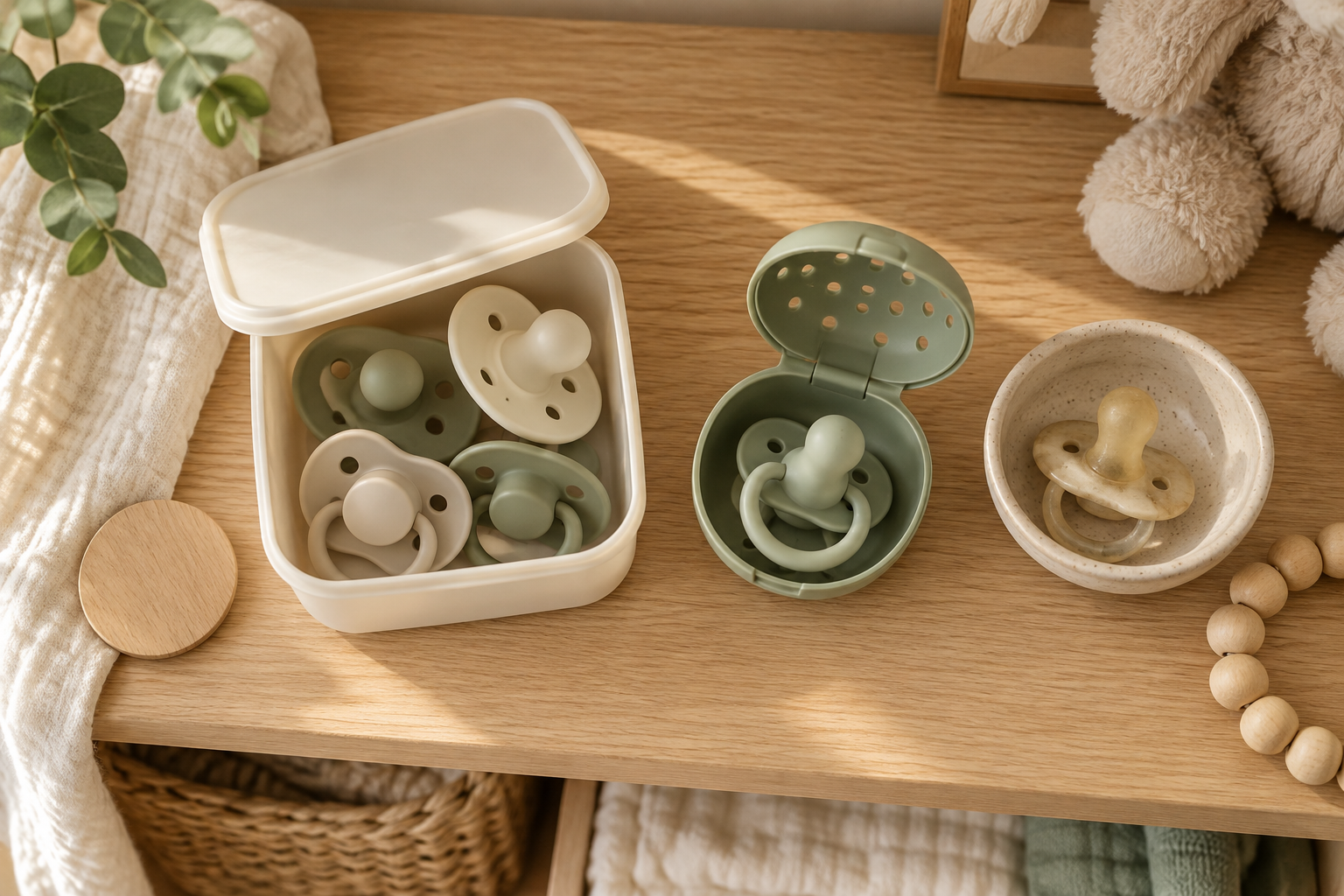
You do not need an elaborate tracking system. A small routine is enough:
- Record the date you first use a new dummy in your phone or on its packaging rather than writing on the dummy itself.
- Set a reminder for four weeks later if you are following the BIBS four-to-six-week recommendation. Use that reminder to check the date and your supply, not as a substitute for daily inspection.
- Keep at least one clean, correctly prepared spare at home and another in the changing bag.
- Separate clean spares from used dummies so you can tell which are ready to offer.
- When buying replacements, confirm that the size and care instructions still suit your baby’s current stage. Do not automatically reorder from an old purchase without checking the packaging.
Check every dummy currently in rotation today, remove any with a changed teat, and note when the remaining ones were opened. With a prepared spare nearby and a reminder already set, the next decision becomes a quick check rather than a guess.
References




