
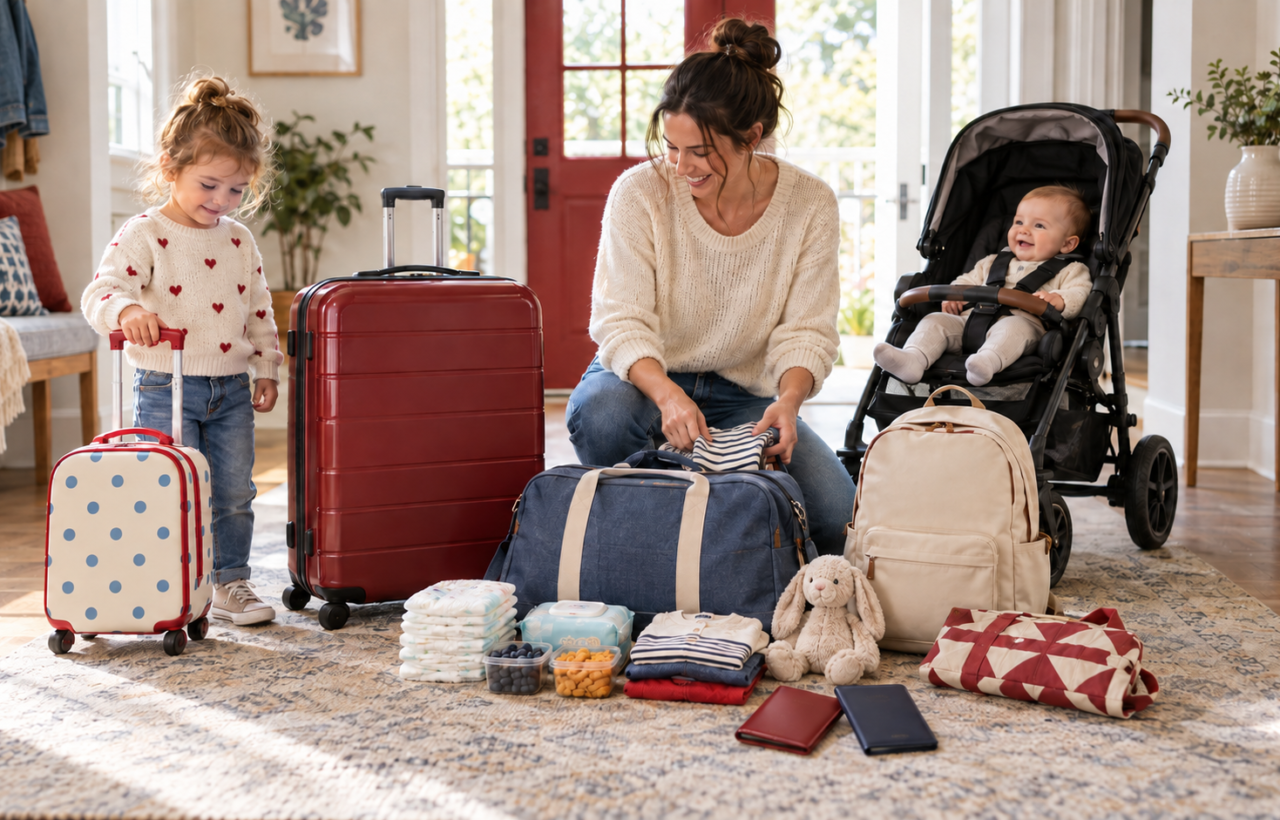
Disney luggage can solve a practical family-travel problem, but only if you choose for the job rather than the character. When you are moving with a baby or toddler, the wrong bag turns diapers, wipes, snacks, clothes, and travel documents into one deep pile.
The Disney x BÉIS collection covers everything from full-size rollers to mini children’s bags and packable extras. Your first decision is not red versus denim. It is whether you need primary luggage, an adult-access care bag, a child’s bag, or overflow space for the trip home.
Start by assigning every bag one clear job
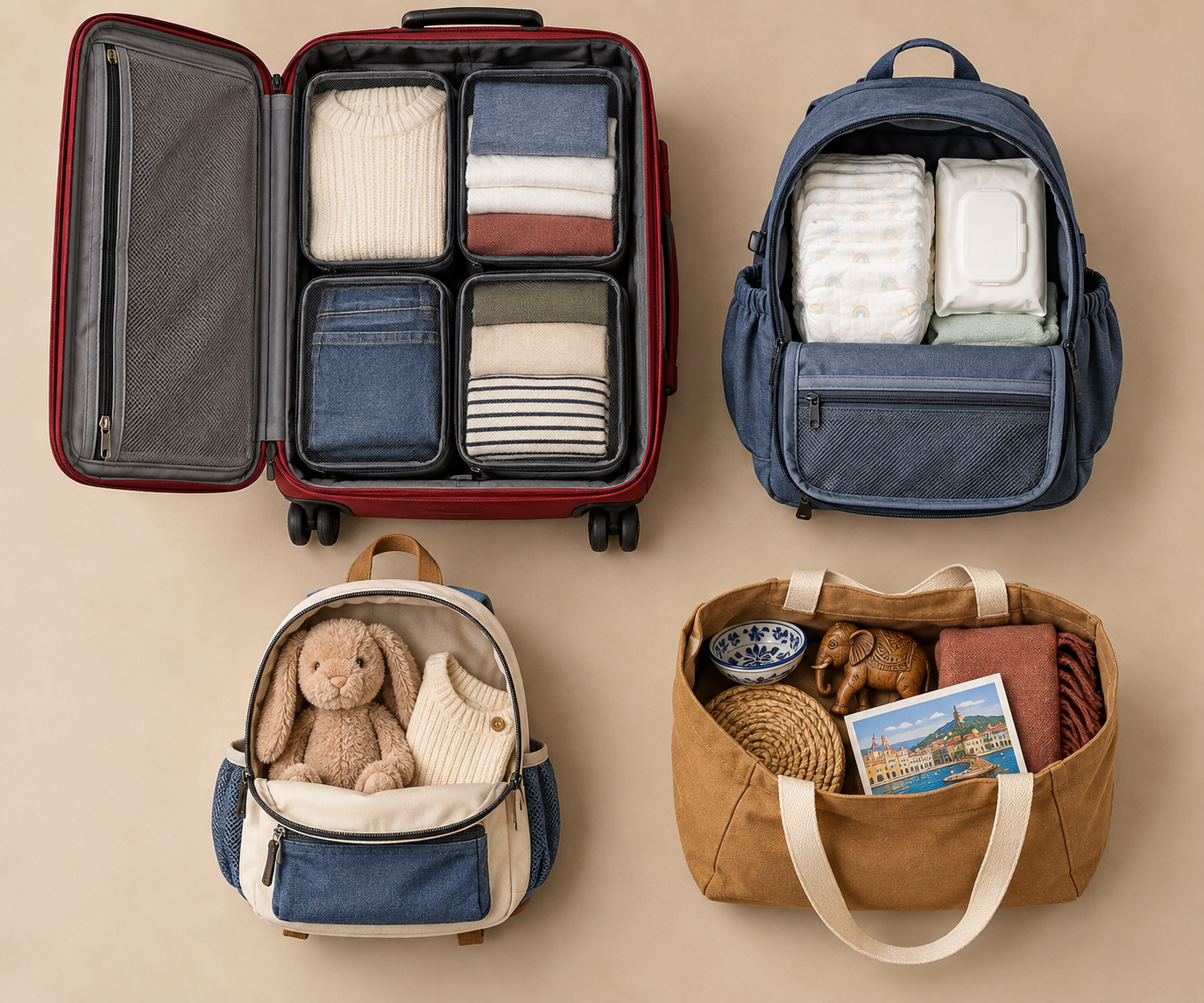
The 28-piece Disney x BÉIS range includes Mickey-embossed rollers, denim totes and backpacks, mini children’s bags, packable options, a Minnie Mouse handbag, and cosmetic pouches. That breadth is useful, but it also makes it easy to buy two attractive pieces that compete for the same role.
| Collection type | Known options | Practical family-travel role | What to verify |
|---|---|---|---|
| Rollers | Bright red Mickey Mouse designs in small and large carry-on formats and medium and large check-in formats, with custom wheel details and matching laundry bags | Main luggage for clothing, refills, and items you do not need continuously | Exterior measurements, empty weight, airline allowance, and whether the size works for your usual trips |
| Adult-size denim bags | Tote, duffle, and backpack in blue or red denim with vintage-style Mickey Mouse patches | The bag an adult keeps accessible during transit or carries during the day | Capacity, closure, pocket layout, strap comfort, and care instructions |
| Children’s bags | Mini duffle, mini backpack, and matching travel bag in a classic Disney doodle print | A place for a toddler’s light, non-essential belongings | Bag dimensions, strap adjustment, weight when packed, and whether your child will actually carry it |
| Packable bags | Beige Mickey Mouse plaid compactible backpack and packable charm bag | Overflow space for an extra layer, purchases, or the return journey | Opened size, closure, carrying comfort, and packed-down size |
| Minnie Mouse handbag | Puff-bow design in red or black, with shoulder and crossbody straps | Small adult essentials for a short outing or an evening away from the main luggage | Interior measurements and whether it holds your actual essentials |
| Cosmetic pouches | Large and other cosmetic-pouch formats in blue denim | Separating changing, feeding, clothing, or adult items inside a larger bag | Care instructions, closure, and resistance to the kinds of spills your family encounters |
A matching set is not automatically a complete travel system. A roller handles bulk. A parent-access bag handles the next part of the journey. A pouch controls small items. A packable bag handles unexpected volume. Give each piece a different responsibility before you consider buying more than one.
Choose around your baby or toddler, not the print
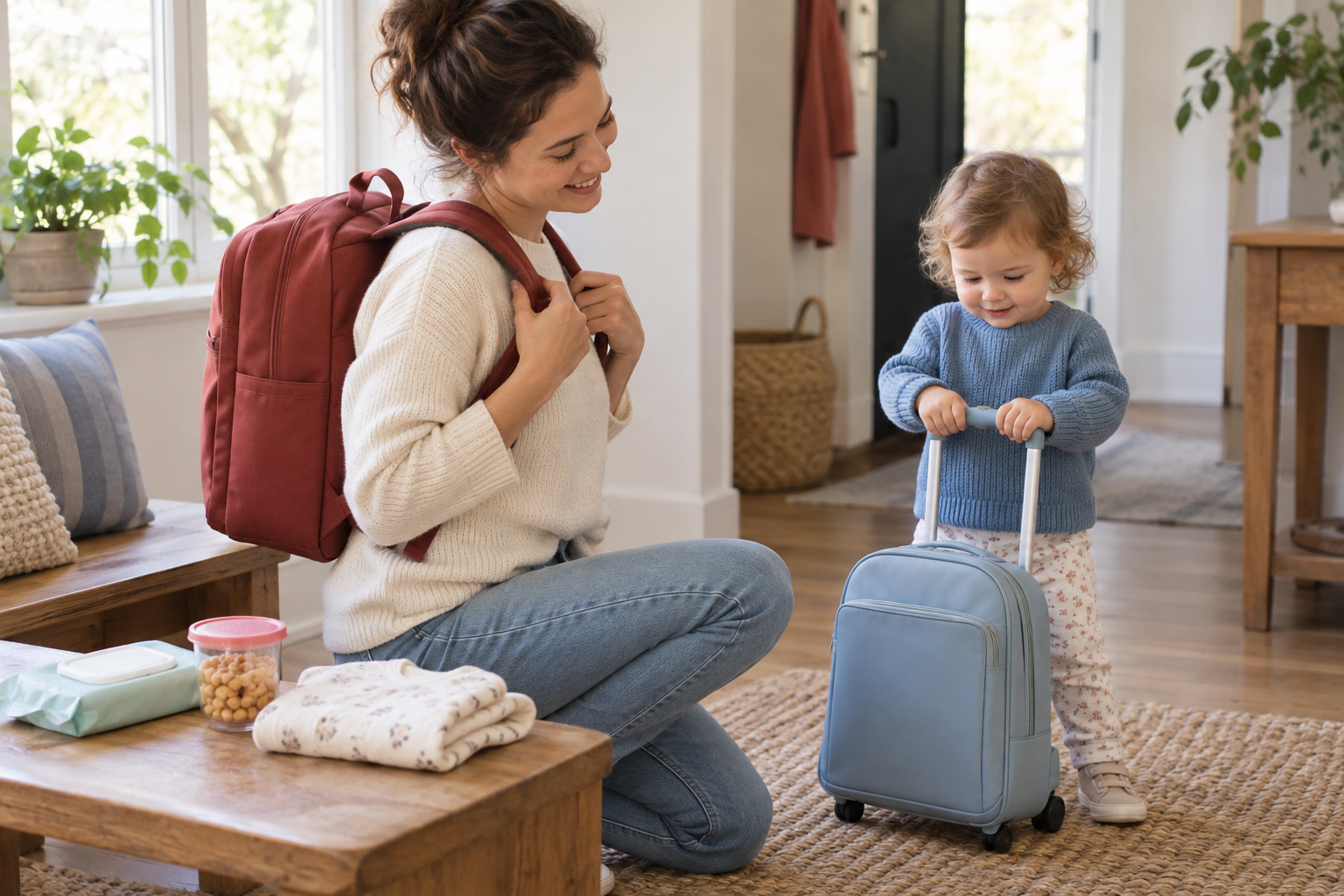
The same collection can work very differently for an infant, a newly mobile toddler, and a child who insists on carrying a bag. Match the format to what you will be doing with your hands and where the essential supplies need to stay.
- For an airport or long-distance trip: use the roller for bulk and refills, then keep one adult-controlled bag for diapers, wipes, age-appropriate feeding supplies, a change of clothes, a comfort item, and travel documents. Do not bury anything needed before baggage claim in checked luggage.
- For a stroller day: choose a bag that fits inside the stroller’s storage area while staying within the stroller manufacturer’s storage and load instructions. Measure the basket opening as well as its interior. A bag can have enough volume yet still be too rigid or wide to insert easily.
- When you need both hands available: the denim backpack format is the natural place to start. A tote may offer easier top access, while a duffle can suit clothing and larger items, but the exact closures, pockets, and straps still need to be checked on the live listing.
- When your toddler wants a bag: use a mini backpack or duffle for items that can safely be separated from you, such as a comfort toy or spare layer. Diapers, feeding necessities, medication, documents, and anything that could derail the trip should remain with an adult.
- For a short outing or dinner: the Minnie Mouse bow handbag may replace a larger day bag only if its listed measurements accommodate what you need. The shoulder and crossbody straps give you carrying options, but they do not establish capacity.
- For park purchases or the trip home: place a compactible or packable bag inside your main luggage at the start. It has a defined purpose without becoming another full bag you must manage during the outward journey.
If your baby is not carrying anything independently, a mini bag becomes another object for you to track. It can still work as an organizer inside the roller, but it should earn that space. With a toddler, carrying a small bag can create a sense of ownership, yet the adult should remain responsible for every time-sensitive care item.
Make these checks before you reach checkout
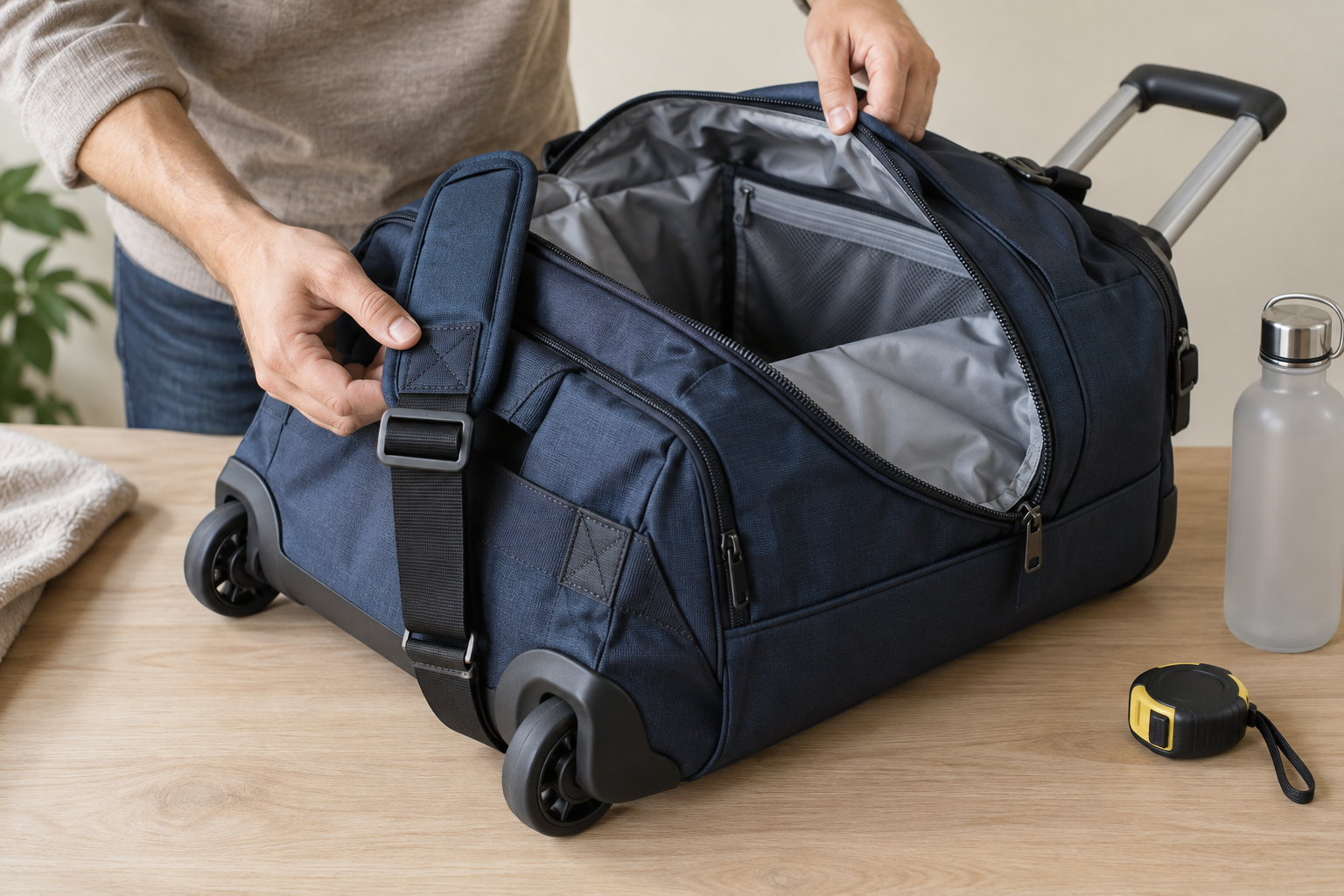
- Compare measurements with the carrier you booked. Carry-on is a product category, not a universal promise that a bag will be accepted by every airline. Check the current allowance for your fare and route, then compare it with the bag’s complete exterior dimensions, including wheels and handles.
- Test the format against your real packing list. Lay out what your child currently uses during a comparable stretch away from home. Include the bulky items, not just the small ones. If the bag’s capacity is not listed in a form you can compare, use its interior dimensions and pocket layout rather than guessing from styled photographs.
- Plan for access, not just capacity. Decide which items must be reachable while standing, holding a child, or working in a small changing space. A roomy bag can still be frustrating if the next diaper, wipe, or outfit sits beneath everything else.
- Read the material and care instructions. Denim, embossed luggage, and decorative patches may have different cleaning requirements. Do not infer that a surface is wipe-clean, machine-washable, or water-resistant from its appearance.
- Verify baby-specific features separately. A backpack that holds diapers is not necessarily a purpose-built diaper bag. Check whether the exact piece includes the features you rely on, such as a changing mat, insulated storage, stroller attachment points, suitable bottle pockets, or a particular closure. If the listing does not promise a feature, plan as though it is absent.
- Check the seller, final cost, stock, and return route. The rollout put the full collection on BÉIS online and only select pieces on Disney Store. Availability can change after launch, so confirm the exact product rather than assuming both stores carry it. If you are ordering across a border, review the currency, shipping charge, tax or duty handling, return postage, and test-packing rules before removing any tags.
These checks matter more than whether all your pieces match. The expensive mistake is not choosing the less fashionable colour. It is discovering that the roller exceeds your carrier’s allowance, the backpack misses a feature you use daily, or the day bag will not enter your stroller basket.
Use a zone-based packing system
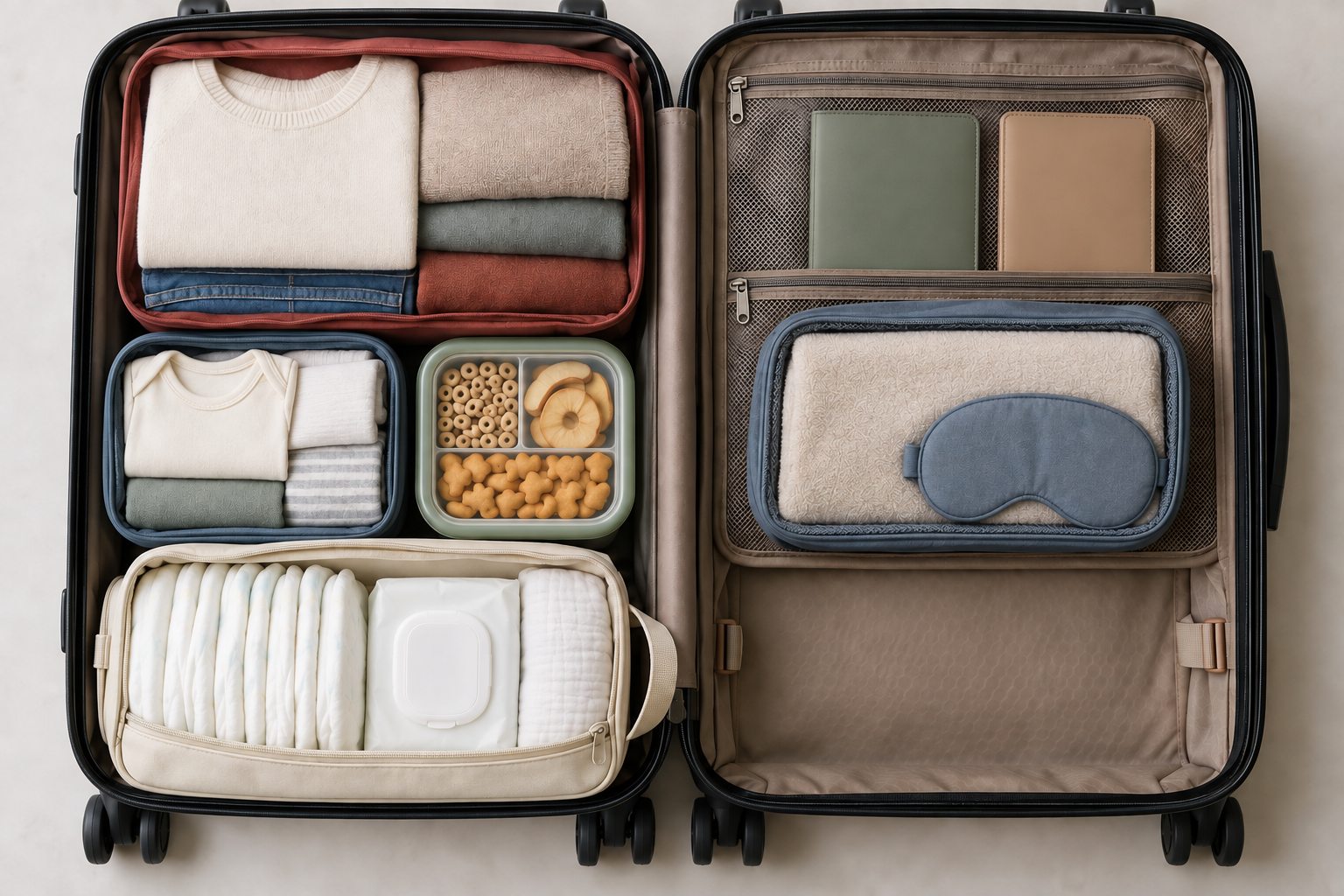
The collection will not organize the trip for you. It works best when the adult-access bag has a deliberate internal structure and the roller holds refills rather than duplicates scattered at random.
- Choose one live bag. This is the only bag you open routinely while moving. It should contain the supplies needed before you can comfortably reach the roller again.
- Create clear care modules. Separate changing supplies, age-appropriate feeding items, spare clothing, comfort or play items, and adult travel essentials. The Disney cosmetic pouches may serve this role, but ordinary organizers you already own can do it too.
- Pack in order of access. Put the item needed at the next predictable transition nearest the opening. Keep later-use modules below it and true refills in the roller.
- Label similar pouches. A second adult should be able to find the changing or clothing module without emptying the bag. Labels also help when matching pouches look alike.
- Keep the child’s bag non-critical. If the mini backpack is forgotten in a restaurant, left with another caregiver, or handed to a tired adult, the immediate care plan should still work.
- Pack the overflow bag empty. Fold the compactible backpack or charm bag into the main luggage instead of filling it on departure. It then remains available for purchases, dirty clothing, or other extra volume on the return trip.
Before leaving, do a simple handoff check. Ask whether someone who did not pack the bag could locate the changing supplies, spare outfit, and any required travel documents without unpacking everything. If the answer is no, change the organization while you are still at home.
Key takeaways
- Choose the format first and the Disney design second.
- Use a roller for bulk, an adult-controlled bag for immediate care, pouches for categories, and a packable bag for overflow.
- Do not treat a carry-on label as confirmation that a roller meets your airline’s current allowance.
- Keep every essential baby or toddler item with an adult, even when your child carries a matching mini bag.
- Verify cleaning instructions and baby-specific features instead of inferring them from the bag’s appearance.
- Check current stock, full checkout cost, and return conditions for the exact item you want.
Write down the single job your next bag must do, lay out the items assigned to it, and buy only if the exact piece passes the measurement, access, and care checks. If it does not, skip it. A recognizable print cannot compensate for a bag that makes family travel harder.
References




