
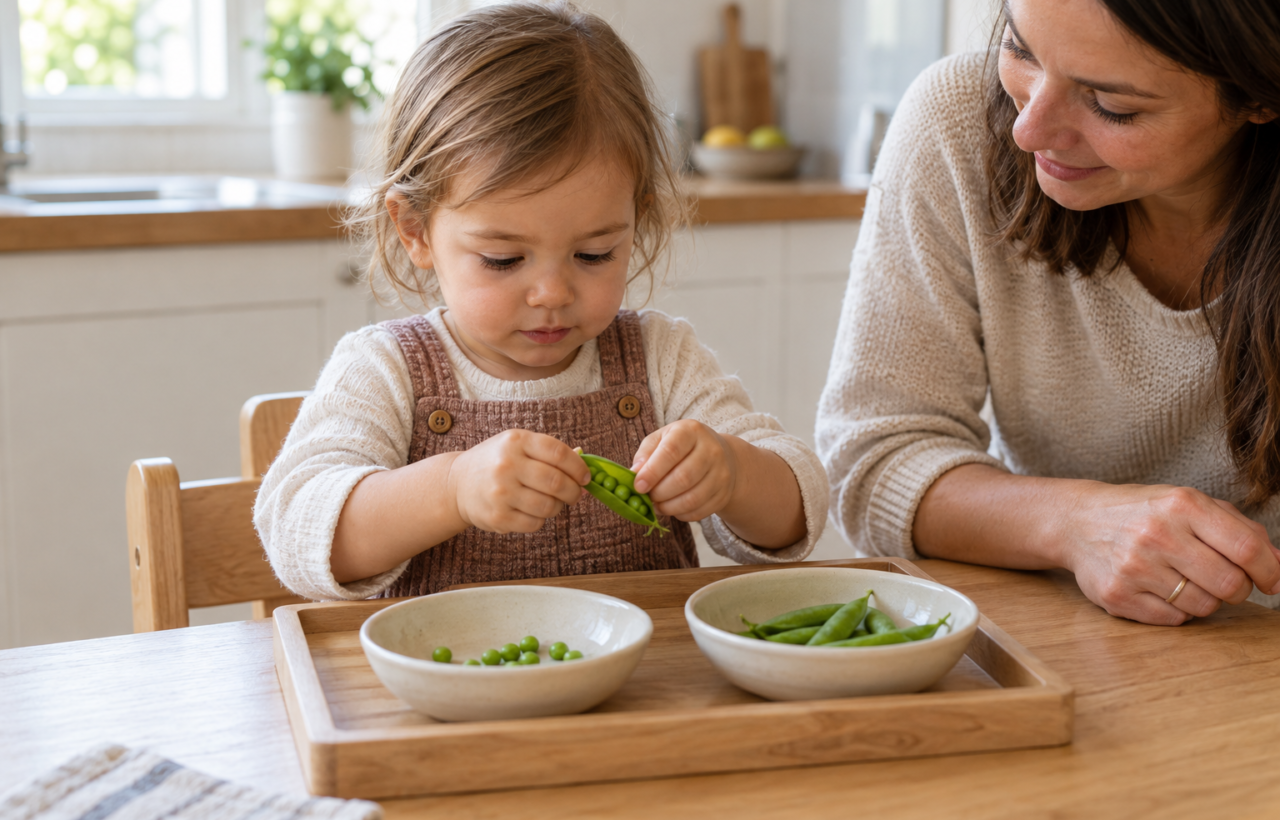
You have fresh pea pods, a toddler who wants to help, and a reasonable desire not to spend the afternoon chasing peas across the kitchen. The simplest version of this activity is a contained, useful job: open a pod, move the peas into one bowl, and place the empty pod in another.
Pea shelling is a practical-life exercise that can build fine-motor skills and independence. Success isn’t measured by how many peas your child shells. It is measured by whether the setup lets your child understand the next movement and attempt it with less help.
Decide whether your child is ready to participate
Within the 0-to-36-month stage, readiness matters more than a fixed birthday. A young baby can watch you work. A toddler may remove peas from a pod you have opened. A child with more hand control may manage the complete sequence.
Look for what your child can do now rather than treating the activity as a milestone test. The task becomes more manageable when your child can sit or stand steadily at a work surface, grasp and release objects intentionally, use both hands together, and copy a simple visible action.
- Observation stage: You shell the peas while your child watches from a safe, stable place.
- Shared stage: You start the opening, then let your child pull the pod apart and remove the peas.
- Full-sequence stage: Your child opens the pod, moves the peas, sorts the empty pod, and helps clear the workspace.
Pea shelling creates small, round pieces of food as well as torn pieces of pod. Stay beside your child for the entire activity, remove dropped peas promptly, and put the tray away before turning your attention to another kitchen job. If your child immediately puts every item in their mouth, scatters the materials, or cannot remain near the tray, let them watch or wait and try again another time.
Do not assume a pea is suitable to eat straight from the pod simply because your child helped shell it. Keep shelling and eating as separate decisions. Serve peas only in a form that is appropriate for your child’s established feeding stage; ask your child’s health professional if you are unsure.
Set up a small workspace with an obvious sequence
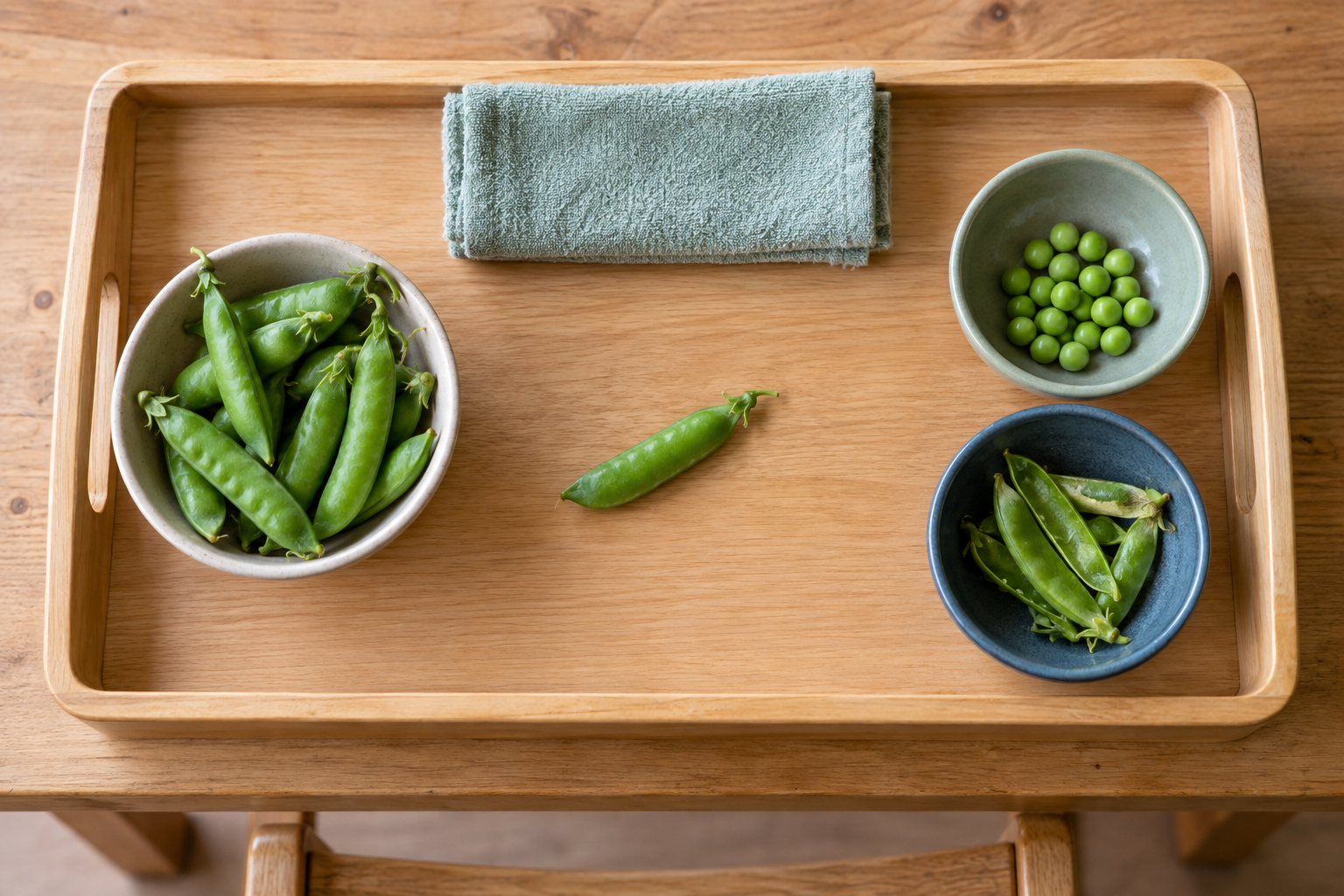
You do not need a branded Montessori material. Use familiar kitchen items that fit your child’s hands and make each part of the job easy to see.
- A low tray with a rim to contain rolling peas
- A small number of rinsed pea pods
- One bowl for shelled peas
- One bowl for empty pods
- A damp cloth for the final wipe
Place the full pods, pea bowl, and empty-pod bowl in a consistent order on the tray. The exact direction matters less than clarity: every item should have one purpose and one visible place. A stable table or high-chair tray is easier to manage than the floor, where peas can roll out of sight.
Begin with only enough pods to make the task approachable. A large pile can hide the sequence and invite scooping, squeezing, or dumping. You can always add another pod if your child is still engaged.
Check the pods before presenting them. If the seams are difficult to separate, start each one with a small opening. That adjustment preserves the interesting part of the work without forcing your child to struggle with a pod their hands cannot yet open.
Demonstrate slowly, then give your child time
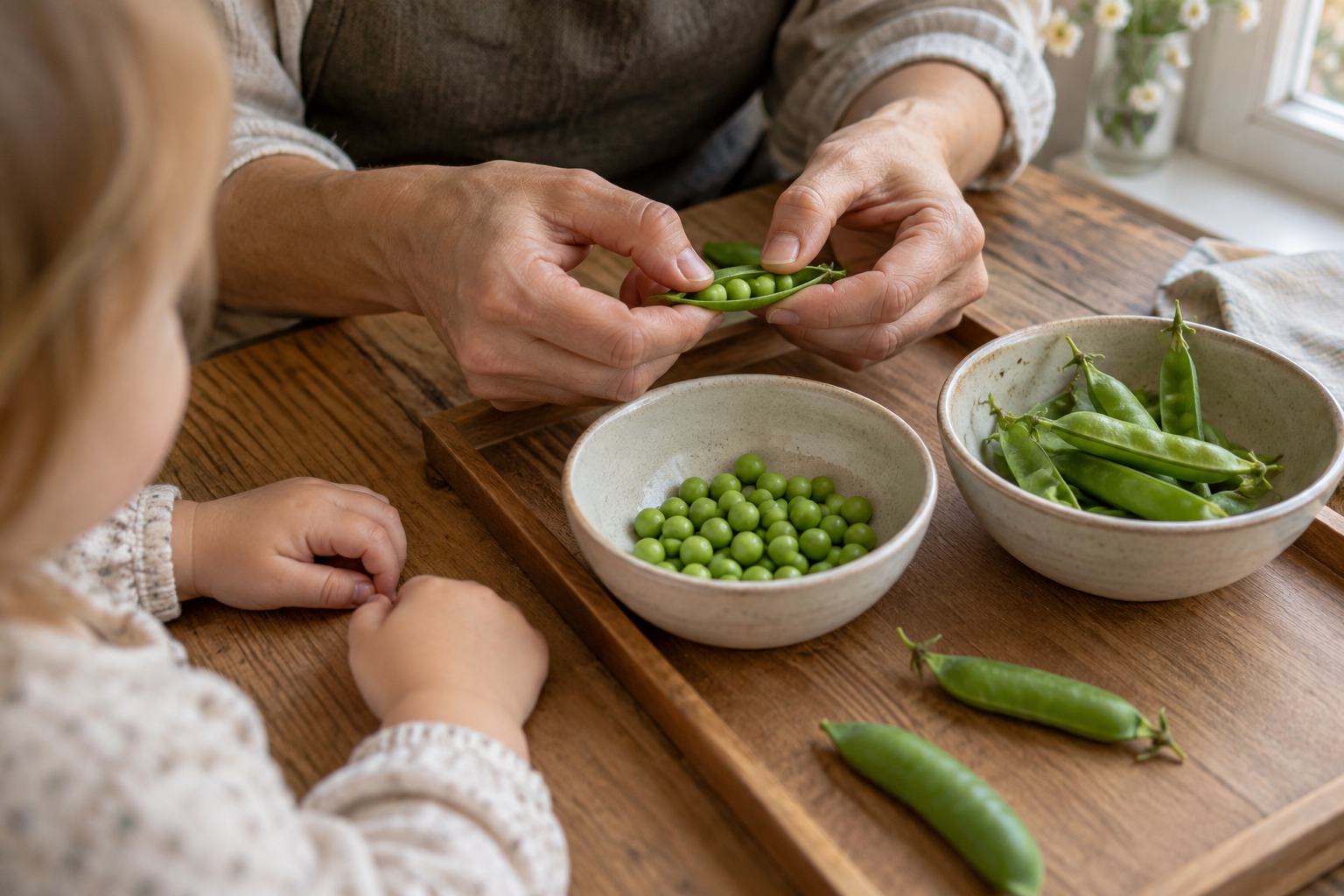
Practical-life work is easier to copy when the movements are slow and the language is brief. Sit where your child can see your hands. Demonstrate one pod from beginning to end before offering a turn.
- Pick up one pod with both hands.
- Find the seam and gently pull the two sides apart.
- Hold the open pod over the pea bowl.
- Use a thumb or fingertip to nudge the peas into the bowl.
- Place the empty pod in its separate bowl.
- Pause, then offer the next pod with a simple invitation such as, “Your turn.”
Once your child starts, allow a little silence. Opening a pod requires them to coordinate two hands, adjust pressure, and aim small objects at a container. Repeated instructions can compete with the movement they are trying to organize.
Help at the smallest useful point. If your child cannot begin the seam, open it slightly and hand the same pod back. If the bowl is too far away, move it closer. If a pea misses, wait to see whether your child notices before retrieving it. This keeps the task theirs without withholding help when the setup is the real problem.
Let the mess tell you what to change
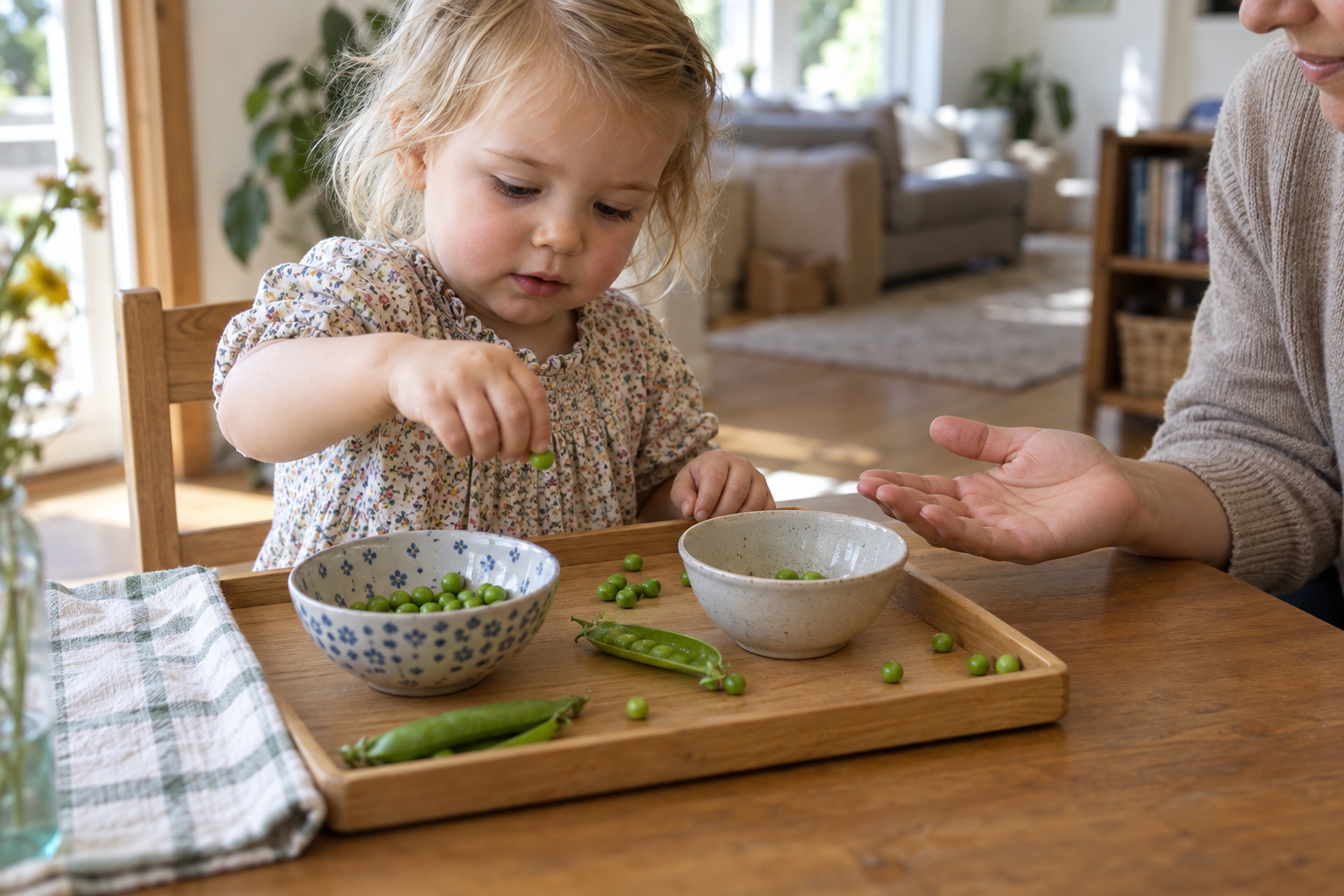
A toddler who does something unexpected is giving you information about the task. You can usually respond by simplifying the environment instead of correcting every movement.
- The pod will not open: Separate part of the seam before presenting it. Let your child complete the pulling and shelling.
- Peas keep escaping: Bring the receiving bowl directly under the pod and keep everything inside the rimmed tray.
- Your child crushes or pokes the pod: Demonstrate the opening movement once more. If exploration continues, decide whether it is safe to allow briefly or end the food activity.
- Your child dumps both bowls: Reset the tray once with fewer materials. Repeated dumping usually means the shelling sequence is not holding their attention. End calmly and offer a separate pouring activity another time.
- Your child tries to eat the peas: Pause the work and follow the feeding plan you already use. Remove the tray if shelling and eating cannot remain safely separated.
- Your child walks away: Treat that as the end. Do not follow with the tray or coax them back. Return the food to the kitchen and invite help with wiping only if they are interested.
- Your child asks for more: Add pods gradually. Repeating the same complete sequence is more valuable than covering the tray with new material.
Include the closing steps when your child is willing: carry the pea bowl to the kitchen, empty the pod bowl into the appropriate household waste or compost, and wipe the tray. Your child does not have to complete every step on the first attempt. The goal is to make the whole cycle visible so independence can grow through repetition.
If the peas are destined for a family meal, say so plainly: “These peas will go into dinner.” A real contribution gives the handwork a purpose. It also separates practical life from a performance staged only for the child.
Key takeaways
- Choose the level of participation by observed readiness, not by a rigid age.
- Use a rimmed tray, a pea bowl, an empty-pod bowl, and only a small number of pods.
- Pre-open a tough pod rather than turning the activity into a test of strength.
- Demonstrate one complete sequence slowly, then reduce your talking and wait.
- Stay beside your child and keep decisions about shelling and eating separate.
- End when interest ends, then offer the activity again on another day.
Start with one easy pod the next time peas are already part of your kitchen routine. If your child opens it, removes one pea, or simply watches the whole sequence, you have a useful starting point for the next attempt.
References




