
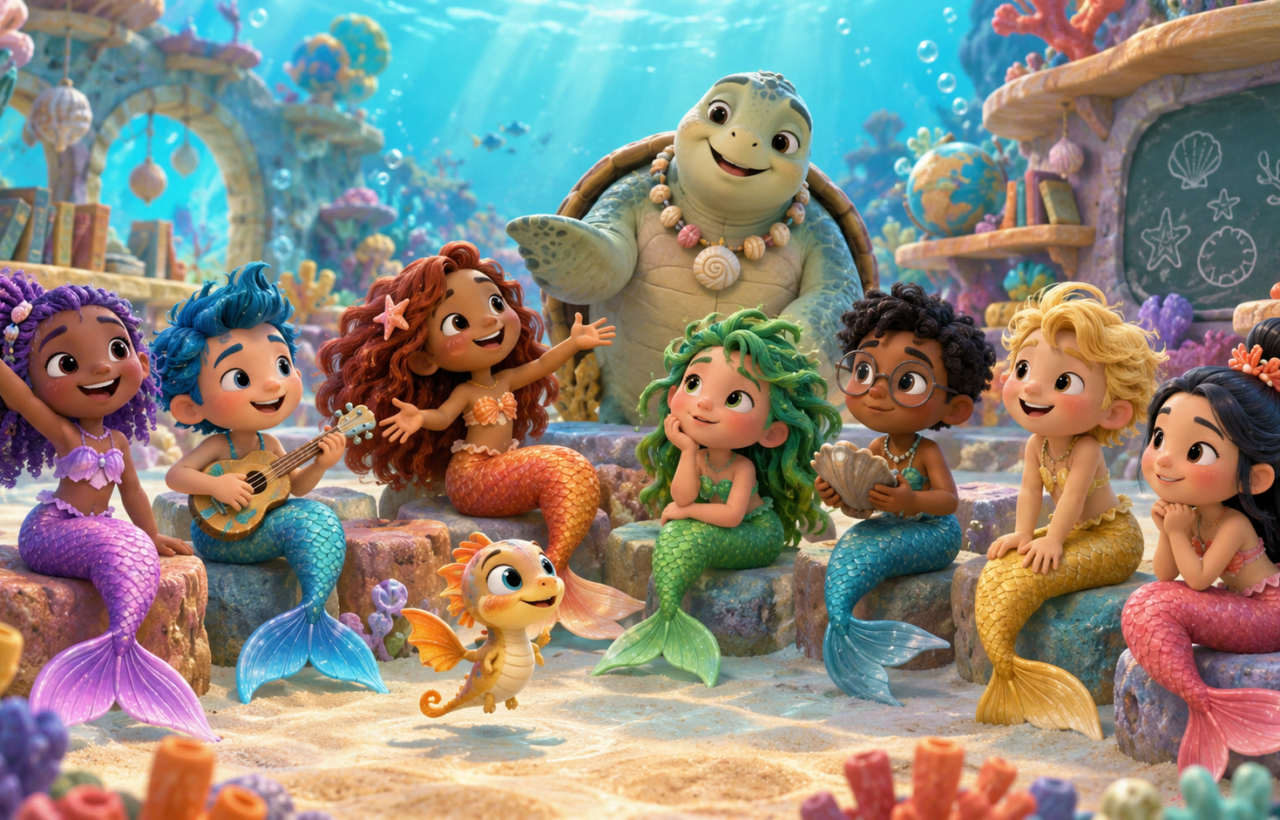
Your child wants the episode with “the silly one,” asks you to sing like Deema, or corrects you because you called Goby Gil. You don’t need to memorize every underwater adventure. You just need a reliable way to connect each character’s name with the trait that makes them recognizable.
This quick who’s-who covers the main guppies, their teacher and their familiar companions. It also gives you simple prompts you can use when your child wants to talk about what they’re watching.
The seven main Bubble Guppies characters
The easiest way to learn the cast is to attach one clear cue to each name. Each guppy has a distinct personality, even though they all sing, play and take part in the class’s adventures.
| Character | The easiest cue to remember | What you can say to your child |
|---|---|---|
| Molly | The confident, friendly leader who helps keep things moving | “Molly is ready to help.” |
| Gil | The energetic, playful guppy who often brings the silliness | “Gil has a funny idea.” |
| Goby | The imaginative storyteller who enjoys make-believe | “What is Goby pretending?” |
| Deema | The dramatic, expressive performer with big reactions | “Deema is being very dramatic.” |
| Oona | The gentle, caring guppy who pays attention to other people’s feelings | “Oona noticed someone needed help.” |
| Nonny | The thoughtful, cautious guppy who tends to focus on facts | “Nonny is thinking it through.” |
| Zooli | The confident animal expert who is especially interested in creatures | “Zooli knows about that animal.” |
Zooli is a later addition to the group, which explains why she may be missing when your family watches an older episode. You haven’t overlooked her; the lineup changes depending on when the episode was made.
Mr. Grouper, Bubble Puppy and the Little Fish
Mr. Grouper is the class’s teacher. He introduces ideas, asks questions and guides the guppies through the day’s topic. If your child refers to “the big orange one” or “the teacher,” this is probably the name they’re looking for.
Bubble Puppy is the playful, dog-like pet. He doesn’t fill the same classroom role as the guppies, but he is part of their world and often contributes physical comedy, excitement or an affectionate moment.
The Little Fish are the small fish who appear together. They react to questions, help with transitions and act a little like a chorus. A child may describe them simply as “the fish,” so it helps to know that “the Little Fish” is their collective name rather than the name of one individual character.
How to tell commonly confused guppies apart
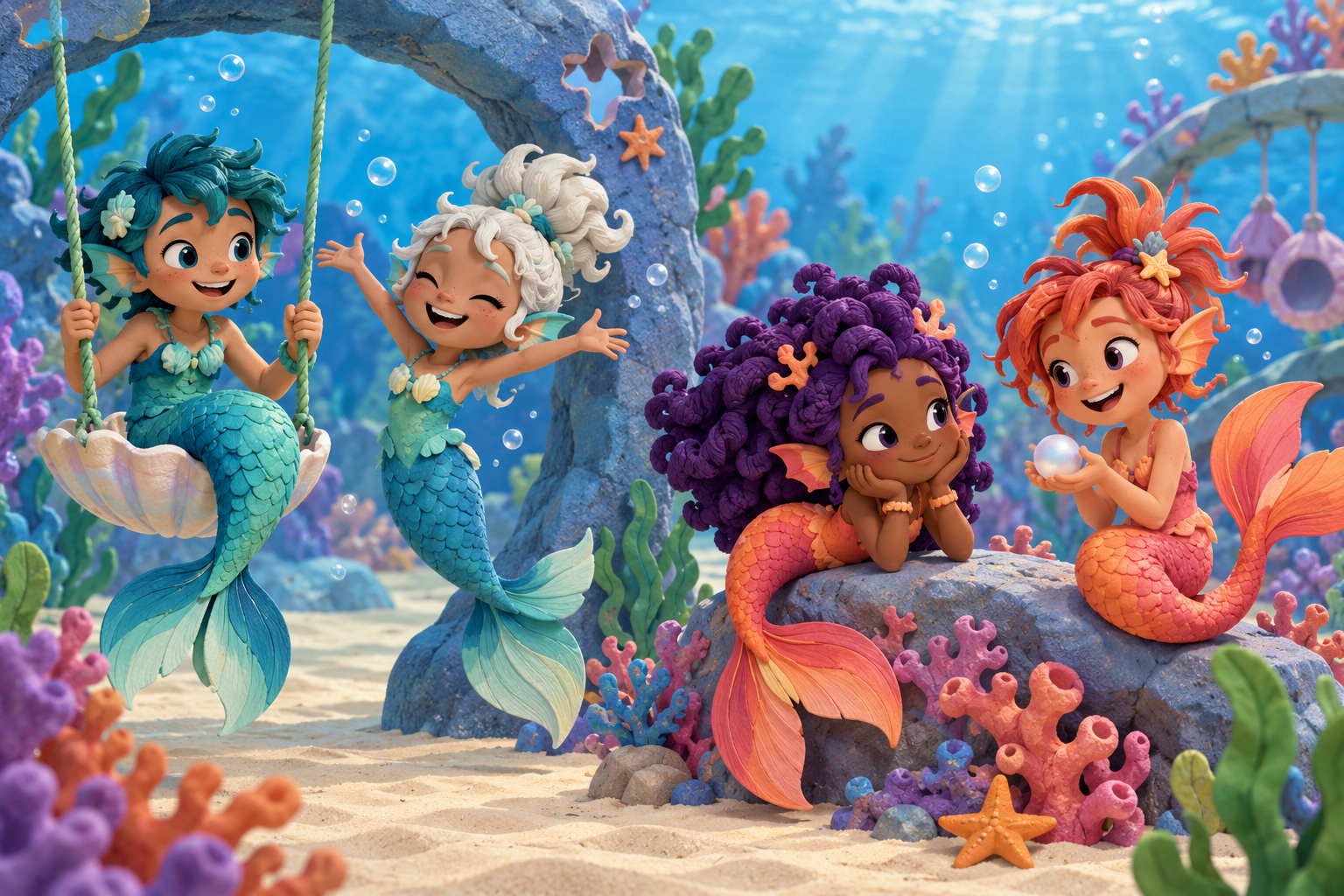
Gil and Goby are easy to mix up because both bring playful energy. Listen for what drives the scene. Gil is usually the better match when the moment is goofy, impulsive or physical. Goby is the better match when a character is building an imaginary world or telling a story.
Molly and Oona can both appear warm and helpful. Molly usually has the stronger leading presence, while Oona is more closely associated with empathy and noticing feelings. Ask yourself whether the character is moving the group forward or responding gently to somebody else’s experience.
Deema and Zooli are both confident, but their interests separate them. Deema’s cue is performance: bold expression, theatrical delivery and a taste for attention. Zooli’s cue is animals. When the story centres on a creature, Zooli’s animal knowledge is often the fastest clue.
Oona and Nonny are often quieter than the most exuberant members of the group, but they aren’t interchangeable. Oona’s cue is care; Nonny’s is careful thought. Put simply: Oona notices how someone feels, while Nonny notices what needs to be figured out.
Turn character recognition into an easy conversation
You don’t have to turn the show into a lesson. Follow your child’s current way of communicating and add one small invitation. If your child isn’t speaking yet, point and name: “That’s Molly.” Pause afterward so they have time to look, gesture or make a sound.
If your child uses single words, offer a choice instead of an open-ended question: “Gil or Goby?” or “Happy or sad?” A choice gives them language they can repeat without requiring them to retrieve a name from memory.
If your child is combining words, describe an action and leave room for them to add the character: “Someone is helping the puppy. Who is it?” You can also connect a personality to the plot with concrete prompts such as “What is Goby pretending?”, “Who did Oona help?” or “Which animal is Zooli talking about?”
When the answer is wrong, keep the exchange moving. Repeat the correct name naturally rather than demanding another try: “Yes, Gil is being silly.” The useful part is the shared attention and conversation, not whether your child can pass a character quiz.
Key takeaways
- Remember one dominant cue for each guppy: Molly leads, Gil plays, Goby imagines, Deema performs, Oona cares, Nonny thinks and Zooli knows animals.
- Mr. Grouper is the teacher, Bubble Puppy is the pet and the Little Fish are a group of recurring helpers.
- Separate similar characters by what drives the scene, not by trying to memorize every visual detail.
- Match your question to what your child can already do: point and name, offer two choices, or ask about one concrete action.
- Correct a mixed-up name by modelling the answer naturally and continuing the conversation.
Start with the character your child mentions most. Learn that name and one personality cue, then add another the next time you watch together. Before long, “the silly one” and “the animal one” will be names you both know.
References




