A toddler tower can make everyday counter-height activities more accessible for a small child, but it is still a piece of furniture that needs careful choosing and close supervision.
Parents described toddler towers as safe, stable kitchen helper stools meant to elevate a toddler’s learning. With only that limited source detail available, the most useful way to approach the purchase is to focus less on product hype and more on the practical questions families should ask before bringing one into the kitchen.
What a Toddler Tower Is Meant to Do
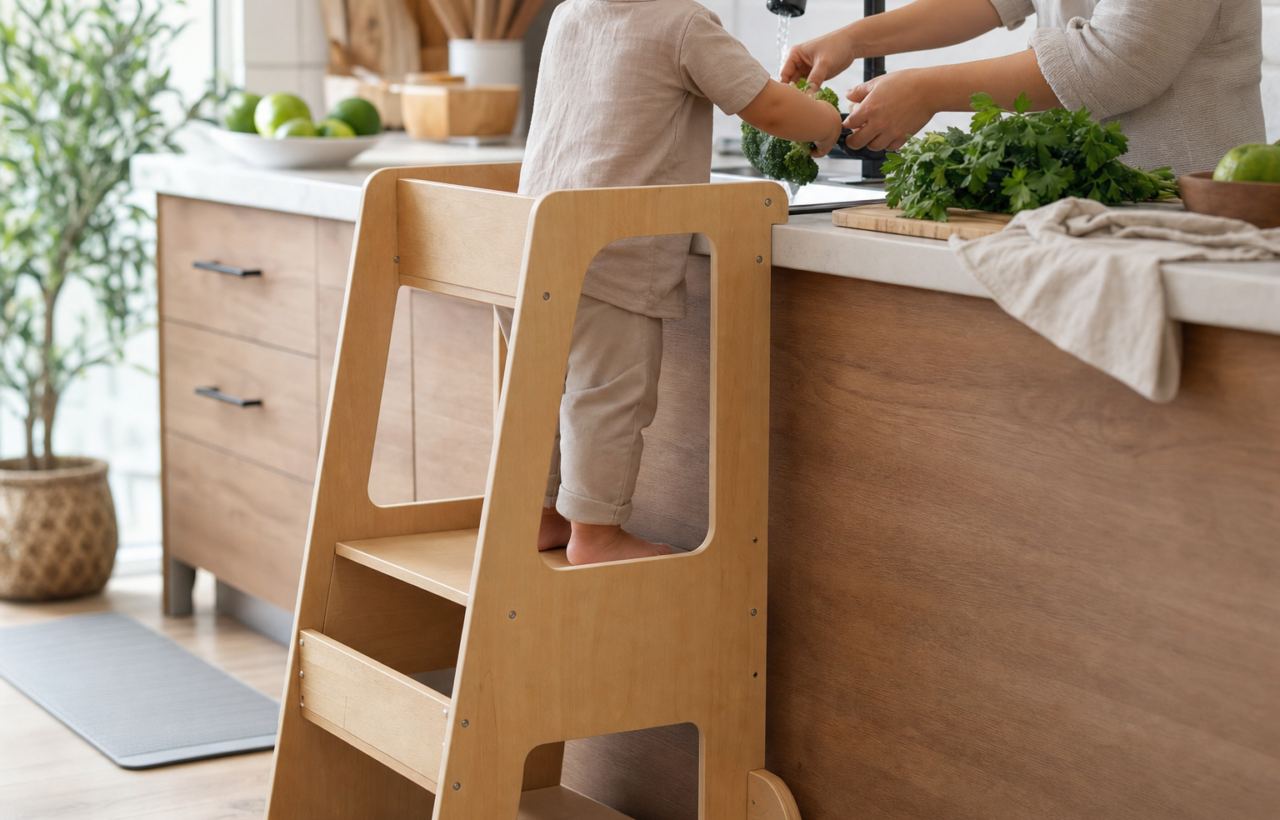
A toddler tower is generally used to help a young child stand at counter height during supervised family routines. Parents positioned the product category around learning and participation, rather than simply giving a child extra height.
That distinction matters. A tower is not just a taller step stool. Families usually consider one because they want a child to be close enough to watch, help, or feel included while an adult handles tasks nearby. In a kitchen, that can mean standing near food prep, washing produce, or observing simple routines. The adult remains responsible for the environment, the task, and the child’s movement at all times.
Safety Should Lead the Decision
The source summary from Parents emphasizes two qualities: safe and stable. Those are the right starting points because toddler towers are used by children who are still developing balance, impulse control, and awareness of hazards.
Before choosing one, parents and caregivers can think through the basics that apply to this kind of product category:
- Stability: The tower should feel solid on the floor and resist tipping during normal supervised use.
- Fit: The standing platform should suit the child’s size and the counter or work surface where it will be used.
- Barriers: Enclosed sides or rails can help define the standing area, though they do not replace supervision.
- Surface grip: Slippery floors, socks, and wet kitchen areas can all make use riskier.
- Storage: A tower that is awkward to move or store may end up left in unsafe spots.
These are general buying considerations, not claims about any specific model. The Parents source provided a broad product recommendation topic, but did not include usable model-by-model details in the material available here.
Where a Tower Helps, and Where It Does Not
A toddler tower can support participation in family routines, but it does not make a kitchen child-proof. Hot surfaces, sharp tools, breakable items, cleaning products, and heavy cookware still need to be kept out of reach.
It may be most useful for families who already spend time including a child in simple, supervised tasks. It may be less useful in a cramped kitchen, in a household where counters are often cluttered, or for a child who is likely to climb in and out without waiting for help. The right question is not whether toddler towers are popular; it is whether the setup works in the actual home.
Key Takeaways
- Parents framed toddler towers as safe, stable kitchen helper stools that can support toddler learning.
- The available source material does not provide specific product names, prices, dimensions, or testing results.
- Families should prioritize stability, fit, supervision, and the surrounding kitchen environment.
- A tower can encourage involvement, but it should never be treated as a substitute for adult attention.
How to Make the Purchase More Practical
Because the available source information is brief, shoppers should be cautious about treating any best-of list as complete without checking the current product details themselves. Measurements, weight guidance, materials, and assembly requirements are the kinds of details that can meaningfully affect whether a tower suits a household.
A practical approach is to decide first where the tower would live, who would supervise its use, and what activities the child would actually do from that height. If those answers are clear, the product choice becomes less about finding the most talked-about option and more about choosing a stable tool that fits the home, the child, and the routine.
Inspired by this post on Parents.