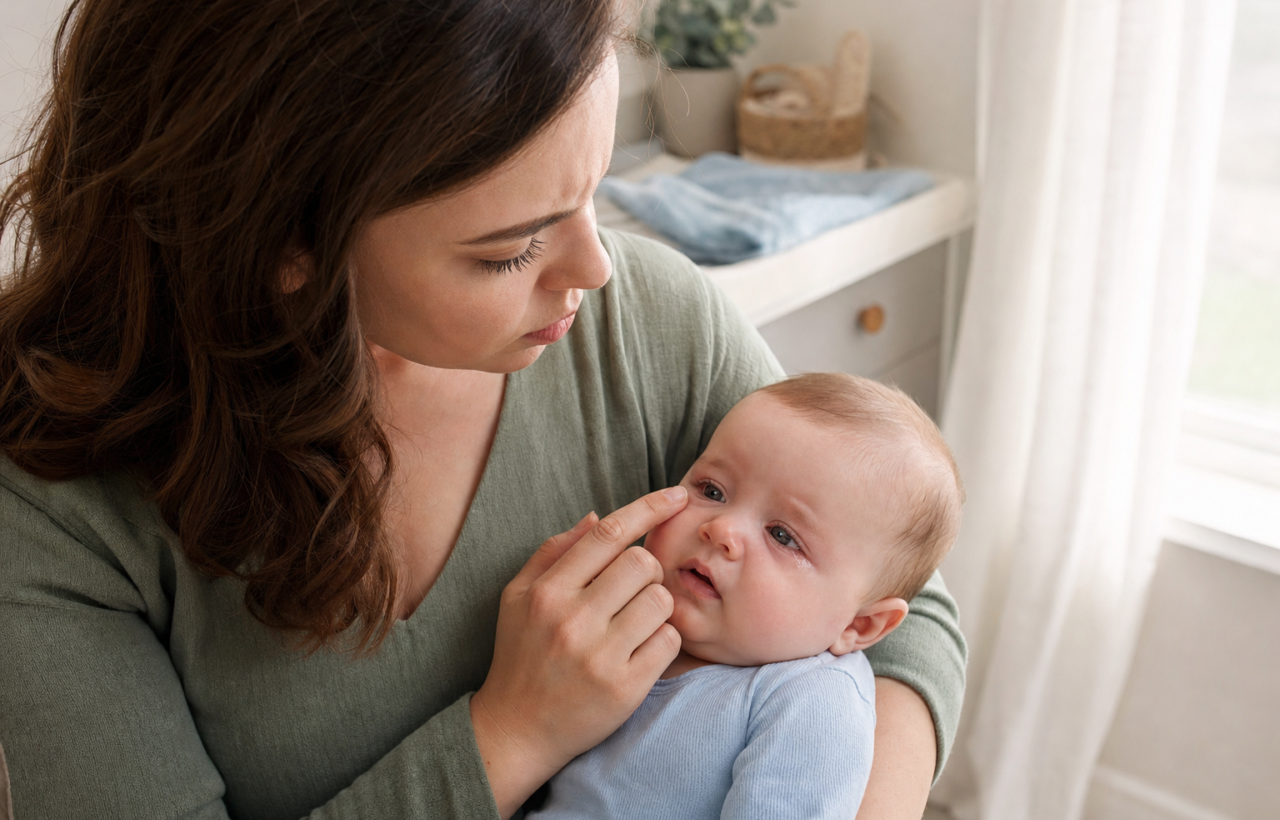
Redness in or around a baby’s eyes can make parents worry quickly, especially because infants cannot explain whether an eye hurts, itches, or feels irritated. The Parents article supplied for this rewrite is identified as a guide to 13 possible causes and solutions, but the usable source text was not included.
That means the safest approach is to separate what is known from the limited source material from general, non-diagnostic guidance. Parents reported the topic as baby’s red eyes; this article does not recreate the missing list or claim details that were not provided.
What the source does and does not provide
According to the available Parents source information, the original article focused on red eyes in babies and framed the issue around possible causes and solutions. No article body, expert quotes, medical definitions, symptom descriptions, or treatment recommendations were available in the supplied material.
Because of that, it would not be appropriate to list the 13 causes named in the original headline or to present a treatment plan as though it came from the source. Eye redness can have many explanations, and the right response depends on details that are not available here, including the baby’s age, whether one or both eyes are affected, whether there is discharge, and whether other symptoms are present.
Why eye redness in babies deserves caution
A baby’s eyes are sensitive, and redness can be caused by something minor, such as irritation, or by something that needs medical attention. In general terms, redness may involve the white of the eye, the eyelids, the skin around the eye, or a combination of those areas. Those differences matter because they can point in different directions.
Parents should also be careful about home treatment. Products that are safe for older children or adults may not be suitable for infants, and eye symptoms are easy to misread without an exam. When there is uncertainty, a pediatrician or qualified health professional is the right source for advice.
Key takeaways
- The available Parents source identifies baby red eyes as the subject, but the full article text was not supplied.
- Without the source body, the specific 13 causes and solutions should not be reconstructed or guessed.
- Eye redness in infants can range from mild irritation to an issue that needs prompt medical review.
- Parents should avoid using adult eye products or leftover medications unless a clinician specifically recommends them.
- A health professional should evaluate redness that is persistent, worsening, painful, linked with swelling or discharge, or accompanied by broader illness.
Questions to consider before calling the doctor
Parents do not need to diagnose the problem before seeking help. It can still be useful to observe and describe what is happening clearly. Is the redness in one eye or both? Is the skin around the eye involved? Is there tearing, crusting, swelling, or light sensitivity? Did the redness appear suddenly or gradually?
Those observations can help a clinician decide how urgently the baby should be seen. They can also prevent parents from focusing only on the most visible symptom while missing changes in feeding, sleep, fever, behavior, or comfort.
What parents should avoid doing on their own
The main risk with eye symptoms is treating too casually or treating with the wrong product. Unless instructed by a health professional, parents should avoid putting medication, herbal preparations, or adult eye drops into a baby’s eye. They should also avoid assuming redness is harmless just because it looks mild at first.
A practical next step is to contact the baby’s pediatrician, describe the eye redness and any related symptoms, and follow the guidance given. That is especially important for newborns, babies who seem unwell, or symptoms that change quickly. With the original article text unavailable, the most useful guidance is also the most conservative: observe carefully, avoid guesswork, and get medical advice when the cause is not clear.
Inspired by this post on Parents.