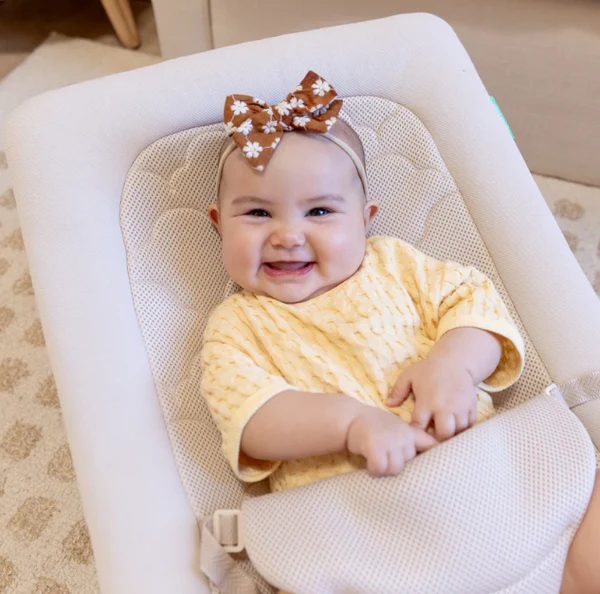
A swing, bouncer, and rocker can all look like versions of the same baby seat, but they are built for different moments. The practical choice starts with one question: does the baby need soothing, play, or a portable place to rest while awake and supervised?
Newton Hush describes bouncers as more play-focused, while swings and rockers are mainly intended to calm a baby. That distinction matters because movement, size, features, cleaning, and safety limits all change from one product type to another.
Start With The Job The Seat Needs To Do
According to Newton Hush, a baby swing is a powered seat that moves mechanically, usually front to back or side to side. It is designed for soothing and may include extras such as vibration, sound, lights, or a mobile.
A bouncer is different. It typically moves when the baby kicks, shifts, or when a caregiver taps it gently. Because it responds to motion, Newton Hush frames it as a seat for active play and entertainment, often with a toy bar or optional toy accessories.
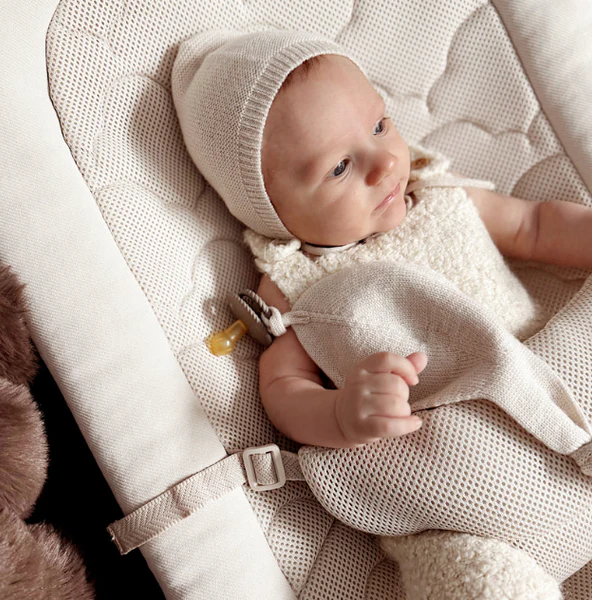
A rocker sits closer to the soothing category. The source describes rockers as curved seats that rock rhythmically, either by hand or through a mechanical function. For families choosing just one item, the most useful question may be whether the priority is calming a fussy baby or giving an alert baby a place for supervised engagement.
Movement Changes The Experience
The main mechanical difference is who or what creates the motion. Swings are powered. Bouncers are usually manual and baby-driven. Rockers can fall in either camp, depending on the model.
That affects how hands-off the product feels. A swing may keep moving on its own once turned on, while a simple bouncer depends on the baby or caregiver to create bounce. A rocker may be a middle option if it is light enough to move around the home but still calming in its motion.
Features also follow this split. Newton Hush notes that swings and some rockers may offer sound or vibration, while many bouncers are simpler. More features can be helpful, but they also tend to mean more settings to manage, more parts, and often a larger footprint.
Think About Space, Portability, And Budget
Swings are generally the largest of the three, according to Newton Hush, and are less convenient to move from room to room. That can be fine if the plan is to keep the seat in one predictable spot, such as a playroom or living room.
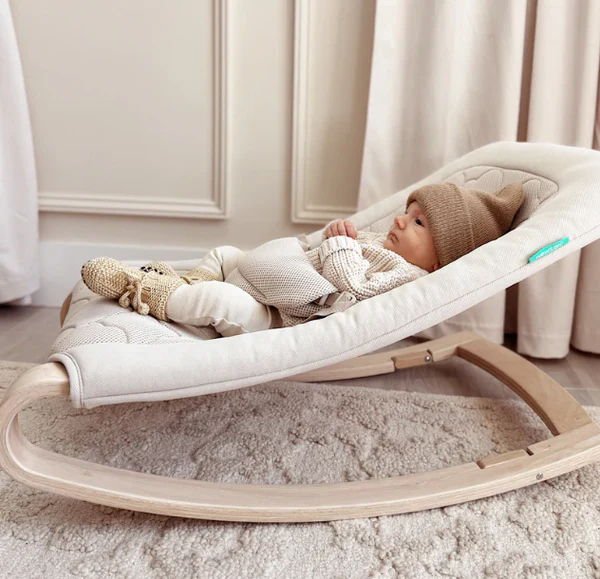
Bouncers and rockers are usually smaller and easier to carry around the home. Some bouncers may also fold for travel or storage. For smaller homes, shared spaces, or parents who want the seat nearby during everyday routines, size may matter as much as motion.
Price can also separate the categories. The source reports that rockers and bouncers are generally more affordable, while swings often cost more depending on brand and features. A higher price does not automatically mean a better fit; it may simply reflect powered movement, electronics, or a bigger frame.
Check Limits, Materials, And Cleaning Before Buying
Age and weight limits should come from the product manufacturer, not from a general rule of thumb. Newton Hush says rockers are often used until about six months or until a baby can sit unassisted, while bouncers and swings may be used until about nine months. Some bouncers convert into toddler chairs and may last longer as chairs.
The source also notes that weight limits vary. Swings are often around 25 to 30 pounds, while rockers may range from 20 pounds for infant-only designs to 40 pounds for infant-to-toddler models. Those numbers are useful for comparison, but the final authority is always the label and instructions for the specific seat.
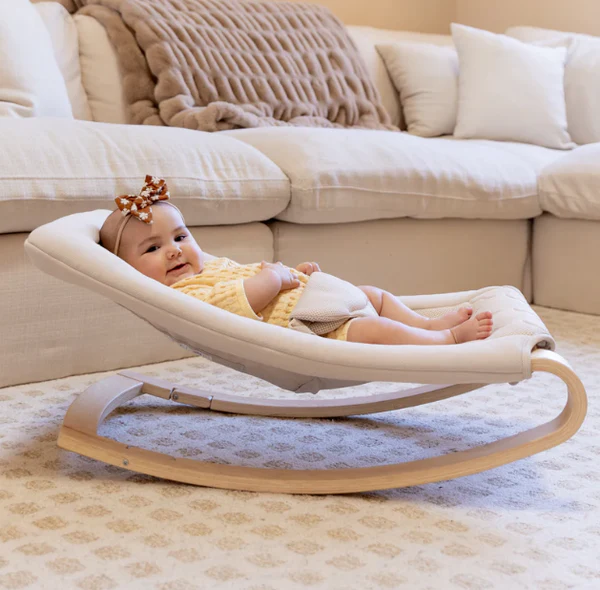
Material and cleaning should not be afterthoughts. Newton Hush describes swings as commonly having a metal frame, molded plastic seat, and plush covering, while bouncers and rockers may use lighter frames with cotton, mesh, twill, canvas, or wipeable PU leather. Since spit-up and diaper leaks are ordinary parts of baby life, wipeable surfaces or machine-washable covers can make a real difference.
Safety Comes Before Soothing
The clearest safety point from Newton Hush is that swings, bouncers, and rockers are not sleep spaces. If a baby falls asleep in one, the source says to move the baby to an appropriate sleep surface as soon as possible.
Caregivers should also follow the stated age, weight, and developmental limits; use the seat only on the floor; make sure straps fit snugly; position the baby according to the product instructions; and avoid carrying or moving the product while the baby is in it.
Key Takeaways
- Choose a swing or rocker when the main goal is soothing an awake baby.
- Choose a bouncer when the goal is supervised play and baby-powered movement.
- Swings usually take up more space and often cost more because they are powered and feature-heavy.
- Always follow the manufacturer limits for age, weight, position, and milestones.
- None of these seats should be treated as a safe place for sleep.
The best pick is the one that fits the home, the baby, and the way caregivers will actually use it. A compact bouncer, a calming rocker, or a feature-rich swing can all be useful, as long as the product is used for awake, supervised time and retired when the baby reaches its stated limits.
Inspired by this post on Newton Hush.