Giving Birth at Peter Lougheed Centre: What to Know

A practical guide to Peter Lougheed Centre birth logistics, from parking and triage to delivery rooms, postpartum care, NICU and going home.

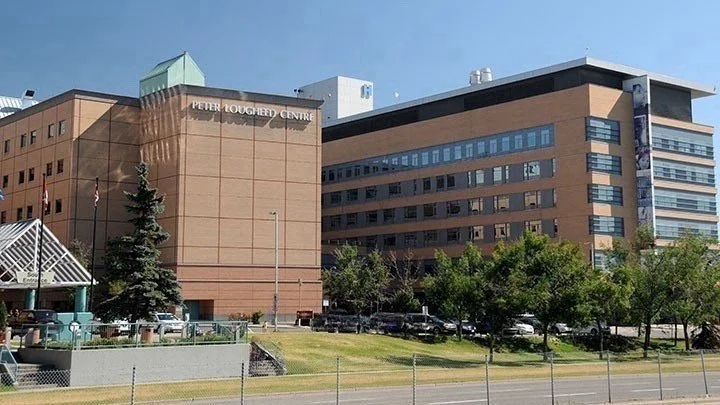
Large brick building with sign reading Peter Lougheed Centre, trees, parked cars, and a road in front.
A multi-storey brick building marked "Peter Lougheed Centre" is shown from across a road, with trees, parked cars, and a clear sky around the entrance area.

For Calgary families planning a hospital birth at Peter Lougheed Centre, the most useful preparation is practical: where to park, where to check in, who can come with you, and what the first day after birth may look like.

Welcome Baby Co. Blog reports that Peter Lougheed Centre is located at 3500 26 Avenue NE, opened in 1988, and has more than 600 beds across the centre. Its labour and delivery, postpartum, and NICU areas were renovated in 2018 and are located on the 3rd floor.
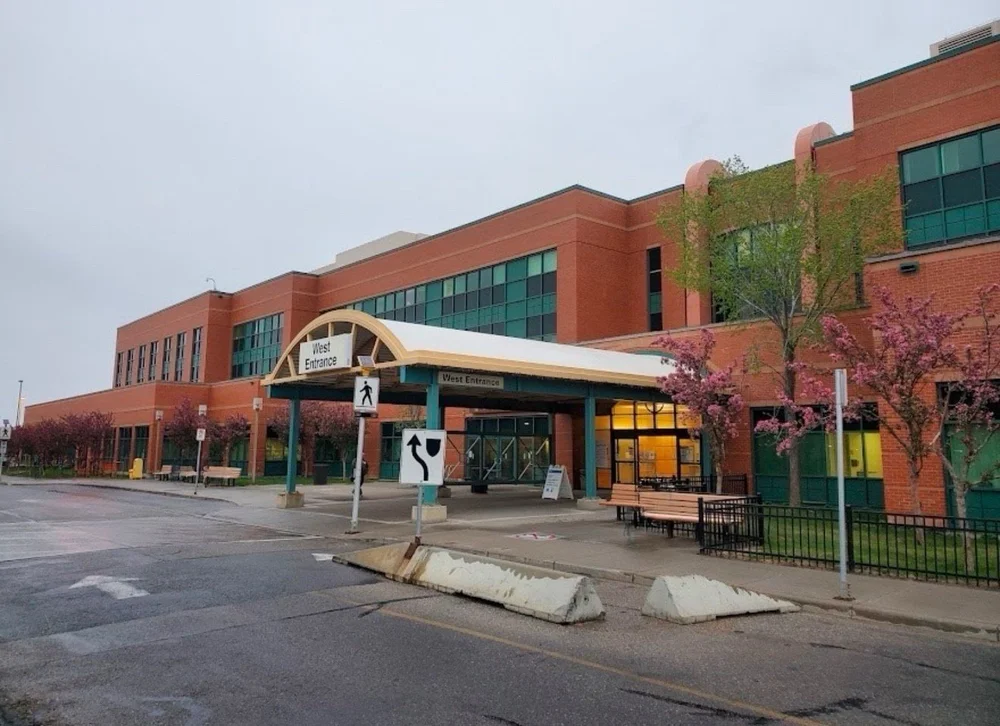
Brick hospital entrance with covered walkway, benches, trees, and signs reading West Entrance.
A brick medical building is shown from the street, with a covered entry canopy labeled "West Entrance," benches, flowering trees, and pedestrian signage nearby.

Start with the building logistics

According to the source, Lot 11 is the most convenient parking option for labour and delivery because it is closest to the West Entrance. It can be accessed from 26 Avenue NE. If birth feels imminent or urgent care is needed, the Emergency department doors are near the South Entrance, with Lot 15 nearby.
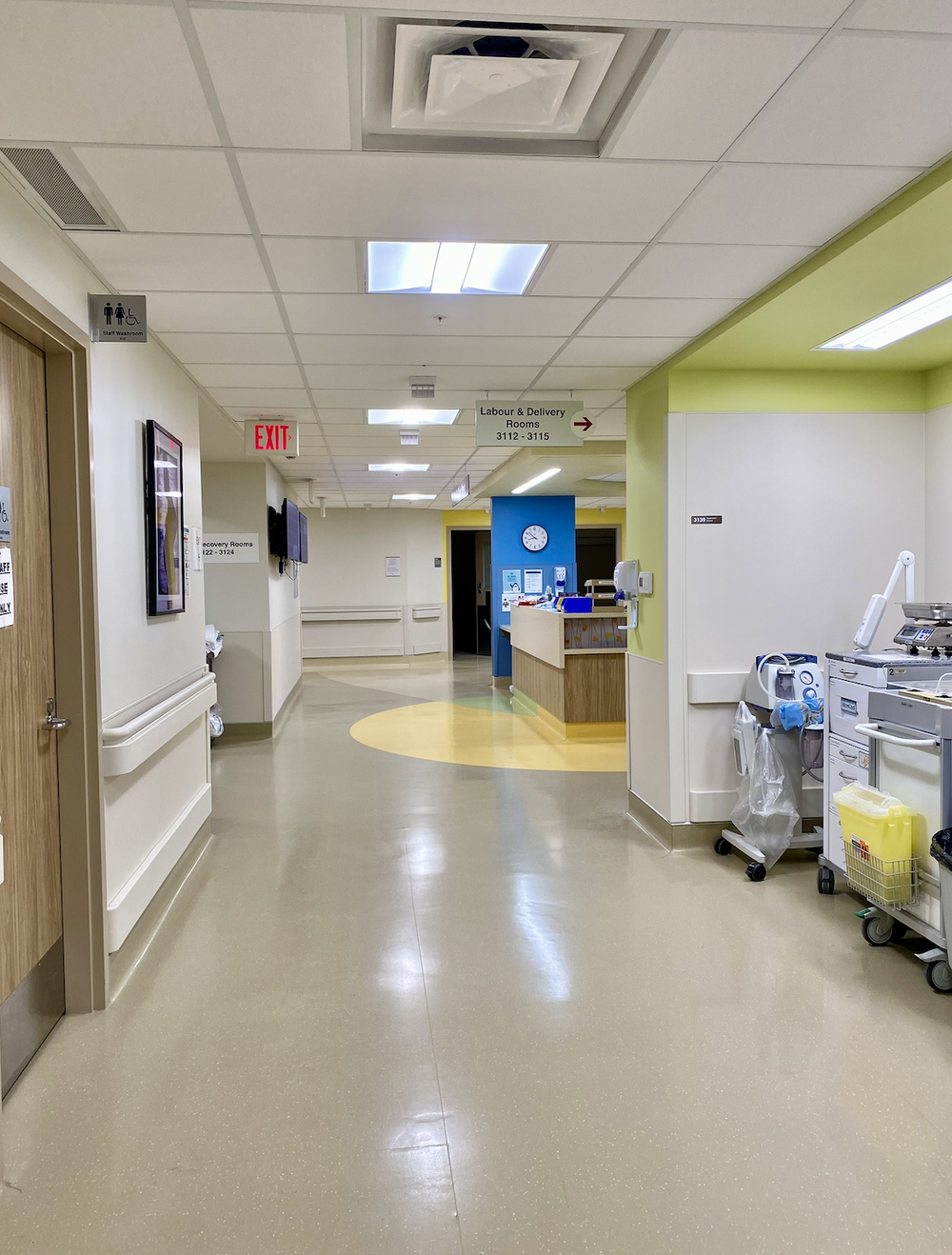
Hospital hallway with signs for Labour & Delivery Rooms and staff washroom near a nurses station
A bright hospital corridor shows overhead signs for Labour & Delivery Rooms 3112-3115, a staff washroom sign, and a small desk area with medical equipment nearby.

The source lists AHS parking at $5.00 per hour, with a $15.00 daily maximum, and identifies Peter Lougheed Centre parking lot code 6012. It also recommends setting up the AHS parking app ahead of time so payment can be managed without returning to a machine. A small but useful planning habit is to take a photo of the parking location before heading inside.
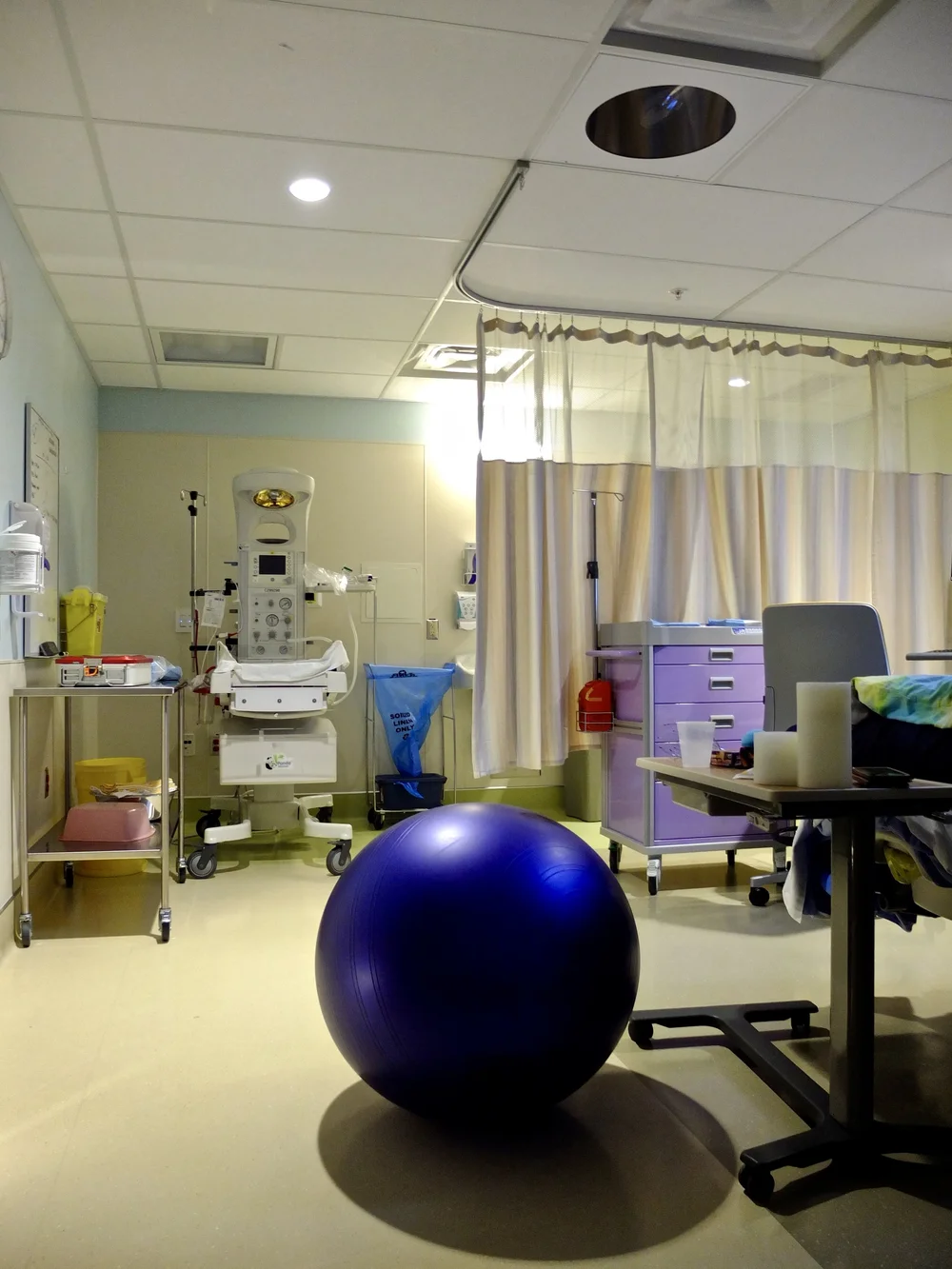
Hospital birth room with a blue exercise ball, curtains, infant warmer, carts, and medical equipment.
A hospital birth room shows a blue exercise ball on the floor, privacy curtains, an infant warmer, mobile carts, and bedside equipment under ceiling lights.

What happens when you arrive

Welcome Baby Co. Blog says birthing patients should enter through the West Entrance. After 9:00pm, entry may require using an intercom. From there, the elevators lead to the 3rd floor, where families follow signs to Maternity Triage, Unit 31.
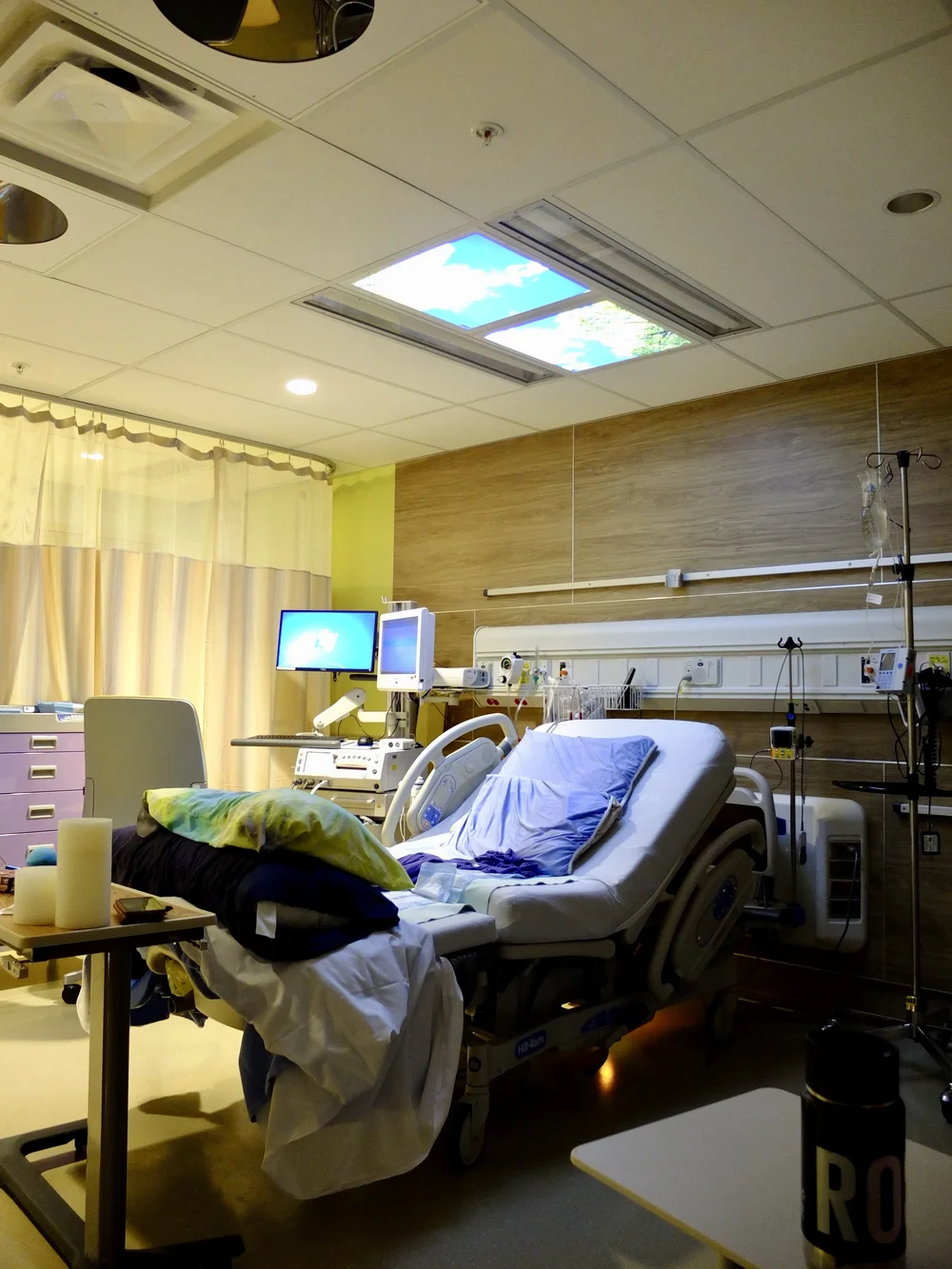
Hospital room with an adjustable bed, monitors, medical equipment, curtains, and a ceiling window.
An adjustable hospital bed sits in a furnished patient room with monitors, wall-mounted medical outlets, an IV pole, privacy curtains, and a bright ceiling window.

At triage, a nurse asks initial questions and the care team assesses both labour progress and the baby. The source explains that, when the birthing person and baby are well, admission usually depends on being in active labour. A support person may be asked to complete admission paperwork on the main floor near the South Entrance and should have the Alberta health care or Blue Cross card available.

Snowy foreground with parking structures, trees, and a distant city skyline under a hazy blue sky.
A snow-covered outdoor area with low parking structures and trees sits in the foreground, with a distant high-rise skyline visible through haze.

For families working with a midwife, the source notes that the midwife may meet them at the hospital and provide triage instructions. Policies can vary by situation, so any special support needs should be discussed with the care team directly.
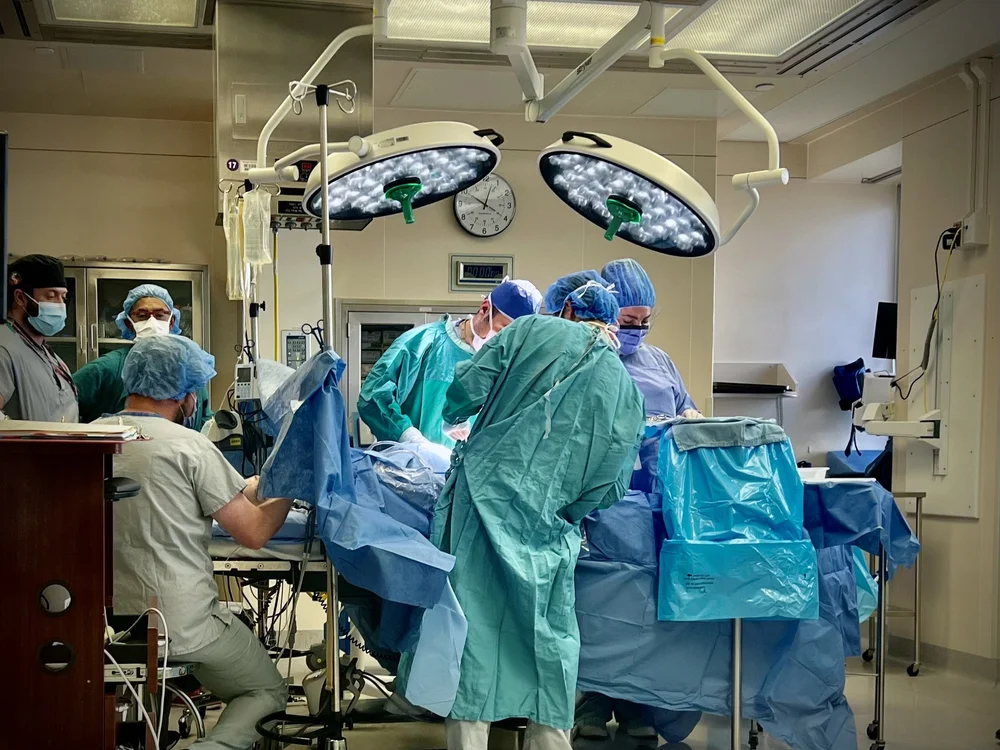
Medical team in surgical gowns gathered around a patient under operating room lights
A medical team wearing surgical masks, caps, and gowns works around a covered patient in a bright operating room with overhead lights and equipment.

Key takeaways

  • Labour and delivery, postpartum units, and the NICU are reported to be on the 3rd floor.
  • Lot 11 is described by the source as the closest parking area to the West Entrance and labour and delivery.
  • Maternity triage is in Unit 31, and only one support person is typically permitted there.
  • The source says two designated support people are typically allowed during birth, with doulas included in that number.
  • For uncomplicated births, the reported hospital stay is usually about 24 hours after vaginal birth and about 48 hours after cesarean birth.

Delivery rooms, cesarean care and NICU context

The labour and delivery unit has 14 private rooms, according to Welcome Baby Co. Blog. The source describes each room as having a hospital bed, a small couch that can convert into a bed for support people, medical equipment including fetal monitoring and a baby warmer, and a private bathroom with a shower.
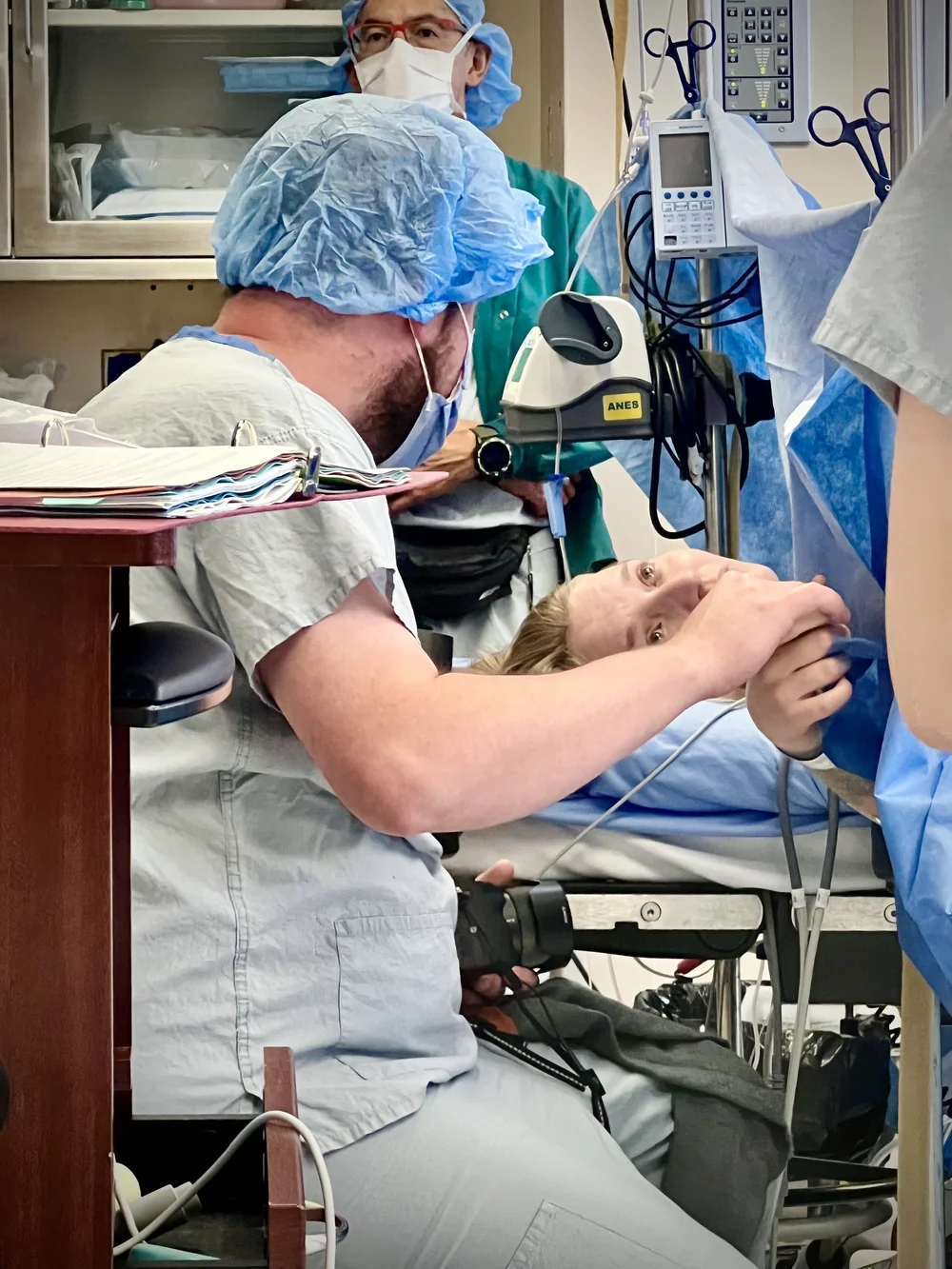
Person on a hospital bed with medical staff and equipment in an operating room
A person lies on a hospital bed while masked medical staff in scrubs work nearby, with monitors, cables, blue drapes, and surgical supplies visible.

For a cesarean birth, the source says patients move to one of two operating rooms on the unit, then recover for the first few hours in a post-operative area with the baby. Staff can assist with skin-to-skin contact and the first feed. Only one support person is reported to be permitted in the operating room.
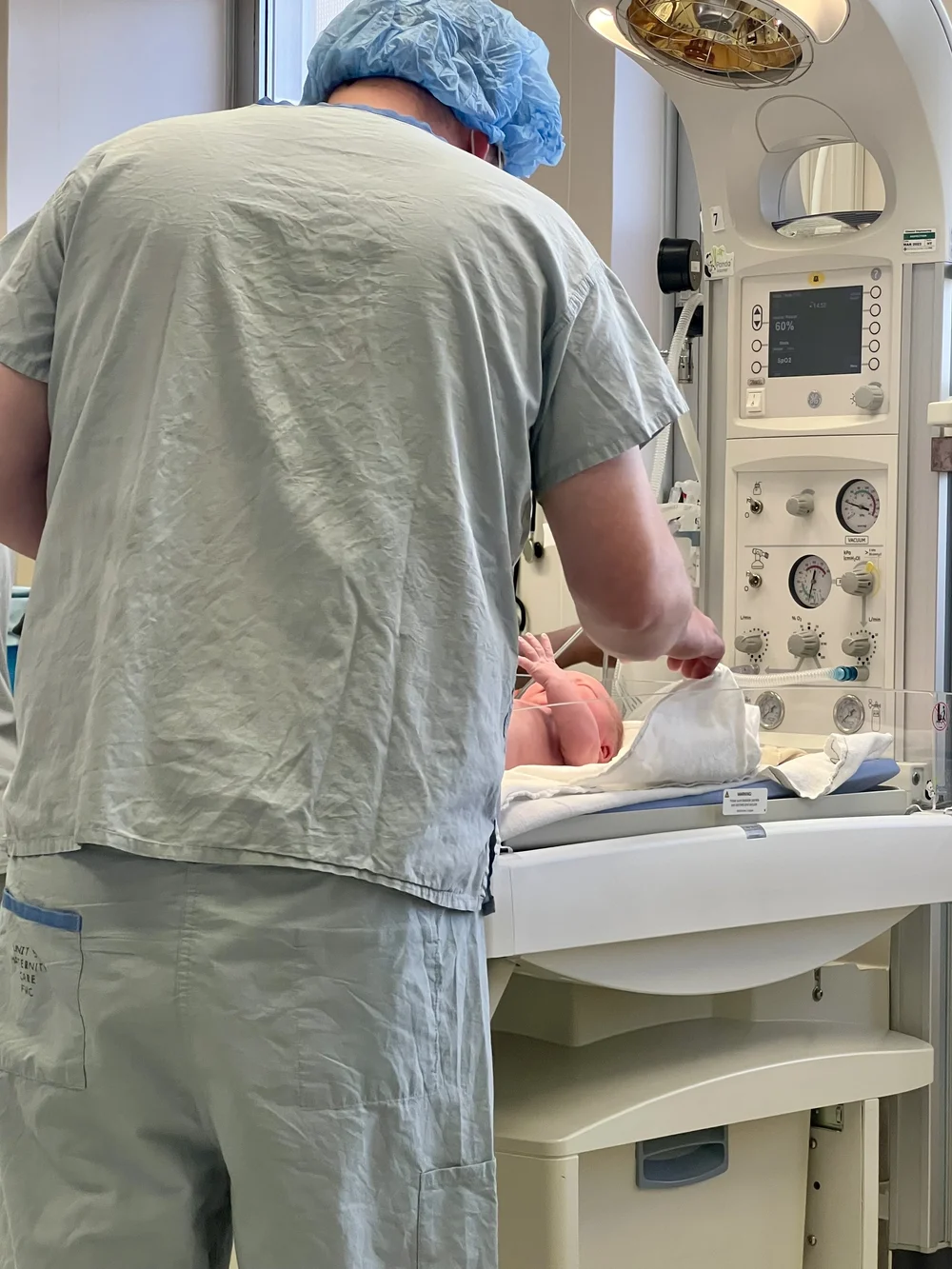
Person in surgical scrubs tending to an infant on a hospital warming table beside medical equipment
A person wearing surgical scrubs and a blue cap stands beside an infant on a hospital warming table with monitors, gauges, and overhead equipment nearby.

The NICU is also on the 3rd floor. Welcome Baby Co. Blog reports that it has 12 private beds and 6 multi-birth beds, with each room including a chair and sleeper bench for parents. The unit cares for newborns who need additional medical attention, including premature infants and babies with medical conditions.
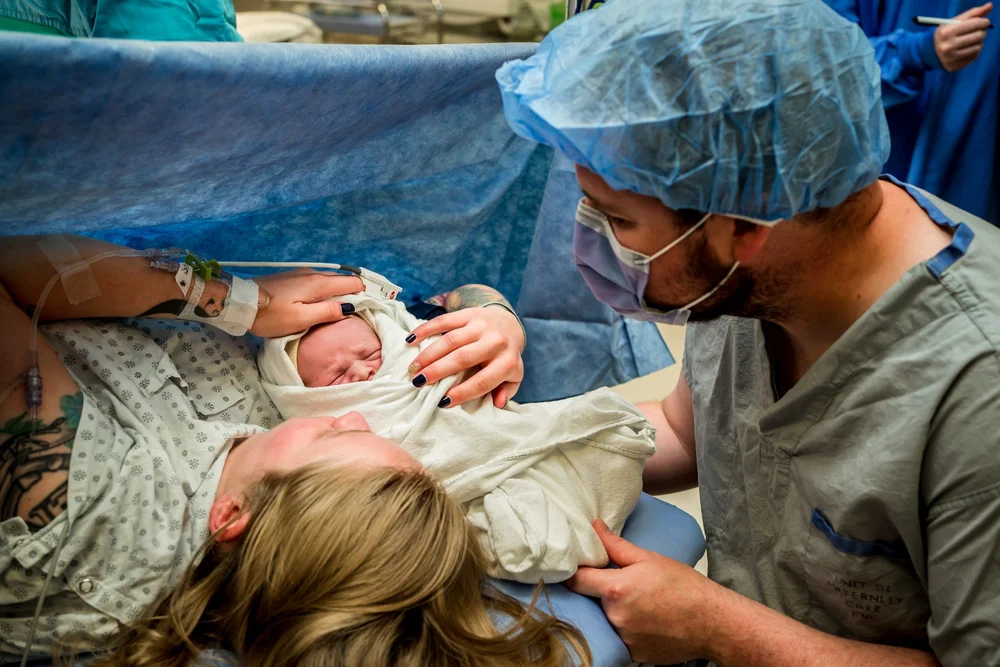
Newborn wrapped in a blanket held by a mother as a masked person in surgical clothing leans close
A newborn wrapped in a light blanket rests against a reclining mother while a masked person in surgical clothing leans in nearby.

Postpartum rooms, food and discharge planning

A few hours after birth, patients are typically moved to postpartum Unit 32 or Unit 33, according to the source. Most rooms are semi-private, with two beds and one bathroom. Curtains provide privacy, and support people have a chair rather than a bed.
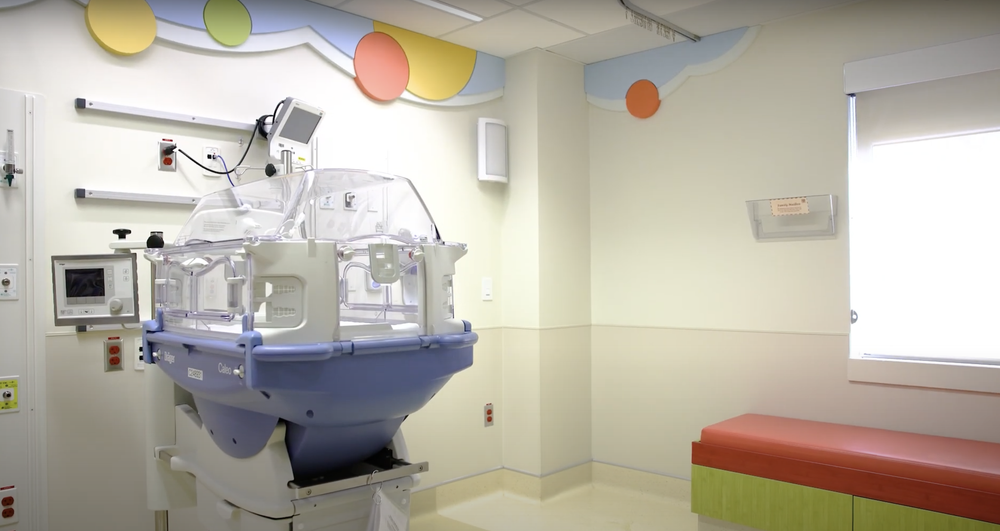
Hospital room with an infant incubator, wall equipment, colorful decor, and a bench by a window.
An infant incubator sits in a bright hospital room with wall-mounted equipment, playful circular decorations, and a red-cushioned bench beneath a window.

If the parent and baby are well, the baby usually remains in the room in a bassinet. This is commonly called rooming-in. The source says the postpartum units are locked areas with intercom access, and that two support people may visit at a time. One support person may be able to stay overnight, though comfort and roommate rest periods can affect that arrangement.
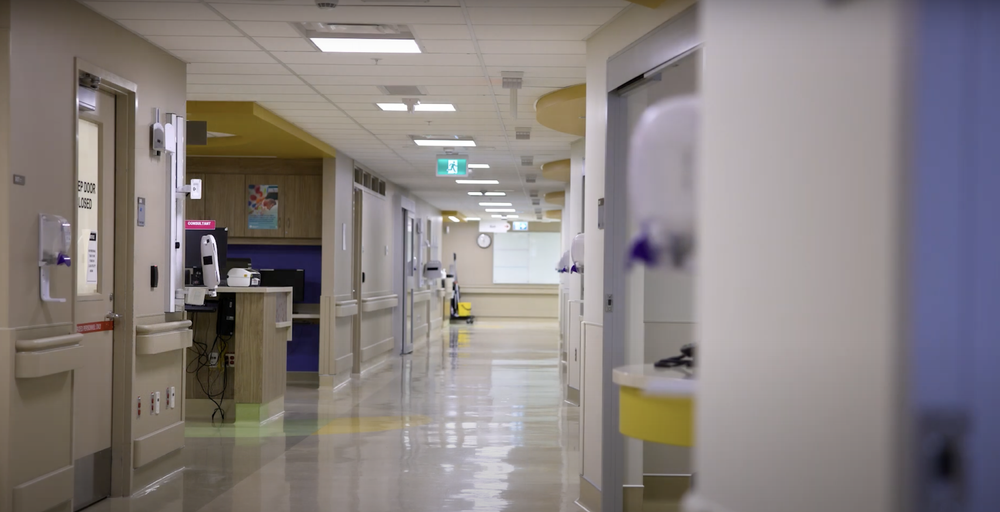
Clean hospital corridor with doors, hand sanitizer dispensers, and overhead exit signs
A quiet hospital hallway shows patient room doors, wall-mounted dispensers, handrails, ceiling lights, and green exit signs along a polished floor.

For food, the source says labour and postpartum areas have small kitchenettes with items such as ice, water, juice, tea and light snacks for patients. Postpartum patients receive three hospital meals per day. Support people may use paid options including Market Cafe, described as open 24 hours a day, 7 days a week, and Second Cup, described as open daily from 6:30am to 8:30pm.

How to prepare before the due date

The most practical preparation is to reduce decisions on arrival day. Based on the source, families may want to plan parking, identify the West Entrance route, confirm who the two designated support people will be, and pack a smaller labour bag plus a separate postpartum bag.

Welcome Baby Co. Blog also notes that Alberta law requires infants to travel in an approved rear-facing car seat. Hospital staff may check that a car seat is available, but the source says they cannot confirm correct use or installation. Families should learn how their own seat works before discharge.

After going home, the source says families should have a public health nurse appointment the following day and can call the Alberta Health Services Early Start Line for babies under 8 weeks at (403) 244-8351. Planning meals, household help and feeding support before birth can make that first stretch at home less improvised.


Inspired by this post on Welcome Baby Co. Blog.


Generated image 1 (2)

FAQs

Where should families park for labour and delivery at Peter Lougheed Centre?

The source identifies Lot 11, accessible from 26 Avenue NE, as the closest option to the West Entrance and labour and delivery. It lists AHS parking at $5 per hour, a $15 daily maximum, and parking lot code 6012.

Where do birthing patients check in at Peter Lougheed Centre?

The article says to enter through the West Entrance, take the elevators to the 3rd floor, and follow signs to Maternity Triage in Unit 31. After 9:00pm, entry through the West Entrance may require using an intercom.

How many support people can attend the birth?

The source says one support person is typically permitted in maternity triage and two designated support people are typically allowed during birth, with a doula counting toward that total. For a cesarean birth, one support person is reported to be permitted in the operating room.

What are the labour and delivery rooms like?

According to the article's source, the unit has 14 private rooms with a hospital bed, a convertible couch for support people, fetal monitoring equipment, a baby warmer, and a private bathroom with a shower. Cesarean births take place in one of two operating rooms on the unit before recovery with the baby in a post-operative area.

What should families expect during the postpartum stay?

Patients are typically moved to postpartum Unit 32 or Unit 33, where most rooms are semi-private with two beds and one bathroom. For uncomplicated births, the reported stay is about 24 hours after a vaginal birth and about 48 hours after a cesarean birth.

What does the article say about the Peter Lougheed Centre NICU?

The NICU is reported to be on the 3rd floor and to have 12 private beds plus 6 multi-birth beds, with a chair and sleeper bench for parents in each room. It cares for newborns who need additional medical attention, including premature infants and babies with medical conditions.

How can families prepare before the due date?

The article recommends planning the parking and West Entrance route, choosing the two designated support people, and packing a smaller labour bag plus a separate postpartum bag. Families should also learn how to use their approved rear-facing infant car seat before discharge.

Join the conversation

Your email address will not be published. Required fields are marked.

From birth till the first flush

A few taps now. A clearer picture later.

Log diapers, feeds, sleep and more in one calm place—then notice the gentle patterns in your baby’s day.

Get diapr.ai Free to download · iPhone & Android
Diaproo, the diapr.ai kangaroo mascot