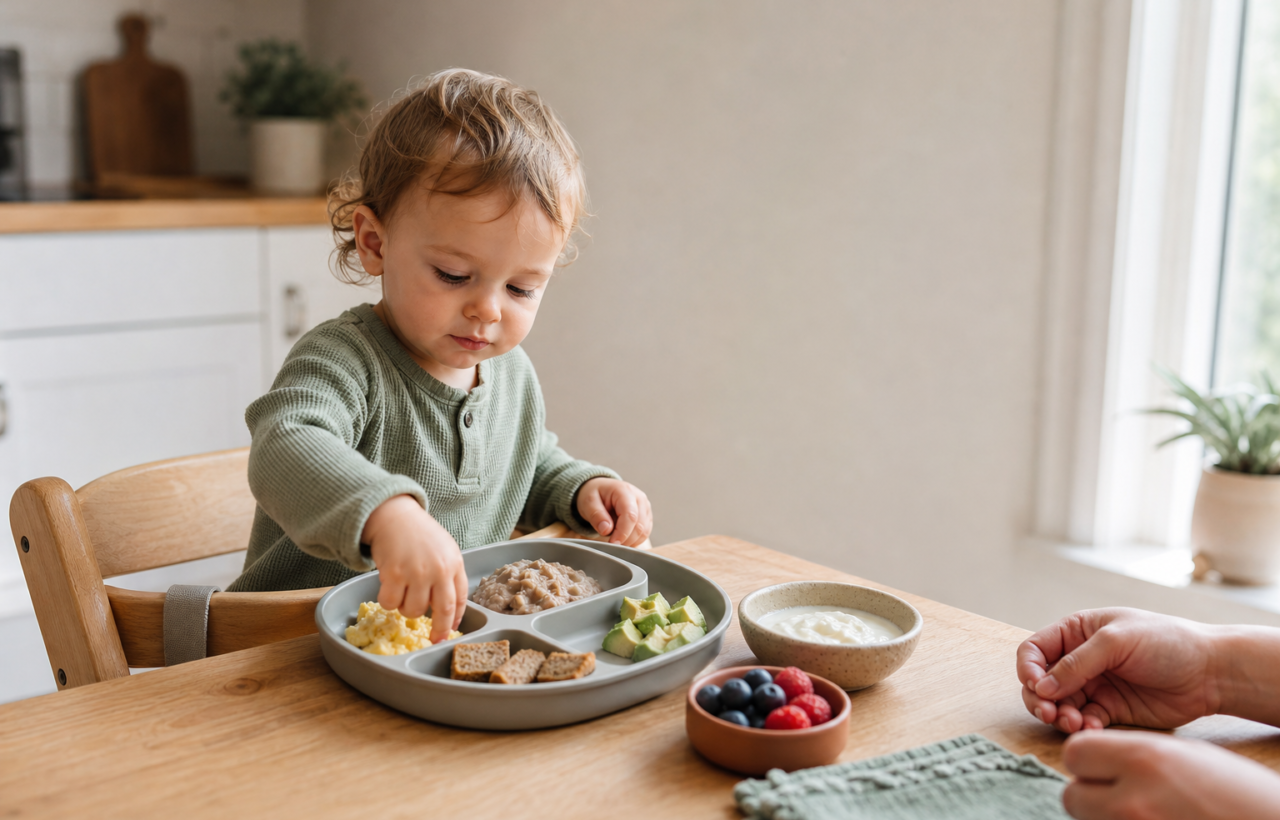
Your toddler ate half a yogurt, rejected the chicken, and asked for toast again. Does that add up to enough protein, or do you need to find a shake, powder, or more meat they’ll accept?
For most healthy toddlers, the answer is simpler than gram counting. Focus on two toddler-sized servings across the day, count the protein already present in familiar foods, and use variety to cover nutrients that milk alone cannot provide.
Set the right target for ages 1 to 3
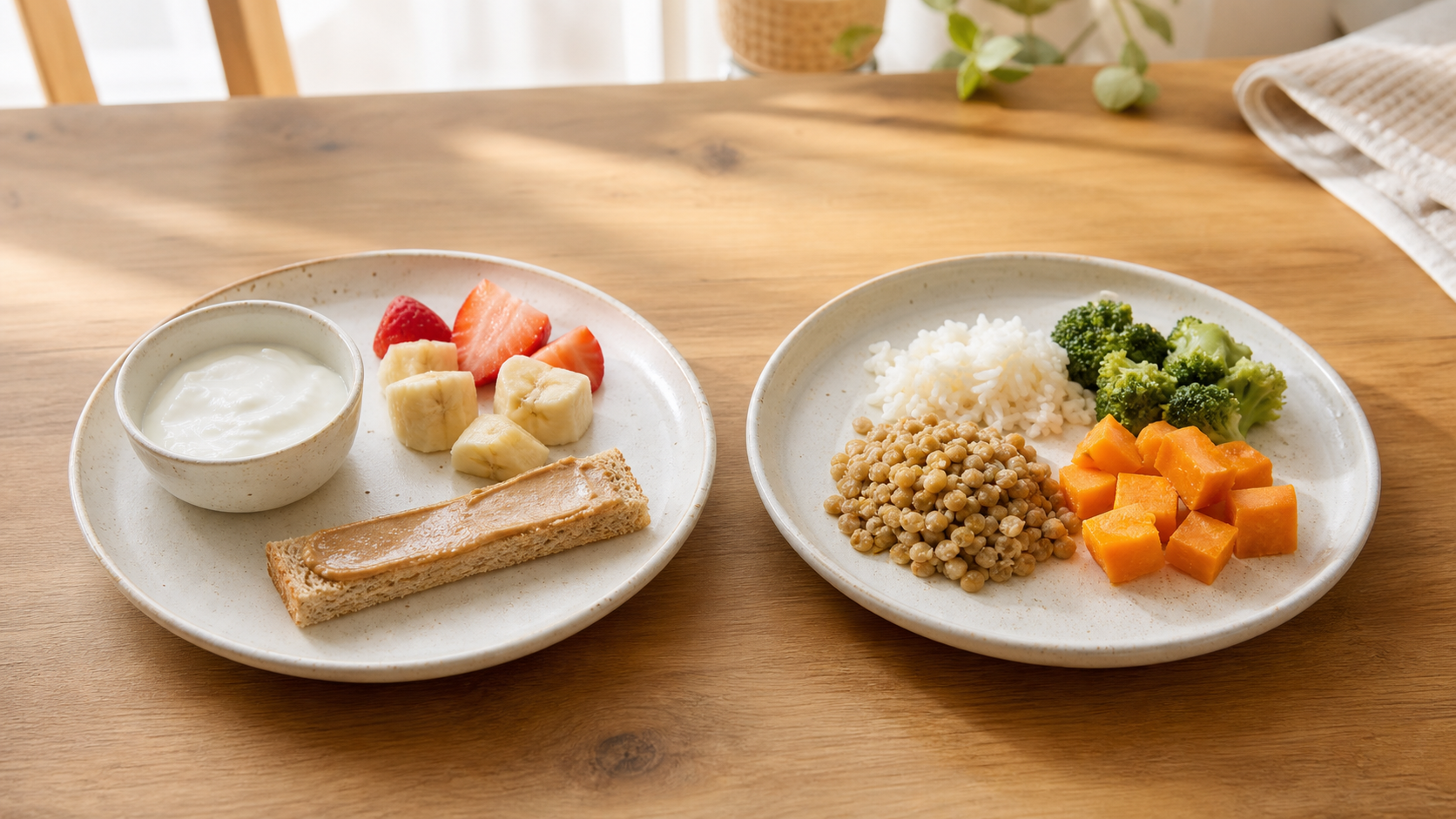
Most children from 1 through 3 years old need about two servings of protein-rich food each day. That is a daily target, not a requirement to serve meat at breakfast, lunch, and dinner.
Toddler portions are much smaller than adult portions. At a meal, about 1 ounce of meat, roughly the size of three small dice, or 2 to 3 tablespoons of beans can be an appropriate amount. One egg or 4 tablespoons, equal to 1/4 cup, of lean ground beef are examples that can add up to the day’s two servings.
Milk also counts. A toddler drinking 16 to 24 ounces of cow’s milk or soy milk in a day is likely receiving enough protein from milk alone. Breast milk continues to contribute protein as well. This does not mean you should increase milk to reach a protein target. It means you may not need to add extra meat, cheese, or yogurt simply because the solid food on the plate looks small.
The cow’s milk and soy milk examples apply after a child’s first birthday. Do not switch a baby under 12 months to either drink just to increase protein; ask your baby’s health care provider about age-appropriate feeding instead.
Count more than meat, eggs, and dairy
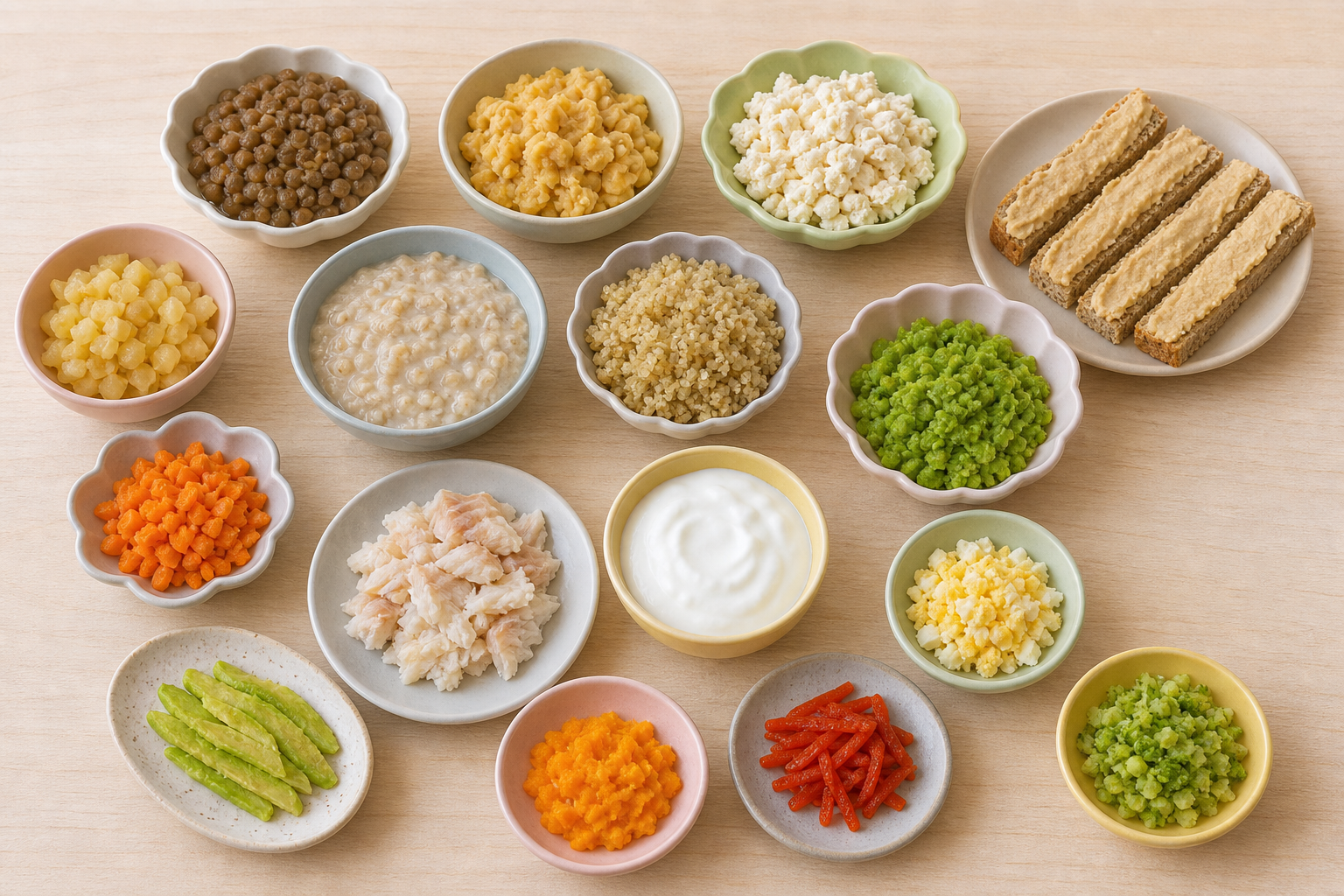
A child does not have to eat chicken or beef to get protein. The useful question is not, “Did my toddler eat meat today?” It is, “Which protein-containing foods did my toddler eat across the day?”
- Eggs and dairy: eggs, cheese, yogurt, and cow’s milk after 12 months.
- Plant-based choices: beans, lentils, hummus, tofu, soy milk after 12 months, nut butters, and seed butters.
- Meat and fish: fish, meat, turkey, and lean ground beef.
- Everyday foods that contribute protein: oatmeal, whole-grain pasta, peas, and broccoli.
Serve each food in a texture your child can manage safely. Stir nut or seed butter into oatmeal or yogurt, or spread it thinly, rather than offering a dense spoonful. Seat and supervise your toddler while they eat.
Variety still matters even when milk appears to cover the protein requirement. Meat and beans also provide iron and zinc, so meeting a protein target does not automatically mean the entire diet is balanced. Keep offering fruits, vegetables, whole grains, and healthy fats alongside protein foods.
Build a protein plan without tracking grams
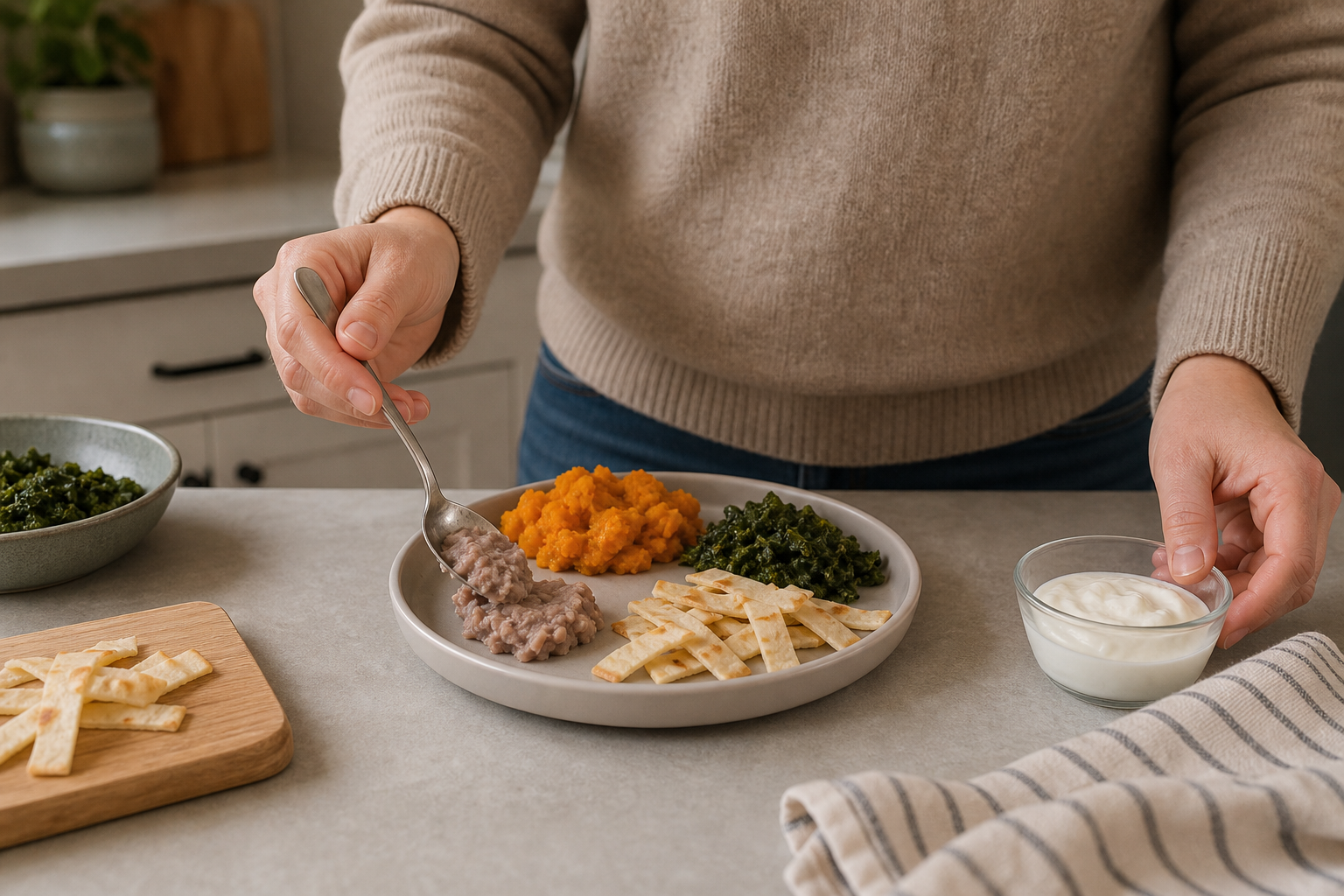
Start with foods your child already accepts. A toddler who refuses meat but eats yogurt, hummus, oatmeal, peas, or beans may be getting more protein than the plate makes obvious.
- List the protein-containing foods your toddler ate over one ordinary day, including milk, breast milk, yogurt, cheese, grains, beans, and vegetables.
- Choose two predictable eating opportunities for protein. Breakfast and dinner may work, but lunch and a snack can work just as well.
- Offer one familiar protein food while occasionally rotating in another family of foods. If yogurt is reliable, for example, keep it in the rotation while also offering eggs, hummus, lentils, tofu, fish, or meat at other meals.
Practical combinations can stay very simple:
- Breakfast: an egg with toast and fruit, or oatmeal mixed with yogurt or seed butter.
- Lunch: hummus with soft bread and vegetables, or whole-grain pasta with peas and cheese.
- Dinner: 2 to 3 tablespoons of beans or lentils, tofu, fish, turkey, or a toddler-sized portion of meat alongside a familiar grain and vegetable.
- Snack: yogurt, cheese, or hummus when the day’s meals have contained little protein.
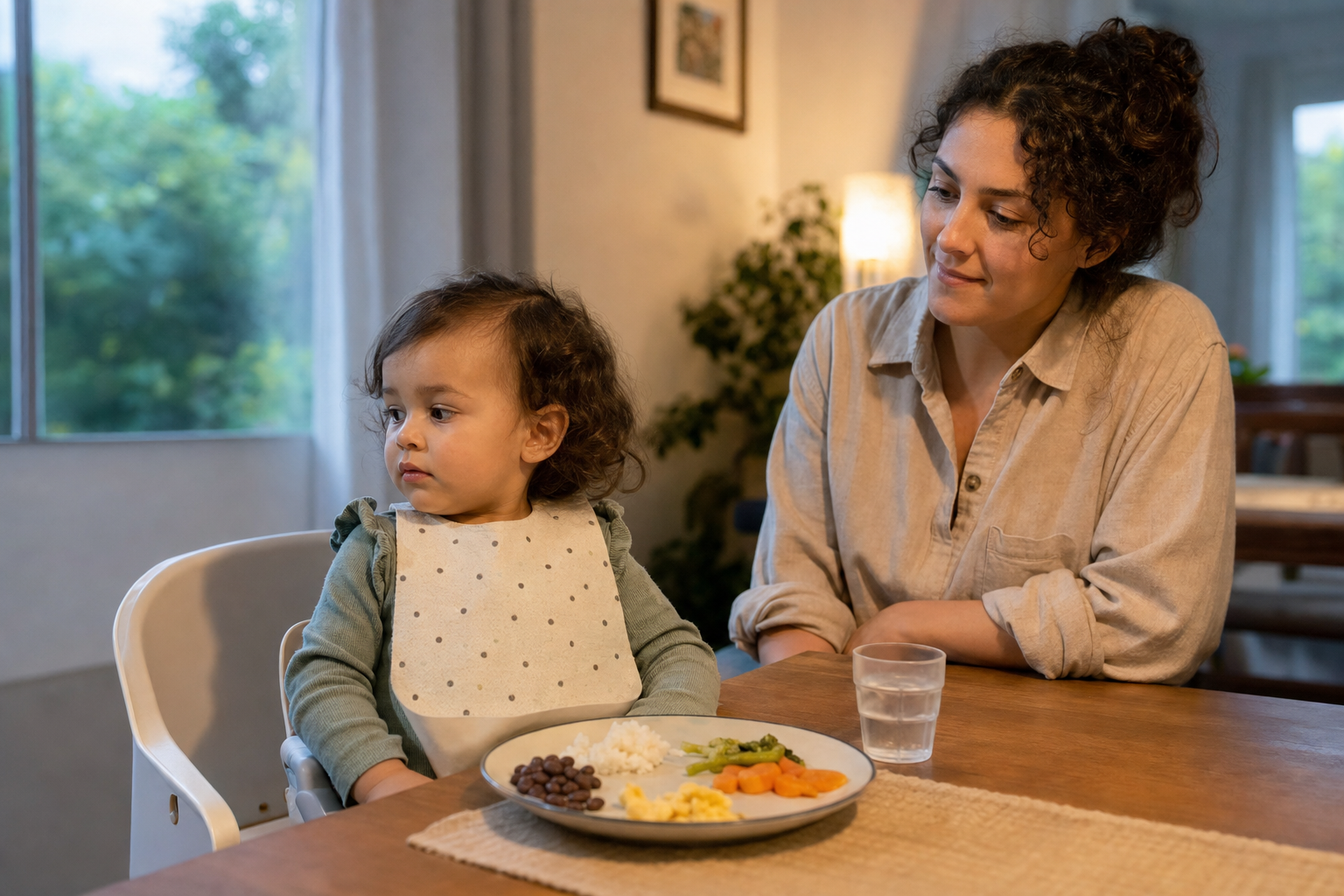
These are options, not a menu your toddler must complete. Treat the serving as an offer rather than a clean-plate quota. If breakfast supplies both daily servings, dinner does not need to become a second protein test.
Know when more protein is not the answer
More protein is not automatically better. Evidence about excess intake in babies and toddlers is limited: some findings have linked high protein intake early in life with a greater chance of later overweight, but they do not prove that protein caused the outcome or establish a clear cutoff for “too much.” That uncertainty is a reason to serve balanced meals, not a reason to fear ordinary foods.
Protein powders and concentrated supplements are different from ordinary food. Very excessive intake, particularly from supplements, may contribute to dehydration or kidney and liver harm. Do not add a protein powder or shake to a toddler’s routine unless their pediatrician or pediatric dietitian recommends it for that child’s needs.
Bring the question to a health care professional if your toddler avoids all dairy and other protein-rich foods, has several food groups restricted by allergies or another condition, or has been told they need catch-up growth. Children with medical or growth concerns need an individualized plan rather than a generic serving target.
Key takeaways
- For most healthy toddlers ages 1 to 3, aim to offer two toddler-sized protein servings across the day.
- Count milk, yogurt, cheese, eggs, beans, lentils, hummus, tofu, nut or seed butters, grains, peas, broccoli, fish, and meat.
- A toddler portion may be about 1 ounce of meat or 2 to 3 tablespoons of beans at a meal.
- Even when milk covers protein needs, varied foods remain important for nutrients such as iron and zinc.
- Skip protein supplements unless your child’s health care team has recommended one.
Tonight, write down the protein-containing foods your toddler already eats and choose two realistic places for them in tomorrow’s meals or snacks. If that list is nearly empty, take it to your child’s pediatrician or a pediatric dietitian; it gives them a concrete starting point for advice.
References