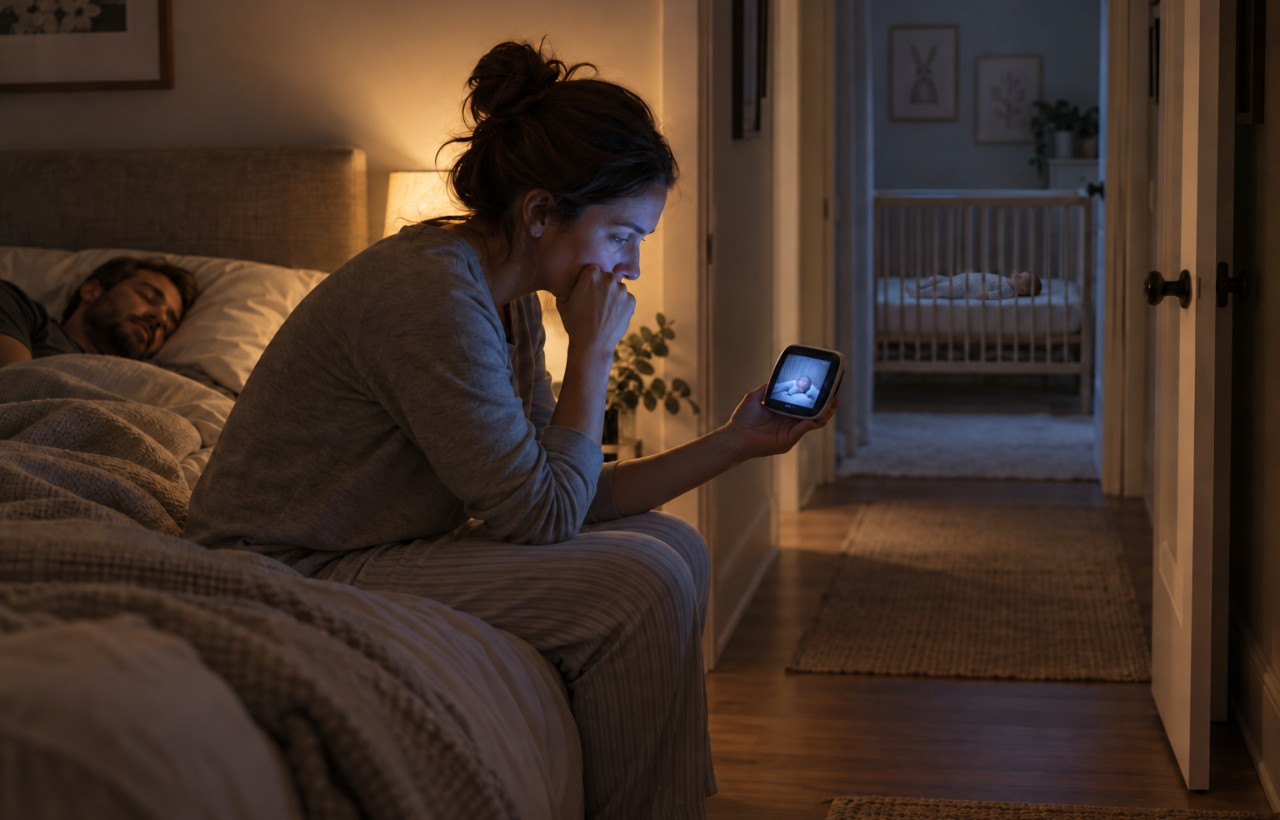
If you check the monitor after every rustle, watch the feed long after your child has settled, or struggle to sleep because one ear is always listening, the device may no longer be doing only the job you bought it for.
A baby monitor can solve a real problem: it lets you hear or see a child from another room. But as that practical need changes, continued monitoring can bring more risk than reward for the household. The useful question is not whether you are allowed to stop. It is whether each feature still helps you make a necessary decision.
Key takeaways
- There is no single birthday when every family should remove the monitor. Decide by its current purpose, not by habit or pressure.
- The clearest warning sign is checking that does not lead to a useful action.
- Constant access can disturb your sleep, reinforce anxious checking, prompt unnecessary interventions, reduce household privacy, and create conflict between caregivers.
- You do not have to jump from continuous video to no monitor. Keep the signal you need and remove the features you do not.
- If monitoring is part of a clinician-directed care plan, ask that clinician before changing it. A household monitor is not a substitute for medical monitoring or a safe sleep environment.
Prolonged use is about purpose, not a fixed age
A monitor has a clear purpose when it solves a current problem. Perhaps you cannot hear your child from your bedroom, a caregiver has a hearing or mobility limitation, or you need an alert that tells you when to go into the room. A temporary situation, such as sleeping in an unfamiliar place, can also create a temporary reason to use it.
Use becomes prolonged when the original need has faded but the monitoring routine continues unchanged. The device may still provide information, but more information is not automatically more safety. If seeing your child roll over, sigh, sit up, or briefly wake does not change what you should do, that information may be keeping you on duty without helping your child.
Give the monitor a one-sentence job description: “Alert us when our child calls and we would not otherwise hear.” That is a usable purpose. “Let us confirm that everything is fine whenever we feel uncertain” has no natural stopping point and can turn the screen into a reassurance habit.
Treat a consumer monitor as an information channel, not as a safety system. It cannot make an unsafe sleep space safe, prevent a child from climbing, establish that a child is medically well, or replace direct adult judgment. Address the underlying hazard instead of asking the camera to compensate for it.
Five ways constant monitoring can cost your family
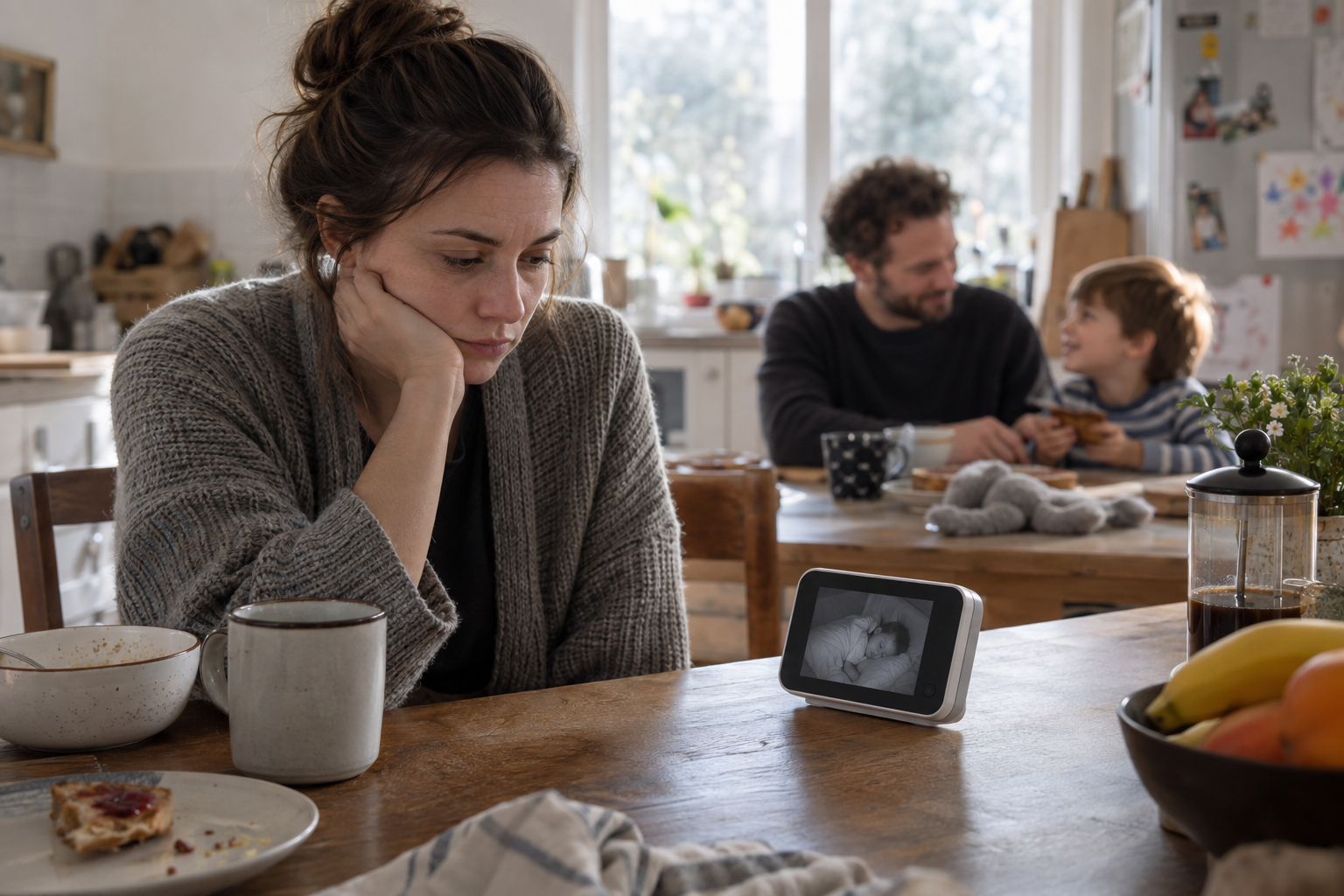
It keeps the caregiver’s brain on call
A sensitive microphone makes small sounds louder. A bright display brings every movement into your bedroom. Notifications can wake you even when your child does not need you. The child may be resting while the caregiver remains in a state of active surveillance.
Notice what happens after an alert. If you wake, look, and take no action most of the time, the setting may be too sensitive for its purpose. Start with the notification, volume level, or screen setting that produces the most checks without changing your response. Use the device’s built-in controls rather than covering vents, speakers, or other hardware.
Checking can become its own reassurance loop
A quick look can reduce uncertainty for a moment. That relief can make another look feel necessary the next time uncertainty appears. Soon, you may check because you feel uneasy rather than because the monitor signalled a problem.
The distinction is simple: an alert-driven check begins with information from the room; an anxiety-driven check begins with the urge to be certain. When there is no immediate safety concern, pause before opening the feed and name what you expect to find. If you cannot identify a signal or an action, the check is unlikely to help.
It can turn ordinary sleep behaviour into a prompt to intervene
Children move, vocalize, wake briefly, and sometimes settle again. A close-up feed can make every change look like the beginning of a problem. Entering the room immediately may add light, movement, or conversation just as your child is settling.
Decide in advance which signals need a response. Persistent crying, a direct call for you, or a visible immediate hazard is different from a quiet change of position. The point is not to ignore your child. It is to stop treating every visible movement as equally urgent.
Always-on video creates a household privacy issue
A nursery camera can capture more than a sleeping child. Caregivers, siblings, visitors, conversations, and daily routines may all enter the frame or microphone range. If the monitor records clips or connects to an online account, access and retention deserve deliberate choices rather than default settings.
Review who can view the feed, remove access for people who no longer need it, use a unique account password, install device updates, and enable stronger account verification if the service offers it. Turn off recording if you do not use it, and delete stored clips that serve no current purpose. As your child grows, reconsider camera placement and whether video is still necessary at all.
It can turn different caregiving styles into conflict
One caregiver may want to respond at the first sound while another prefers to wait and listen. With a live stream available, each person can use the same footage to question the other’s choice. The monitor then becomes a scoreboard instead of a shared tool.
Agree on three things before bedtime: which signals require action, who will respond, and when the screen or sound will be off. If one caregiver needs a different setup to rest, solve that directly rather than expecting both adults to tolerate the most intensive monitoring arrangement.
Use this decision test instead of waiting for a milestone
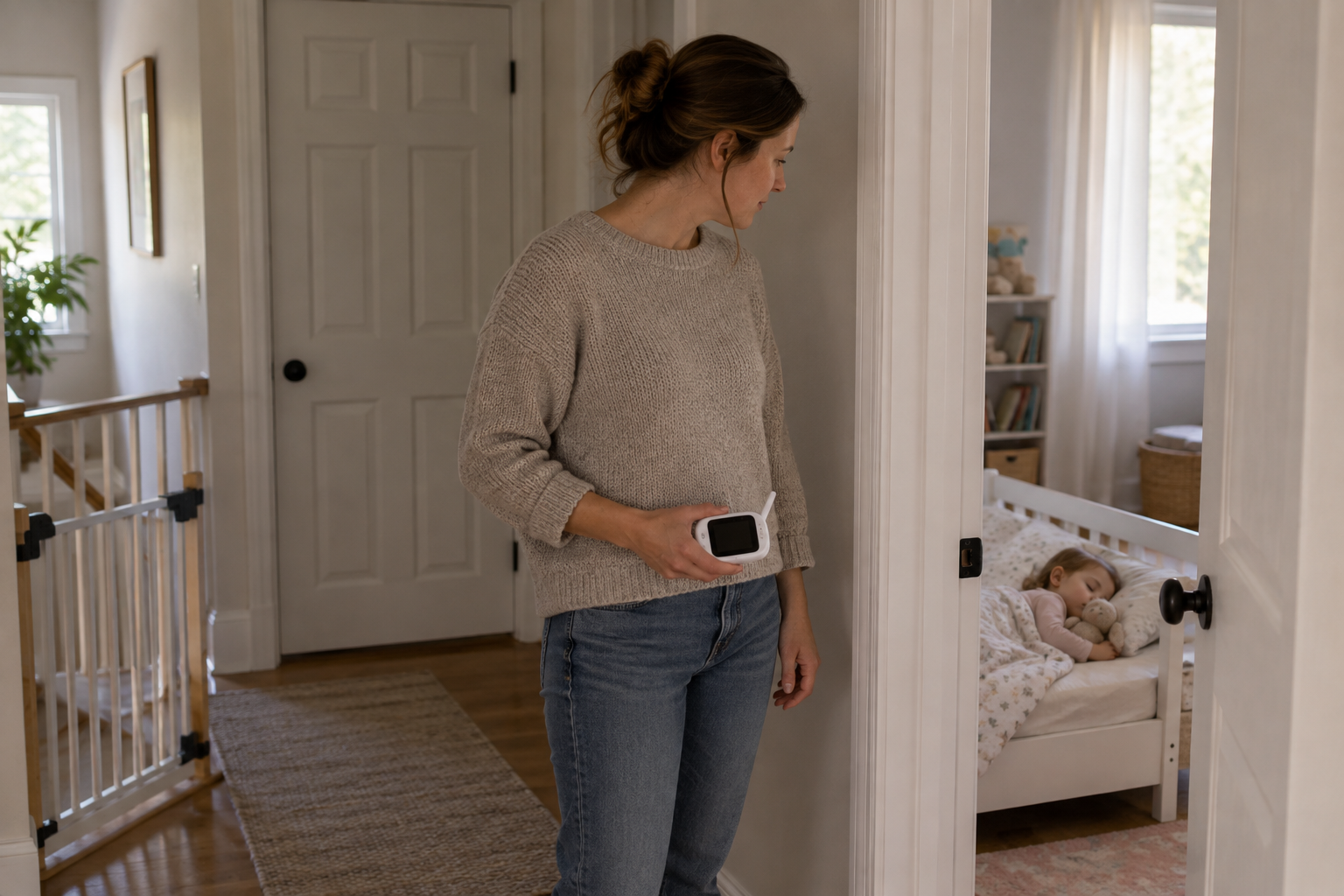
You do not need a universal age rule to make a sound decision. Work through these questions based on your child’s present needs and your home’s layout:
- What current problem does the monitor solve? Name a specific issue, not a general wish for certainty.
- Which signal matters? It might be crying you cannot otherwise hear, a direct call, or another clearly defined event.
- What will you do when that signal appears? If the information rarely changes your action, the feature may not be useful.
- Are you opening the feed because of an alert or because you feel compelled to check? Frequent checks without a signal point to a habit rather than a monitoring need.
- What does the setup cost? Consider disrupted sleep, repeated false alarms, tension between caregivers, unnecessary room visits, and unwanted recordings.
- Could a less intensive setup do the same job? Audio-only monitoring, fewer notifications, no recording, or a monitor used only in specific situations may preserve the useful function.
If the monitor has a clear job and its benefits outweigh the disruption, keep it and configure it narrowly. If only one signal matters, keep only the feature that delivers that signal. If you cannot name a current need or a useful response, that is a reasonable basis for scaling back.
How to scale back without removing a useful alert
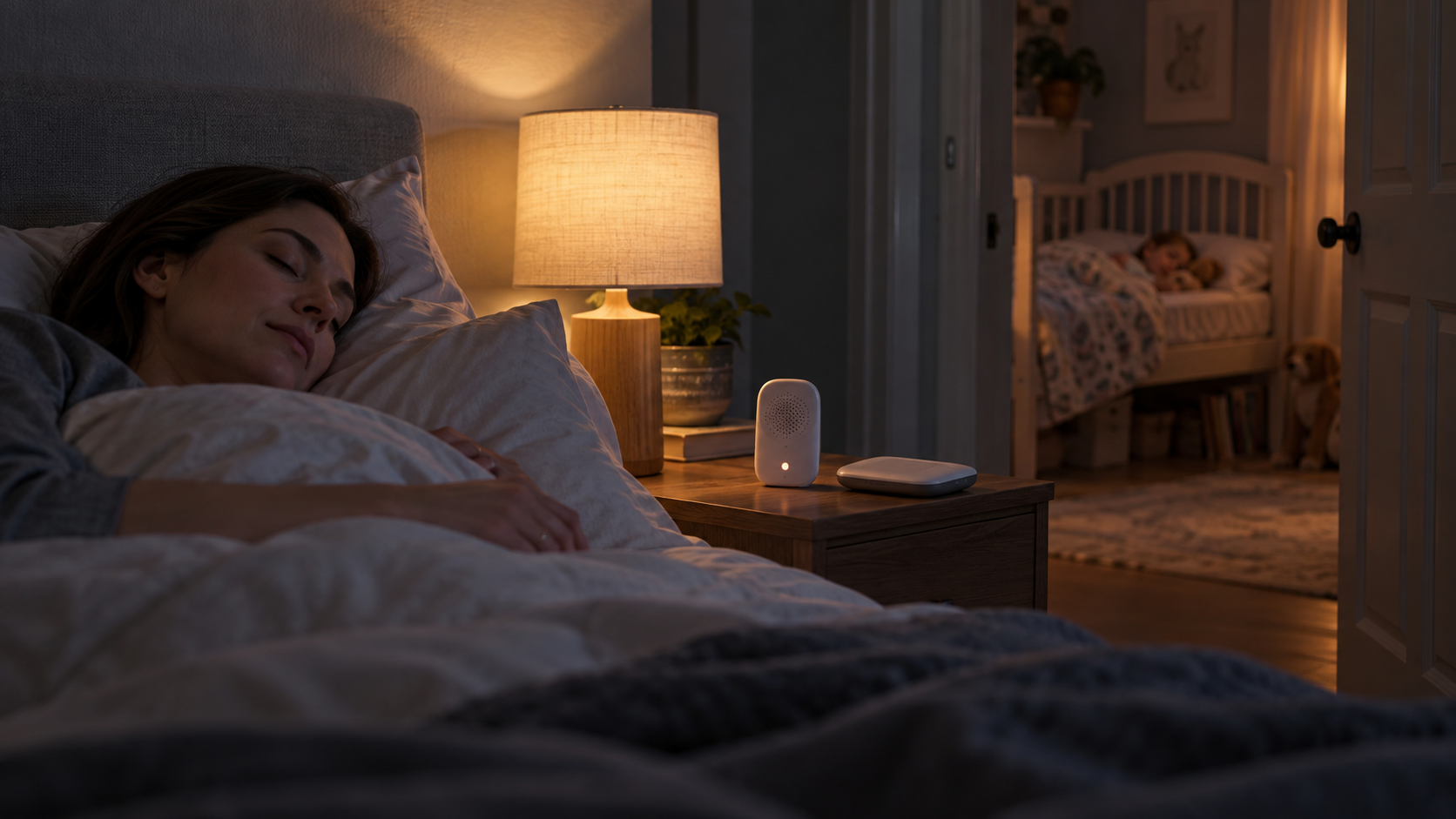
Reduce monitoring in layers. Changing one part at a time makes it easier to see what your family actually needs and prevents you from accidentally removing a function tied to a real concern.
- Check the physical setup first. Deal directly with hazards in the sleep space or room. Do not rely on watching a hazard through a camera.
- Write the monitor’s current job. Include both the signal and the response: “If we hear a direct call, one of us will check in.”
- Remove the lowest-value layer. Depending on your setup, that may mean turning off continuous video, motion alerts, recording, or notifications that never lead to action.
- Set a response rule. Decide which sounds or events need an immediate visit and which allow you to listen for signs that your child is settling.
- Interrupt reflexive checking. Put the handheld display outside your direct line of sight, close the app when it is not needed, and avoid using the feed as something to watch while waiting for sleep.
- Review the result when you are calm. Ask whether you missed a signal that genuinely required action, whether anyone slept better, and whether the urge to check changed. Base the next adjustment on those outcomes.
One possible progression is continuous video to audio-only, then audio only when distance makes it necessary, followed by retiring the everyday setup. That sequence is an example, not a rule. A family that needs visual information may choose a different feature to remove first.
When to pause and get more guidance
- Monitoring is part of a medical care plan. Ask the clinician who recommended it before changing the equipment, alerts, or routine.
- Your child is unwell or has a new symptom. Do not use a consumer monitor feed to decide that a child is medically fine. Seek appropriate medical guidance based on the symptom and the child’s condition.
- There is an unresolved physical danger. A climbing risk or unsafe room setup needs a direct safety response, not closer viewing through the camera.
- Worry is disrupting sleep or daily life. If you cannot step away from the feed, leave your child with another trusted caregiver, or rest even when your child is settled, discuss that worry with a family doctor or qualified mental health professional. The intensity of the urge to monitor does not, by itself, prove that more monitoring is necessary.
You can also bring the monitor back for a specific temporary reason without restoring every old setting. Define the reason when you turn it on and decide what will tell you that the extra monitoring is no longer needed.
Tonight, give the monitor one job. Keep the alert that serves that job and switch off one feature that only invites another look. The goal is not to prove that you can parent without technology. It is to make the technology earn the attention, sleep, and privacy it takes from your family.
References