

You’re not looking for the cheapest formula in the abstract. You’re trying to keep your baby fed with a product they can use, without letting the next purchase undo the rest of your household budget.
Useful opportunities include manufacturer samples, coupons, and local support. The safest approach is to treat each offer as a possible supply lead, not as a reason to change your baby’s formula.
Key takeaways
- Write down the exact formula name and format before looking for offers. Similar packaging does not guarantee the same product.
- Check official manufacturer programs, your usual retailers, your baby’s healthcare team, and local family-support services.
- Judge an offer by its final cost, product fit, redemption rules, timing, and usefulness after the sample runs out.
- Accept only sealed, intact, in-date formula from a source you trust. Check the lot information and recall status before using it.
- Never dilute formula, change the mixing ratio, make homemade formula, or substitute a toddler beverage to make your supply last longer.
Protect your baby’s feeding plan before chasing a discount
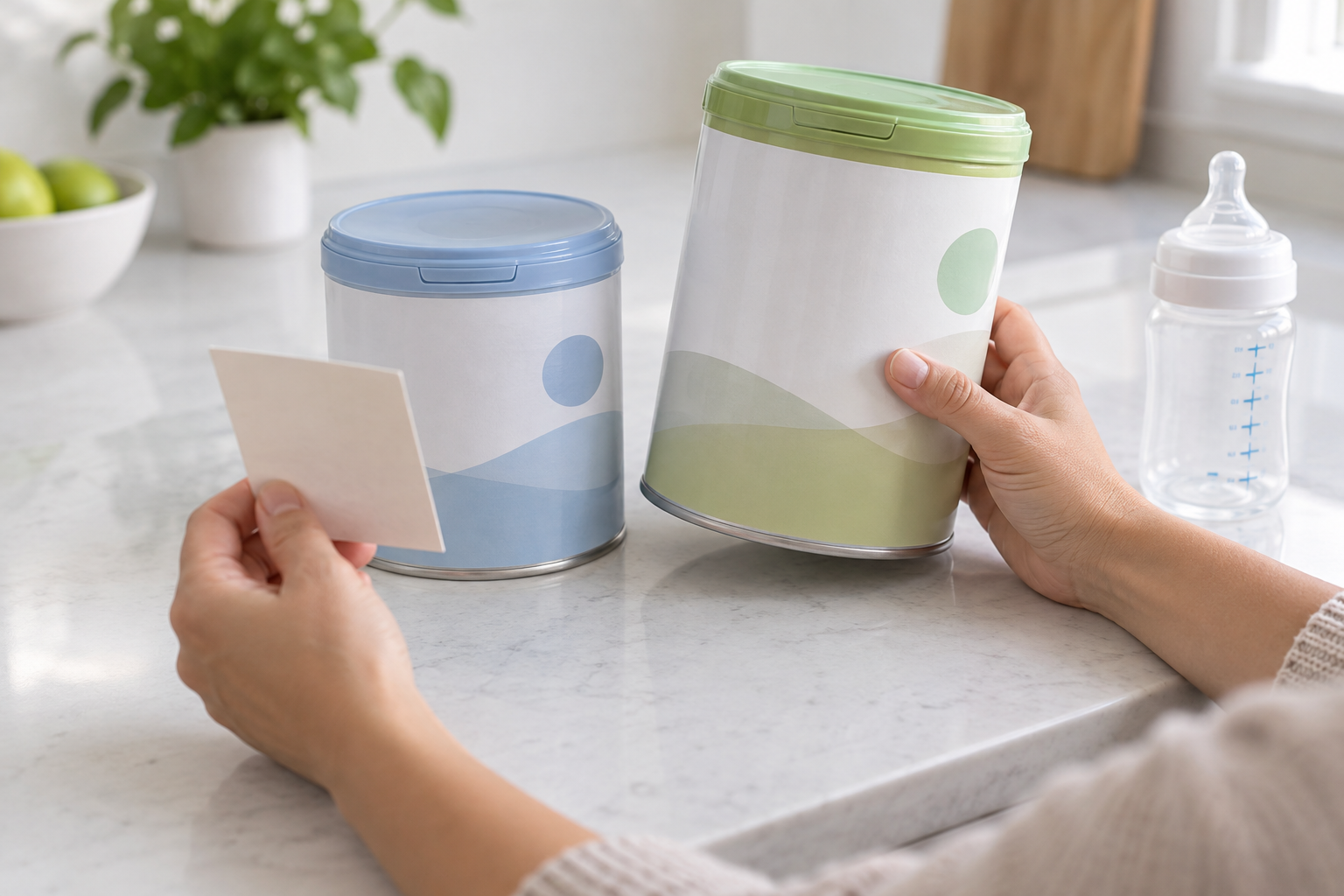
A free package has no value if it is not appropriate for your baby. Formula products that appear similar can differ in formulation, preparation method, and intended use. A promotion is a financial opportunity, not a clinical recommendation.
Before searching, make a short formula identification note. Copy the information directly from the package rather than relying on memory:
- The complete brand and product-line name.
- Whether it is powder, liquid concentrate, or ready-to-feed formula.
- The package size and barcode, if available.
- Any instructions from your baby’s healthcare professional about ingredients, formula type, or acceptable alternatives.
- A clear photo of the front label that you can use while shopping or speaking with a support service.
This matters most when your baby uses a specialty formula, has a diagnosed medical condition, has had a suspected allergic reaction, or was placed on a particular product by a healthcare professional. In those situations, confirm a substitution with the clinician managing your baby’s feeding before using it. Do not let an expiring coupon rush that decision.
If you are unsure whether two products are equivalent, ask a pediatrician, family doctor, nurse, dietitian, or pharmacist. Show them the complete labels. A matching brand name or age range is not enough information on its own.
Search from official programs outward

Start with channels that let you verify the offer and the product. Work outward to local and personal networks only after checking the most direct options.
- Check the manufacturer’s official website. Search for the complete product name with terms such as samples, coupons, savings, or baby club. Confirm that you are on the company’s real domain before entering contact information. Read whether the offer is a physical sample, a printable or digital coupon, or a rebate that requires a purchase first. Also check geographic restrictions, delivery timing, expiry dates, and marketing consent.
- Look at the retailers you already use. Search their websites and apps for the exact product rather than browsing a general formula category. Check store coupons, loyalty offers, pharmacy promotions, and any baby-registry benefit that may apply. Confirm that the discount works on your package size and formula format before making a special trip.
- Ask your baby’s healthcare team. A pediatric, family-medicine, maternity, hospital, or community clinic may know about local assistance or may have sealed samples. Ask for the exact formula rather than asking generally whether formula is available. If the clinic cannot provide it, ask which local service it usually recommends to families facing an immediate supply problem.
- Call local support services. Food banks, family resource centres, public-health offices, and community organizations may provide formula or refer you to a program that does. Availability and eligibility differ by location, so call before travelling. Ask about current inventory, required documents, pickup rules, and whether help is occasional or ongoing.
- Use your trusted personal network carefully. Someone may have unopened formula their baby did not use. Accept it only when the package is sealed and intact, the expiry and lot information are readable, its storage history is credible, and the product has not been recalled. Decline opened containers, damaged packaging, loose powder, or anything from an unknown source.
A call script that prevents a wasted trip
Keep the request precise: I am looking for a sealed package of [complete product name] in [powder, concentrate, or ready-to-feed form]. Is it available now? Are there eligibility documents, pickup requirements, or other conditions I should know about?
Repeat the product name and format before ending the call. If another person is collecting it, send them the label photo. That small step helps prevent a well-intentioned but unusable substitute from coming home.
Decide whether an offer creates real savings
The word free can hide shipping charges, travel, a required purchase, or a product you cannot use. A coupon can also look generous while applying only to a larger or more expensive package. Review every offer with the same checklist.
- Product match: Is it the exact formula your baby uses, or an alternative already approved for your baby?
- Format match: Powder, concentrate, and ready-to-feed products have different preparation requirements. Make sure the offered form works for your circumstances.
- Final cost: Include required purchases, shipping, membership costs, transportation, and any rebate amount you must wait to receive.
- Redemption rules: Check the eligible retailer, package size, expiry date, geographic restrictions, and whether the offer can be combined with another promotion.
- Timing: A mailed sample that arrives after your current supply is gone does not solve an immediate feeding problem.
- Continuity: Ask whether you can afford and reliably find the same product after the sample ends. A coupon for a product you already use may be more useful than a free sample that creates a new purchasing problem.
- Privacy: Decide whether the discount is worth the personal information and promotional messages requested. Provide only the information the legitimate program requires.
When comparing package prices, use the prepared yield stated on each label. Package weight and liquid volume are not directly comparable across different formula forms. Follow the label’s mixing ratio exactly even when a package appears to produce less than another option.
A discounted bulk purchase is useful only if the formula is appropriate, can be stored as directed, and will be used before its expiry. Avoid buying extra simply because a promotion is ending. Money tied up in an unsuitable package is not a saving.
Build a next-supply plan before the container is nearly empty
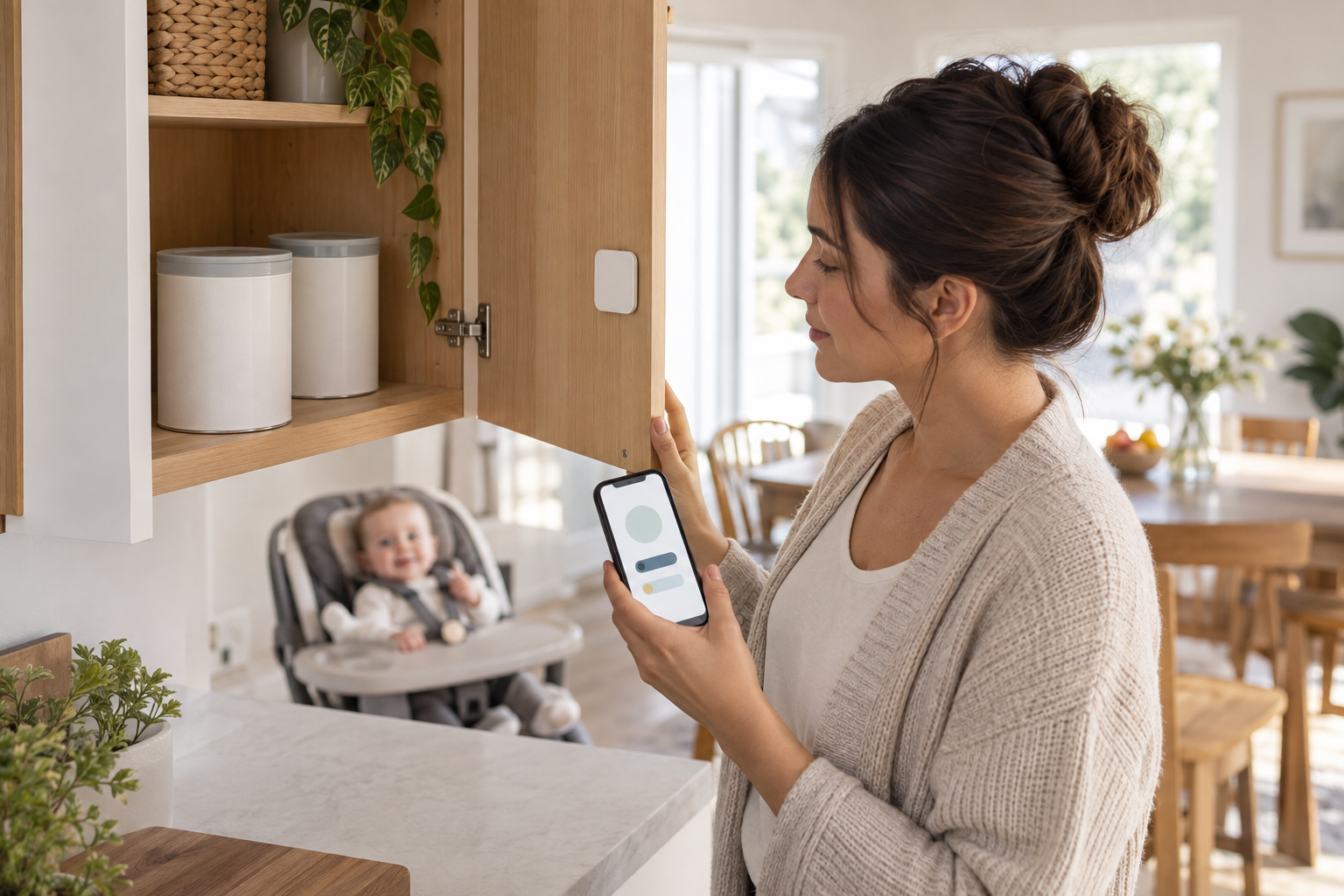
Samples and coupons are often individual opportunities rather than a complete feeding budget. Keep a simple note with your current product photo, the offers you requested, delivery or pickup details, coupon conditions, and the date you last confirmed local availability. This prevents expired offers and repeated calls from becoming part of the problem.
Set your own reorder point using your baby’s established feeding pattern, the amount remaining, and the lead time for delivery or pickup. Do not wait for the package to be almost empty before checking whether the next source actually has stock.
If your supply may run out before you can obtain an appropriate replacement, contact your baby’s healthcare professional, a pharmacist, an after-hours health service, or a local feeding-support program promptly. They can help identify an appropriate alternative or direct you to urgent local assistance. If your baby is not feeding normally or seems unwell, seek urgent medical advice.
Do not respond to a shortage by adding extra water, reducing the amount of powder, making homemade formula, or using a toddler beverage as an infant-formula substitute. Use only intact, in-date products, prepare and store them according to their labels, and follow the water-safety advice applicable to your baby and location.
Start by photographing the exact label and checking the manufacturer’s official offer page. Then contact your usual retailer and a local family-support service with the same precise product description. Specific requests are easier to answer, and they give you a safer route to meaningful savings.
References




