
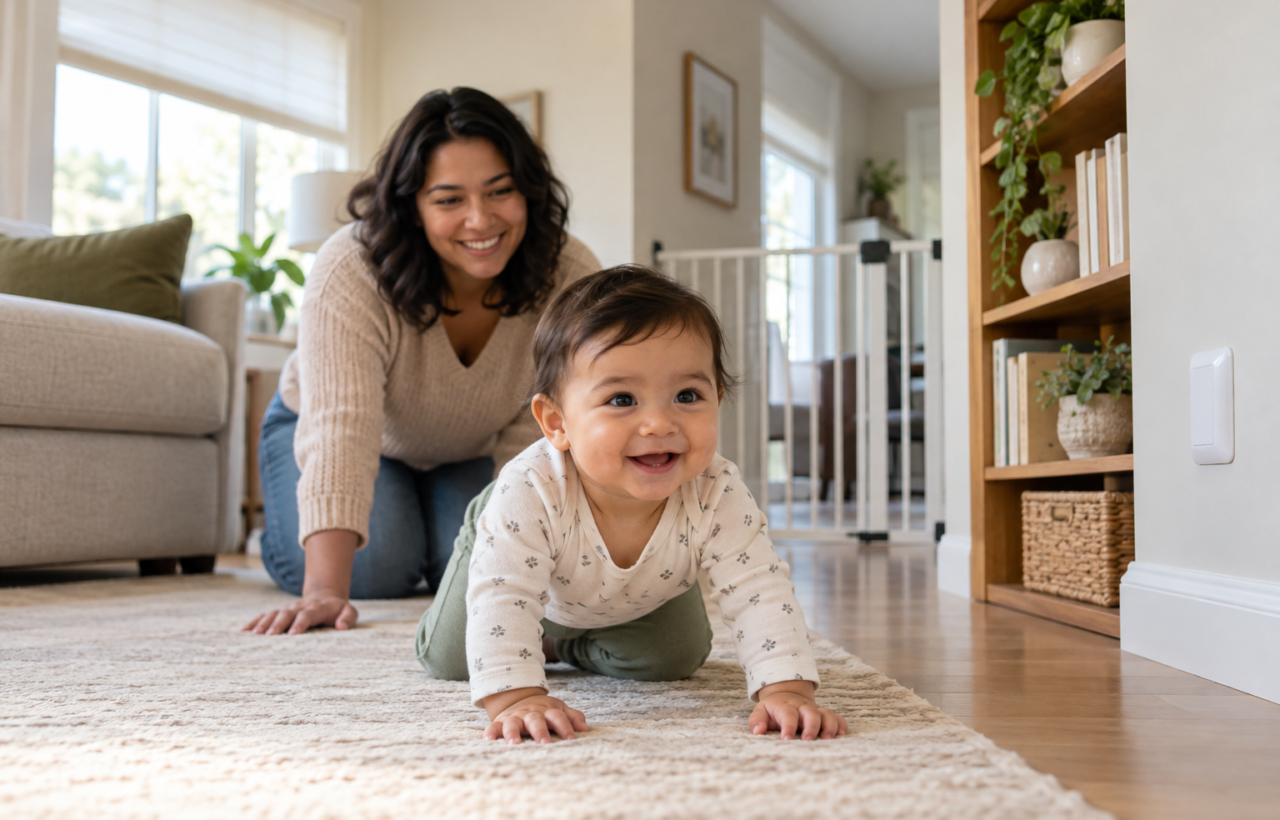
One day your baby stays where you put them. The next, they roll toward a cord, crawl under a table or pull up using furniture you never considered climbable. That first burst of mobility is the moment to change the environment, even if the new skill still looks wobbly.
The most useful rule is to prepare one movement ahead. If your baby is rolling, plan for crawling. If they are crawling, plan for pulling up. If they are pulling up, assume cruising and climbing attempts are coming. Start with the places where a mistake has the biggest consequence: the crib, stairs, heavy furniture, windows, water, heat, poisons and small objects.
Change the crib at the first mobility milestone
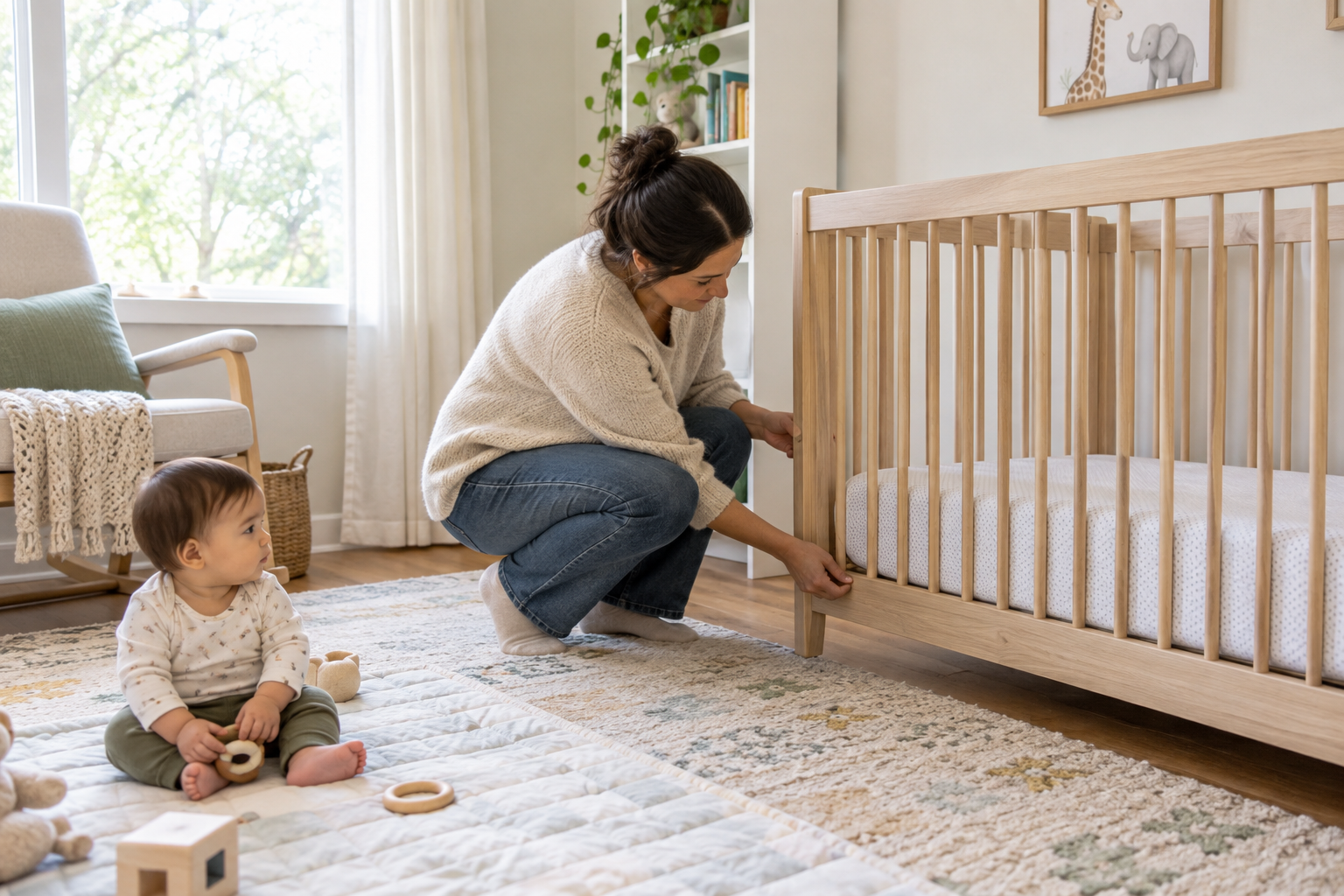
Do not wait for your baby to stand in the crib before lowering the mattress. Follow the crib’s instructions and move the mattress down as soon as your baby reaches the milestone specified by the manufacturer, such as pushing up on hands and knees. Development matters more than the age printed on a milestone chart.
Use the exact hardware and support positions shown in the manual. After making the change, confirm that every support is seated, every fastener is tight and the mattress platform does not shift when you press firmly at its edges. If the manual is missing, find the crib’s model information and obtain the manufacturer’s instructions. Do not guess at the configuration or replace missing hardware with a convenient substitute.
Stop using the crib if the mattress platform will not lock securely, the frame is damaged or the mattress leaves an excessive gap. A temporary safe sleep space that is appropriate for your baby’s age and size is safer than an improvised repair.
A crib check should cover more than height. Under U.S. Consumer Product Safety Commission rules cited in the available material, standard cribs have fixed sides, slats no more than 2 3/8 inches apart and a firm mattress that fits with no more than about a two-finger gap at any side. Those measurements are useful screening points, but they do not prove that an old, altered or damaged crib is safe. Confirm the requirements where you live as well as the instructions for your specific model.
Mobility also changes what belongs inside the crib. Through the first birthday, keep the sleep surface to the firm mattress, a fitted sheet and your baby. Pillows, loose blankets, toys, stuffed animals and crib bumpers add suffocation or entrapment hazards. A correctly sized sleep sack can provide warmth without adding loose bedding.
Stop swaddling as soon as your baby shows signs of rolling; that commonly happens between two and four months, but the sign matters more than the typical range. Place your baby on their back at the start of every sleep until the first birthday. Once they can roll independently in both directions, they may stay in the position they choose after being placed on their back. Room-sharing without bed-sharing is recommended for at least the first six months.
Baby-proof the routes your baby can take
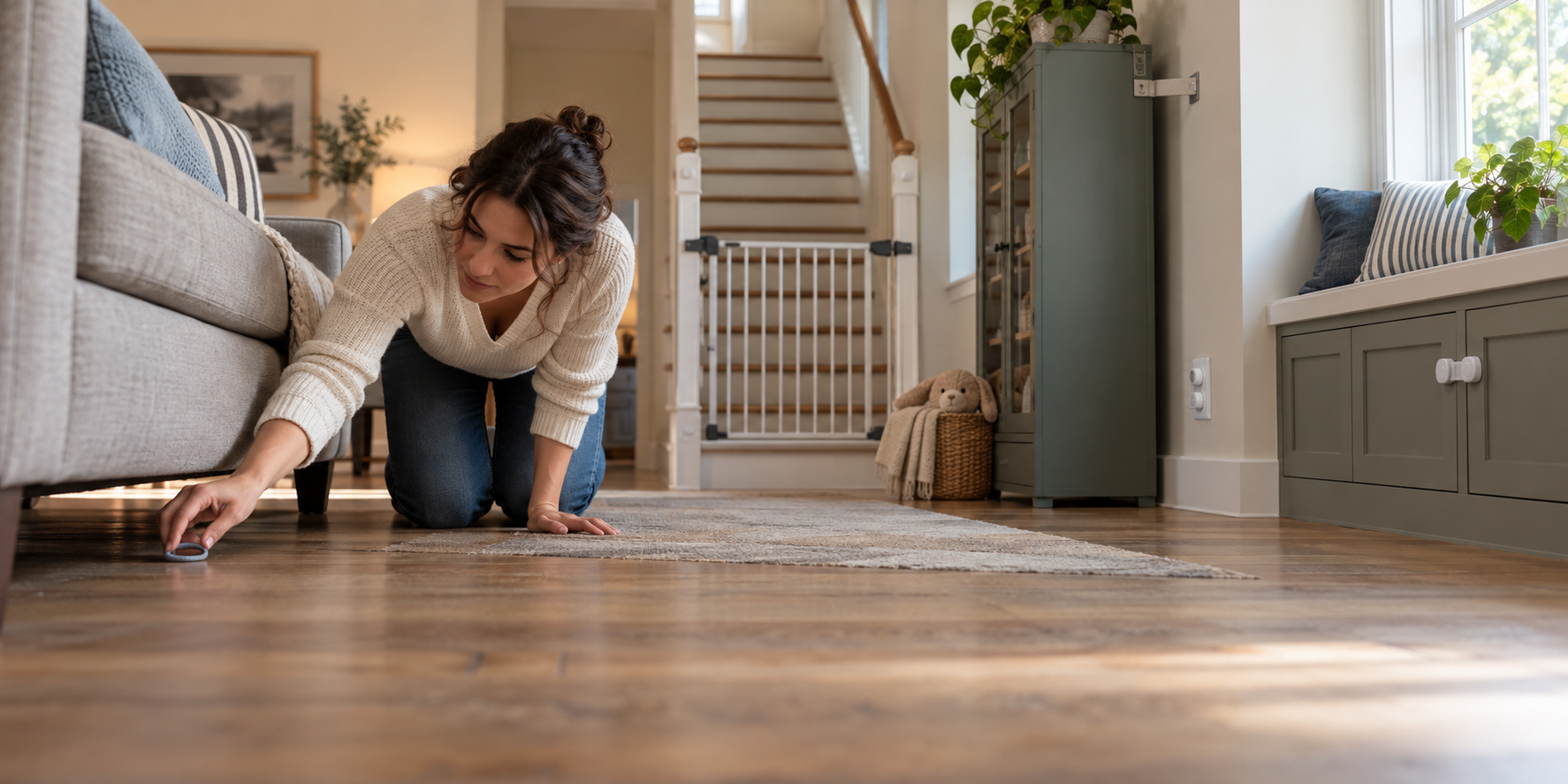
A room can look safe from adult height and still be full of reachable hazards. Get down to your baby’s level and follow the route from the main play area to the nearest doorway, stairs and furniture. Then repeat the check from standing height, because pulling up suddenly brings table edges, drawers and dangling objects into range.
- Block stairs and level changes. Install gates designed and rated for their specific location, following the manufacturer’s mounting instructions. A chair, storage bin or closed-looking door is not a reliable barrier. Make closing the gate part of how every adult moves through the space.
- Prevent tip-overs and window falls. Secure tall or heavy furniture and televisions so they cannot fall when pulled or climbed. Move climbable furniture away from windows, keep window openings inaccessible and remove anything that gives your baby a step upward.
- Remove cords and electrical temptations. Put blind cords, chargers, lamp cables and appliance leads completely out of reach rather than merely pushing them toward the back of a surface. Protect accessible outlets with products intended for that purpose.
- Search for objects that can be swallowed. Check beneath sofas and along baseboards for coins, caps, hardware, pieces of older children’s toys, batteries and magnets. Repeat the search after visitors, repairs or craft activities. If you think your baby swallowed a battery or magnet, seek urgent medical help rather than waiting for symptoms.
- Move heat and sharp objects beyond both reach and pull range. Set hot drinks well back from edges, remove hanging tablecloths and keep knives, pans and small appliances inaccessible. Remember that your baby may pull an object down by its cord or fabric before they can reach the object itself.
- Put a barrier between your baby and water. Restrict access to bathrooms, tubs, toilets, buckets, pools and other water sources. Empty standing water when it is no longer being used. A gate or lock supports supervision; it does not replace hands-on attention around water.
- Lock up medicines, cleaners and other harmful products. A high shelf is not enough once climbing begins. Use locked storage, and include handbags, suitcases and visitors’ belongings in the check because they may contain medicine or other small items.
The point is not to make every room empty. It is to remove hazards that rely on your baby remembering a rule they are not developmentally ready to follow. Redirection can teach over time, but the barrier, lock or anchor is what protects them during that learning.
Create one place where everything within reach is allowed
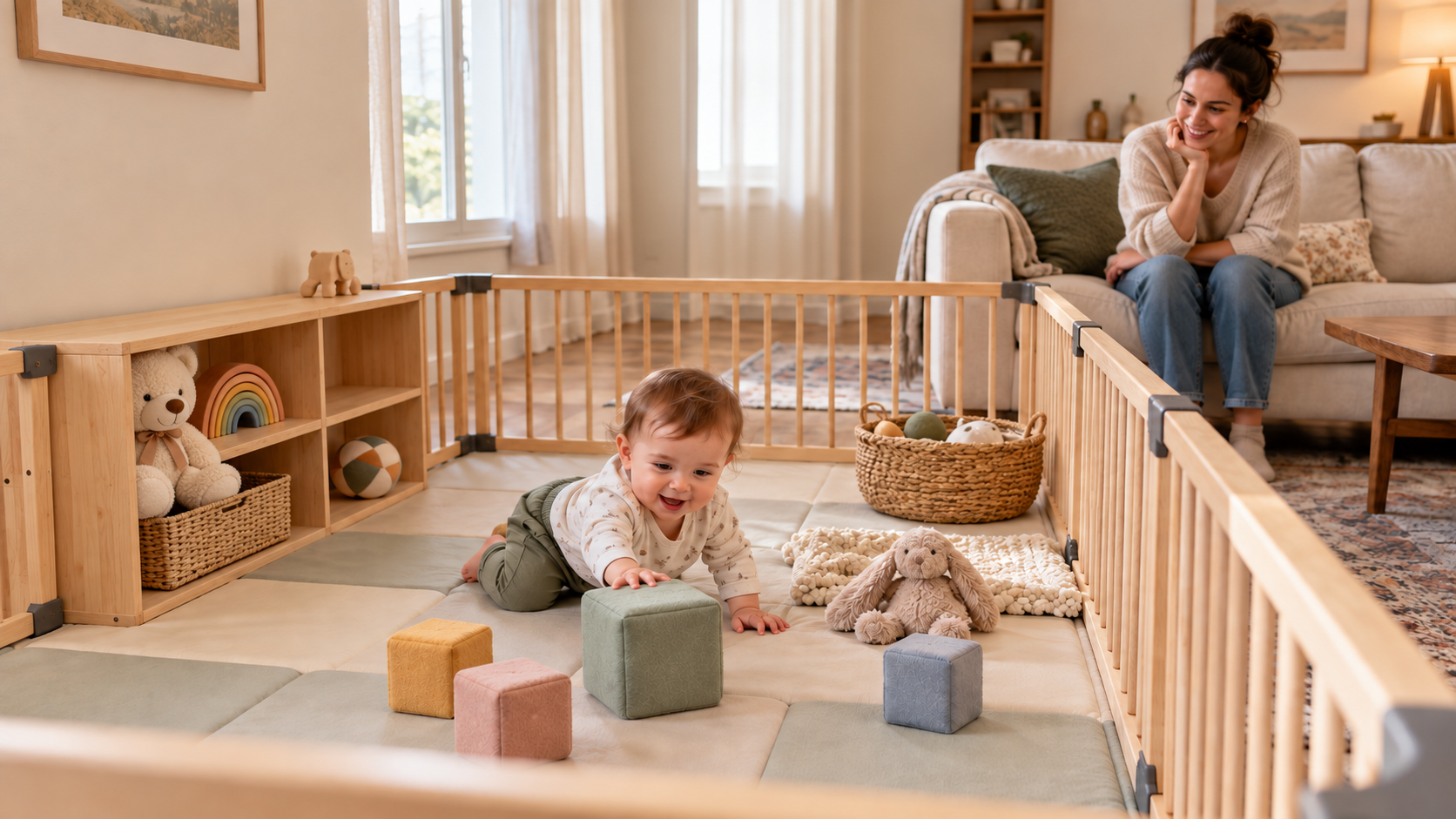
Whole-home baby-proofing is a continuing job. A smaller, controlled play area gives you somewhere your baby can explore while you are close by without repeatedly taking objects away. Choose a space with secured furniture, covered or inaccessible cords, no reachable small objects and only toys suitable for your baby’s stage. Check the floor each time before use; yesterday’s safe space may contain a dropped coin, snack or pen cap today.
Keep supervision and containment as two separate plans. During normal play, stay close enough to intervene. When your attention must move to a hot pan, an exterior door or another child, place your baby in a correctly assembled crib or age- and size-appropriate play yard used within its manufacturer’s limits. A sofa, adult bed, countertop or chair is not a safe holding place simply because your baby has not fallen from it before.
Use every supplied restraint on high chairs, strollers and similar equipment each time, even for a short pause. Mobility often arrives before judgment, and a baby who has never twisted, leaned or climbed out may do it without warning.
Make the setup understandable to anyone caring for your baby. Show them which gates must stay closed, where medicines and cleaning products belong, how the crib is set up and which space is the designated play area. A safety system that depends on one person remembering unwritten rules will eventually develop gaps.
Treat first shoes as gear, not fall prevention
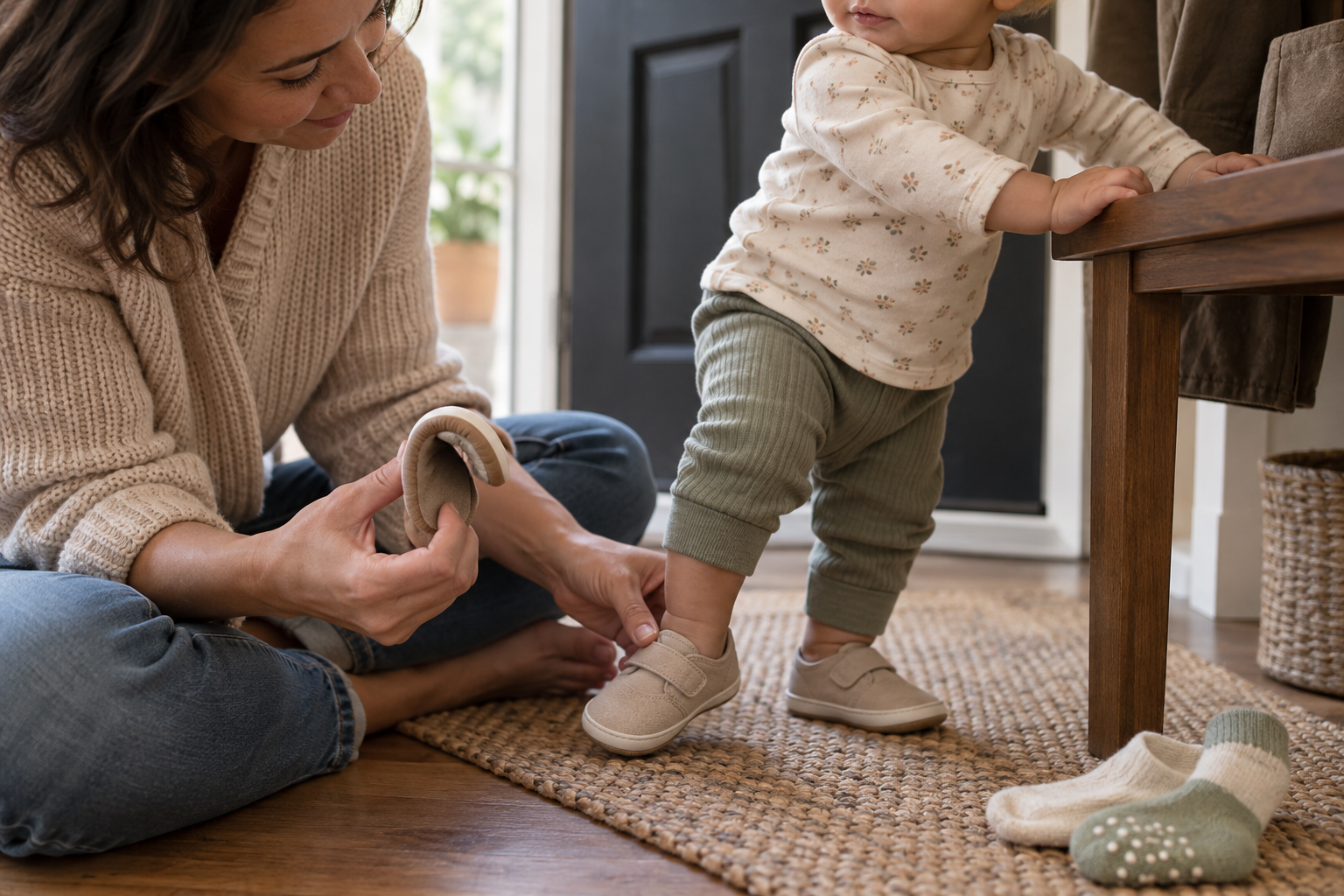
Footwear and home safety solve different problems. Shoes may be useful for a particular outdoor surface or weather condition, but they cannot make stairs, unstable furniture or a cluttered floor safe. When considering shoes for a new walker, judge them by fit and function in the setting where your baby will wear them, not by a promise that they will create confidence.
Watch your baby move in whatever is on their feet. If the heel slips, the toes appear compressed, a fastener comes loose or your baby’s feet slide inside the footwear, stop and correct the problem. Recheck the fit rather than assuming a recently purchased pair still works.
Fix the walking surface itself. Wipe up spills, remove toys from travel paths and secure or remove rugs that bunch or slide. Do not use footwear to compensate for a floor hazard you can eliminate.
Key takeaways for the day your baby starts moving
- Lower the crib mattress at the manufacturer’s first stated mobility milestone; do not wait for confident standing.
- Keep the crib bare, stop swaddling at the first signs of rolling and begin every sleep with your baby on their back.
- Inspect the home from crawling height and standing reach, concentrating first on stairs, tip-overs, windows, water, heat, poisons, cords and small objects.
- Create one controlled play space, plus a safe containment option for moments when you cannot give active attention.
- Use shoes for the conditions underfoot, but remove slipping and tripping hazards from the environment itself.
Start with the crib today, then clear the route your baby uses most and finish one controlled play area. Repeat the floor-level scan whenever a new skill changes where your baby can go or what they can reach.
References
- Newton Hush – When to Lower Crib Mattress Height: An Expert Guide
- Parents – The 10 Best Baby Shoes to Take Those Precious First Steps With Confidence




