You open an infant formula testing report and find a long chemical list, parts-per-billion measurements, colour-coded results and a reassuring statement that the product passed. The information looks precise, but it may not answer the question you actually have: What does this result mean for the formula in your baby’s bottle?
The most useful transparency is not the biggest testing number or the cleanest badge. It lets you connect a specific container of formula to a specific test, understand what the laboratory could detect, see the measured result and learn what the company does with that information. Here is how to make that assessment without treating every trace detection as proof of danger or every green label as proof of zero risk.
Transparency should answer five concrete questions
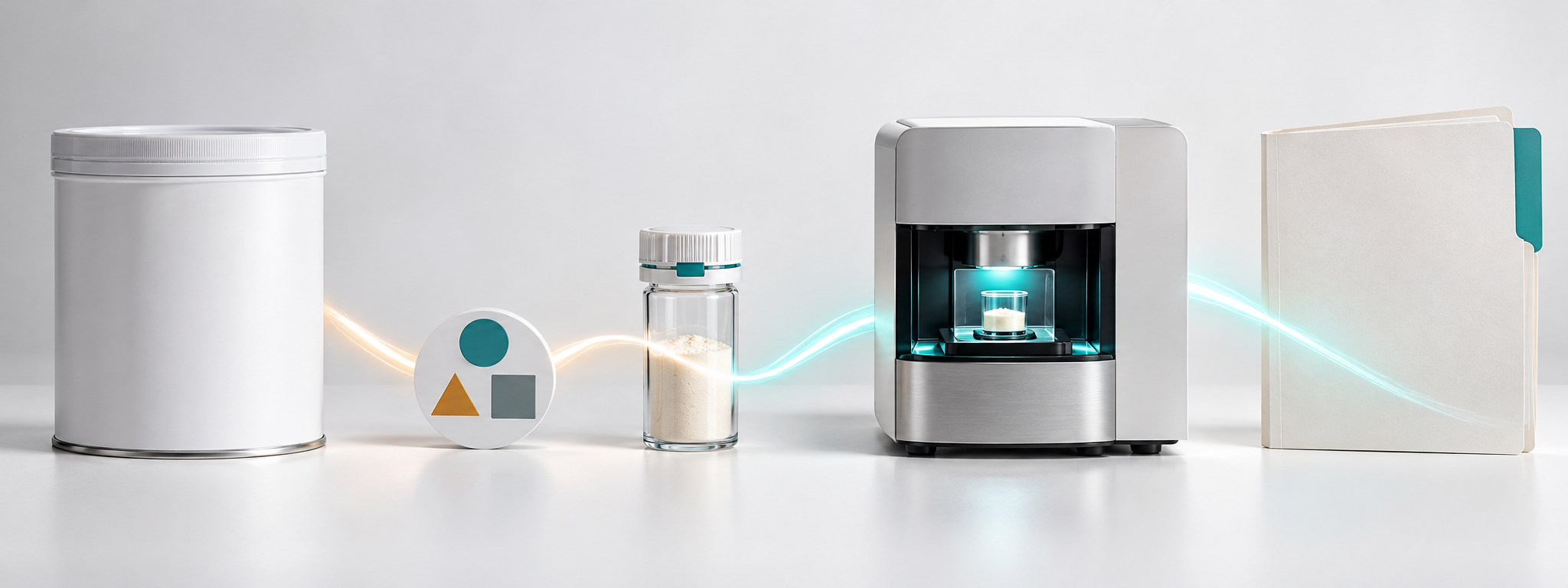
Formula transparency is not another word for contaminant-free. Modern laboratory instruments can detect substances at extremely low concentrations, including substances that occur naturally in soil, water and the wider food supply. A useful disclosure shows enough detail for you to interpret those findings rather than asking you to trust a slogan.
- What was tested? The report should identify the exact formula, format and batch or lot, not just the brand.
- Who tested it? Look for the laboratory’s name, its relationship to the manufacturer and whether the testing was independent.
- How was it tested? You need the analytical method or at least its detection and reporting thresholds.
- What was found? Look for an actual result with a unit, or a clearly defined non-detect, rather than a bare pass label.
- What was it compared with? The disclosure should identify the internal limit, regulatory requirement or external benchmark and explain what happens when a result approaches or exceeds it.
A missing detail does not prove that a formula is unsafe. It does limit what you can conclude from the transparency claim. A generic statement such as rigorously tested may be true, but it cannot help you evaluate a particular lot unless the supporting information is available.
Regulatory compliance and voluntary disclosure also do different jobs. Rules may not provide a product-specific limit for every substance that a laboratory can detect. For example, Bobbie says the FDA regulates infant formula for safety and nutritional completeness but does not set specific limits for heavy metals in infant formula. That is the company’s description of the U.S. framework, not a universal rule. If you live elsewhere, check the requirements and public-health advice that apply in your country rather than assuming a U.S. comparison governs your formula.
Read a batch report in this order
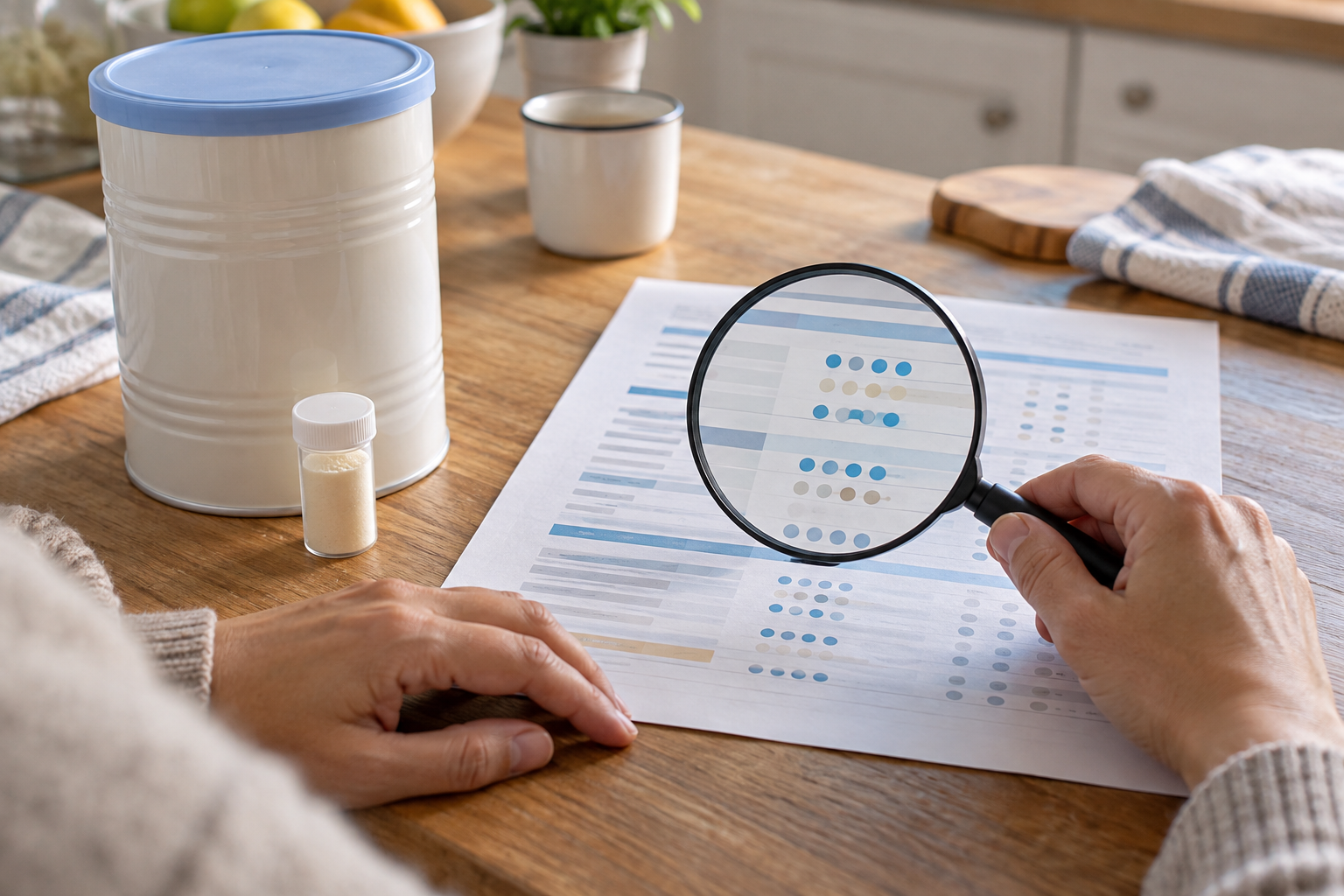
Do not start with the green or yellow marker. Start with identity, then work toward interpretation. This prevents an impressive-looking dashboard from carrying more weight than the underlying result.
- Match the product and batch. Compare the formula name, type, package format and lot or batch identifier with the container you have. A report for the same brand but a different formulation or batch is background information, not direct evidence about your container.
- Check the report date and laboratory. Confirm when the sample was analysed and whether the laboratory is named. Bobbie, for example, identifies Light Labs as an independent third-party laboratory that tests each batch and supports publicly available results. Independence adds useful separation from the manufacturer, but you still need the method, result and benchmark.
- Read the analyte list. A statement about contaminant testing should lead to the substances actually included. One disclosed programme screens for more than 550 potential contaminants, including heavy metals, pesticides, microbials, bisphenols, plasticizers, phthalates, glyphosate and allergens. The list matters more than the headline total because different panels can count substances in different ways.
- Find the result and its unit. Parts per billion, usually abbreviated ppb, is a concentration unit. It tells you the scale of the measurement; it does not by itself tell you whether the result is harmful. Look for the value attached to the specific substance you care about.
- Find the detection threshold. Depending on the laboratory, you may see a limit of detection, limit of quantification or reporting limit. These are related but not interchangeable. Without a threshold, you cannot tell what a non-detect means or fairly compare it with a result from a more sensitive method.
- Separate the result from the limit. The measured concentration, the company’s internal limit and any external comparison benchmark are three different values. A good report puts them side by side and explains the action attached to each threshold.
If a dashboard does not provide all of this on its first screen, look for a downloadable laboratory report, methods note or batch detail page. If the information still is not there, ask the company directly. The goal is not to become a laboratory scientist. It is to see whether the conclusion displayed to you is supported by information you can inspect.
What a detection means, and what it does not
A trace result is not a complete risk assessment
Lead, arsenic, cadmium and mercury can occur naturally in soil, water and the food supply. Sensitive equipment may therefore detect a very small amount even when a substance was not intentionally added. The word detected tells you that the result met the laboratory’s reporting criteria. It does not, on its own, establish that the amount is safe or unsafe.
Interpretation requires the identity of the substance, its concentration, the relevant benchmark and the exposure context. This is why finding a trace amount does not automatically establish a safety concern. It is also why trace should not be used as automatic reassurance. The number and its comparison point still matter.
Never add extra water in an attempt to reduce a reported concentration. Formula should be prepared exactly as directed on its container. Changing the powder-to-water ratio changes the nutrients and electrolytes delivered to your baby and can be dangerous.
Non-detect does not mean absolute zero
A non-detect generally means that the method did not find the substance at or above its stated detection or reporting threshold. It is not proof that no molecule is present. That distinction becomes important when you compare two reports: a more sensitive test may report a trace where a less sensitive test reports non-detect.
Do not rank those results until you have compared the thresholds and units. A non-detect with no disclosed threshold is less informative than a result accompanied by the method’s threshold, even if the latter initially looks more alarming.
Internal limits are not the same as external benchmarks
A manufacturer may create an internal limit that prompts additional review before an external standard would be exceeded. That can be useful, but only if the company explains the limit and how it relates to the comparison benchmark. A proprietary standard with no number or rationale is not meaningfully transparent.
Bobbie’s disclosed system illustrates the distinction: green indicates that a result meets its internal standard and comparison benchmarks, while yellow indicates a trace below external safety standards that receives additional review. The colour describes the company’s decision rule. It is not the laboratory result itself, and green does not mean that every tested substance measured absolute zero.
Testing totals can count different things
Large numbers need labels. Bobbie describes more than 2,000 safety and quality checks across its broader programme and a separate third-party screen covering more than 550 contaminants. Those claims are not interchangeable. The first describes a wider quality system; the second describes the stated scope of a contaminant panel. Neither number tells you the result for lead, a phthalate or any other individual analyte.
The same care applies across contaminant categories. Microbials, pesticides, heavy metals, bisphenols, plasticizers and allergens are different hazards assessed with different methods and comparison points. Phthalates, for example, are chemicals used to make some plastics more flexible and may enter the food supply through manufacturing or packaging even when they are not added to the formula. A single pass badge can hide these important differences.
Use this checklist to compare formula disclosures
When two brands both promise extensive testing, compare the evidence in the same order. The table below gives you a practical way to record what is present and notice what is missing.
| Field | What a useful disclosure shows | What should prompt a question |
|---|---|---|
| Product identity | Exact formula, format and batch or lot | A brand-wide statement with no batch connection |
| Laboratory | Full laboratory name and whether testing is independent | Tested by experts with no laboratory identified |
| Scope | Named analytes or an accessible full panel | Only a total number of tests or broad category names |
| Result | Numeric value and unit, or a defined non-detect | Pass, clean or a colour with no underlying value |
| Method threshold | Detection, quantification or reporting limit | A sensitivity claim without the threshold used for the result |
| Benchmark | Named internal limit and applicable external comparison | Meets standards without naming the standard or limit |
| Follow-up | What triggers review, retesting, investigation or another action | No explanation of what happens near or above a limit |
| Access | A stable batch report you can save or revisit | Only a marketing summary or undated badge |
If a field is missing, send a focused request: Please provide the report for this exact product and lot. For the substance I am asking about, what was the result and unit, what detection or reporting threshold was used, which benchmark applies, and what action would an elevated result trigger?
A company may need time to retrieve a batch record, but it should be able to explain its own terminology. If it cannot provide the result behind a public testing claim, treat the disclosure as incomplete. That still does not prove the formula is unsafe; it means the claim should carry less weight in your decision.
Do not choose formula by laboratory reporting alone. A transparent contaminant report cannot tell you whether a formula meets your baby’s individual medical needs, whether an ingredient is appropriate for a diagnosed allergy, or whether your baby is tolerating it. If your baby has symptoms, a suspected allergy or a clinical reason for using a specialty formula, speak with a pediatrician or another qualified clinician before changing feeds.
Key takeaways
- An exact batch report is more useful than a brand-wide testing badge.
- A numeric result needs a unit, a laboratory threshold and a named comparison point.
- Non-detect means below a stated threshold, not proven absolute zero.
- A trace detection is information to interpret, not automatic proof of harm.
- The measured result, an internal company limit and an external benchmark are separate values.
- A long contaminant list is useful only when you can inspect the individual results and methods.
- An official recall or health-authority instruction takes priority over a brand’s colour-coded dashboard.
The next time a formula label promises extensive testing, photograph your lot number and try to complete every row in the checklist. Ask for the missing information before allowing a green badge, a non-detect or a large testing total to settle the decision. If a change could affect a specialty feeding plan, involve your baby’s clinician and keep preparing the formula exactly as directed.
References