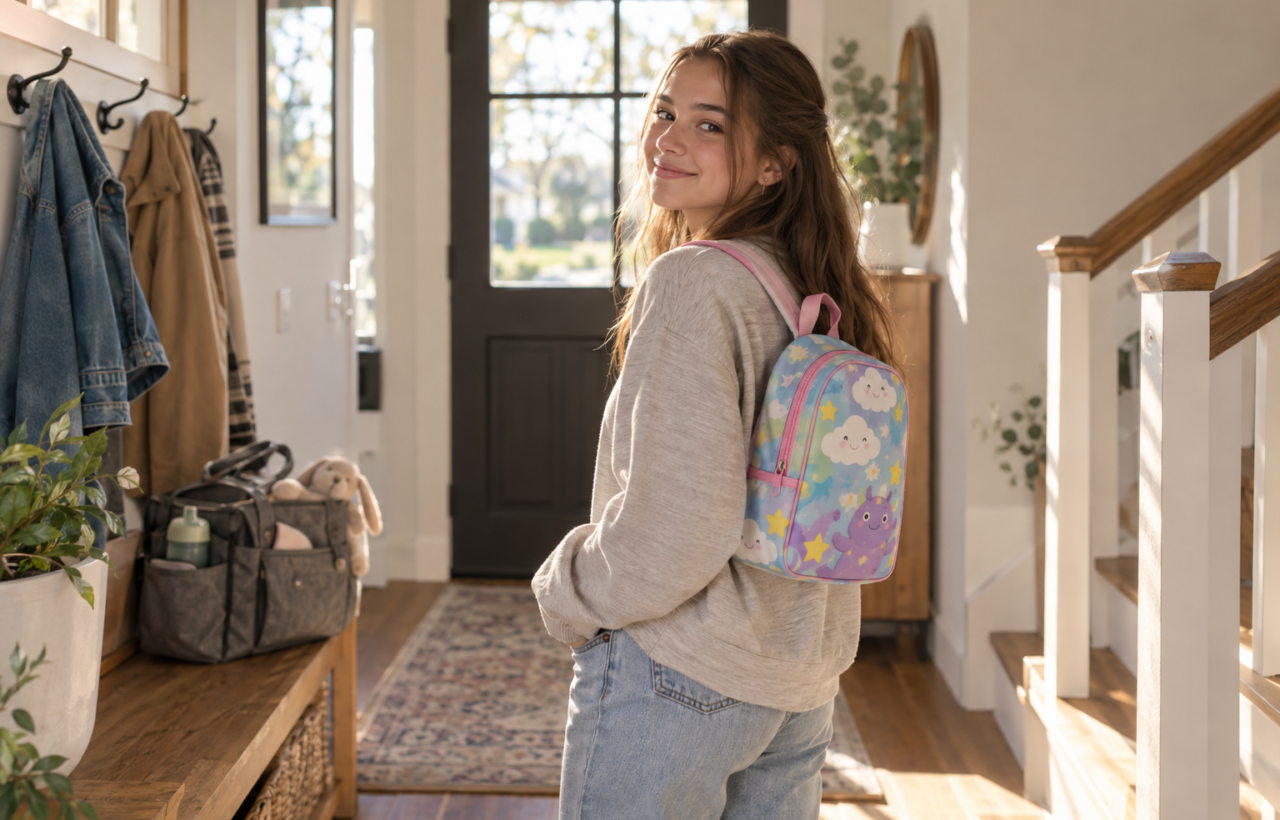
If your front hall holds a diaper bag and your high school senior suddenly asks for a Dora or Pokemon backpack, the contrast can be jarring. It may look like an impractical joke or an abrupt return to childhood.
The choice, by itself, isn’t a sign that your teen is moving backward. Carrying little-kid characters such as Dora the Explorer and Pokemon has become a playful senior-year throwback. Your job isn’t to decode the entire trend. It is to find out what this particular backpack means to your senior and whether it will work for the way they plan to use it.
The mismatch is part of the appeal

A childhood-themed backpack stands out precisely because a high school senior is carrying it. The student is old enough to choose the reference deliberately, and close enough to graduation for the reminder of early childhood to feel meaningful. The bag can be funny and sentimental at the same time.
That doesn’t mean every senior has the same motive. One teen may be joining a group plan. Another may genuinely love a character they watched or played with as a child. Someone else may want the bag only for photos, a themed day, or the final stretch of school.
Ask before you interpret. A simple question such as, “Is this for everyday use, or is there a senior event behind it?” will tell you more than a lecture about maturity. If the answer is sentimental, ask which character matters and why. If the answer is social, ask what the group has planned. If the answer is practical, move on to size and construction.
Key takeaways for parents
- A childhood character can be a deliberate senior-year joke or keepsake, not an accidental style choice.
- Find out whether the bag is for daily use, a particular event, photos, or a group tradition before spending money.
- Check the bag’s actual dimensions and capacity. A design made for a young child may not hold a senior’s school supplies.
- Set a budget that matches the expected use. A one-day prop doesn’t need to be priced like a daily backpack.
- Let your senior choose the character. Nostalgia is personal, and a surprise based on your memories may miss theirs.
Decide whether it is a prop or a working school bag
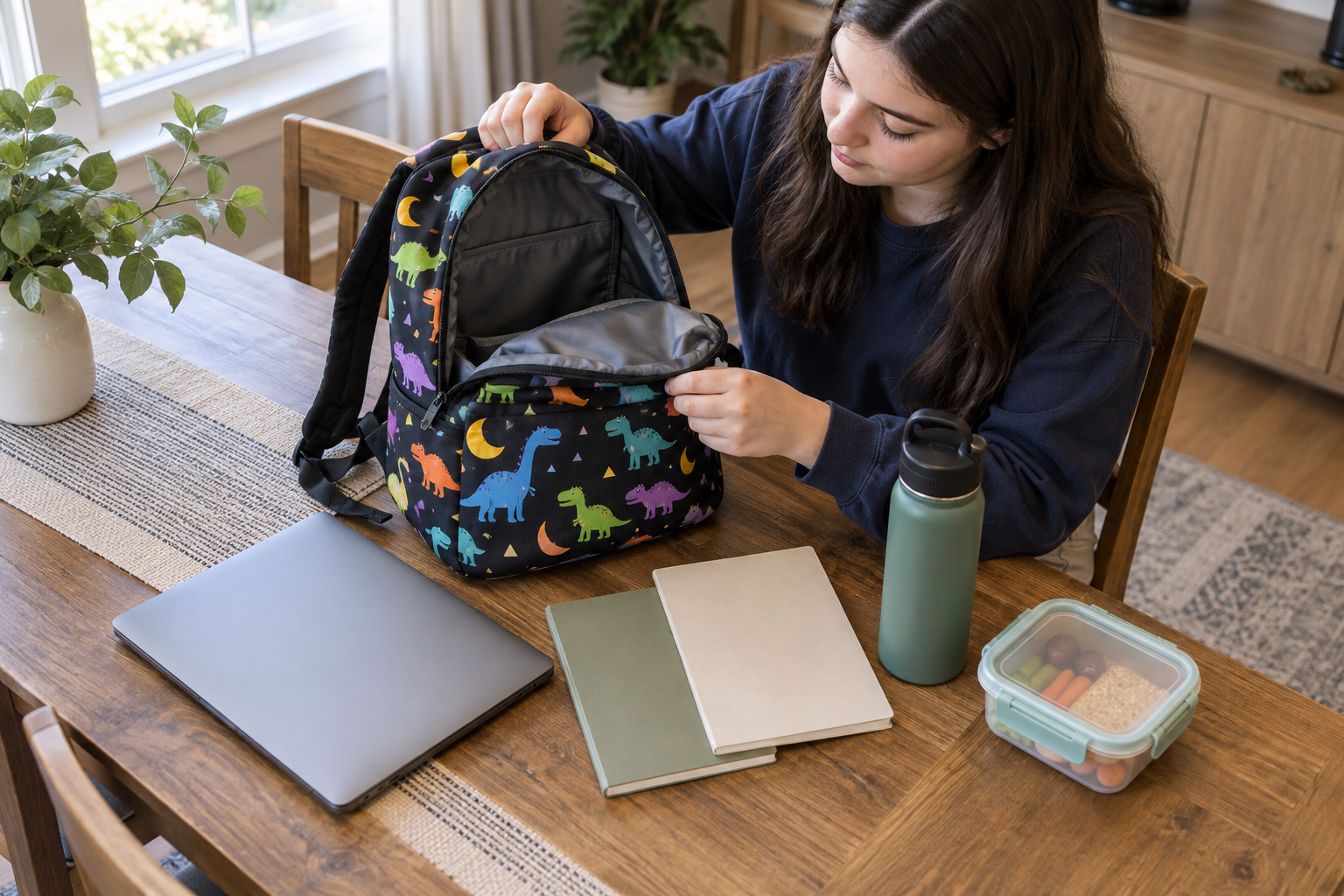
The biggest purchasing mistake is choosing from the front image alone. A backpack can look perfect online and still be too small for the items your senior carries. Product photos also make it easy to overlook whether the bag was designed for a preschooler, an older child, or an adult fan.
Before ordering, work through these checks with your teen:
- Name the use. Is this the everyday bag, an occasional bag, a photo accessory, or something for one school event?
- Lay out the real load. Include the largest binder, laptop or tablet, lunch container, water bottle, charger, and anything else that normally leaves the house.
- Compare measurements. Check the listed height, width, depth, compartment dimensions, and opening. Do not assume that an item fits merely because the backpack is described as roomy.
- Inspect the working parts. Look at the straps, closures, seams, pockets, and handle. For a daily bag, these details matter more than a perfectly nostalgic print.
- Confirm school requirements. If the school limits bag styles, sizes, or where backpacks may be carried, check those rules before buying.
- Agree on a price ceiling. Base it on how often the bag will be used and whether your teen expects to keep it after graduation.
If the backpack is for daily use, test it with the actual load before removing tags. Adjust both straps and have your teen walk around the house with it. Watch for slipping straps, strained closures, awkward weight distribution, or items that can only fit when forced. Keep the receipt and packaging until the bag has passed that test.
For a single event or a few photos, the calculation changes. The character and overall look may matter more than capacity. Borrowing one, buying second-hand, or repurposing a bag already in the family can keep a brief joke from becoming an expensive purchase.
Talk about the trend without making your senior defensive

“Aren’t you too old for that?” sounds like a practical question, but it closes the conversation by treating the choice as a mistake. Your senior already knows the character is associated with younger children. That contrast is likely the point.
Use questions that help your teen make a decision instead:
- “Which character are you looking for?”
- “Do you want it to carry your regular things, or is it mainly for the look?”
- “Is everyone choosing a different childhood favourite?”
- “Would you still want this one if your friends changed their plans?”
- “Do you want help finding it, or do you already know what you want?”
The fourth question is especially useful when you are worried about peer pressure. It lets your teen consider the possibility without requiring them to defend their friends. If the plan feels uncertain, keep their regular backpack available as a no-drama backup.
Give the same respect to the photos. A parent may see an irresistible then-and-now moment, while a senior may want control over where the image appears. Ask before posting or sharing it, even if the backpack itself is meant to attract attention at school.
If you are giving the backpack as a graduation gift
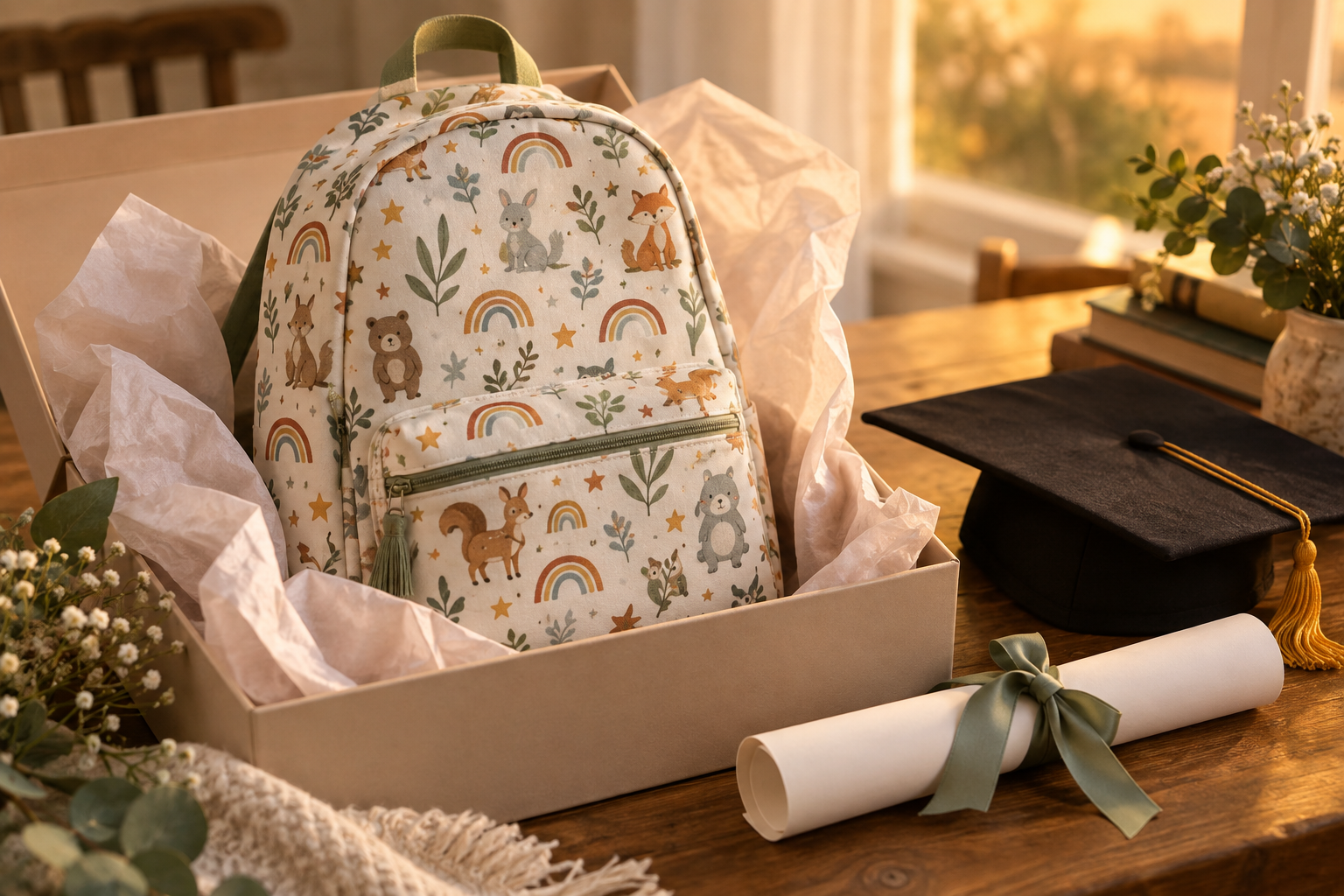
A character backpack can make a thoughtful gift, but only when you know the reference belongs to the recipient. Your favourite show from their childhood may not be the one they remember most. Even within the same franchise, a teen may care about a particular character, colour, or version.
Ask for a screenshot, product link, or short list. If you want the gift to remain a surprise, confirm the character with a sibling or close friend and include a gift receipt. Avoid personalizing the bag until you know its size and design are right; a name or graduation message can make an otherwise returnable purchase final.
If your senior hopes to keep the backpack, plan for that when school ends. Empty every pocket, remove food and loose paper, follow the care instructions, let it dry fully if cleaned, and store it without crushing the shape. If it was only fun for the moment, ask whether they want to pass it to a younger relative or donate it rather than quietly deciding for them.
Start with one question: “What is the plan for the backpack?” Their answer will tell you whether to laugh with them, help them shop, test the fit, or simply let them enjoy a small piece of childhood before graduation.
References