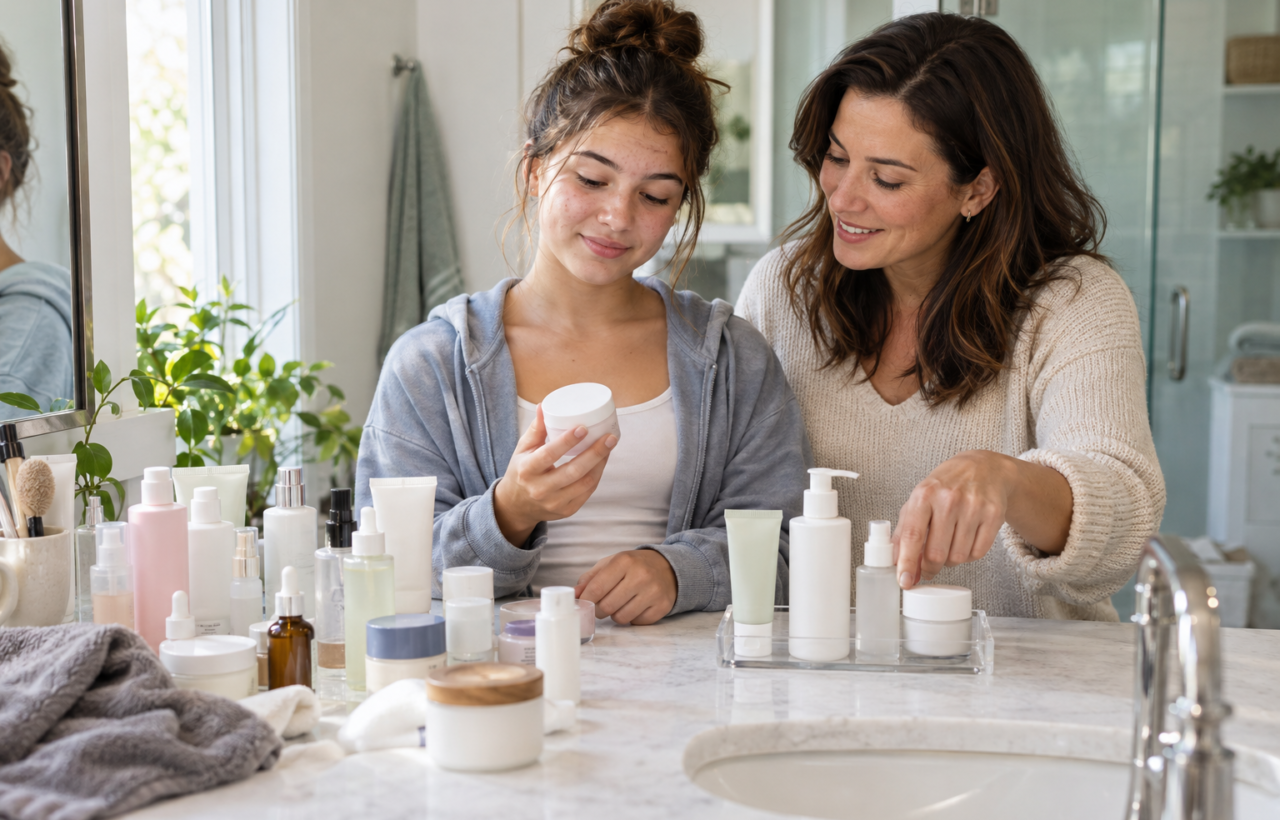
Your teen has a cart full of serums, creams, and mists and says they need all of them for ‘glazed donut skin.’ You don’t have to decide whether skincare is good or bad. You need to separate a fun interest from a routine that may irritate their skin or teach them that a normal face is a problem to correct.
Start with three moves: identify what each product is meant to do, return to a simple routine, and discuss the pressure behind the trend without mocking it. That gives you a practical way to protect both skin and confidence.
Key takeaways
- ‘Glazed,’ ‘glass,’ and ‘butter’ skin describe visual finishes, not measures of skin health.
- More products create more opportunities for irritation, duplicated ingredients, and confusion about which product caused a reaction.
- A basic routine can usually begin with gentle cleansing, moisturizer when needed, and broad-spectrum sunscreen used according to its label.
- Ask what your teen hopes a trend will change before setting limits. Enjoyment and experimentation are different from fear, shame, or compulsive comparison.
- Persistent, painful, scarring, or worsening skin problems belong with a pediatrician or dermatologist, not a social-media routine.
A glossy finish is not a skin-health target
Glazed donut skin aims for a shiny, smooth, intensely hydrated appearance, often created by layering toners, serums, eye creams, moisturizers, and facial mists. Glass skin emphasizes a clear, highly reflective finish. Butter skin is presented as soft and velvety. The clean-girl aesthetic expands the idea into hair, clothes, makeup, and accessories that appear polished but effortless.
These names turn an appearance into a checklist. That matters because the checklist can disguise how many products are being used and why. A teen may copy an entire routine when the only result they actually want is a temporary dewy finish.
The useful distinction is function versus finish. Healthy skin performs protective work. It can still have visible pores, oil, texture, dryness, blemishes, or changes related to hormones. A glossy surface may come from moisturizer, facial oil, balm, makeup, lighting, or camera settings. It doesn’t prove that the skin underneath is healthier.
Ask your teen to name the desired result in plain language: less uncomfortable dryness, help with acne, sun protection, or simply a shiny look. A genuine skin concern deserves a suitable product or professional assessment. A cosmetic finish can be treated as style rather than as a standard their bare skin must meet.
Give every product a job before it reaches their face
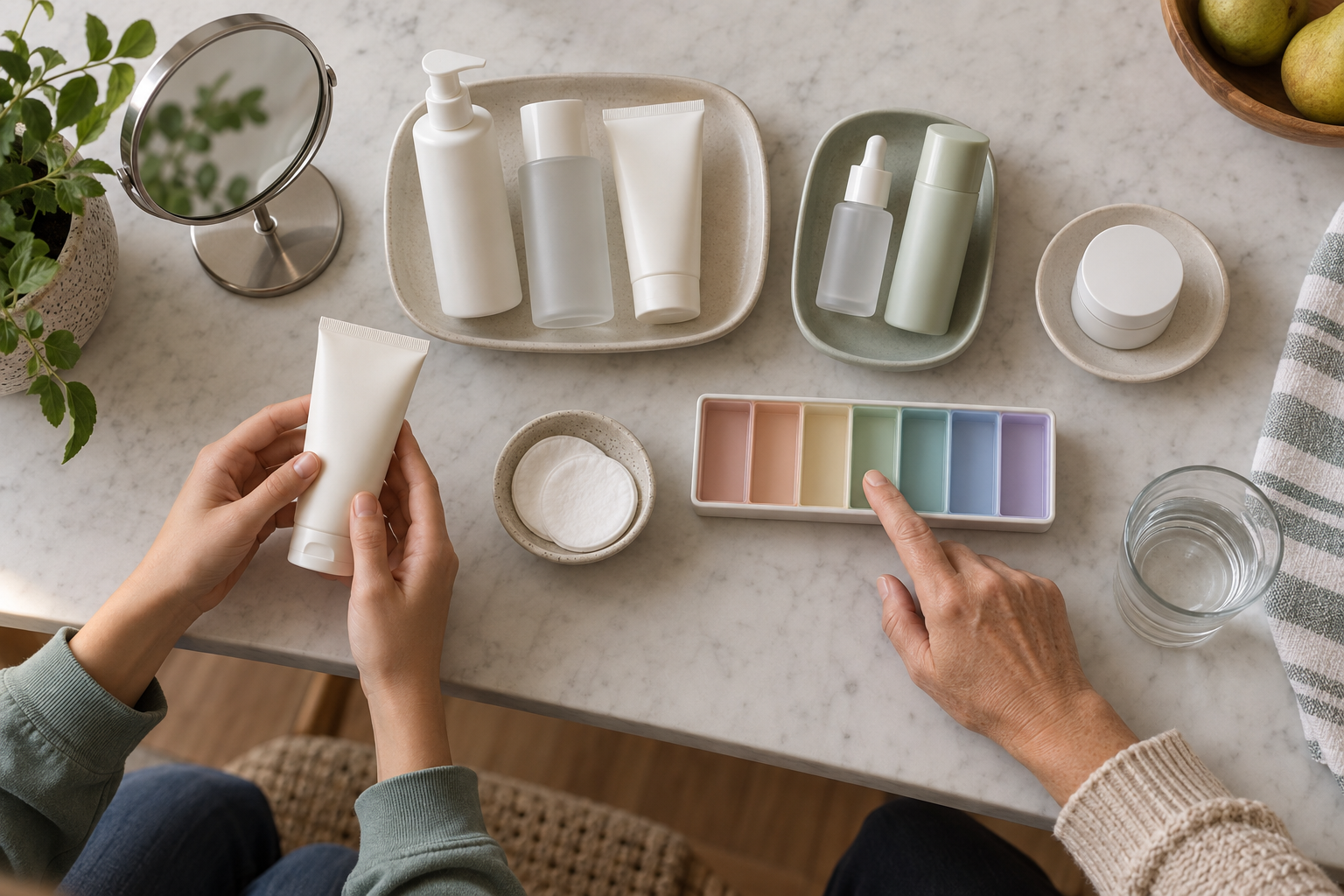
You don’t need to memorize every ingredient in the beauty aisle. Audit the routine one item at a time. Put the products on a counter, including anything borrowed from friends or family, and work through these questions together.
- What specific concern is this for? ‘Glowing’ and ‘better skin’ are marketing goals, not specific concerns. Dryness, oiliness, acne, and removing makeup are clearer answers.
- What does the label say the product does? Read the directions, warnings, active ingredients, and intended frequency. A creator’s routine doesn’t replace the instructions on the package.
- Is another product already doing that job? Two exfoliating products or several acne treatments can duplicate an effect even when their bottles have different names.
- Is it intended for an issue your teen has? Anti-aging claims address concerns that young skin generally doesn’t have. A product isn’t necessary merely because it is popular or expensive.
- Has a clinician already recommended a treatment? Don’t replace, combine, or intensify a prescribed plan with a viral routine without checking with the prescriber.
- What would make you stop? Agree in advance that burning, persistent stinging, swelling, an itchy rash, blistering, marked peeling, or a sudden worsening of breakouts means the experiment ends and may need medical advice.
Pay particular attention to products containing strong exfoliating acids, retinol, or multiple acne-fighting ingredients. This doesn’t make every such ingredient universally unsafe. Some are used appropriately for particular conditions, including clinician-guided acne treatment. The problem is using potent or unnecessary products without matching them to the person’s skin and the concern being treated.
Products chosen without professional guidance can lead to breakouts or other unwanted skin changes. Layering several unfamiliar products at once also makes troubleshooting harder: when irritation appears, you won’t know which formula caused it.
Introduce no more than one new leave-on product at a time, follow its label, and don’t increase the amount or frequency to chase a faster result. If the label advises testing on a small area first, follow those directions. A small-area test may reveal a reaction, but it cannot guarantee that regular facial use will be trouble-free.
Build a simple baseline before adding trend products
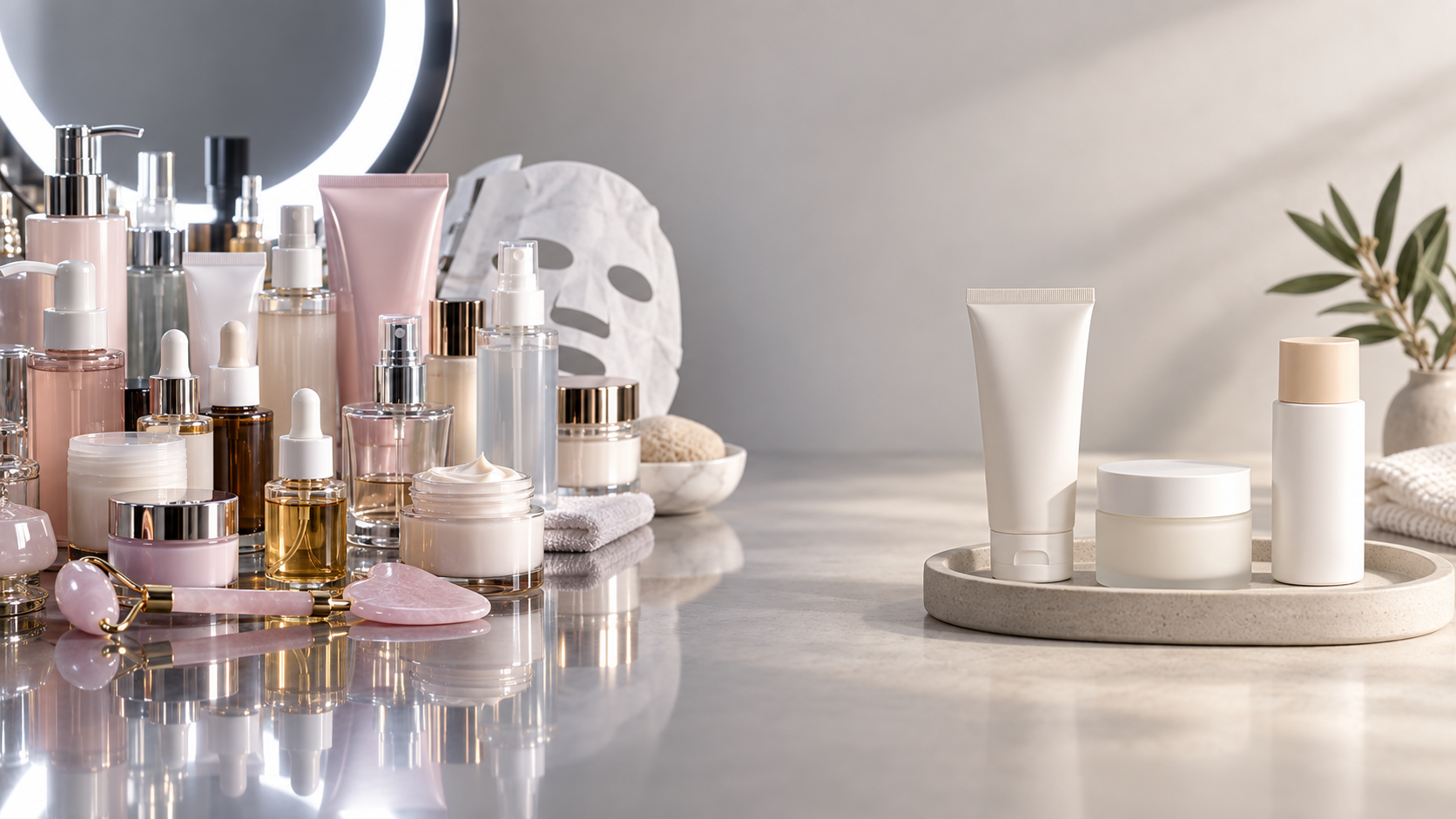
A routine needs a stable baseline. Without one, every new product becomes another variable. For a teen without a diagnosed skin condition or an established treatment plan, the starting point can be straightforward.
- Morning: Cleanse gently if needed, use a moisturizer if the skin feels dry or uncomfortable, and apply broad-spectrum sunscreen according to the label.
- Evening: Remove sunscreen and makeup with a gentle cleanser, then use a moisturizer if needed.
- Clinician-directed care: Use prescribed or recommended treatment exactly as instructed rather than moving it around to accommodate a trend routine.
Choose products for the skin in front of you, not for the number of steps shown in a video. Sensitive or easily irritated skin may do better with simple, fragrance-free formulas. Oily skin can still need gentle care, while dry skin doesn’t automatically need several oils and heavy balms. There is no empty ‘serum slot’ that has to be filled.
If irritation starts after new products are introduced, pause the recent additions and other optional actives. Don’t scrub peeling skin or add another acid to remove the flakes. Return to the gentle products that were already tolerated and contact a pediatrician or dermatologist if the reaction is significant, persists, spreads, or worsens.
Get urgent medical help for trouble breathing, swelling of the lips or tongue, pronounced swelling around the eyes, or a severe or widespread blistering reaction. Those symptoms are not a skincare troubleshooting project.
Talk about the pressure without ridiculing the trend

A lecture about vanity is likely to miss what the routine is doing for your teen. Skincare may be creative, social, soothing, or simply enjoyable. It can also be a way to manage fear about acne, belonging, status, or being judged. You need to learn which version you are dealing with.
Open with curiosity: ‘What do you like about this look?’ Then ask, ‘What do you expect these products to change?’ and ‘How would you feel if your skin never looked like the video?’ Those questions make room for your teen to tell you whether this is play, a genuine skin concern, or pressure.
Young teens can be especially susceptible to messages promising that a product will help them resemble their peers. Knowing that social media is curated doesn’t make a person immune to comparison. Lighting, filters, makeup, careful selection, and editing can present a polished moment as an everyday face.
Look at a few posts together and examine the sales mechanics. Is the product gifted or sponsored? Is the creator selling a code? Does the camera remain close enough to show real texture? Is there a cut between the application and the result? Does the video explain the ingredient’s purpose, or does it rely on words such as ‘flawless,’ ‘poreless,’ or ‘must-have’?
Money and representation belong in the conversation too. Premium products, facials, and professional treatments can turn an aesthetic into a status marker. A narrow ideal can also exclude teens living with acne, eczema, vitiligo, or hair and skin features that aren’t routinely celebrated by the trend. Not fitting an aesthetic is not a personal failure.
Set boundaries that address the actual risk. You might agree on a product budget, require a label check before buying active treatments, finish or discard one product before purchasing its replacement, and prohibit sharing open jars or applicators. Keep the rules about health, hygiene, and spending rather than declaring that caring about appearance is shallow.
Your own language counts. Teens notice when adults repeatedly criticize their appearance or obsess over beauty trends. Try not to describe your face as disgusting, old, or unacceptable in front of them. Treat skincare as an optional form of care or expression, not the price of being seen.
Know when the problem is bigger than a routine
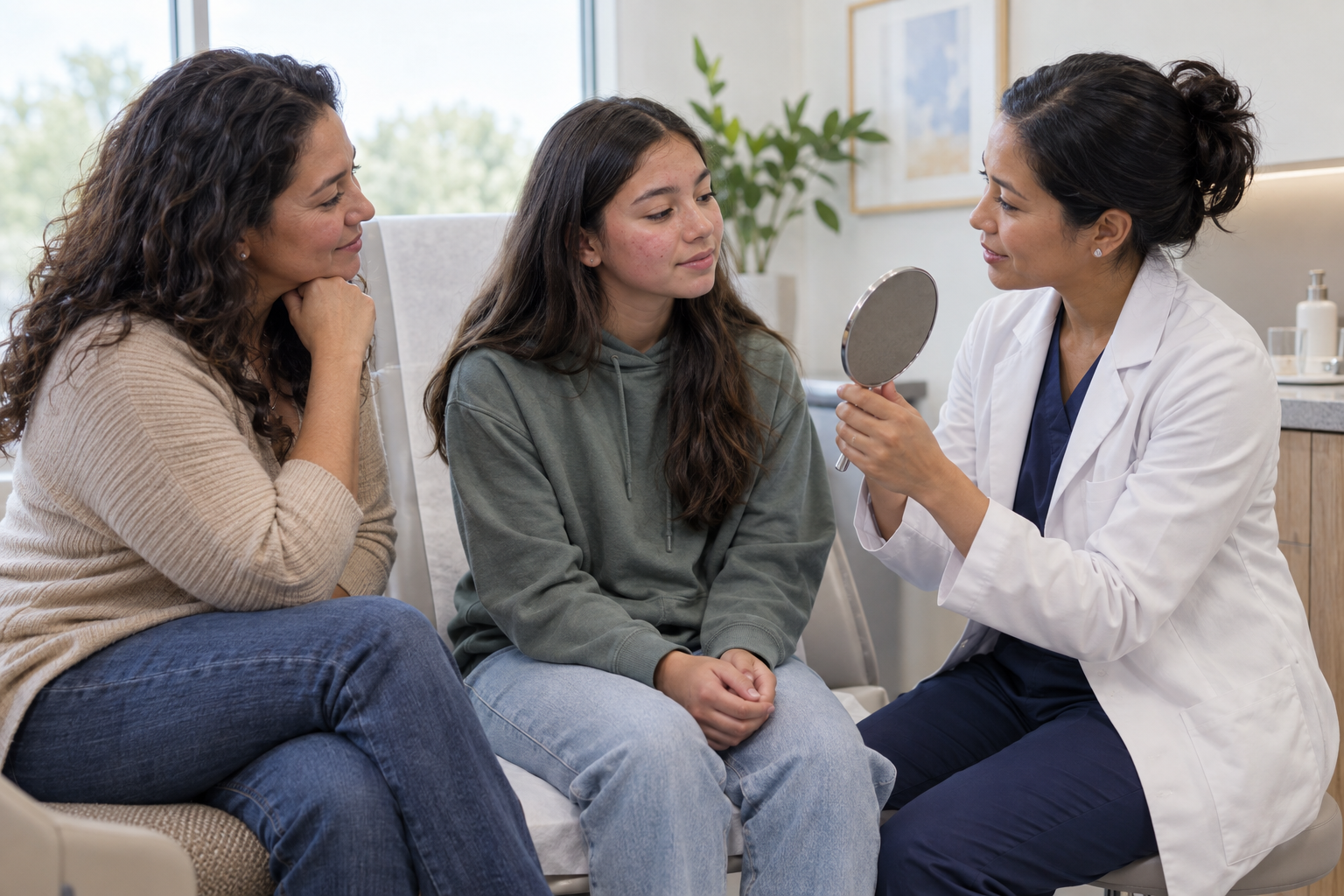
Some concerns need more than a stripped-back product shelf. Make an appointment with a pediatrician or dermatologist when acne is painful, persistent, worsening, or leaving scars; when a rash keeps returning; when there may be eczema or another skin condition; or when irritation doesn’t settle after suspected products are stopped. Bring the containers or clear photos of their labels, a list of when each item was started, and photos showing how the skin changed.
Also watch what the routine is doing to daily life. Repeatedly checking or hiding the face, avoiding school or social plans, becoming highly distressed by ordinary texture or blemishes, spending beyond agreed limits, or feeling unable to appear without completing the routine can signal that appearance pressure is no longer harmless. A pediatrician or qualified mental-health professional can help assess that distress; skincare products cannot treat it.
Tonight, don’t try to settle every argument about beauty culture. Put the products on the counter, identify the few that have clear jobs, and park the rest. Then ask your teen what they want their routine to do for them. That answer will tell you whether the next step is a simpler shelf, a medical appointment, a conversation about comparison, or room for a safe bit of style.
References