
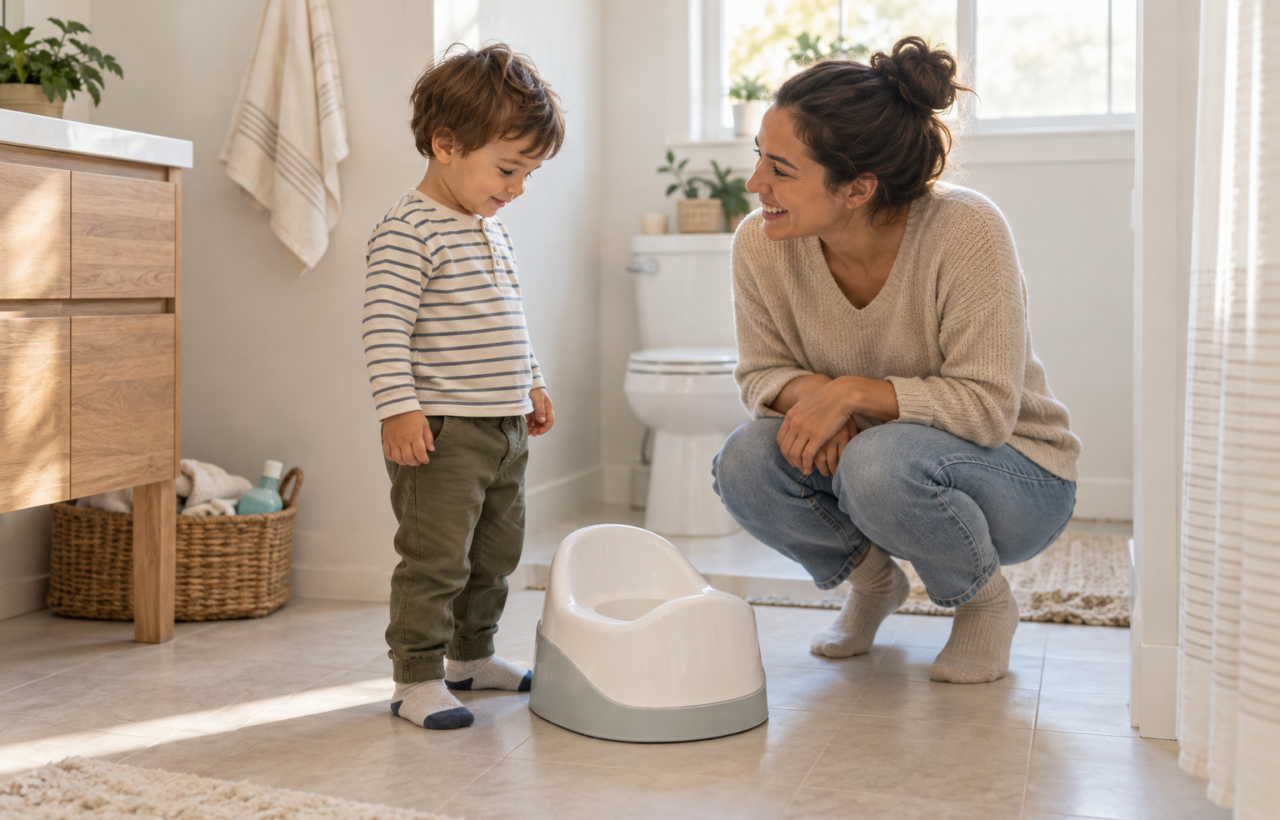
If you are looking at a long weekend and wondering whether you can really take off your toddler’s diaper and stay home watching for every pee, the honest answer is that the Oh Crap method is simple but demanding. Its aim is not to make your child pee on command. It is to help them connect the feeling of needing to go with getting to the potty.
You do not have to solve daytime accidents, outings, underwear, daycare and nighttime dryness all at once. Treat them as separate decisions. The plan below will help you decide whether this method fits your family, arrange the first few days and know when to move forward.
Decide whether the method fits your week and care setup
The Oh Crap method progresses through blocks rather than a fixed schedule. Your child stays in each block until they have learned what that stage is meant to teach. The method does not assign a set number of days to a block or tie progress to a designated age.
That flexibility does not make the opening stage casual. During the first block, your child is naked and you remain close enough to notice their signals and move them to the potty. A long weekend or another stretch of home days can make that concentrated observation easier.
Before choosing a start date, ask whether every regular caregiver can support the same plan. Some daycare providers cannot accommodate a child who is going without underwear, whether because of hygiene rules or because staff cannot provide continuous individual attention. Find out what your child’s care setting permits before removing daytime diapers. Otherwise, your child may be asked to follow two incompatible routines from the first week.
Key takeaways
- The goal is body awareness and eventual self-initiation, not toileting on an adult’s schedule.
- There are four blocks, but no universal timetable for completing them.
- The first block requires focused observation at home and will involve some mess.
- Daytime and nighttime training can be handled separately.
- Daycare, relatives, nannies and other regular caregivers need a workable version of the same routine.
Work through the four blocks without racing the calendar
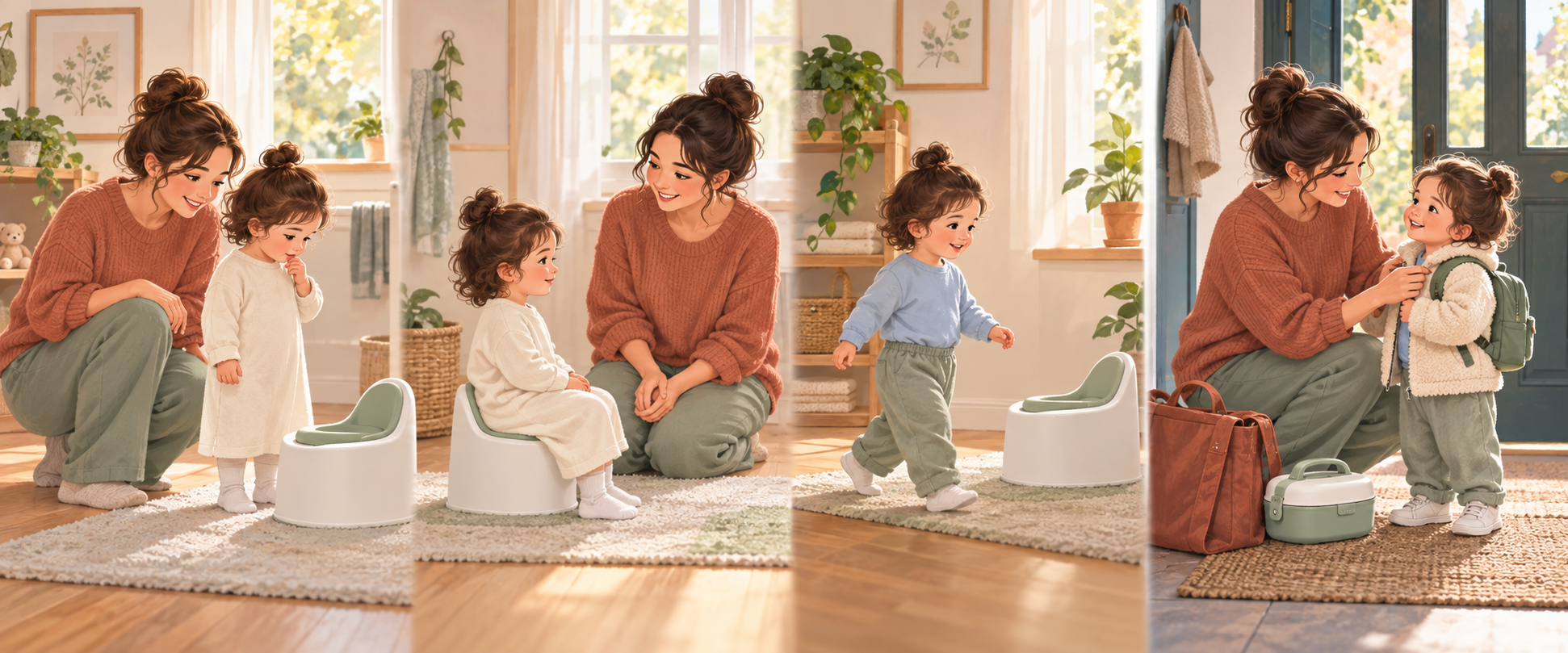
Each block changes one part of the challenge. Clothing returns before underwear, and outings grow gradually rather than jumping from an at-home weekend to a full day away.
- Block 1: naked at home. Watch for your child’s physical cues, the beginning of a pee or poop, and any emerging pattern in when they go. Move them to the potty as soon as you notice. Catching the beginning rather than the entire pee still helps build the intended connection.
- Block 2: clothes, no underwear and very short outings. Once you have some sense of your child’s timing or “tell,” add clothing without adding underwear. Start with a trip to the mailbox, a short walk or another outing that can end quickly.
- Block 3: progressively longer outings. Extend time away from home in manageable increments. Bring spare clothes and choose destinations where a toilet or potty will be reasonably accessible.
- Block 4: underwear. Underwear comes last because its close fit may feel familiar to a child accustomed to diapers. Jamie Glowacki’s version of the method recommends about a month without underwear after training begins. Treat that as the method’s recommendation, not a deadline your child has failed if they need a different pace.
Move from Block 1 when you are beginning to understand your child’s frequency, schedule or cues. Do not wait for a perfectly clean day, but do not advance merely because the weekend is ending. If you still have no idea when your child goes, adding clothing and longer outings removes the very observation time the first block is designed to provide.
Set up the first days before the diaper comes off
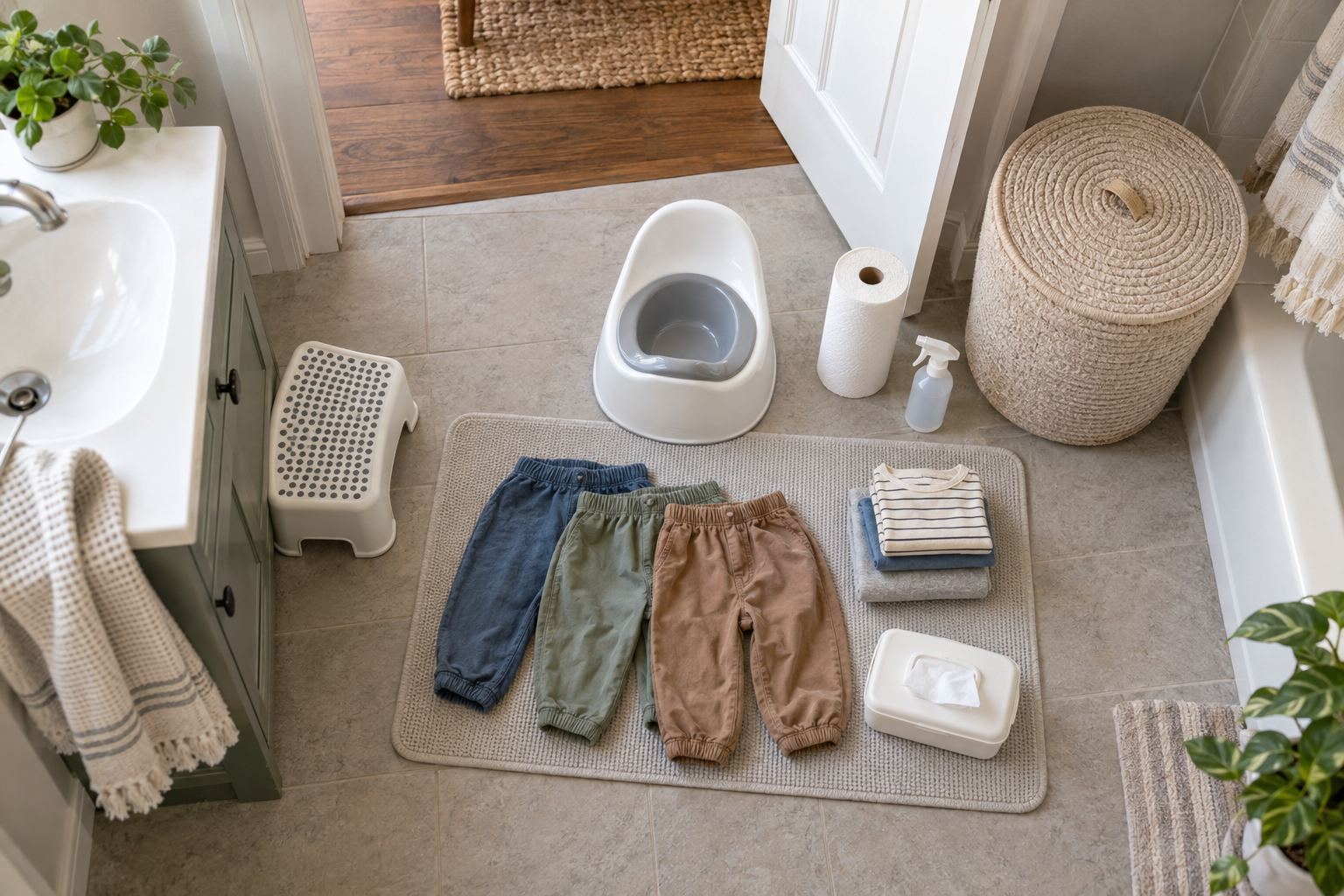
The method requires little equipment. The more important preparation is removing avoidable conflicts from the schedule and deciding how you will respond when an accident begins.
- Protect the hardest surfaces. Put washable pads on furniture or carpeted areas that concern you. Keep cleaning supplies nearby so an accident remains a cleanup task rather than a household emergency.
- Keep the potty within quick reach. In Block 1, you may have only the time between noticing a cue and the flow beginning. A potty in the room where your child is playing removes an unnecessary race down the hall.
- Choose simple Block 2 clothing. Use bottoms that can come off quickly. Overalls, complicated fasteners and several layers add a motor task while your child is still learning to respond to a body signal.
- Make a daytime decision. The general Oh Crap approach says goodbye to diapers, but nighttime training is optional. If you are postponing it, keep a separate supply of nighttime diapers or pull-ups instead of allowing them to drift back into daytime use.
- Agree on neutral language. Caregivers should use the same short cue, such as “Pee goes in the potty,” and the same calm response to accidents. Consistency matters more than finding a perfect phrase.
- Plan the handoff. Tell daycare or another caregiver which block your child is in, what clothing they will wear and what the provider can realistically continue. If commando clothing is prohibited, settle on an adaptation before day one.
If you cannot create several observant home days or arrange a workable care plan, changing the start date may be more practical than beginning under pressure. The method’s opening demand is not something you can replace with occasional reminders while everyone follows a normal schedule.
Run the first day as observation, not a potty test
Block 1 is as much about what you learn as what your child does. You are looking for timing, posture, facial expressions, hiding, pausing or another repeatable cue. A poop signal is often easier to notice than a pee signal, so a rough pee schedule may be the useful information you get first.
- Remove the daytime diaper and keep your child naked while you are home together.
- Stay close and observe during ordinary play. You do not need to turn every few minutes into a question about whether they have to go.
- When you see a cue or notice pee or poop beginning, move your child to the potty. A midstream transfer is still useful because it links the bodily sensation with the correct destination.
- Respond briefly and matter-of-factly. The useful information is what happened immediately before the accident and whether your child noticed the sensation.
- Keep observing across the day. If it helps the adults coordinate, make a simple note of the time and cue rather than relying on memory.
Three traps that weaken the connection
- Parking your child on the toilet. Long waits may produce a pee, but they do not necessarily teach the sequence of noticing an urge and going to the potty. This method discourages having a child sit until something happens.
- Building a reward economy. Treats, toys and a large celebration are not part of the Oh Crap approach. They can shift attention from mastering the bodily skill to earning the reward and create another problem when you try to stop offering it.
- Adding every challenge together. Underwear, a long outing and an unfamiliar toilet should not all arrive as soon as your child has one successful pee. Add one layer of difficulty at a time so you can see what your child understands.
An accident is not proof that the method is failing. In the early stage, it gives you the chance to notice a cue, practise the move to the potty and adjust the environment. What matters is whether the connection is becoming clearer over repeated attempts.
Read later accidents before changing the whole plan
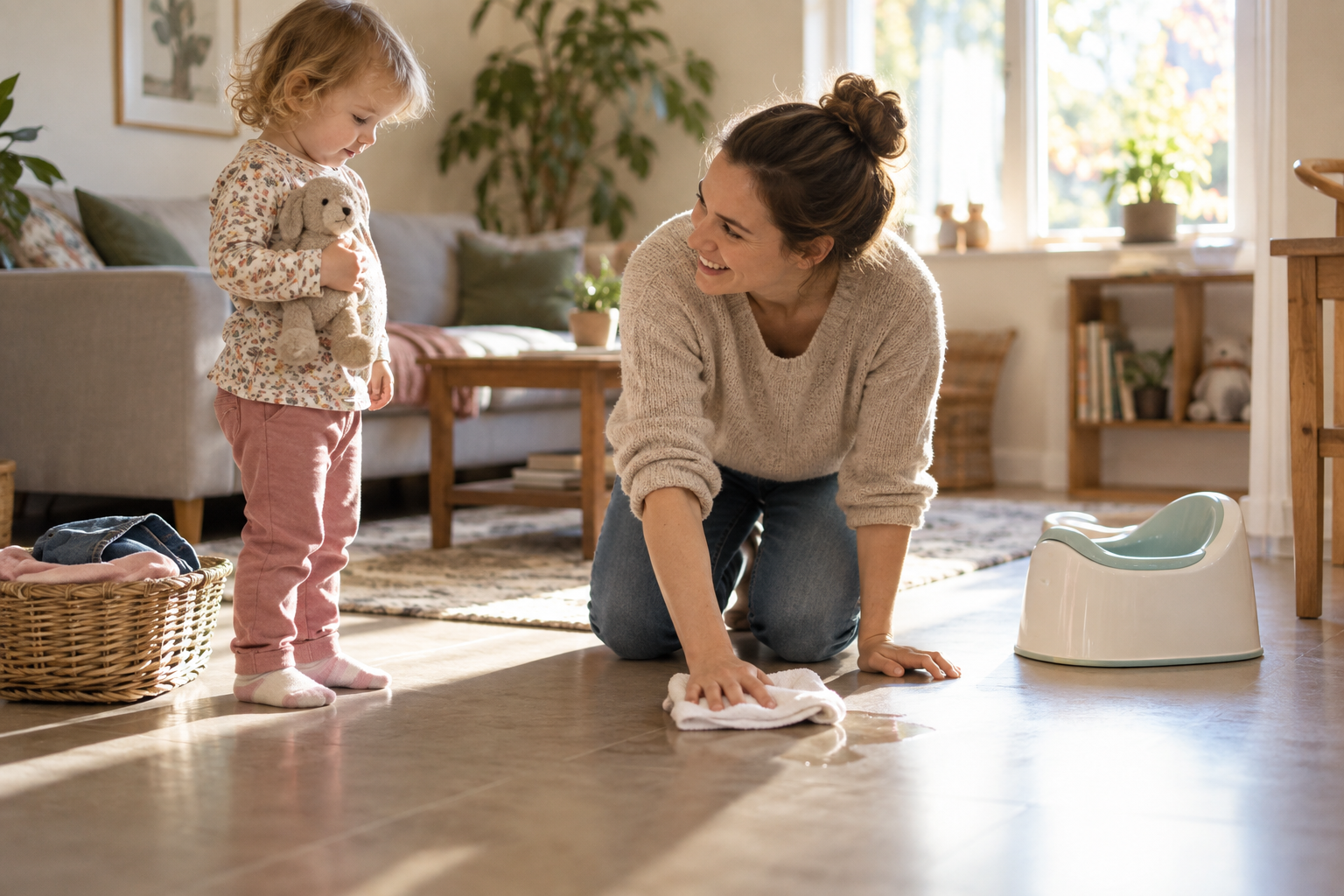
A difficult day after apparent progress does not automatically equal regression. Within this method, one day of accidents is not treated as regression, while accidents continuing for about three weeks might be. That is a practical rule of thumb, not a medical diagnosis.
Look first for what changed around the child. A new sibling, a move, a new daycare or school, or an illness can coincide with renewed accidents. Then reduce the immediate demand instead of treating the behaviour as defiance:
- Shorten outings again if accidents began when trips became longer.
- Make the potty easier to reach and return to clothing your child can manage quickly.
- Check whether every caregiver is using the same routine or whether diapers and underwear have been reintroduced in one setting.
- If a new baby is taking much of your attention, place the toddler’s potty near the spot where you feed the baby. This preserves access and lets you offer brief connection without abandoning either child.
- If the change arrived with illness or you are concerned that a health problem may be involved, speak with your child’s pediatrician rather than assuming it is a training issue.
Choose your start date only when you have three things: a few focused days at home, agreement from regular caregivers and a realistic cleanup plan. Then measure the first stage by what you and your child are learning, not by whether the floor stays dry. If your schedule or daycare rules cannot support the standard version, adapt the plan or wait for a workable window; that constraint does not mean your child has failed.
References




