
A blocked nose can make bedtime feel harder for both babies and parents. The question many caregivers ask is practical: how can a baby breathe more comfortably without making sleep less safe?
Newton Hush reports that the safest sleep position for a baby with a stuffy nose is still flat on the back. The comfort strategies belong before bedtime, during feeds, and while the baby is awake and supervised, not in the crib setup itself.
The safest sleep position does not change
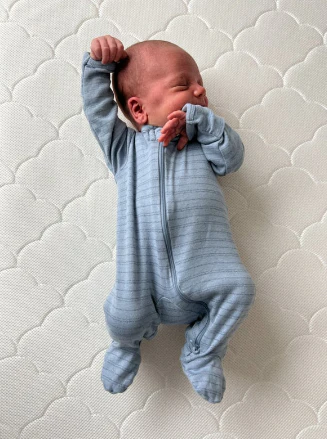
According to Newton Hush, a congested baby should be placed to sleep on their back, on a firm, flat sleep surface. That advice can feel counterintuitive when mucus is making a baby noisy, restless, or uncomfortable, but propping a baby up is not the safer shortcut it may appear to be.
The source specifically warns against using side sleeping, pillows, wedges, or inclined surfaces to help mucus drain. Newton Hush explains that babies can have trouble maintaining a safe airway position when their head tips forward on an incline, raising the risk of positional asphyxia. In other words, the setup that seems helpful for congestion can create a breathing hazard.
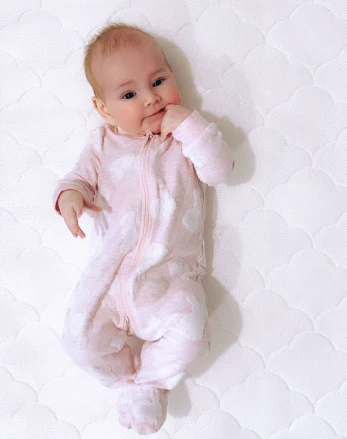
The safer distinction is this: upright can be useful while a baby is awake and watched, but sleep should happen on the back in a crib, bassinet, or travel crib.
What a stuffy nose may look like
Babies cannot describe pressure, drainage, or throat irritation, so parents are left reading the signs. Newton Hush lists thick mucus, yellow or green mucus, coughing, snoring, noisy breathing, and difficulty eating as possible clues that congestion is getting in the way.
The source says congestion can happen when nasal tissue becomes irritated or inflamed, allowing mucus to build up in the nose and airways. Viruses, including RSV and flu, are named as common causes, though allergens, pollutants, dust, pet dander, fragrances, and strong household products may also irritate a baby nose.
Some mucus is part of the body’s normal response to irritants. Still, parents should treat breathing difficulty, poor feeding, dehydration signs, fever, or worsening symptoms as reasons to seek medical advice rather than trying to manage everything at home.
Key takeaways
- Back sleeping remains the recommended position, even when a baby has a stuffy nose.
- Do not use pillows, wedges, inclined sleepers, or side positioning to manage congestion.
- Clear the nose before sleep with gentle, baby-safe measures such as saline and limited suction.
- Keep the crib bare, with no toys, loose blankets, or soft items for babies under 12 months.
- Call a doctor promptly for a baby under 3 months, breathing trouble, fever, feeding problems, dehydration signs, symptoms lasting more than 4 days, or parental concern.
Comfort measures to try before sleep
The goal is not to redesign the sleep space. It is to help the baby enter sleep with less nasal blockage while keeping the sleep environment simple and safe.
- Use saline drops or mist to loosen mucus before feeding or bedtime.
- Suction gently with a bulb syringe or nasal aspirator. Newton Hush notes that overdoing suction can irritate the nostrils and make swelling worse, and cites a general limit of three or four times daily unless a pediatrician advises otherwise.
- Offer feeds in a more upright position if congestion makes latching or bottle-feeding difficult.
- Keep the baby hydrated through normal age-appropriate feeding, since fluids can help thin mucus.
- Use a cool-mist humidifier if dry air seems to be making congestion worse.
- Sit briefly in a steamy bathroom with the baby, stopping if the baby seems uncomfortable. Newton Hush suggests keeping this to three to five minutes.
- Hold or carry the baby upright while awake and supervised to make them more comfortable during the day.
The source also cautions against adult-style remedies unless a pediatrician approves them. That includes over-the-counter cough and cold medicines, menthol rubs, and essential oils.

The sleep space still matters
Congestion can make parents more willing to bend the usual sleep rules, especially after a difficult night. Newton Hush’s guidance points the other way: keep the sleep surface boring, clear, and predictable.
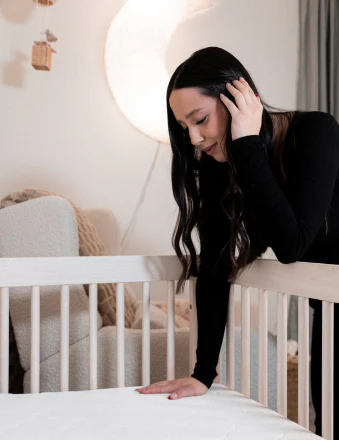
That means using a crib, bassinet, or travel crib; choosing a firm mattress; removing loose bedding and toys; and moving the baby if they fall asleep on a couch, rocker, or another unsafe surface. The source also recommends room-sharing rather than bed-sharing and dressing the baby for the room temperature rather than over-bundling.
A dark, quiet room and a familiar bedtime routine can help preserve rest when a baby is uncomfortable. Those routines are supportive, not medical treatment, but they can reduce extra disruption while the congestion runs its course.

When congestion needs a doctor
Newton Hush recommends contacting a pediatrician right away if the baby is under 3 months old, is working hard to breathe, makes high-pitched or grunting sounds while breathing, has a fever, refuses feeds, cannot feed because of congestion, shows signs of dehydration, or has congestion lasting more than 4 days.
Parental instinct also matters. If a baby seems unusually unwell, is breathing differently, or simply does not seem right, it is reasonable to call a clinician even if the symptoms do not fit neatly into a checklist. The safest plan is to keep sleep flat and on the back, use gentle comfort measures before bedtime, and escalate concerns early.
Inspired by this post on Newton Hush.