
Combo Feeding Schedules: A Practical Guide by Age

A practical guide to combo feeding by age, with schedule examples, supply considerations, baby cues, and flexible ways to plan breast and bottle feeds.

Woman pours liquid into a bottle beside a Bobbie formula can while a baby sits at a kitchen counter.
In a bright kitchen, a woman in a red cardigan pours liquid into a small bottle near a Bobbie Organic Whole Milk Infant Formula can as a baby watches from the counter.

Combo feeding can be useful when a family wants both breast milk and infant formula in the same feeding routine. The hard part is usually not the definition; it is deciding what the day should actually look like without turning feeds into a rigid clock-watching exercise.

Using hibobbie Blog as the source, this guide reframes the main decisions: why a parent might combine feeds, how to protect flexibility, what age-based examples can look like, and when to adjust the plan around the baby rather than the schedule.

Image

What Combo Feeding Actually Means

Combo feeding, also called mixed feeding, means a baby receives both breast milk and infant formula. According to hibobbie Blog, there is no required ratio. One family might breastfeed most of the time and add one formula bottle. Another might rely mostly on formula while nursing for comfort. A third might alternate more evenly between breast and bottle.

Two adults smiling with a baby on a couch in a bright room with yellow flowers by the window.
A baby sits on an adult woman's lap while another adult smiles nearby, with soft daylight, white furnishings, and yellow flowers in the background.

That flexibility is the point. Combo feeding can be arranged around work hours, another caregiver’s availability, overnight rest, changing milk supply, or a gradual move toward more formula feeding. It can also change over time as the baby grows and the household routine shifts.

Bobbie Organic Whole Milk Infant Formula can beside a filled baby bottle and measuring scoops.
A can labeled "bobbie Organic Whole Milk Infant Formula" stands on a reflective surface next to a filled baby bottle and two white measuring scoops.

The source also notes that, in a survey of more than 1,200 parents in the Bobbie community, nearly 90% said they had combo-fed at some point. That figure is reported by the brand’s own community survey, so it should be read as a useful signal about that audience rather than a general population statistic.

Worker in hairnet, safety glasses, and blue gloves handles bobbie containers on a production line.
A gloved worker in a white coat and hairnet handles cylindrical containers on a production line, with the word "bobbie" visible on the coat and tubs.

Build the Schedule Around the Goal

A combo feeding schedule works best when it solves a real problem. The source describes several common reasons parents choose it: milk supply changes, returning to work, sharing feeds with partners or relatives, easing pressure around exclusive breastfeeding, rotating night feeds, handling travel or errands, and adapting as the baby gets older.
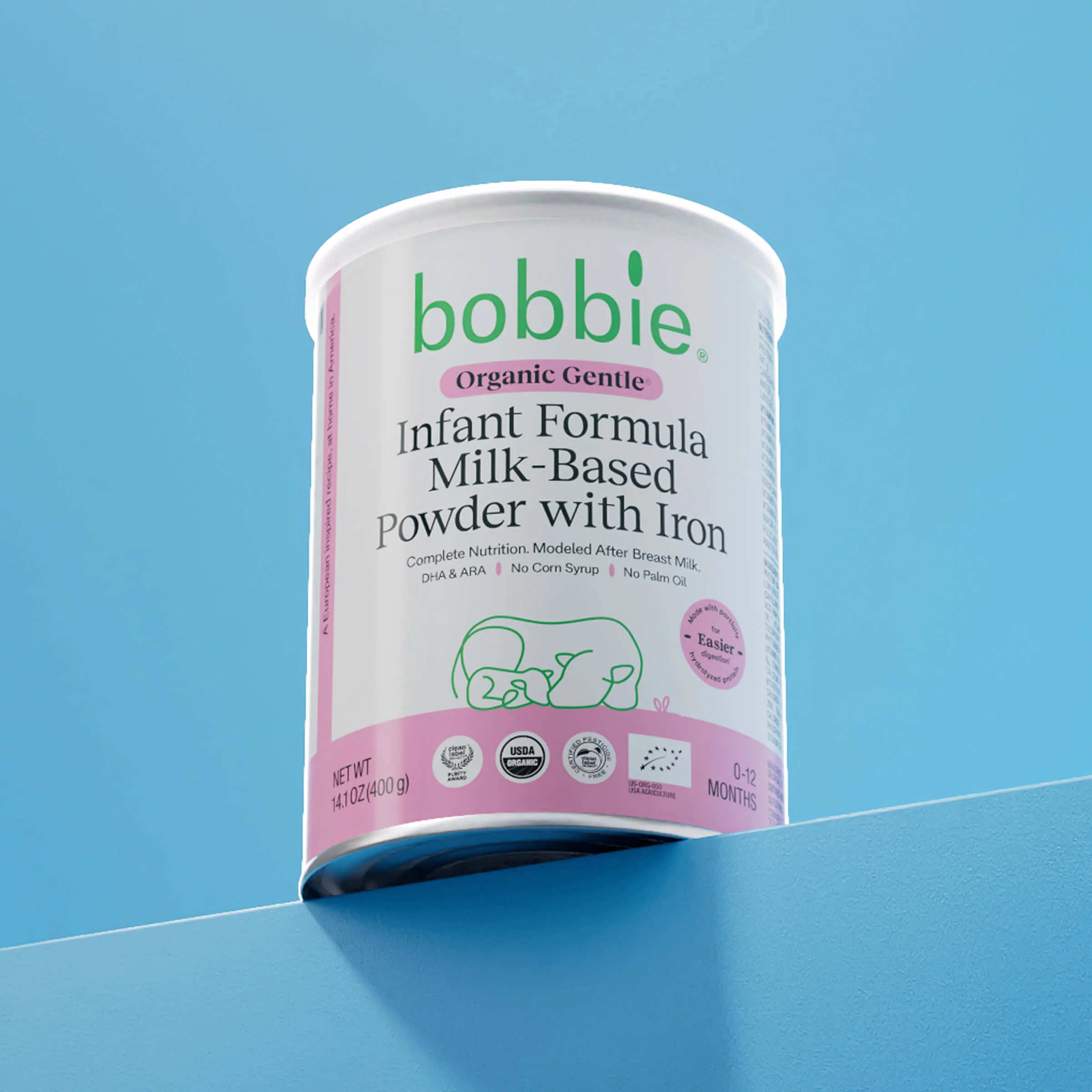
Can of Bobbie Organic Gentle infant formula on a bright blue surface and background
A Bobbie Organic Gentle infant formula can is photographed against a bright blue backdrop, with label text including milk-based powder with iron and 0-12 months.

Before picking times, it helps to name the goal in plain terms. Is the aim to keep breastfeeding as the main source of milk while adding occasional formula? To replace feeds during work hours? To let another caregiver handle one bottle each day? To transition gradually toward formula? The answer shapes the routine.

Two adults sit on a couch with a smiling baby holding a bottle, beside a partly visible Bobbie formula can.
A smiling baby with a bottle sits between two adults on a couch, with a partly visible can labeled Bobbie near toys at the lower left.

For parents who want to maintain breast milk supply, the source emphasizes the basic supply-and-demand pattern of lactation: nursing or pumping regularly supports production, while sudden reductions may decrease it. Practical guardrails include offering the breast first when milk production is a priority, avoiding abrupt drops in feeds, staying nourished and hydrated, and monitoring diapers and growth.

Smiling adult holding a baby and a can of Bobbie organic infant formula against a blue background.
A smiling adult holds a baby in a green striped outfit while showing a can labeled Bobbie organic infant formula against a plain blue backdrop.

Watch the Baby, Not Just the Clock

A written schedule is only a framework. The source repeatedly points parents back to feeding cues, because hunger and fullness can vary from day to day.

Comparison chart for Bobbie and Similac infant formula, with Bobbie checked and Similac crossed out for listed features
A product comparison chart shows Bobbie Organic Whole Milk Infant Formula beside Similac 360 Total Care Powder, with checkmarks under Bobbie and X marks under Similac.
  • Hunger cues may include rooting, turning toward the breast or bottle, sucking on hands or fingers, fussiness, or restlessness.
  • Fullness cues may include relaxed hands, slower sucking, or turning away from the breast or bottle.
  • Signs that the overall routine is working can include steady weight gain, regular wet and dirty diapers, satisfaction after feeds, alert awake periods, and less feeding-related stress for the parent.

If a baby is not gaining well, has concerning diaper output, or seems consistently unsatisfied after feeds, the source recommends involving a pediatrician. A lactation consultant may also help if the parent wants a longer-term combo feeding plan that preserves nursing or pumping.

Two babies in diapers on a peach backdrop, one holding a Bobbie infant formula can.
Two babies pose on a warm peach studio backdrop; one sits while holding a can with visible Bobbie infant formula labeling, and the other lies nearby.

Sample Combo Feeding Schedule Ranges by Age

The hibobbie Blog article provides age-based examples rather than one universal schedule. The table below condenses those examples into a planning view, keeping the amounts and feed frequency attributed to the source.
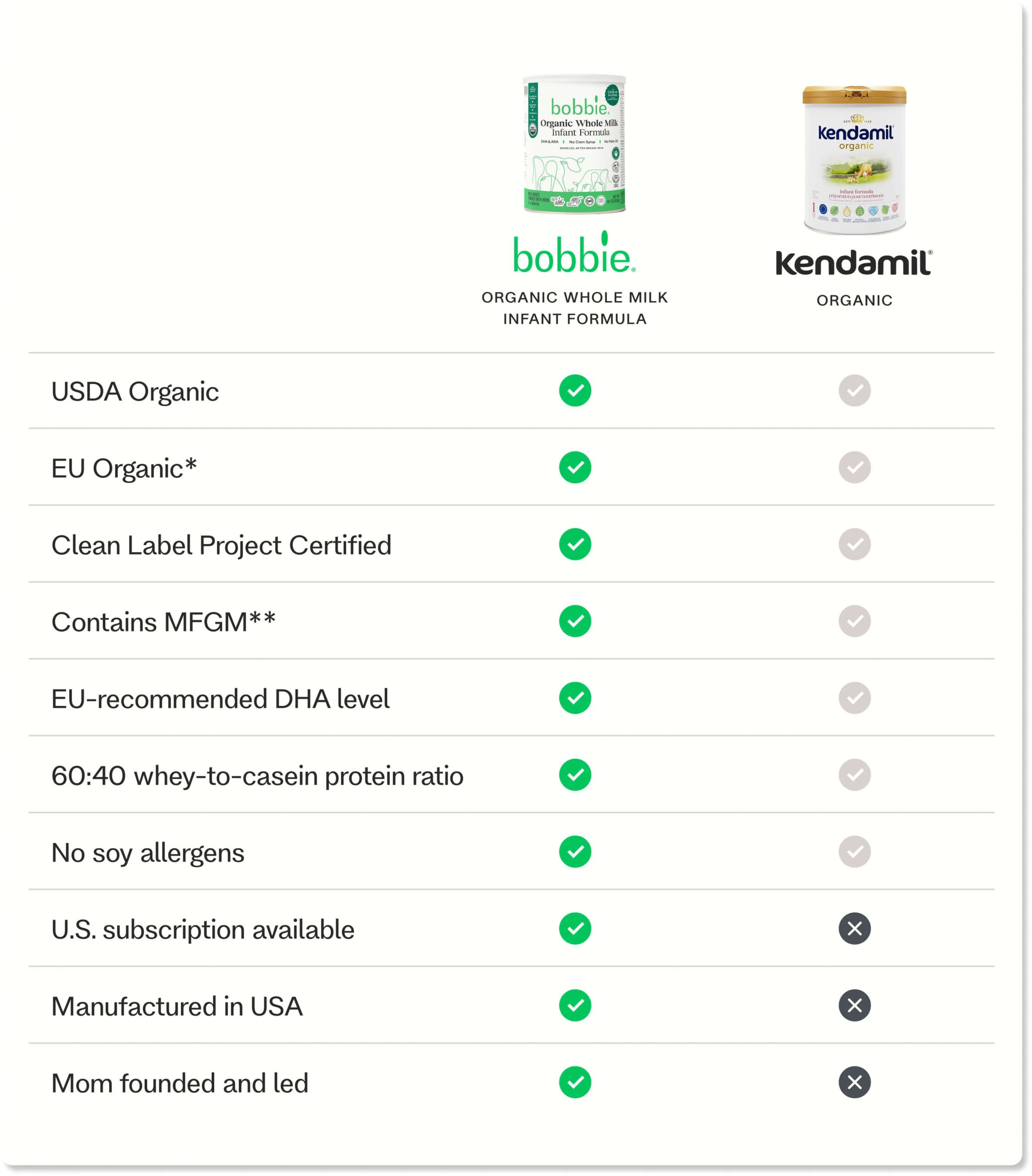
Comparison chart for Bobbie Organic Whole Milk Infant Formula and Kendamil Organic with checkmark rows.
A side-by-side chart compares Bobbie Organic Whole Milk Infant Formula with Kendamil Organic across certifications, ingredients, subscription, origin, and leadership claims.
Baby’s ageReported feeding patternExample combo feeding approachTypical formula amount reported
0-3 months8-12 feeds per dayMostly breastfeeding, with one or two formula bottles for support or flexibility1-3 oz. when formula is offered
3-6 months6-8 feeds per dayBreastfeeding in the morning and evening, with formula bottles during daytime routines3-5 oz. per bottle
6+ months4-6 milk feeds per day, alongside small amounts of solidsBreastfeeding at bookend times and formula bottles at midday or before bed4-8 oz. based on appetite

These examples are not medical instructions or minimum targets. They are schedule shapes. A newborn who wants frequent feeds, a parent managing supply, and a baby starting solids may all need different adjustments.

Aerial view of a large building with bobbie. signage, parked cars, trees, fields, and green check marks above.
A large low building with the visible text "bobbie." on its facade and tower is shown from above, with parked cars in front and a row of green check marks across the top.

Key Takeaways

  • Combo feeding means using both breast milk and infant formula; the balance can be occasional, mostly formula, mostly breastfeeding, or closer to even.
  • The best schedule starts with the family’s goal, such as shared caregiving, workday coverage, supply support, or a gradual transition.
  • Parents who want to protect milk supply generally need consistent nursing or pumping and should avoid sudden feed reductions.
  • Age-based schedules can help with planning, but hunger cues, diaper output, growth, and satisfaction matter more than exact times.

A Flexible Plan Can Still Be Structured

The practical message from the source is that combo feeding does not have to be all-or-nothing. A parent can use formula for one predictable bottle, for daytime coverage, for overnight help, or as the main feeding source while still keeping some nursing in the routine.

The most useful schedule is one that keeps the baby fed, gives caregivers a workable rhythm, and leaves room to revise the plan as feeding needs change.


Inspired by this post on hibobbie Blog.


Generated image 1 (2)

FAQs

What is combo feeding, and does it require a specific breast-milk-to-formula ratio?

Combo feeding, also called mixed feeding, means giving a baby both breast milk and infant formula. There is no required ratio; a routine can be mostly breastfeeding, mostly formula, or a more even mix.

How should I build a flexible combo feeding schedule?

Start by naming the goal, such as covering work hours, sharing a daily bottle with another caregiver, supporting overnight rest, or transitioning gradually toward more formula. Use the schedule as a framework and adjust it around the baby's hunger, fullness, growth, and diaper output rather than exact clock times.

What is an example combo feeding schedule for a baby 0–3 months old?

The article reports 8–12 feeds per day in this age range, with an example of mostly breastfeeding plus one or two formula bottles. When formula is offered, the reported amount is 1–3 oz.; these are planning examples, not medical instructions or minimum targets.

For 3–6 months, what combo feeding pattern does the guide describe?

The guide reports 6–8 feeds per day, with breastfeeding in the morning and evening and formula bottles during daytime routines. The reported formula amount is 3–5 oz. per bottle, but the routine should still follow the baby's appetite and cues.

What can combo feeding look like at 6 months and older?

The example includes 4–6 milk feeds per day alongside small amounts of solids, with breastfeeding at bookend times and formula at midday or before bed. The reported formula range is 4–8 oz. based on appetite.

How can a parent support breast milk supply while combo feeding?

Regular nursing or pumping supports milk production, while sudden reductions in feeds may decrease it. If maintaining supply is the priority, the guide suggests offering the breast first, avoiding abrupt feed reductions, staying nourished and hydrated, and monitoring diapers and growth.

Which feeding cues and warning signs should guide changes to the schedule?

Hunger cues can include rooting, turning toward the breast or bottle, hand-sucking, fussiness, or restlessness; fullness cues can include relaxed hands, slower sucking, or turning away. Steady growth, regular wet and dirty diapers, satisfaction after feeds, and alert awake periods can suggest the routine is working. Contact a pediatrician if the baby is not gaining well, has concerning diaper output, or seems consistently unsatisfied; a lactation consultant may also help with preserving nursing or pumping.

Join the conversation

Your email address will not be published. Required fields are marked.

From birth till the first flush

A few taps now. A clearer picture later.

Log diapers, feeds, sleep and more in one calm place—then notice the gentle patterns in your baby’s day.

Get diapr.ai Free to download · iPhone & Android
Diaproo, the diapr.ai kangaroo mascot